
Nagao Shrine
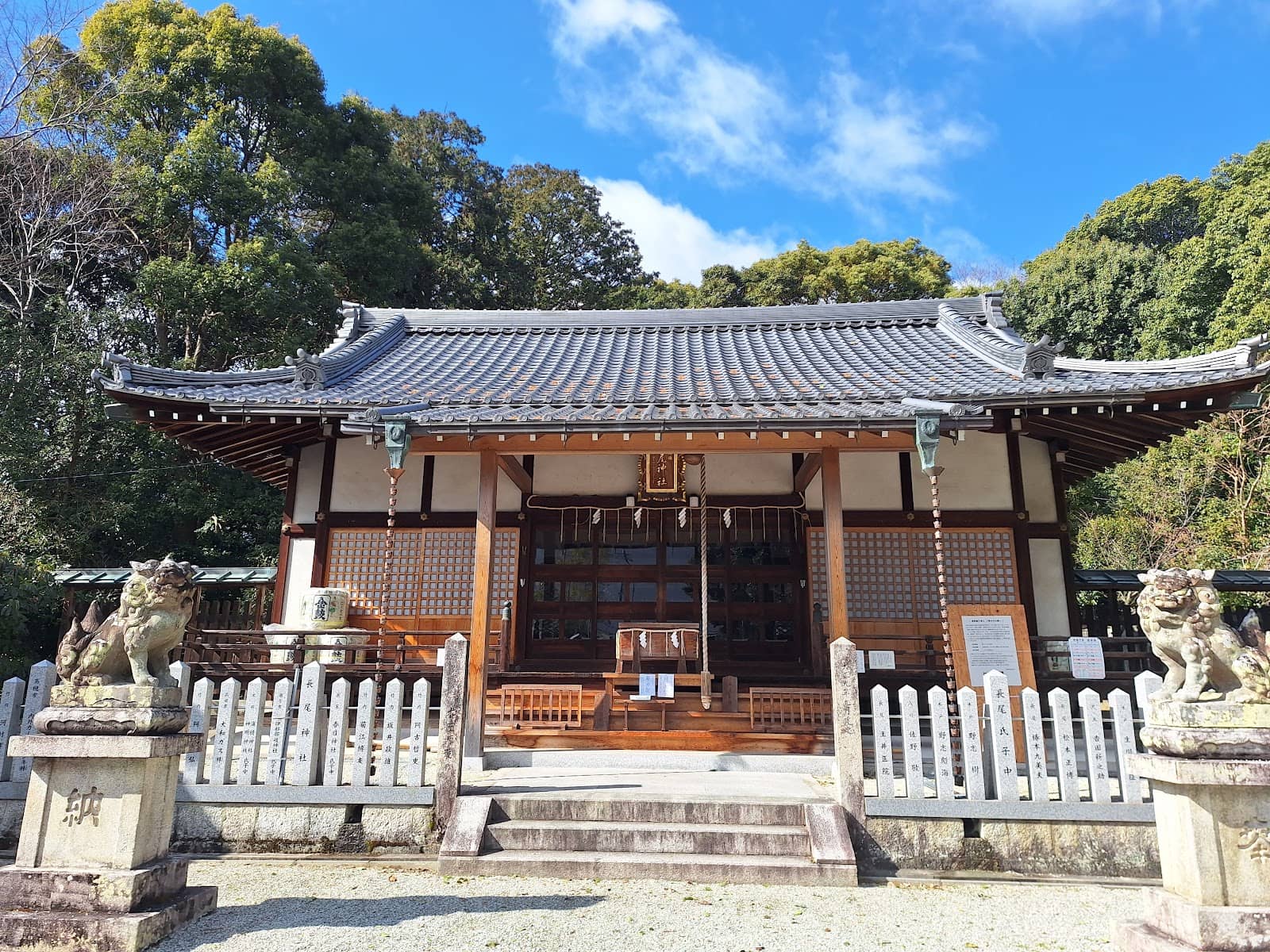
A serene shrine steeped in ancient legends of snakes and frogs, revered for household safety and as a god of travel.
Highlights
Must-see attractions

Social
From TikTok & Reddit
Best Time
Pleasant weather for exploring
Nagao Shrine
Best Time
Pleasant weather for exploring
Highlights
Must-see attractions
A serene shrine steeped in ancient legends of snakes and frogs, revered for household safety and as a god of travel.
"A place of calm with unique legends, though parking can be a challenge."
Train is Best Bet
Take the train to Iwaki Station; parking is scarce. :train2:
Explore Nearby
Combine your visit with Taimadera Temple for a fuller experience. :temple_buddha:

Highlights
Discover the most iconic attractions and experiences
Ema-den
To the right of the worship hall
Unusually large votive plaque hall, showcasing unique boy and girl designs offered at the autumn festival.
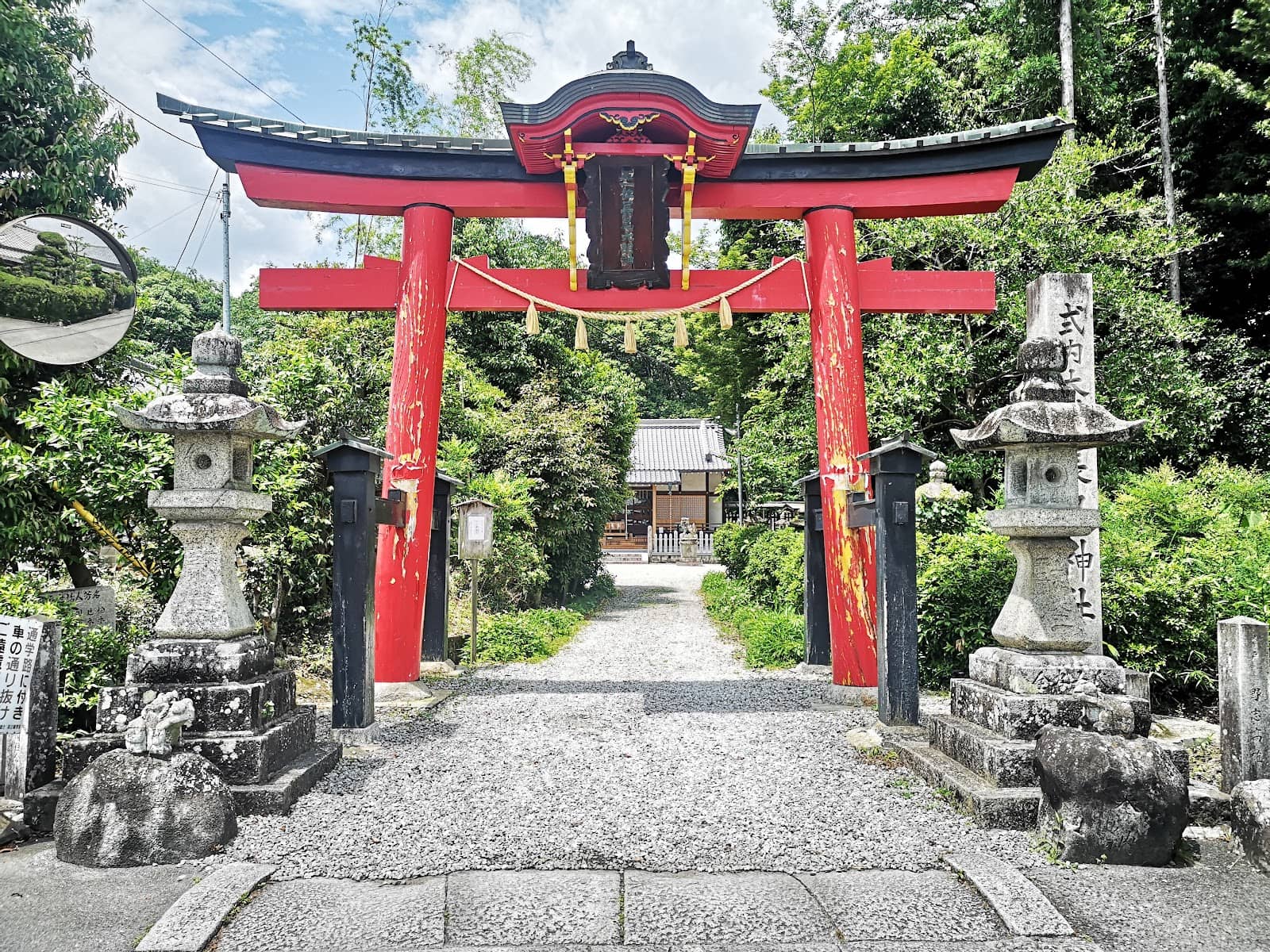
Distinctive Torii Gate
Entrance to the shrine grounds
A unique torii gate with a small roof, marking the entrance to the serene and clean shrine grounds.
Frog Statue
In front of the main hall
A charming stone statue of a frog, hinting at the shrine's connection to both snakes and frogs.
Plans like a pro.
Thinks like you
Planning Your Visit
Access & Parking
Deities & Blessings
Best Times
Insider Tips
from TikTok, Instagram & Reddit
Train is Best Bet
Take the train to Iwaki Station; parking is scarce. :train2:
Explore Nearby
Combine your visit with Taimadera Temple for a fuller experience. :temple_buddha:
Snake & Frog Lore
Learn about the shrine's snake and frog legends. :snake: :frog:
Votive Plaque Custom
See the unique Ema-den with special offerings for children. :gift:
Tips
from all over the internet
Train is Best Bet
Take the train to Iwaki Station; parking is scarce. :train2:
Explore Nearby
Combine your visit with Taimadera Temple for a fuller experience. :temple_buddha:
Snake & Frog Lore
Learn about the shrine's snake and frog legends. :snake: :frog:
Votive Plaque Custom
See the unique Ema-den with special offerings for children. :gift:
What Travellers Say
Reviews Summary
Visitors find Nagao Shrine to be a place of calm and historical significance, appreciating its unique legends and the serene atmosphere. The Ema-den and the shrine's connection to travel safety are often highlighted as points of interest. However, the lack of convenient parking is a recurring concern for those arriving by car.
"This ancient shrine enshrines Amaterasu Omikami and Toyouke Omikami. Suikohime-no-Mikoto and Shirakumo-wake-no-Mikoto are also enshrined here. The exact date of its founding is unknown, but it is believed to have become the main shrine in the 600s. Blessings include safety for the household and good health.
Legend has it that a snake is the incarnation of Omononushi-no-Mikoto, with the head representing Omikami Shrine and the tail representing Nagao Shrine.
The Nagao surname is said to have originated from the fact that this area was the birthplace of the powerful Nagao clan.
Enshrined at the intersection of several old roads, the shrine is also said to be the god of travel, as travelers would pray there for safety.
The grounds beyond the distinctive torii gate with a small roof are clean and pleasant to visit.
The highlight is the Ema-den, located to the right of the worship hall. It is unusually large, measuring just 50cm wide. It's unclear when it began, but in this area there is a custom of offering votive plaques when a child is born, and these are offered at the annual autumn festival. Incidentally, the designs offered for boys and girls are different.
No parking available. I couldn't find any place nearby where I could park on the street. There is a paid parking lot north, towards Iwaki Station. Motorbikes and bicycles can park there without any problems."
Ar Kn
"If you're coming by car, there's a coin parking lot just north of our shrine.
According to legend, there's a white snake stretching east to west across the Nara Basin, with our shrine on its tail and Omiwa Shrine on its head.
This may be a metaphor for a dragon vein or underground water vein.
The main deities are Amaterasu and Toyouke.
Then there are the two deities, Mizuhime (Mihikahime) and Shirakumowake (Shirakumowake),
daughter and father.
It's said that Mizuhime
was encountered by Kantake (Jinmu) in Yoshino during his eastern expedition,
and according to one theory, she is the mother of Yamato no Sukune no Mikoto (Shiinetsuhiko no Mikoto/Uzuhiko).
Her son, Shiinetsuhiko, was the governor of Tsukushi Province in Kyushu,
and met Kantake at Hayasui Gate (Toyo Strait) before his mother, who had left Miyazaki Jingu Shrine to continue his eastern expedition.
This suggests that the information network was surprisingly developed at the time.
If Shiinetsuhiko's father was Takeitate, then Takeitate and Suikohime may have been husband and wife.
Incidentally, Takeitate and Ugayafukiawasezu are likely half-brothers,
and from Shiinetsuhiko's perspective,
Watazumi Toyotamahiko would likely be his great-grandfather.
Shiinetsuhiko's seventh-generation grandson is said to be Nagaoichi, the first chief priest of Yamato Shrine.
Our shrine's enshrined deity, Suikohime,
could likely be one of the princesses who supported Ryugu, Kagoshima Shrine, and the Watatsumi family.
Suikohime. We don't know her lineage, but
she may have come all the way from Manai in Tango to Yoshino to investigate and supervise the mining of cinnabar.
As can be seen from her son, Shiine Tsuhiko, it seems that Princess Suiko also had ties to Tsukushi, Tango, and Yamato."
なかむらゆづき 624
"This shrine has a calm atmosphere.
Although it is a snake-related shrine, it is a nice place as there is a white tree frog on the steps in front of the main hall.
There is a stone statue of a frog in front of the shrine, so I wonder if frogs are enshrined as well as snakes?
If you are going here, it is best to take the train.
I don't think there is a parking lot.
You might be able to see a lot more if you stop by Taimadera Temple on the way back."
Kyle M
What People Like
What People Dislike
Frequently Asked Questions
🚇 🗺️ Getting There
The most convenient way to reach Nagao Shrine is by taking the Kintetsu Minami Osaka Line to Iwaki Station. From there, it's a short 5-minute walk south to the shrine.
Parking at Nagao Shrine is very limited. There is a paid coin parking lot located just north of the shrine, which is a better option if you are arriving by car. Street parking is generally not available.
Yes, public transport is recommended. Iwaki Station is accessible by train, and the shrine is a short walk away.
Travelers suggest taking the train to Iwaki Station as the primary mode of transport due to limited parking.
Yes, Taimadera Temple is a nearby attraction that visitors often combine with a trip to Nagao Shrine.
🎫 🎫 Tickets & Entry
Nagao Shrine is free to enter. There are no admission fees to explore the shrine grounds.
Shrine grounds are typically open during daylight hours. Specific opening and closing times are not usually posted, but it's best to visit during reasonable daytime hours.
No, tickets are not required, and advance booking is not necessary for Nagao Shrine as it is a public place of worship.
While the shrine is generally accessible, it's advisable to visit during daylight hours to fully appreciate the grounds and for safety.
As a place of worship, visitors are expected to be respectful. There are no specific entry restrictions mentioned, but general etiquette for visiting shrines should be followed.
🎫 ⛩️ Onsite Experience
Nagao Shrine is known for its historical significance, unique Ema-den hall, and legends involving snakes and frogs. It's also considered a god of travel.
The main deities are Amaterasu Omikami and Toyouke Omikami, along with Suikohime-no-Mikoto and Shirakumo-wake-no-Mikoto.
Visitors pray for household safety, good health, and safe travels, as it's considered a god of travel.
The Ema-den is an unusually large hall where votive plaques are offered, featuring distinct designs for boys and girls during the autumn festival.
Yes, there is a distinctive torii gate with a small roof and a stone statue of a frog in front of the main hall.
🎫 🐍 Legends & History
Nagao Shrine is linked to legends of a white snake, with the shrine representing the snake's tail and Miwa Myojin its head. Frogs are also associated with the shrine.
It's believed to have become the main shrine in the 600s and is the head shrine of five villages. It's listed in the Engishiki and was historically important as a strategic transportation hub.
The Nagao surname is said to have originated from this area, being the birthplace of the powerful Nagao clan.
Legend suggests that Miwa Myojin is the head of a snake, while Nagao Shrine is its tail, both facing opposite directions.
Amaterasu Omikami and Toyouke Omikami are the main deities. Suikohime-no-Mikoto, a water goddess, and Shirakumo-wake-no-Mikoto are also enshrined, with Suikohime linked to the Nagao clan.
For Different Travelers
Tailored advice for your travel style
👨👩👧 Families with Kids
While there isn't a playground, the historical and mythological aspects of the shrine provide a good opportunity for learning. Consider visiting during a less crowded time to allow children to wander and observe without feeling rushed. The nearby Taimadera Temple could also be a good addition to a family itinerary.
🚶 Solo Travelers & Day-Trippers
Plan to spend an hour or two exploring the grounds, admiring the Ema-den, and learning about the snake and frog lore. Combining your visit with Taimadera Temple can create a fulfilling half-day excursion. Remember to check train schedules for your return journey.
Deep Dives
In-depth insights and expert knowledge
The Legends of Nagao Shrine
These legends are intertwined with the shrine's history and the powerful Nagao clan, whose name is believed to originate from this very area. The enshrined deities, Suikohime-no-Mikoto and Shirakumo-wake-no-Mikoto, add further depth to these narratives. Suikohime, a water goddess, is particularly significant, with tales of her appearing from a well and being a guardian deity of the Nagao clan.
The shrine's strategic location at the intersection of ancient roads also contributes to its lore as a god of travel and safe passage. Travelers historically prayed here for protection on their journeys, reinforcing its spiritual importance beyond its local community.
Historical Significance and Rankings
The shrine's spiritual rank has evolved over centuries. It was recorded as Junior Fifth Rank Upper in 895, later elevated to Senior Second Rank in 1281, and finally to Senior First Rank in 1724. This progression signifies its growing importance and reverence within the region. The shrine also played a role in post-conflict reconciliation, with the entire Kuzushita district being donated to it after Emperor Tenmu's victory in the Jinshin War.
Furthermore, historical documents from 1713 mention the enshrinement of Mizumitsuhime-no-Mikoto and Shirakumo-wake-no-Mikoto, adding to the shrine's complex pantheon. The shrine's connection to the Nagao clan and its role as a spiritual center for the region underscore its enduring legacy.


Social
from TikTok, Instagram & Reddit