Tomb of Amunherkhepshef QV55
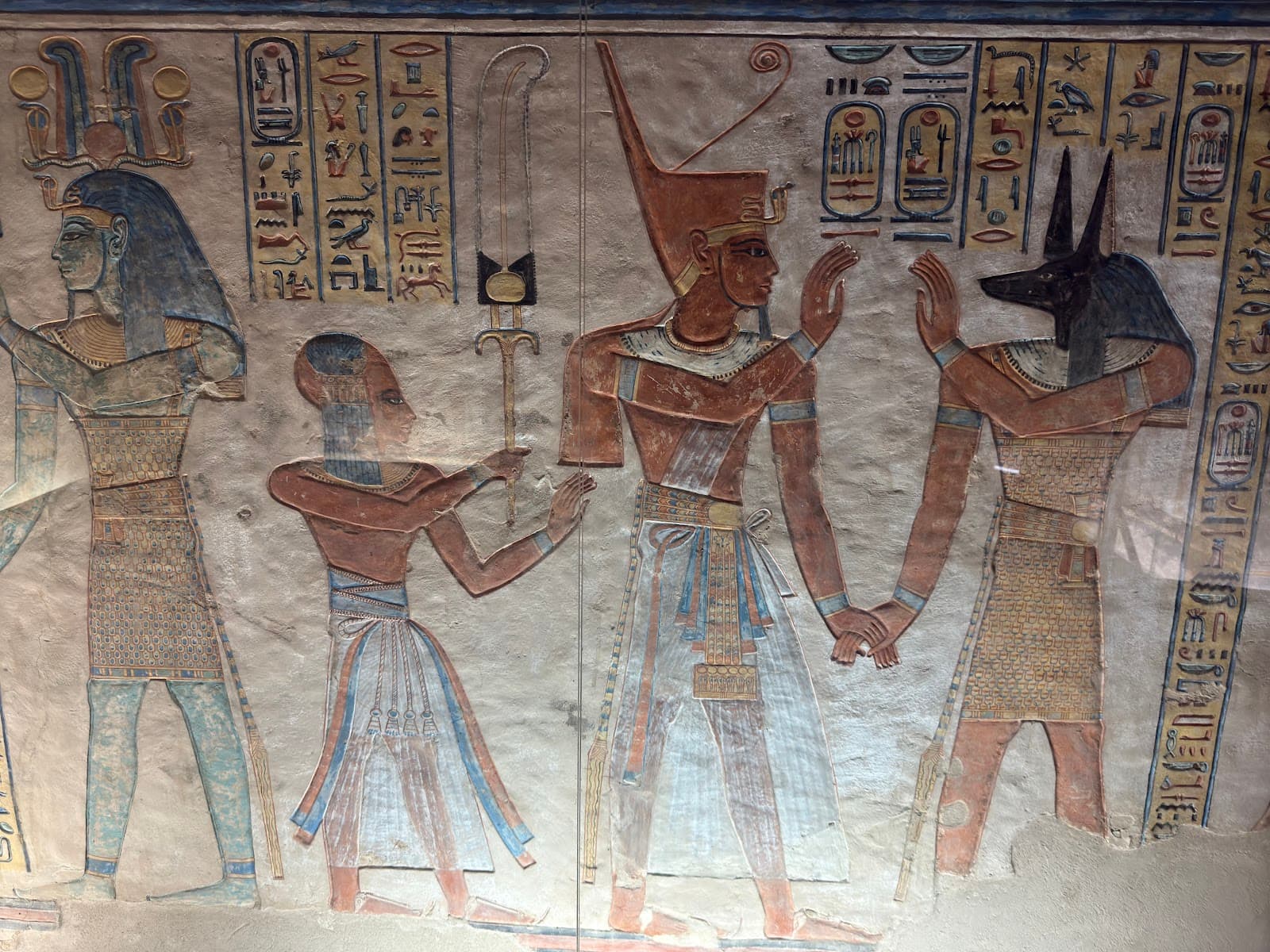
Discover the vibrant, well-preserved tomb of Prince Amun-her-khepeshef (QV55) in Luxor's Valley of the Queens.

Highlights
Must-see attractions

Social
From TikTok & Reddit
Best Time
Beat the heat and crowds
Tomb of Amunherkhepshef QV55
Best Time
Beat the heat and crowds
Highlights
Must-see attractions
Discover the vibrant, well-preserved tomb of Prince Amun-her-khepeshef (QV55) in Luxor's Valley of the Queens.
"Small but beautiful, with bright colors and traditional scenes from Ancient Egypt."

📸 Photography Tips
Plexiglass covers artwork; use a polarizing filter or shoot at an angle to reduce glare.
🚶♂️ Hire a Guide
Essential for understanding the tomb's rich history and symbolism.

Highlights
Discover the most iconic attractions and experiences
Vibrant Murals
Main burial chamber
Experience remarkably preserved ancient Egyptian art with vivid colors depicting royal and divine scenes.
Prince's Sarcophagus
Burial chamber
See the sarcophagus of Prince Amun-her-khepeshef, distinguished by the traditional pharaonic side lock of hair.

Human Foetus Display
Near the entrance
A unique and somber exhibit of a human foetus found in a nearby grave, offering a glimpse into ancient burial practices.
Plans like a pro.
Thinks like you
Planning Your Visit
Timing is Key for Amunherkhepshef
Understanding the Artwork
Best Times
Insider Tips
from TikTok, Instagram & Reddit
📸 Photography Tips
Plexiglass covers artwork; use a polarizing filter or shoot at an angle to reduce glare.
🚶♂️ Hire a Guide
Essential for understanding the tomb's rich history and symbolism.
💧 Stay Hydrated
The Valley of the Queens can be hot; carry plenty of water. :droplet:
👟 Comfortable Shoes
You'll be doing a lot of walking within the Valley. :athletic_shoe:
Tips
from all over the internet
📸 Photography Tips
Plexiglass covers artwork; use a polarizing filter or shoot at an angle to reduce glare.
🚶♂️ Hire a Guide
Essential for understanding the tomb's rich history and symbolism.
💧 Stay Hydrated
The Valley of the Queens can be hot; carry plenty of water. :droplet:
👟 Comfortable Shoes
You'll be doing a lot of walking within the Valley. :athletic_shoe:
What Travellers Say
Reviews Summary
Visitors find the Tomb of Amunherkhepshef to be a small but beautifully preserved tomb with remarkably vibrant colors. While the plexiglass covering the artwork can make photography tricky, the historical significance and unique displays, like the prince's sarcophagus and a human foetus, are highly appreciated. It's recommended for those seeking a quieter experience in the Valley of the Queens.
"Visited 31 October 2022.
One of the four tombs that was open to the public, this tomb was also discovered by Schiaparelli in 1904. The tomb, despite being totally looted over the ages, is in very good condition. It is only a small tomb much like the others in the valley, but the colours are vibrant and the princes sarcophagus also lies within the tomb.
QV55 belongs to Amen Khopshef, the eldest son of Queen Titi and Ramses III. The prince never succeeded his father instead dying when he was about 15 years old. He held the titles of Heir to the Throne, Royal Scribe, and Charioteer-in-Chief.
The prince can be distinguished with the traditional side lock of hair.
Please note that the art work in this tomb is covered by protective plexiglass so photography can be tricky."
S Hetherington
"Tomb of Amen Khopshef (QV55): Building royal tombs for princes in the Valley of the Queens began as a custom after the 20th Dynasty. The Tomb of Amen Khopshef was constructed by Ramesses III of the 20th Dynasty for his son, Amun-her-khepeshef. His mother was likely Titi, whose tomb is located right next door. The tomb’s murals mostly depict Ramesses III portraying himself both as pharaoh and as a divine father, guiding his deceased son to be introduced to the gods of the heavens."
詹頤
"Small but colourful tomb one of the current ones open in 2024 onwards. A lot has been put behind screens to preserve the artwork. Without a guide it would be very difficult to understand.
Worth a visit and valley of the queens is really quiet while Queen Nefertari tomb is closed. This allows you to enjoy the tombs at your own speed."
Luke
What People Like
What People Dislike
Frequently Asked Questions
🚇 🗺️ Getting There
The Tomb of Amunherkhepshef (QV55) is located in the Valley of the Queens, west of Luxor. You can hire a taxi or arrange a private tour from Luxor city. Many visitors combine a visit with other tombs in the Valley.
Yes, the Valley of the Queens is accessible by road. Taxis and tour buses are common modes of transport. It's generally quieter than the Valley of the Kings, offering a more relaxed experience.
Opening hours can vary, but generally, the Valley of the Queens is open from early morning until late afternoon. It's best to check current hours upon arrival or with your tour operator. :clock1:
The Luxor Pass often includes entry to various sites in Luxor, including the Valley of the Queens. Check the specific inclusions of your Luxor Pass to confirm access to QV55. :ticket:
Yes, there is usually a designated parking area for visitors at the entrance to the Valley of the Queens.
🎫 🎫 Tickets & Entry
Entry to the Valley of the Queens typically requires a separate ticket, which grants access to several tombs, including QV55. Ticket prices can change, so it's advisable to verify current costs at the ticket office.
Usually, the ticket for the Valley of the Queens covers entry to QV55. However, some exceptionally well-preserved tombs might require an additional ticket. Confirm this at the ticket counter.
While some major Egyptian attractions offer online booking, it's often more straightforward to purchase tickets on-site at the Valley of the Queens ticket office. :ticket:
Photography is generally allowed, but often without flash. The artwork in QV55 is covered by protective plexiglass, which can affect photo quality.
Buying tickets directly at the Valley of the Queens ticket office is the most common method. Be prepared with Egyptian Pounds or check if cards are accepted. :moneybag:
📸 📸 Photography
Given the low light and protective plexiglass, use a tripod if allowed (check rules), a wider aperture, and a higher ISO. Shooting at an angle can help minimize reflections from the plexiglass.
Flash photography is typically prohibited inside tombs to protect the ancient artwork. Always adhere to signage and guide instructions. :no_flash:
Try to position yourself to avoid direct reflections. A polarizing filter can also help cut down on glare. Shooting from a slight angle might also yield better results.
Focus on capturing the vibrant colors and detailed scenes. The sarcophagus area and walls with depictions of Ramses III are popular subjects.
A camera with good low-light performance and manual settings is ideal. Mirrorless or DSLR cameras are suitable, but even a good smartphone can capture decent shots if used wisely. :iphone:
🎫 🏛️ Onsite Experience
You'll find vibrant murals depicting Ramses III and his son, Amun-her-khepeshef, along with the prince's sarcophagus. The tomb is small but well-preserved.
While children can visit, the historical context might be complex. The human foetus display could be sensitive for younger children. A guide can help make it more engaging.
The tomb itself is small and can be explored in about 15-20 minutes. However, factor in time for travel within the Valley of the Queens and potential waiting times.
Yes, there are usually basic restroom facilities available near the entrance of the Valley of the Queens. :toilet:
The side lock of hair is a traditional symbol of youth and royalty in ancient Egypt, often depicted on young princes and gods.
For Different Travelers
Tailored advice for your travel style
👨👩👧 Families with Kids
🏛️ History Enthusiasts
📸 Photography Lovers
Deep Dives
In-depth insights and expert knowledge
The Royal Lineage of Amunherkhepshef
The tomb's artwork offers a unique perspective on the relationship between Ramses III and his son. Many murals depict the pharaoh not only as a ruler but also as a divine father, guiding Amun-her-khepeshef through the afterlife and introducing him to the gods. This imagery underscores the importance of familial bonds and the pharaoh's role in ensuring his son's eternal well-being. The prince is often identifiable by the distinctive side lock of hair, a common representation of youth and royalty in ancient Egyptian art.
While the tomb was unfortunately looted over the centuries, its structure and the remaining artwork are in remarkably good condition. The vibrant colors and detailed scenes provide invaluable insights into the funerary beliefs and artistic achievements of the New Kingdom period. The presence of the prince's sarcophagus within the tomb further enhances its historical significance, offering a tangible connection to this young royal figure.
Preservation Efforts and Visitor Experience
Visitors often find that the plexiglass can cause glare and reflections, making it difficult to capture clear images of the vibrant scenes. Photographers are advised to use techniques such as shooting at an angle, employing a polarizing filter, or utilizing a tripod (if permitted) to mitigate these issues. Despite these photographic hurdles, the visual impact of the tomb's artwork remains profound, offering a colorful glimpse into ancient Egyptian beliefs and royal life.
The tomb is described as small but beautiful, and its relative quietness compared to the Valley of the Kings allows for a more personal and unhurried exploration. This tranquility, especially during off-peak seasons like winter or early spring, enhances the visitor's ability to appreciate the tomb's details and historical significance. The inclusion of a human foetus display, found in a nearby grave, adds another layer of interest, providing a rare insight into ancient burial practices.


Social
from TikTok, Instagram & Reddit