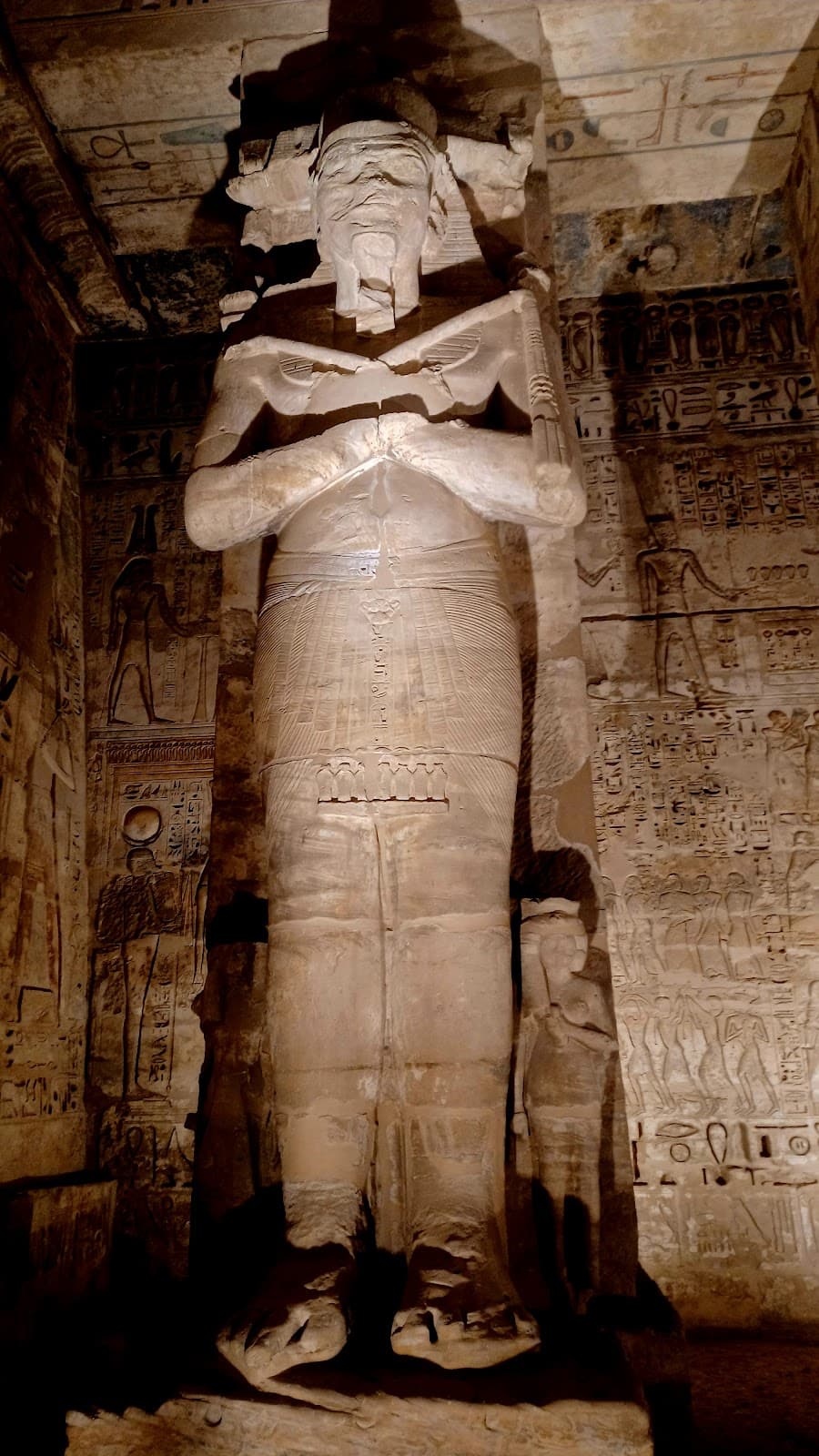
Medinet Habu Temple of Ramesses III
Explore the Mortuary Temple of Ramesses III, a remarkably preserved ancient Egyptian marvel with vibrant colors and detailed reliefs.

Highlights
Must-see attractions

Social
From TikTok & Reddit
Best Time
Escape the heat and crowds
Medinet Habu Temple of Ramesses III
Best Time
Escape the heat and crowds
Highlights
Must-see attractions
Explore the Mortuary Temple of Ramesses III, a remarkably preserved ancient Egyptian marvel with vibrant colors and detailed reliefs.
"The original colors and detailed reliefs at Medinet Habu are a breathtaking glimpse into ancient Egyptian history."
🎯 Hire a Local Guide
Enhance your visit with a guide to understand the temple's history and reliefs. :bustsinsilhouette:
💧 Stay Hydrated
Luxor can be very hot. Carry plenty of water, especially during warmer months. :droplet:

Highlights
Discover the most iconic attractions and experiences
Vibrant Original Colors
Various walls and ceilings
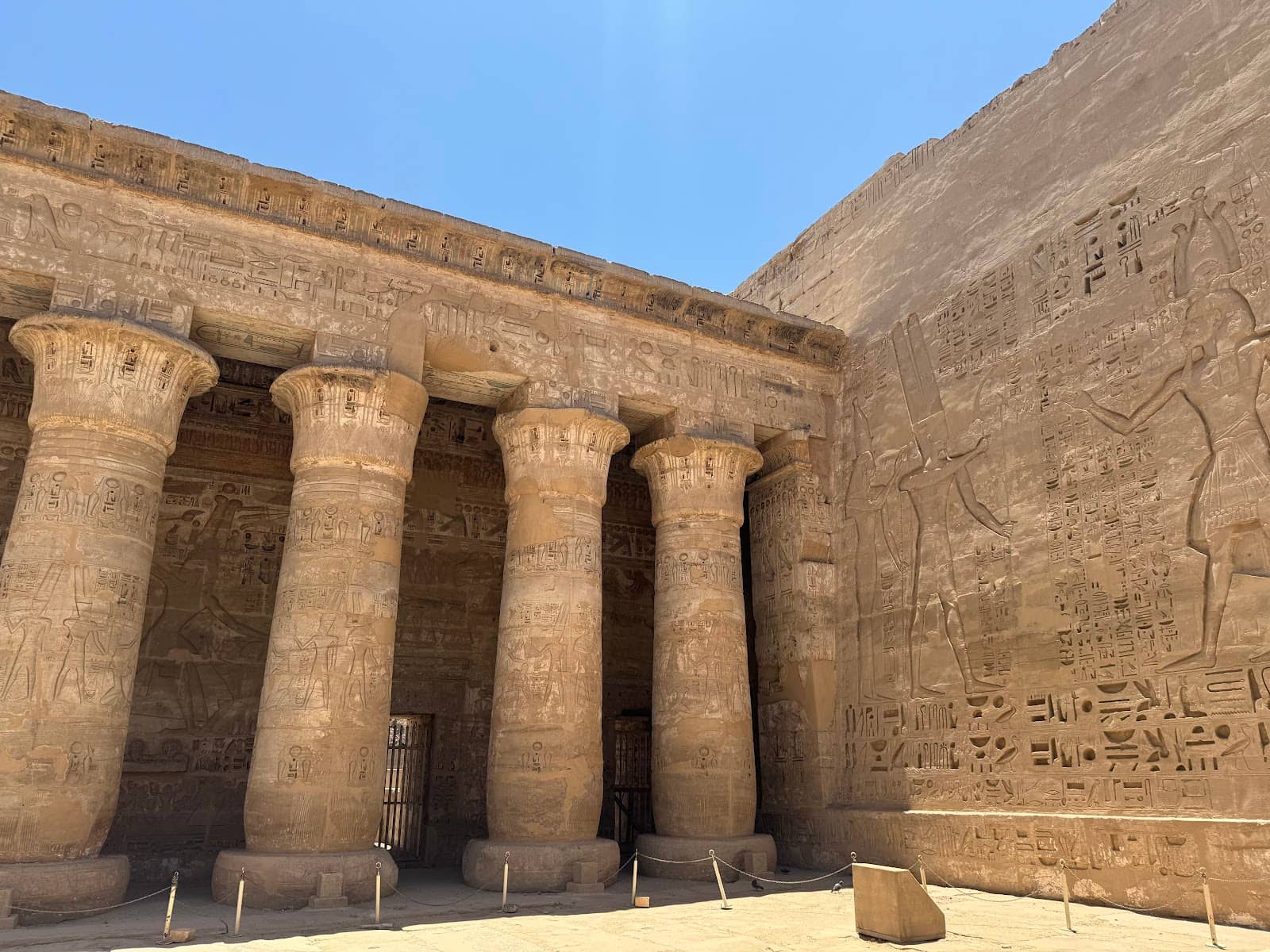
Marvel at the remarkably preserved original colors on the temple's reliefs, offering a glimpse into ancient Egyptian artistry.
Ramesses III's Military Victories
Outer walls
Witness detailed bas-reliefs depicting Ramesses III's triumphs, including his battles against the Sea Peoples.

The Syrian Gate
Entrance
Explore the unique Syrian Gate, an architectural element that stands out among the temple's other features.
Usurped Statuary
Courtyards and halls
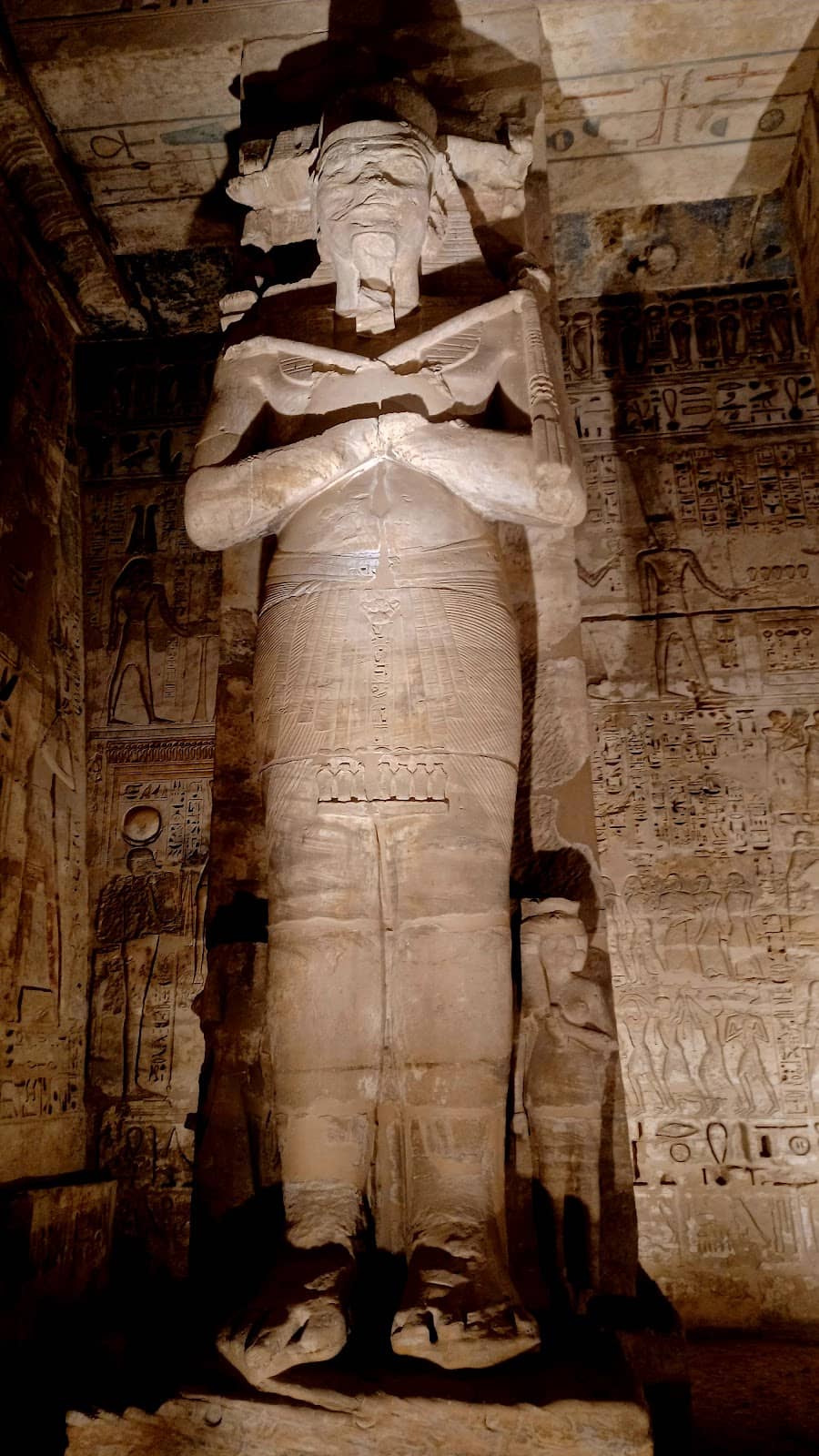
Discover impressive granite statues, many originally from Amenhotep III's era, later re-inscribed by Ramesses III.
Plans like a pro.
Thinks like you
Planning Your Visit
Beat the Heat and Crowds
Unlocking the Details
Best Times
Insider Tips
from TikTok, Instagram & Reddit
🎯 Hire a Local Guide
Enhance your visit with a guide to understand the temple's history and reliefs. :bustsinsilhouette:
💧 Stay Hydrated
Luxor can be very hot. Carry plenty of water, especially during warmer months. :droplet:
👟 Comfortable Footwear
You'll be doing a lot of walking on uneven surfaces. Wear comfortable shoes! :athletic_shoe:
📸 Capture the Colors
Don't miss the chance to photograph the vibrant, original colors on the temple walls. :camerawithflash:
Tips
from all over the internet
🎯 Hire a Local Guide
Enhance your visit with a guide to understand the temple's history and reliefs. :bustsinsilhouette:
💧 Stay Hydrated
Luxor can be very hot. Carry plenty of water, especially during warmer months. :droplet:
👟 Comfortable Footwear
You'll be doing a lot of walking on uneven surfaces. Wear comfortable shoes! :athletic_shoe:
📸 Capture the Colors
Don't miss the chance to photograph the vibrant, original colors on the temple walls. :camerawithflash:
⏳ Allow Ample Time
Give yourself at least 2-3 hours to explore this vast and detailed archaeological site. :hourglass:
What Travellers Say
Reviews Summary
Visitors consistently praise Medinet Habu for its impressive scale and the remarkable preservation of its original colors and detailed reliefs. Many highlight the value of having a guide to fully understand the historical narratives depicted. While generally well-received, some find the site can be very hot and recommend visiting during cooler parts of the day.
"Very nice, especially if you have a guide to explain to you."
mohamad abdallah
"An archaeological site dating back thousands of years"
محلات الحاج محمد ابو طالب
"The Pharaonic Egyptian ruins are a miracle of the world"
بهاءالدين رمضان
What People Like
What People Dislike
Frequently Asked Questions
🚇 🗺️ Getting There
Medinet Habu Temple is located on the West Bank of Luxor. You can reach it by taxi, private car, or by taking a ferry across the Nile and then a taxi or local transport. Many day tours from Luxor include Medinet Habu as part of a larger West Bank itinerary. +1
It's on the West Bank, a bit further south than the Valley of the Kings and Hatshepsut's Temple, but often visited together on West Bank tours. +1
Taxis are readily available, but agree on a price beforehand or hire a driver for the day. Some visitors opt for bicycles for shorter distances, but the heat can be a factor. +1
Absolutely! Medinet Habu is a common stop on comprehensive West Bank day tours from Luxor, often combined with other major sites. +1
If you're not on a tour, consider hiring a driver for the day to efficiently visit multiple West Bank sites, including Medinet Habu.
🎫 🎫 Tickets & Entry
Medinet Habu Temple typically opens around 6:00 AM and closes around 5:00 PM. It's best to check the most current hours before your visit, as they can vary seasonally.
Ticket prices for Egyptian archaeological sites can change. As of recent information, a ticket for Medinet Habu is usually around 100 EGP for foreigners. It's advisable to confirm the current price upon arrival or through official tourism channels.
While not always strictly necessary, purchasing tickets in advance can save time, especially during peak tourist seasons. You can often buy them at the site's ticket office.
Yes, there are often combined tickets available that cover multiple sites on the West Bank, which can be more economical if you plan to visit several attractions. Inquire at the ticket office.
General photography is usually allowed, but tripods and professional video equipment might require special permits. Always check local regulations upon entry.
🎫 🏛️ Onsite Experience
Medinet Habu is renowned for its remarkably preserved mortuary temple of Ramesses III, featuring vibrant original colors, detailed reliefs of military victories, and impressive architecture.
Don't miss the detailed bas-reliefs depicting Ramesses III's battles, the unique Syrian Gate, the colossal statues, and the surviving original colors on the walls and ceilings.
Yes, a guided tour is highly recommended to fully appreciate the historical context and intricate details of the temple's reliefs and architecture.
Most visitors spend around 2-3 hours exploring Medinet Habu to see its main features and appreciate the scale of the complex.
Basic facilities like restrooms are usually available. It's always a good idea to carry your own water and snacks, as options inside the site can be limited.
📸 📸 Photography
The outer walls with the battle reliefs, the inner courtyards with the statues, and any areas where the original colors are still visible offer fantastic photo opportunities.
Drone photography is generally prohibited in most archaeological sites in Egypt, including Medinet Habu, for security and preservation reasons.
Early morning or late afternoon provides softer light, ideal for photography. The golden hour can create dramatic shadows and highlight the temple's textures.
Yes, close-up photos of hieroglyphs and reliefs are generally permitted, but avoid touching the carvings.
Focus on capturing the scale of the temple, the intricate details of the reliefs, and the surviving colors. Wide-angle lenses are useful for the grand structures. +1
For Different Travelers
Tailored advice for your travel style
👨👩👧 Families with Kids
🏛️ History Buffs & Archaeology Enthusiasts
Pay close attention to the detailed bas-reliefs that document Ramesses III's campaigns, especially the conflict with the Sea Peoples. The usurpation of earlier works by Ramesses III offers a unique perspective on pharaonic power and legacy. The preservation of original colors is a significant draw, allowing for a more authentic understanding of ancient aesthetics.📸 Photographers
The golden hour light in the late afternoon casts a beautiful glow on the sandstone, enhancing textures and creating dramatic shadows.Deep Dives
In-depth insights and expert knowledge
The Mortuary Temple of Ramesses III
It served as a place of worship for the god Amun and a memorial to the pharaoh himself. The temple complex is one of the largest and best-preserved in Egypt, offering a comprehensive look into the religious and military life of the era. Its sheer scale and the intricate details carved into its walls make it a truly awe-inspiring site.What sets Medinet Habu apart is the remarkable preservation of its original colors.
Beyond its religious function, Medinet Habu is a historical chronicle. The bas-reliefs on the outer walls vividly depict Ramesses III's military campaigns, most notably his victory over the 'Sea Peoples'.
These detailed carvings offer crucial insights into the geopolitical landscape of the late Bronze Age and the pharaoh's efforts to defend Egypt. The temple also features a unique Syrian Gate, an architectural element that hints at foreign influences or interactions during Ramesses III's reign.Architectural Marvels and Usurpation
One of the most striking features is the unique Syrian Gate, an unusual addition that sets it apart from other temples in the region. This gate, along with other architectural elements, suggests a complex history of construction and adaptation over time.A fascinating aspect of Medinet Habu is the phenomenon of usurpation. Many of the impressive granite statues and inscriptions found within the temple were originally created for Amenhotep III, Ramesses III's predecessor.
Ramesses III later had these works re-inscribed with his own cartouches and moved them to his temple. This practice highlights the pharaohs' desire to associate themselves with the achievements of their predecessors and to solidify their own legacy. The depth of Ramesses III's cartouches, carved an astonishing seven inches deep, is also a point of discussion, with some suggesting it was to ensure eternal remembrance.The temple complex also bears witness to later periods. Evidence of Coptic additions can be found, indicating the site's continued use and adaptation by different cultures throughout history.
This layering of history adds another dimension to the exploration of Medinet Habu, revealing its enduring significance across millennia.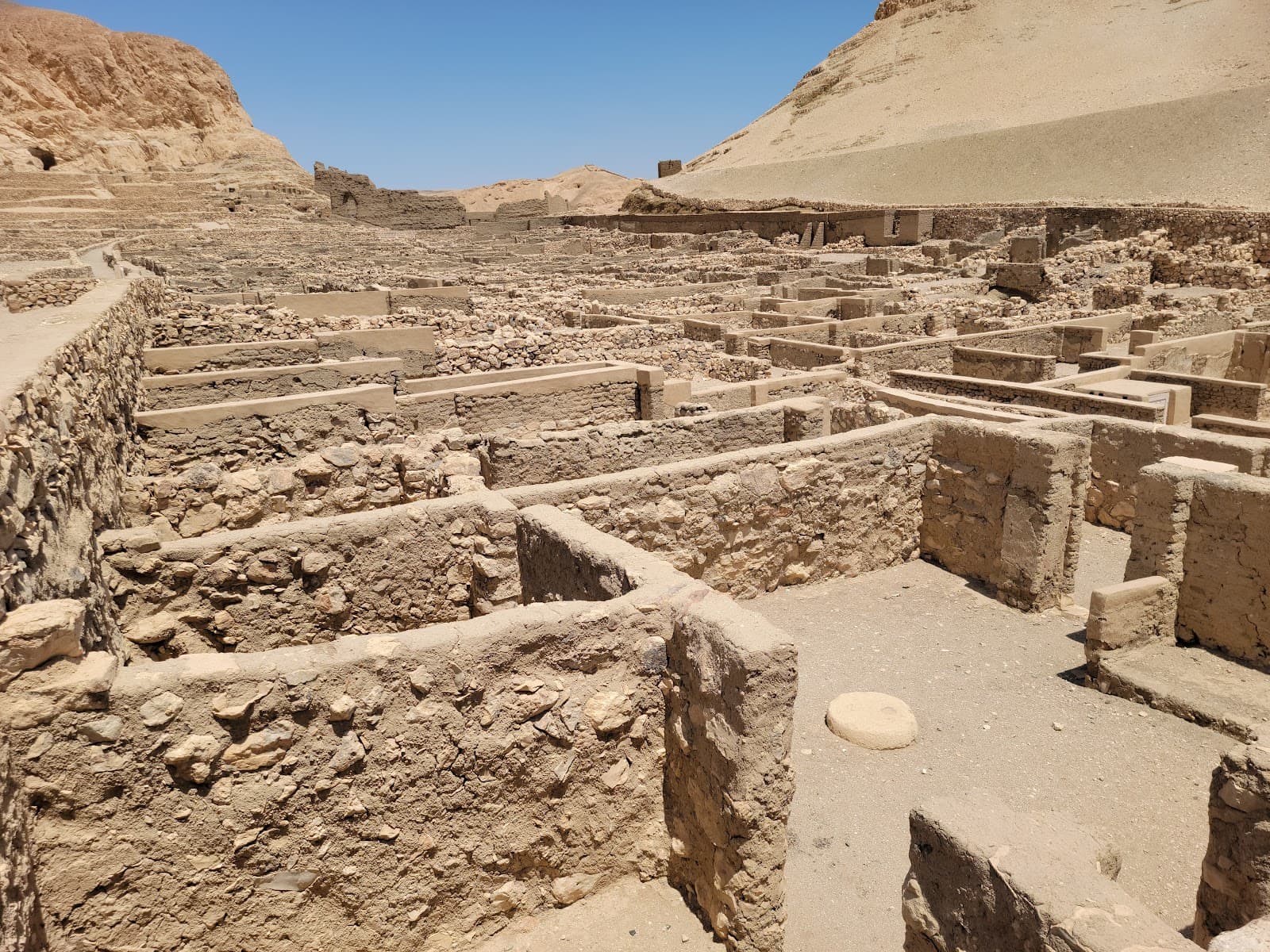

Social
from TikTok, Instagram & Reddit