
Great Holland Pits Nature Reserve
A tranquil nature reserve with diverse habitats, ideal for wildlife spotting, photography, and peaceful walks.
Highlights
Must-see attractions

Social
From TikTok & Reddit
Best Time
Dragonflies, baby birds, insects
Great Holland Pits Nature Reserve
Best Time
Dragonflies, baby birds, insects
Highlights
Must-see attractions
A tranquil nature reserve with diverse habitats, ideal for wildlife spotting, photography, and peaceful walks.
"Lovely nature reserve for children and adults who enjoy long walks and wildlife."
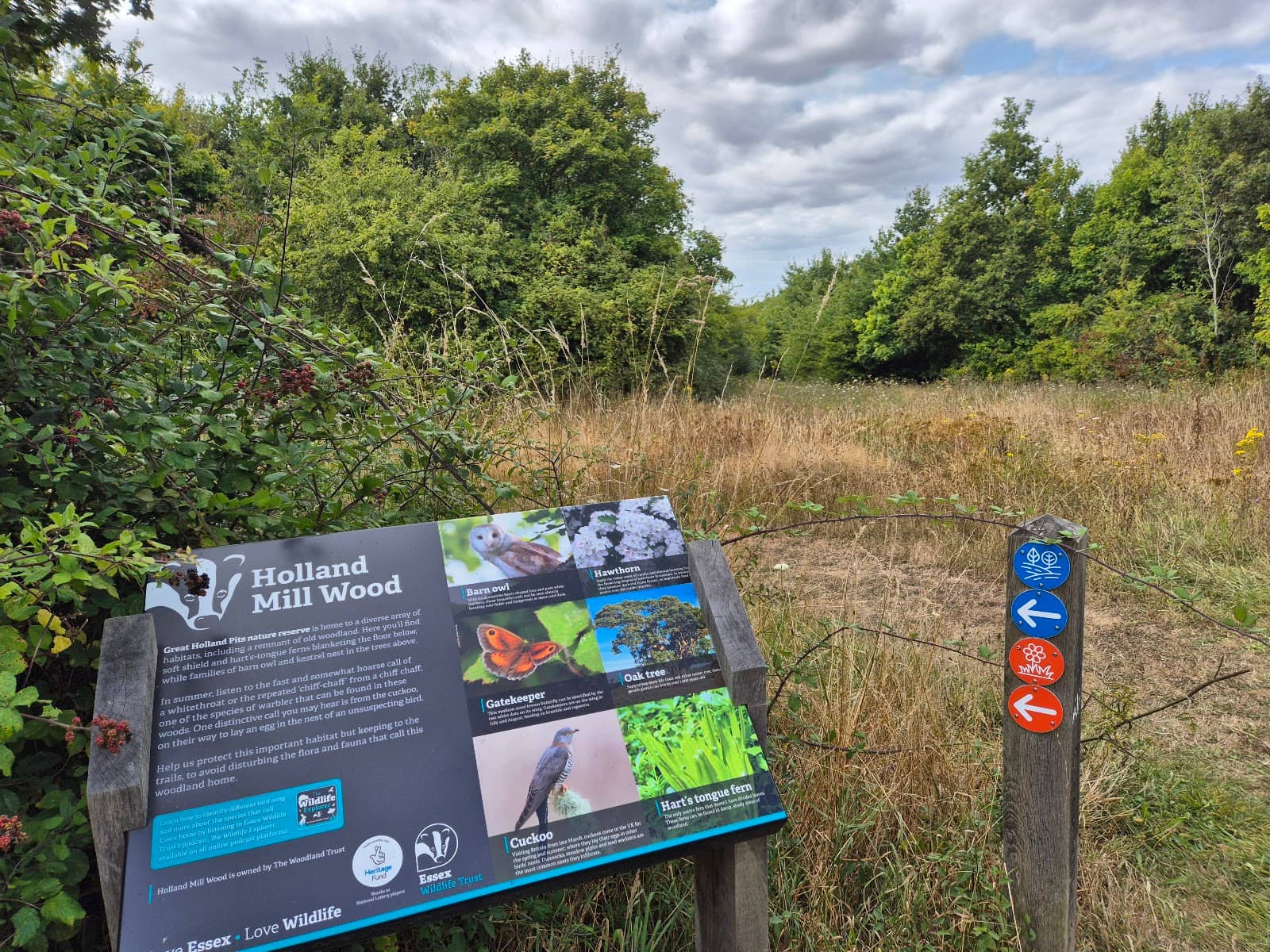
🚗 Small Car Park Alert
The car park is small and the entrance sign is set back. Look carefully for the Essex Wildlife Trust sign!
👢 Be Prepared for Mud
It can get muddy after rain, so wear appropriate footwear. Stick to the main paths for drier routes.

Quick Facts
Hours
Rating
4.5 · 83 reviews
Type
Park
Highlights
Discover the most iconic attractions and experiences
Dragonfly & Butterfly Rides
Designated areas
Vibrant meadows buzzing with life, perfect for spotting dragonflies and butterflies in warmer months.
Wildlife Hide
Near the pond
A quiet spot to observe birds and other wildlife, though sightings can vary. Great for birdwatchers.

Woodland & Pasture Walks
Red and blue routes
Enjoy scenic walks through varied habitats, from lightly wooded areas to open pastures with expansive skies.
Fungi Finds
Wooded areas
Discover a variety of mushrooms, especially in autumn. Remember to admire but not touch toxic varieties.
Plans like a pro.
Thinks like you
Planning Your Visit
Parking & Access
Best for Wildlife Spotting
Best Times
Insider Tips
from TikTok, Instagram & Reddit
🚗 Small Car Park Alert
The car park is small and the entrance sign is set back. Look carefully for the Essex Wildlife Trust sign!
👢 Be Prepared for Mud
It can get muddy after rain, so wear appropriate footwear. Stick to the main paths for drier routes.
🐍 Snake Spotting (with caution)
You might spot grass snakes or adders if you're lucky. Always be mindful of your surroundings.
🍄 Fungi Fun (Don't Eat!)
Autumn brings a fantastic display of fungi. Admire their beauty, but avoid touching or eating them. 
Tips
from all over the internet
🚗 Small Car Park Alert
The car park is small and the entrance sign is set back. Look carefully for the Essex Wildlife Trust sign!
👢 Be Prepared for Mud
It can get muddy after rain, so wear appropriate footwear. Stick to the main paths for drier routes.
🐍 Snake Spotting (with caution)
You might spot grass snakes or adders if you're lucky. Always be mindful of your surroundings.
🍄 Fungi Fun (Don't Eat!)
Autumn brings a fantastic display of fungi. Admire their beauty, but avoid touching or eating them.
🚫 Pack Out Your Rubbish
Help keep the reserve clean by taking all your litter home, especially from areas like the hide.
📸 Wildlife Photography Tips
Patience is key for capturing wildlife. Early mornings and late afternoons can be best for light and activity.
🦎 Slow Worms are Lizards!
Don't be fooled by their name; slow worms are legless lizards, often spotted in the reserve.
What Travellers Say
Reviews Summary
Visitors praise Great Holland Pits for its peaceful atmosphere and diverse wildlife, making it a lovely spot for walks and nature observation. While the small car park and occasional muddy paths are noted, the beauty of the habitats and the chance to see creatures like slow worms and fungi are significant draws. It's a well-managed reserve that offers a rewarding experience for families and photographers alike.
"Great Holland Pits had been on our list for a whole, and finally we got a chance to visit and have a walk round.
Firstly there is a car park, but it's small... and also unless your looking for it, you'll miss the entrance as the Essex Wildlife sign is set back quite a way from the road!
The map next to the car park gives you a fair idea of what is available at the pits, and the red and blue walk are both fairly solid ground. One of the routes does involve some steps, albeit not many! There is also a few other paths that you can take if you want to explore a bit more, although the site itself isn't massive.
We had a lovely walk, although agree with some other reviewers - it was disappointing to see that some dog owners hadn't picked up after their dogs, and that some people do not take their rubbish home with them (the hide for example had someone's left over take away rubbish in it).
Would certainly visit again for a walk, and if you have small children then it's certainly not going to be too much for them. There is no facilities so just need to factor that in before visiting!"
Andrew Cartwright
"Lovely nature reserve for children and adults (possibly wheelchair users if sticking to hard ground areas but not in wet months) who enjoy long walks and wildlife. Bit muddy in places after it's been raining, but there are still good pathways to avoid most of the muddy ways. It will be better for wildlife spotting in late spring and early summer when dragonflies emerge, more insects to see and baby birds to hear. They say there's a Kingfisher on one of the ponds, but it's knowing the right time to see this. There are Adder and Grass snakes 🐍 if lucky enough to spot one but take care when walking freely. We came across a small hide but no waterfowl, which was a little disappointing. It would be good to have seen more birds but could hear plenty, especially the Chiffchaff. Great place to visit and enjoy a relaxing walk in nature."
Sonia Tucker
"Well managed and quite varied habitats with a pond and hide, rides for butterflies and dragonflies and lightly wooded areas. It’s adjacent to agricultural fields with open skies to view buzzard etc."
Graham Armitage
What People Like
What People Dislike
Frequently Asked Questions
🚇 🗺️ Getting There
The reserve is located near Clacton-on-Sea in Essex. The car park is small and the entrance sign can be easily missed, so keep an eye out for the Essex Wildlife Trust sign.
Yes, there is a small car park on-site. It can fill up quickly, especially during peak times.
Information on public transport access is limited, but it's advisable to check local bus routes serving the Clacton-on-Sea area and be prepared for a walk from the nearest stop.
The red and blue routes are generally solid ground and may be suitable for wheelchairs, but it can get muddy after rain, which might make access difficult.
As a nature reserve, it is generally accessible during daylight hours. It's managed by Essex Wildlife Trust, so checking their website for any specific access information is recommended.
🎫 🎫 Tickets & Entry
Great Holland Pits is a nature reserve managed by Essex Wildlife Trust. Entry is typically free, but donations are welcomed to support conservation efforts.
No, there is no entrance fee to visit Great Holland Pits Nature Reserve. It's a public access area for everyone to enjoy.
There are no facilities such as toilets or cafes on-site. Visitors are advised to bring their own refreshments and plan accordingly.
Dogs are generally welcome, but it's important to keep them under control and clean up after them to protect the wildlife and other visitors.
The reserve is generally safe for walking. However, be aware of muddy patches after rain and take care if you encounter any wildlife like snakes.
📸 📸 Photography
Late spring and early summer are excellent for dragonflies and baby birds. Autumn offers great opportunities for fungi photography. Early mornings and late afternoons often provide the best light.
You can photograph a variety of wildlife including dragonflies, butterflies, various bird species (including potential kingfishers), slow worms, grass snakes, and fungi. +2
Yes, there is a wildlife hide near the pond which is a good spot for birdwatching photography. You can also hear many bird species throughout the reserve.
Drone usage is typically restricted in nature reserves to avoid disturbing wildlife. It's best to check with Essex Wildlife Trust for their specific policy.
A telephoto lens is useful for wildlife photography, especially for birds and snakes. A macro lens can be great for fungi and insects.



Social
from TikTok, Instagram & Reddit