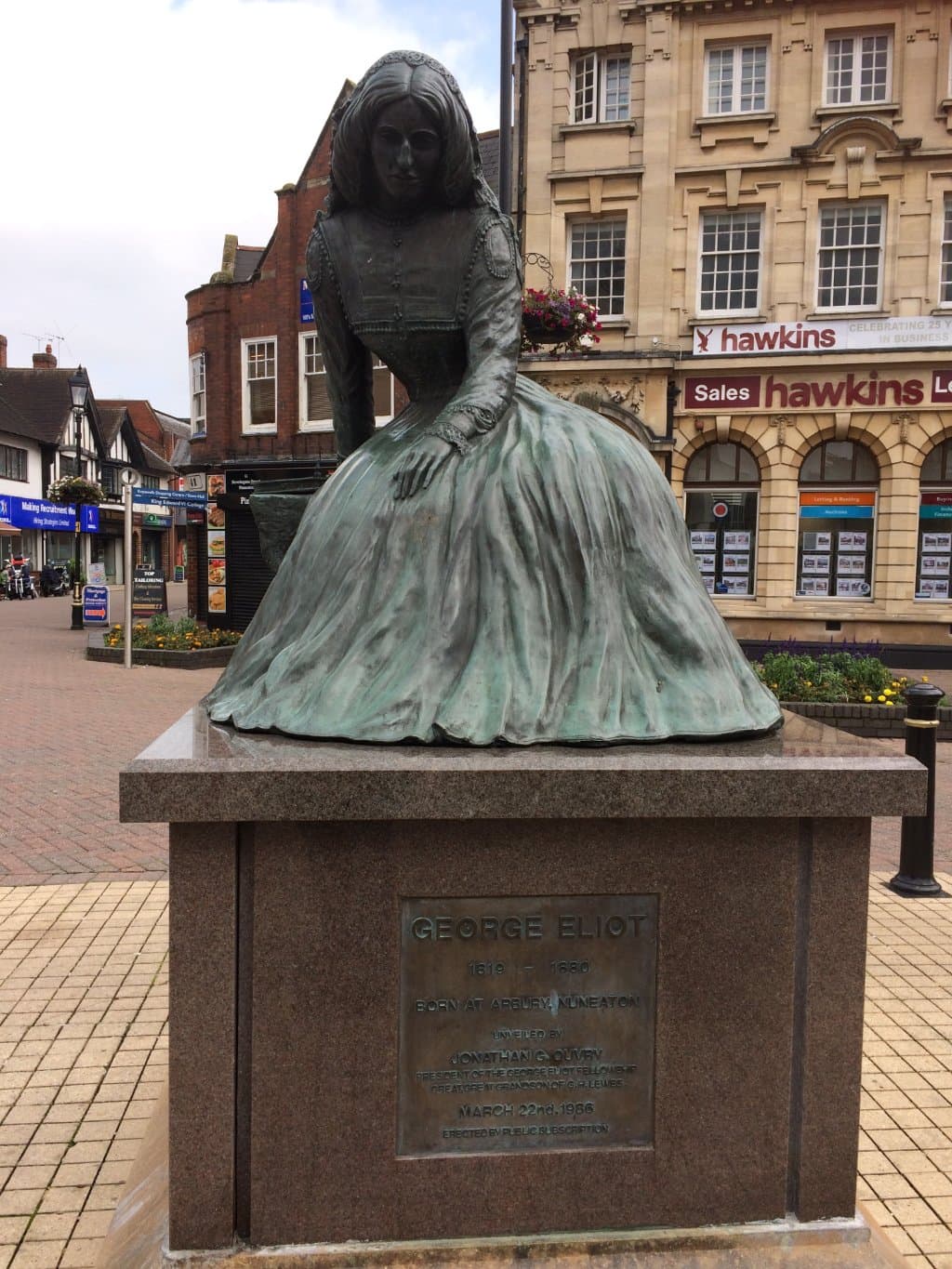
George Eliot Statue
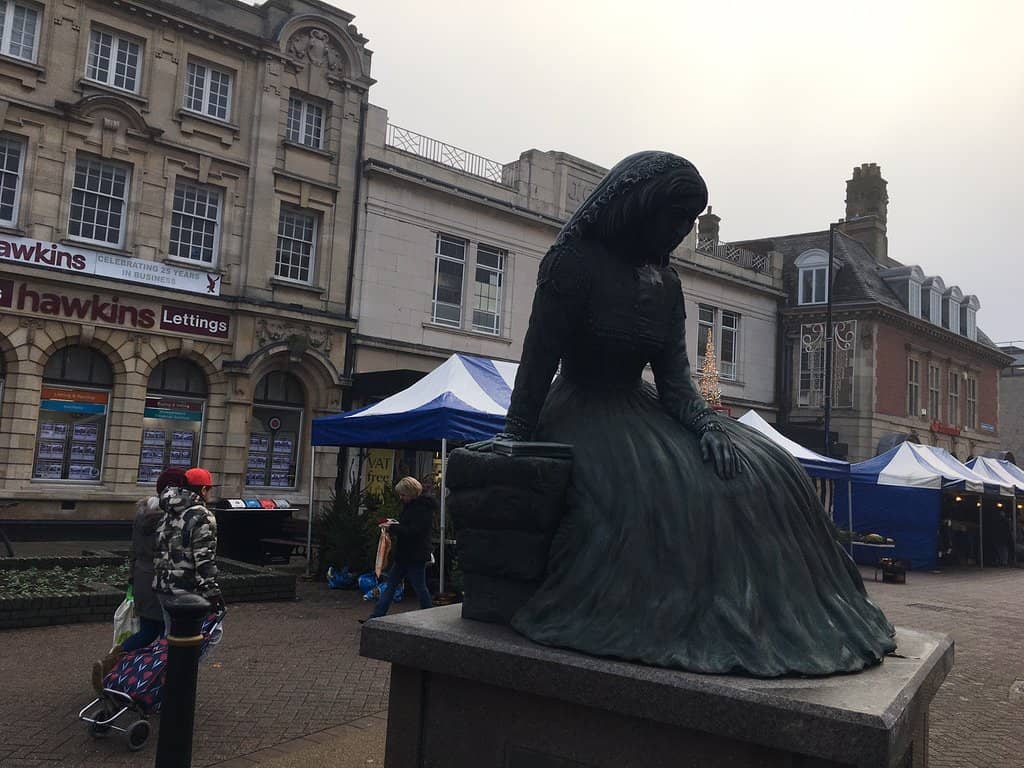
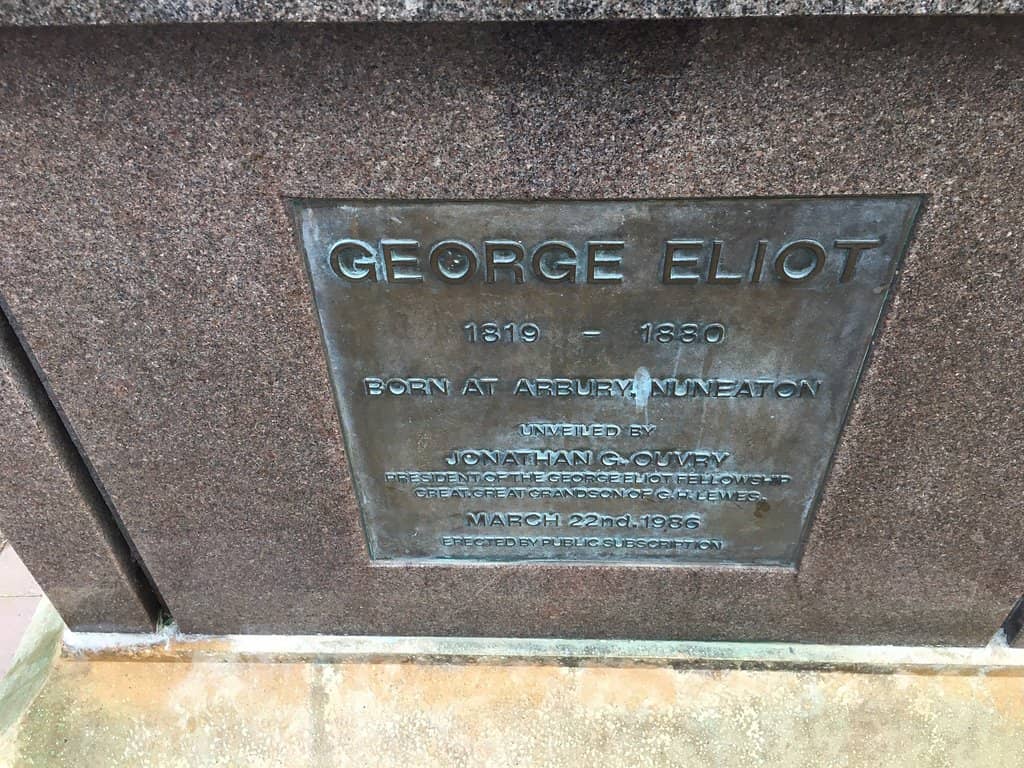
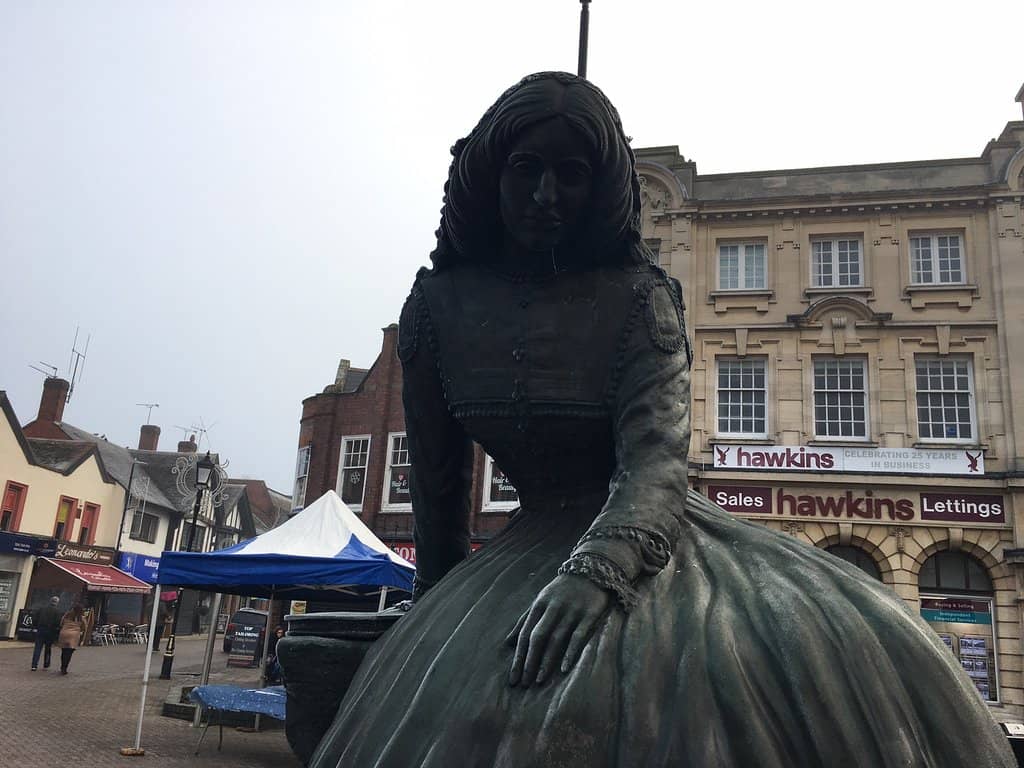
A tribute to George Eliot (Mary Ann Evans), a pioneering Victorian novelist whose pen name defied societal norms and enriched English literature.
Highlights
Must-see attractions

Social
From TikTok & Reddit
Best Time
Best for viewing and photos
George Eliot Statue
Best Time
Best for viewing and photos
Highlights
Must-see attractions
A tribute to George Eliot (Mary Ann Evans), a pioneering Victorian novelist whose pen name defied societal norms and enriched English literature.
"A poignant reminder of Nuneaton's literary heritage and a pioneering female author."
Discover the Author's Story
Learn about Mary Ann Evans's life and why she chose a male pen name to be taken seriously as a writer. :book:
Connect with Local Heritage
The statue is a significant local landmark, celebrating Nuneaton's rich literary history. :flag_gb:
Highlights
Discover the most iconic attractions and experiences
George Eliot Memorial Statue
Nuneaton, Warwickshire
A poignant tribute to the celebrated Victorian novelist Mary Ann Evans, known by her pen name George Eliot.
Plans like a pro.
Thinks like you
Planning Your Visit
Understand the Legacy
Local Landmark Significance
Best Times
Insider Tips
from TikTok, Instagram & Reddit
Discover the Author's Story
Learn about Mary Ann Evans's life and why she chose a male pen name to be taken seriously as a writer. :book:
Connect with Local Heritage
The statue is a significant local landmark, celebrating Nuneaton's rich literary history. :flag_gb:
Explore Warwickshire's Writers
This statue is part of a broader tapestry of literary figures from the Warwickshire region. :map:
Tips
from all over the internet
Discover the Author's Story
Learn about Mary Ann Evans's life and why she chose a male pen name to be taken seriously as a writer. :book:
Connect with Local Heritage
The statue is a significant local landmark, celebrating Nuneaton's rich literary history. :flag_gb:
Explore Warwickshire's Writers
This statue is part of a broader tapestry of literary figures from the Warwickshire region. :map:
What Travellers Say
Reviews Summary
Visitors appreciate the George Eliot Statue as a significant local landmark honoring a celebrated Victorian author. It serves as a poignant reminder of Nuneaton's literary heritage and the historical context of women in literature. While a relatively simple monument, it sparks interest in the author's life and works.
"Statue tomlical author "George Eliot" (Mary Ann Evans)."
Karen B
"The statue is part of Nuneaton's heritage and serves as a local landmark as well as a beautiful reminder of not only a famous author but also how times have changed. George Eliot was a nom du plume as it was frowned upon and very difficult to get published as a woman. A story worth investigating and a great reminder of this hugely popular and significant author."
David Betts
"Mary Ann Evans (22 November 1819 – 22 December 1880; alternatively Mary Anne or Marian[citation needed]), known by her pen name George Eliot, was an English novelist, poet, journalist, translator and one of the leading writers of the Victorian era. She wrote seven novels, Adam Bede (1859), The Mill on the Floss (1860), Silas Marner (1861), Romola (1862–63), Felix Holt, the Radical (1866), Middlemarch (1871–72) and Daniel Deronda (1876), most of which are set in provincial England and known for their realism and psychological insight.
Although female authors were published under their own names during her lifetime, she wanted to escape the stereotype of women's writing being limited to lighthearted romances. She also wanted to have her fiction judged separately from her already extensive and widely known work as an editor and critic. Another factor in her use of a pen name may have been a desire to shield her private life from public scrutiny, thus avoiding the scandal that would have arisen because of her relationship with the married George Henry Lewes.
Middlemarch has been described by the novelists Martin Amis and Julian Barnes as the greatest novel in the English language.
from Wikipedia"
Herstorical Monuments
What People Like
What People Dislike
Frequently Asked Questions
🚇 🗺️ Getting There
The George Eliot Statue is located in Nuneaton, Warwickshire. It's easily accessible by public transport, with Nuneaton train station being a central hub. Local buses also serve the town center where the statue is situated. :train: :bus:
Yes, there are several car parks available in Nuneaton town center, making it convenient for visitors arriving by car. :car:
🎫 🎫 Tickets & Entry
No, the George Eliot Statue is a public monument and can be viewed freely at any time. :free:
The statue is best viewed during daylight hours for optimal photography and to appreciate its details. :camera:
🎫 🏛️ Onsite Experience
The statue honors Mary Ann Evans, the renowned Victorian novelist who wrote under the pen name George Eliot. It celebrates her literary achievements and her connection to Nuneaton. :writing_hand:
Absolutely! Visitors are encouraged to take photos of the statue as a memento of their visit. :iphone:
The statue is located in Nuneaton town center, offering opportunities to explore local shops, cafes, and other historical points of interest. :shopping_cart: :coffee:
🎫 📚 About George Eliot
George Eliot was the pen name of Mary Ann Evans (1819-1880), a prominent English novelist of the Victorian era. She is celebrated for her realistic portrayals of provincial life and deep psychological insight in novels like 'Middlemarch' and 'The Mill on the Floss'. :books:
Mary Ann Evans adopted the pen name George Eliot to escape the societal stereotypes associated with female authors and to have her work judged on its literary merit, separate from her gender and personal life. :closedlockwith_key:
Her most acclaimed novels include 'Adam Bede', 'The Mill on the Floss', 'Silas Marner', and 'Middlemarch', the latter often cited as one of the greatest novels in the English language. :star:
For Different Travelers
Tailored advice for your travel style
Literary Enthusiasts
Nuneaton itself holds historical significance for Eliot, being the setting for some of her most beloved stories. Exploring the town can offer a deeper connection to the author's life and inspirations, making the visit a rich, immersive experience for any literary buff. :books: :walking:
History Buffs
As a local landmark, the statue is woven into the fabric of Nuneaton's heritage. It represents a point of pride for the town and a reminder of its connection to a globally recognized literary figure. It’s a great spot for a brief, insightful stop that sparks reflection on societal progress. :clock: :mortar_board:
Deep Dives
In-depth insights and expert knowledge
The Literary Legacy of Mary Ann Evans
Evans's choice of a pen name was a strategic move to ensure her literary contributions were judged independently of her gender. In an era where women's writing was often relegated to lighter genres, she aimed for her fiction to be taken as seriously as that of her male contemporaries. This aspect of her life highlights the significant barriers women faced in pursuing intellectual and professional careers, making her achievements even more remarkable.
Visiting the statue offers a tangible connection to this influential author and her Nuneaton roots. It serves as a reminder of her enduring impact on English literature and the courage it took for her to forge her own path in a restrictive society. The statue is a local landmark that encapsulates the town's pride in its literary heritage.

Social
from TikTok, Instagram & Reddit