
St Mary the Virgin Bowdon
A historic church with medieval roots, impressive Victorian architecture, and a tranquil Victorian cemetery.
Highlights
Must-see attractions
Social
From TikTok & Reddit
Best Time
Fewer crowds, peaceful atmosphere
St Mary the Virgin Bowdon
Best Time
Fewer crowds, peaceful atmosphere
Highlights
Must-see attractions
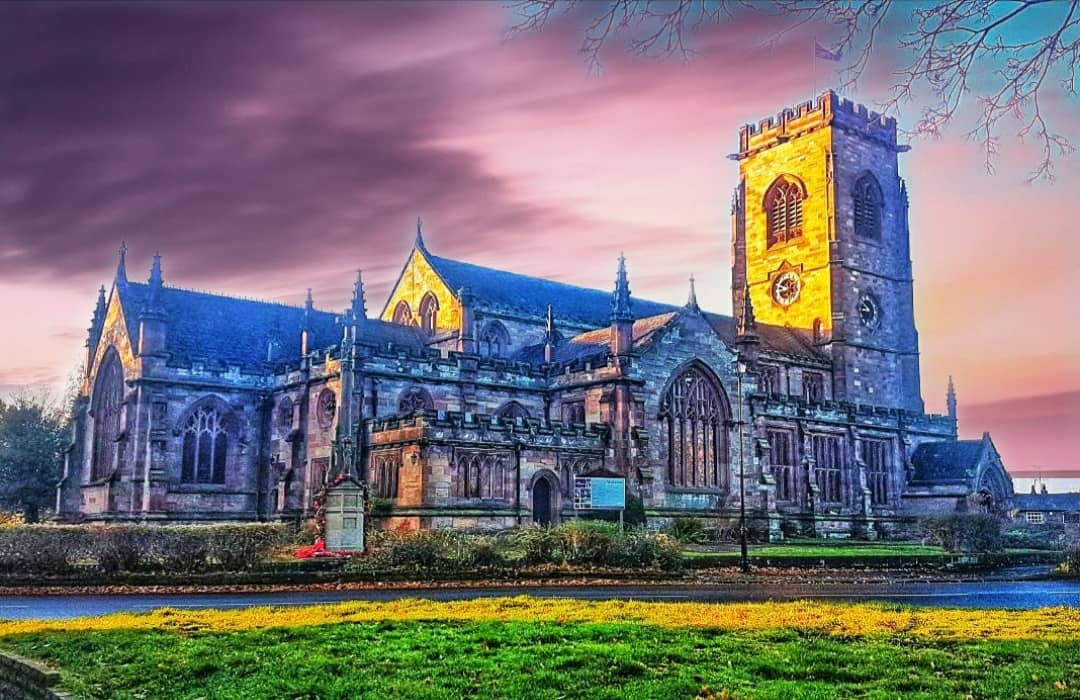
A historic church with medieval roots, impressive Victorian architecture, and a tranquil Victorian cemetery.
"Beautiful church impressive and unspoilt. Went to a family wedding. The peel of bells was so nice to hear."

🔔 Hear the Bells
Try to visit when the bells are being rung for practice or services; the sound is described as lovely.
🚶 Explore the Cemetery
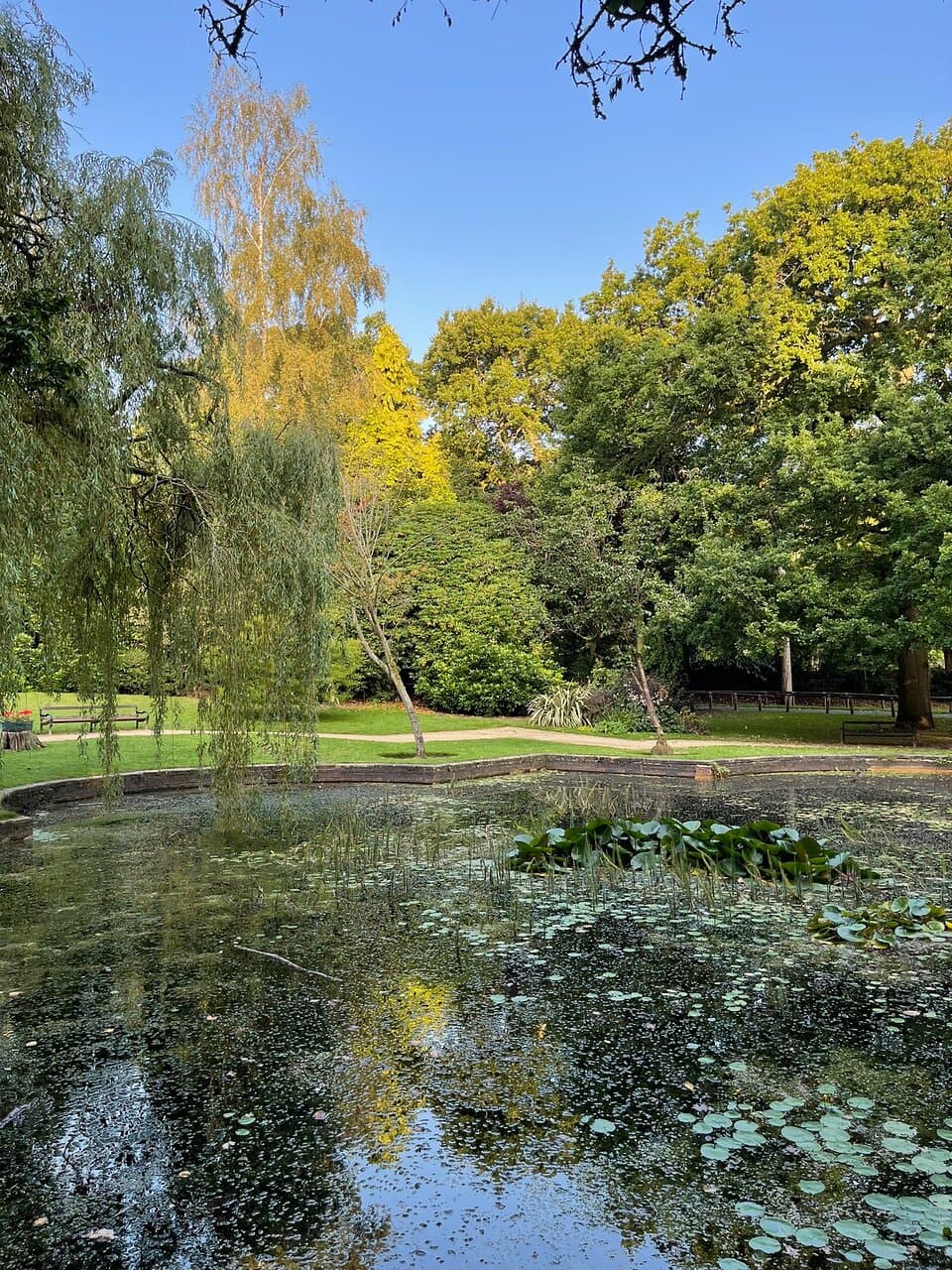
The Victorian cemetery is very tranquil and a great spot to discover local history.
Highlights
Discover the most iconic attractions and experiences
16th-Century Aisle Roofs
Elaborately carved camber beam roofs with bosses and coats of arms, a rare surviving medieval feature.
Sir William Baguley Effigy
North Transept
A damaged reclining effigy of Sir William Baguley, dating back to approximately 1320.

Brereton Monument
North Transept
Recumbent effigies of William Brereton (died 1630) and his wife Jane, with kneeling figures of their seven children.
Victorian Cemetery
A tranquil Victorian-era cemetery offering a peaceful space for reflection and local history discovery.
Plans like a pro.
Thinks like you
Planning Your Visit
Discover Local History
Architectural Marvels
Best Times
Insider Tips
from TikTok, Instagram & Reddit
🔔 Hear the Bells
Try to visit when the bells are being rung for practice or services; the sound is described as lovely.
🚶 Explore the Cemetery
The Victorian cemetery is very tranquil and a great spot to discover local history.
📸 Admire the Architecture
Take time to appreciate the unique pink and red sandstone exterior and the intricate interior details.
🕰️ Discover Medieval Roots
Look for the 15th-century octagonal font and the ancient effigies that hint at the church's long history.
Tips
from all over the internet
🔔 Hear the Bells
Try to visit when the bells are being rung for practice or services; the sound is described as lovely.
🚶 Explore the Cemetery
The Victorian cemetery is very tranquil and a great spot to discover local history.
📸 Admire the Architecture
Take time to appreciate the unique pink and red sandstone exterior and the intricate interior details.
🕰️ Discover Medieval Roots
Look for the 15th-century octagonal font and the ancient effigies that hint at the church's long history.
What Travellers Say
Reviews Summary
Visitors praise St Mary the Virgin Bowdon for its beautiful and unspoiled setting, rich history, and impressive architecture. The retained medieval roofs and historical monuments are frequently highlighted as points of interest. The tranquil Victorian cemetery also offers a peaceful space for reflection and discovery.
"I am re-learning to bell ring here. Lovely setting, lovely bells, lovely people ❤️"
Sandra Taylor
"The presence of a church on the site was noted in the Domesday Book. It is likely that a new church was built in the 14th century and remodelled in the 16th century. The church was completely rebuilt between 1858 and 1860 by W. H. Brakspear, although the 16th-century roofs of the aisles were retained and incorporated into the new structure.
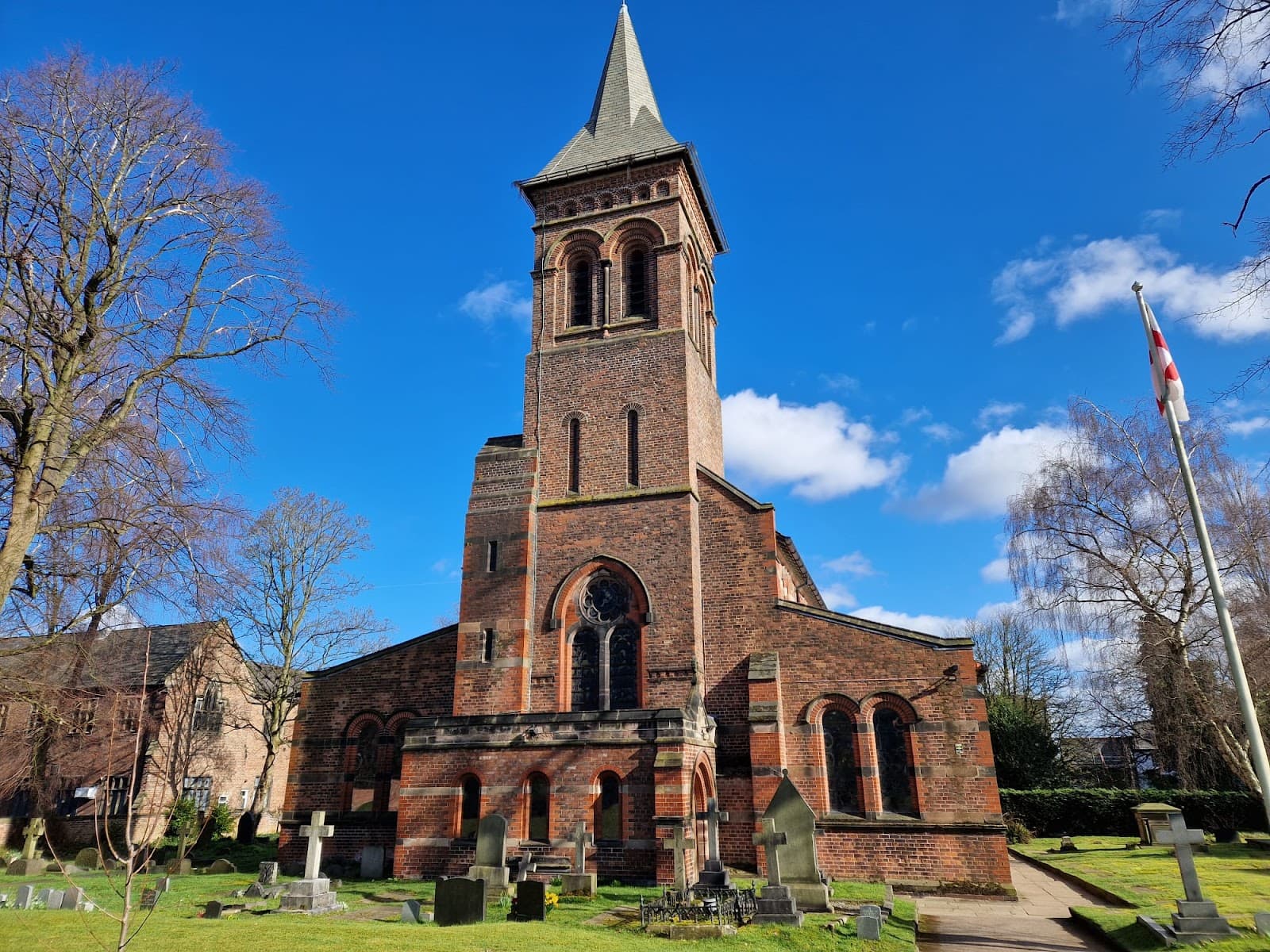
The church is built in pink and contrasting red Runcorn sandstone with a slate roof. Its plan consists of a west tower, a six-bay nave with clerestory, north and south aisles, north and south transepts, and a chancel with an organ loft and vestry on the north side, and a chapel on the south. The tower is in four stages and has diagonal buttresses, ornate clock faces, four-light belfry openings, gargoyles, and its top is castellated. The aisles and clerestory are also castellated. The transepts have corner pinnacles.
The 16th-century roofs of the aisles are camber beam in type and are elaborately carved with bosses and coats of arms.[6] The nave roof is hammerbeam in type.[1] In the north transept is an altar table from the early 18th century and a chest dated 1635. The sanctuary chairs are Jacobean and a 15th-century octagonal font has been placed in the north aisle.[3]
In the medieval church there were many tombs, and some of these have been included in the present church. The oldest are a pair of damaged reclining effigies in the north transept, one of which is of Sir William Baguley who died in about 1320. Also in the north transept is the Brereton monument, with recumbent effigies of William Brereton who died in 1630 and his wife Jane, under a canopy. On the side of the tomb are kneeling figures of their seven children. In the chapel are two memorials by André Carpentière. One is to Henry Booth, 1st Earl of Warrington who died in 1694, his wife Mary and their family, which includes figures of Wisdom and Vanity. The other is to Langham Booth who died in 1724, and to Henry Booth who died in 1727. A mural tablet to the Asshetons is by Richard Westmacott.
In the north transept is a collection of loose carved stones some of which are from the Norman period. In the church is stained glass by Kempe and by Clutterbuck. The pulpit, dating from around 1910, is by Temple Moore. The three-manual organ was built in 1875 and minor alterations were made to it in 1960 by J. W. Walker & Sons Ltd. The parish registers begin in 1628. There is a ring of eight bells, cast in 1964 by John Taylor & Co."
debbra tsai
"Beautiful church impressive and unspoilt. Went to a family wedding. The peel of bells was so nice to hear."
Ella
What People Like
What People Dislike
Frequently Asked Questions
🚇 🗺️ Getting There
St Mary the Virgin Bowdon is accessible by car, with local parking available. Public transport options may include local bus routes. It's advisable to check local transport schedules before your visit.
Yes, there is typically parking available near the church, though it can be limited during peak times or events.
If you are staying locally, walking to the church is a pleasant option, allowing you to enjoy the surroundings.
🎫 🎫 Tickets & Entry
St Mary the Virgin Bowdon is a place of worship, and typically there is no entrance fee for visitors. Donations are often welcome to help with upkeep.
As a working church, St Mary the Virgin Bowdon is generally open during daylight hours, but it's best to check for specific service times or any temporary closures.
Yes, the church is a popular venue for weddings and other family events. You would need to contact the church directly to inquire about booking.
While official guided tours might not be regularly scheduled, the church is rich in history and architecture that you can explore independently. Local historical societies may offer tours occasionally.
📸 📸 Photography
Photography is generally permitted for personal use inside St Mary the Virgin Bowdon, but it's always respectful to be discreet, especially during services.
The exterior architecture, especially the tower and sandstone details, offers great photo opportunities. Inside, the medieval roofs and historical monuments are also impressive subjects.
Yes, photography is usually allowed in the cemetery, offering a peaceful and historic backdrop for your shots.
🎫 🏛️ History & Architecture
The site has a church presence noted in the Domesday Book. It underwent significant rebuilding in the 14th and 16th centuries, with a complete reconstruction in 1858-1860 by W. H. Brakspear.
The church features Gothic elements from its rebuild, but importantly retains 16th-century camber beam aisle roofs and a hammerbeam nave roof. The exterior is notable for its Runcorn sandstone.
Yes, the church houses several significant monuments, including effigies of Sir William Baguley (c. 1320) and the Brereton monument (1630), as well as memorials by André Carpentière.
The 16th-century camber beam roofs of the aisles are particularly special, featuring elaborate carvings of bosses and coats of arms, and were incorporated into the 19th-century rebuild.
For Different Travelers
Tailored advice for your travel style
👨👩👧 Families with Kids
🏛️ History Buffs
🎶 Music and Bell Ringing Enthusiasts
Deep Dives
In-depth insights and expert knowledge
Architectural Significance
The most remarkable architectural survival are the 16th-century camber beam roofs of the aisles. These are not merely structural but are elaborately carved with bosses and coats of arms, offering a glimpse into medieval craftsmanship. The nave features a hammerbeam roof. These older roofs were carefully retained and integrated into the new structure designed by W. H. Brakspear between 1858 and 1860, demonstrating a thoughtful approach to preservation during the Victorian era.
Beyond the roofs, the church contains significant historical artifacts. The presence of a 15th-century octagonal font in the north aisle and an 18th-century altar table in the north transept further enrich the visitor's experience. The overall impression is of a church that respects its past while embracing its present, making it a compelling site for those interested in ecclesiastical architecture and history.
Historical Monuments and Tombs
A more elaborate monument is the Brereton monument, also located in the north transept. This features recumbent effigies of William Brereton, who died in 1630, and his wife Jane, sheltered beneath a canopy. The sides of the tomb are adorned with kneeling figures representing their seven children, providing a detailed family tableau. In the south chapel, two significant memorials by André Carpentière stand out. One commemorates Henry Booth, 1st Earl of Warrington (died 1694), his wife Mary, and their family, complete with allegorical figures of Wisdom and Vanity. The other memorial in the chapel is dedicated to Langham Booth (died 1724) and Henry Booth (died 1727). A mural tablet to the Assheton family, attributed to Richard Westmacott, adds further artistic merit.
The Bells of St Mary's
Visitors have noted the pleasant experience of hearing the bells. One reviewer specifically mentioned the 'peel of bells' being 'so nice to hear' during a family wedding.

Social
from TikTok, Instagram & Reddit