Wat Ratchapradit Bangkok
A serene royal monastery in Bangkok, featuring intricate carvings, vibrant murals, and a unique blend of architectural styles.
Highlights
Must-see attractions

Social
From TikTok & Reddit
Best Time
Quiet and peaceful atmosphere
Wat Ratchapradit Bangkok
Best Time
Quiet and peaceful atmosphere
Highlights
Must-see attractions
A serene royal monastery in Bangkok, featuring intricate carvings, vibrant murals, and a unique blend of architectural styles.
"Few find Wat Ratchapradit — home to royal murals that whisper Thailand’s sacred history."
🎯 Free Entry!
Enjoy the beauty of Wat Ratchapradit without any admission fee.
🚶♀️ Walkable from Grand Palace
Conveniently located just a short walk from the Grand Palace, making it easy to combine visits.
Highlights
Discover the most iconic attractions and experiences
Royal Murals
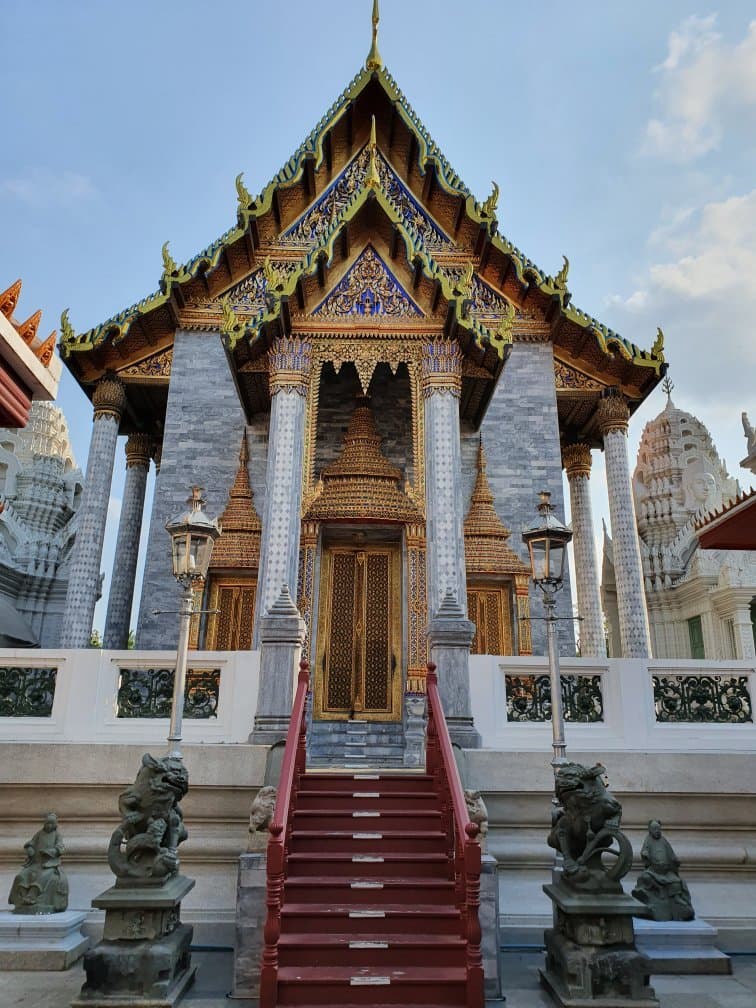
Discover stunning royal murals depicting Thailand's sacred history and ceremonies within the ordination hall.
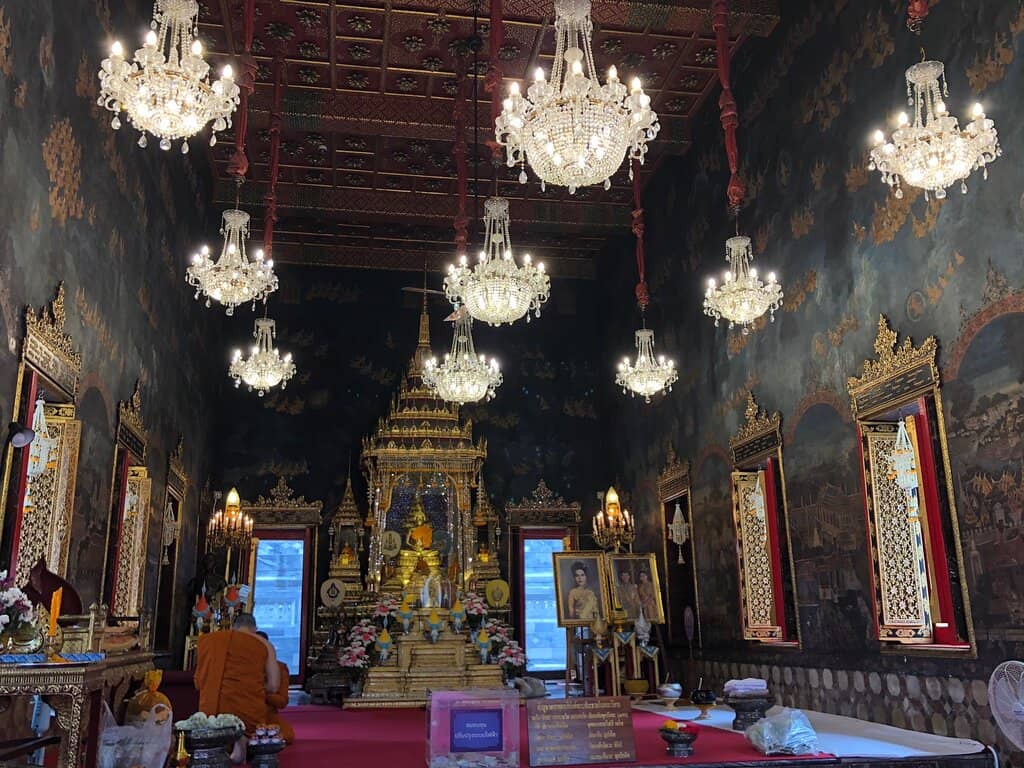
Intricate Wooden Doors
Admire the beautifully carved wooden doors, showcasing exquisite craftsmanship and artistic detail.
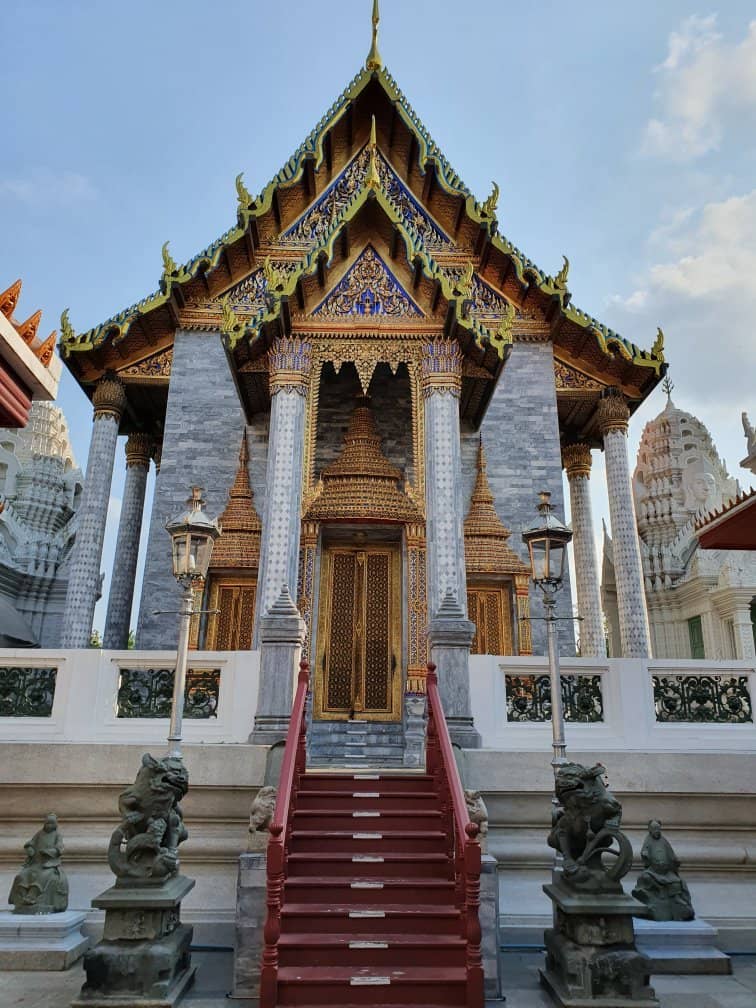
Unique Architecture
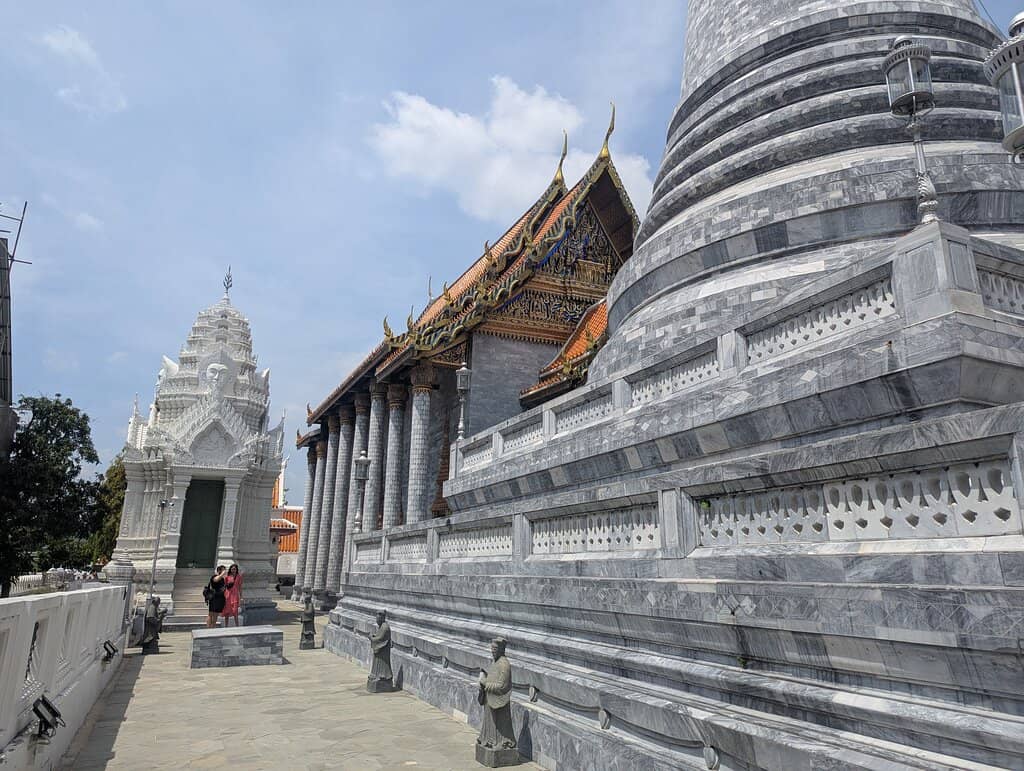
Experience a blend of Thai, Chinese, Western, and Khmer architectural influences in this historic temple complex.
Plans like a pro.
Thinks like you
Planning Your Visit
Beat the Crowds for Serenity
Dress Code & Respect
Best Times
Insider Tips
from TikTok, Instagram & Reddit
🎯 Free Entry!
Enjoy the beauty of Wat Ratchapradit without any admission fee. +1
🚶♀️ Walkable from Grand Palace
Conveniently located just a short walk from the Grand Palace, making it easy to combine visits.
🤫 Off the Beaten Path
Fewer tourists visit here, offering a more authentic and less crowded experience. +1
📸 Great for Photos
The serene environment and beautiful details make it a perfect spot for photography. +1
Tips
from all over the internet
🎯 Free Entry!
Enjoy the beauty of Wat Ratchapradit without any admission fee. +1
🚶♀️ Walkable from Grand Palace
Conveniently located just a short walk from the Grand Palace, making it easy to combine visits.
🤫 Off the Beaten Path
Fewer tourists visit here, offering a more authentic and less crowded experience. +1
📸 Great for Photos
The serene environment and beautiful details make it a perfect spot for photography. +1
What Travellers Say
Reviews Summary
Wat Ratchapradit is praised for its serene atmosphere and stunning artistic details, offering a peaceful escape from the usual tourist crowds. Visitors appreciate its free entry and unique blend of architectural styles, though some note that information on-site is primarily in Thai.
"Ratchapradit Sathitmahasimaram Temple was built in 1864 His intention is that this temple shall be one of the three main monasteries of the city according to the tradition since Sukhothai period, namely Wat Mahathat, Wat Raja Burana and Wat Ratchapradit Sathan.
His Majesty King Mongkut originally named the temple as "Rajapradit Sathitdhammayuttikaram Temple”, (The Temple of the Dhammayut Order) specifically dedicated the land especially to Dhammayut monks. His will manifested in the royal edict, the marble slab behind the Buddha’s hall, and the poems engraved on the monastery-zone marker pillars. After that the name was changed to "Wat Ratchapradit Sathitmahasimaram”, (the Temple with the Great Monastery Zone Markers). Since there was no chapel in this temple, they used the zone marker pillars around the temple, both the Buddha’s and the Sangha’s zones, to indicate the boundary that the ceremony can be performed.
In 1665, His Majesty King Mongkut invited Phra Sāsanasobhaṇa (Sa Pussadeva), the to-be 9th supreme Patriarch of Thailand to be the first abbot. He was King Rama IV student and one of the ten first monks in the Dhammayut Order.
His Majesty King Mongkut paid great attention in decorating the temple with fine arts. He demanded that the carving on the door and windows emulated that of Wat Suthat, the inside window carved in the Japanese style of Wat Nang Chee, on top of every door and window having an emblem of the crown, the king’s sigil, and the stars on the ceiling inspired by that of Wat Rajapraditsathan and Wat Suwan Dararam of Ayutthaya. Furthermore, there are paintings of deity groups roaming freely over the sky, the mural of royal ceremonies in 12 months which were painted in the reign of King Rama V with the background of the previous reign in order to reflect the prosperity under the rule of King Rama IV. Inside the temple is the famous Buddha image, Phra Sihanga Patimakorn, under which is where the royal ashes of King Mongkut were placed.
There are a large number of His Majesty King Mongkut’s relevant edifices and antiquities in Wat Ratchapradit such as the royal temple which illustrates The Great Crown of Victory on the gable, the crown-topped pulpit as Rama IV’s sigil.
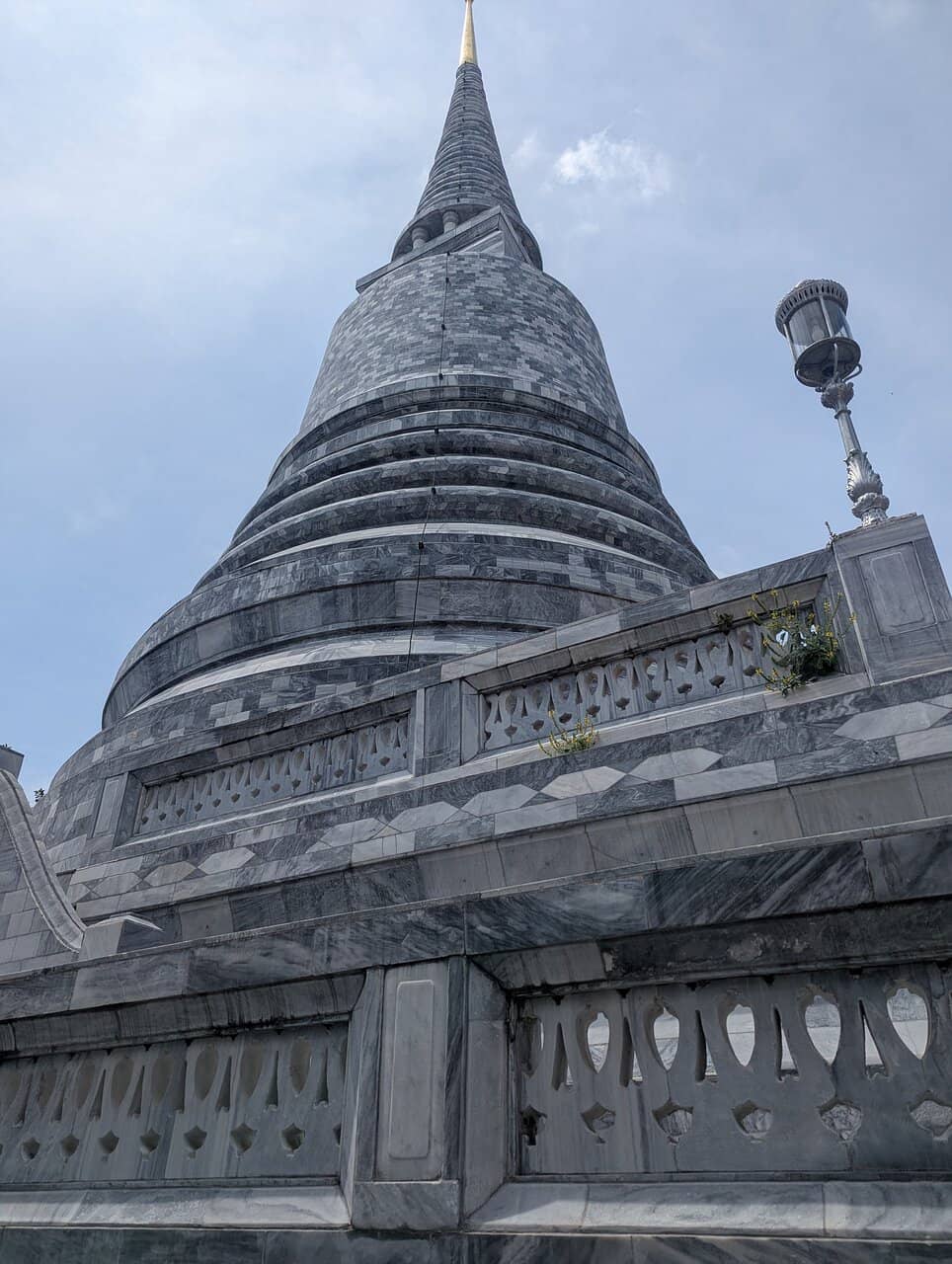
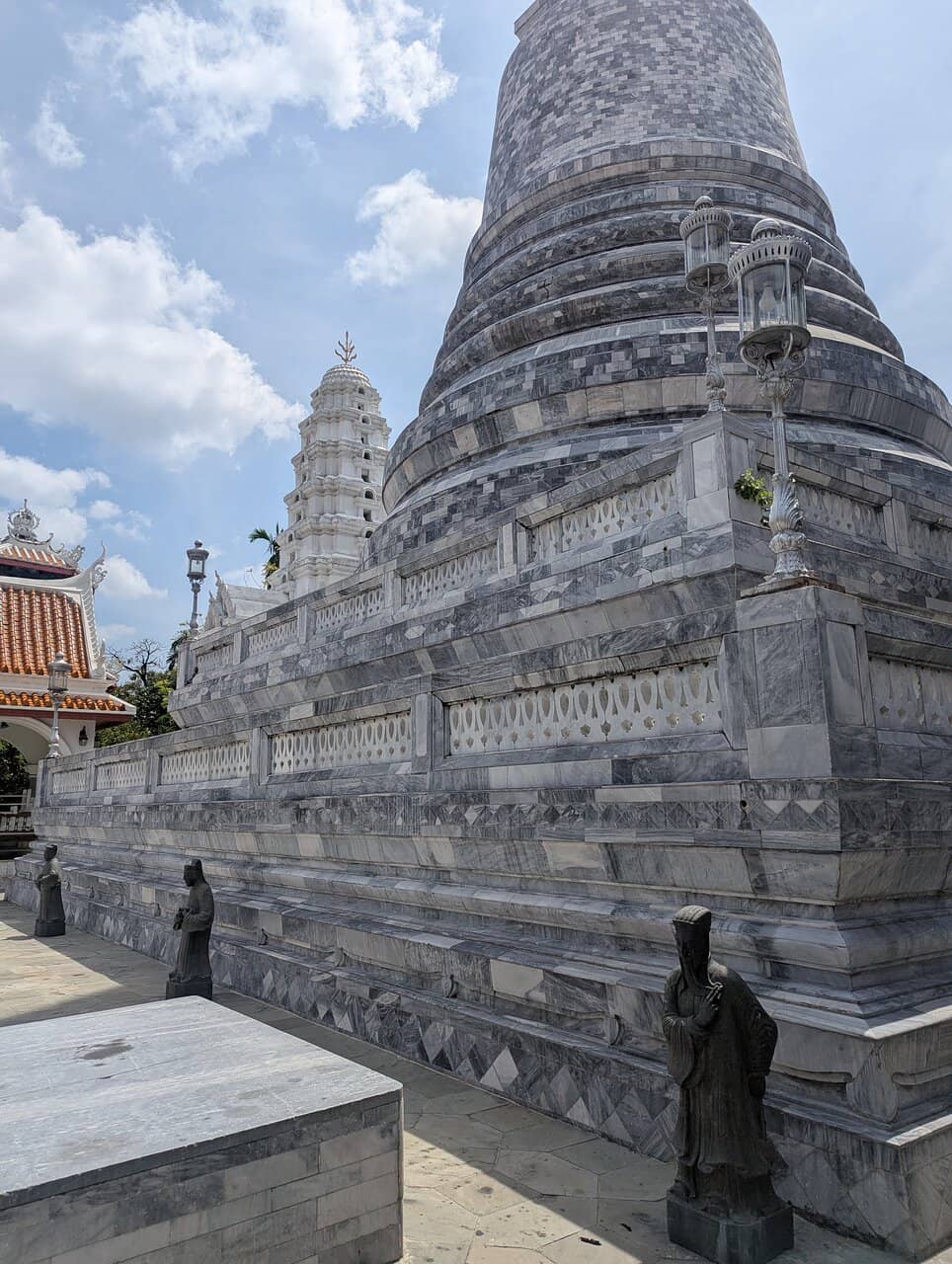
Pāsāna Cetiya (the marble pagoda) is a Sri Lankan style pagoda, inspired by the detail in the commentary of Mahāparinibbāna Sutta that the Emperor Ashoka had built the rock-pagoda
Prasat Phra Boromarup and Prasat Phra Trai Pidok are the Khmer-styled buildings, inside of which are the statue of King Rama IV and 150 years-old palm-leaf manuscripts of the Pali Canon in the book-shaped wooden boxes respectively. Originally, these buildings were constructed in the reign of King Rama V with marbles with the four-faced god, Brahman, on the top, then they were rebuilt in the reign of King Rama VI."
Ade Ho
"Will need to revisit this temple.
Closed for mother's day. The custodians on duty cleaning for the day but the temple doors themselves closed.
Small site but with great detail and some banners posted on the outside about the history of the temple - only in Thai."
B. F. G.
"In scale of Bangkok, Wat Ratchapradit Sathit Maha Simaram is a small, even a tiny temple. The temple is located beside Saranrom Park, and it is, of course, very beautiful, and historic, too. For a regular visitor there are numerous details to wonder, and - during our visit closed - the Viharn is amazing, even exceptional... one can just marvel what there is inside that fabulous building. As said, the temple is very beautiful but doesn't maybe belong to those for an ordinary tourist "must see" temples."
Hannu Toivanen
What People Like
What People Dislike
Frequently Asked Questions
🚇 🗺️ Getting There
Wat Ratchapradit is easily accessible. You can take the MRT to Sanam Chai station and then it's a short walk. Many visitors also walk from the Grand Palace area.
Yes, it's very close to the Grand Palace and Saranrom Park, making it convenient to include in a day of sightseeing.
Public transport like the MRT is recommended to avoid traffic. Taxis or tuk-tuks are also options, but ensure the meter is used or agree on a price beforehand.
Yes, ride-sharing apps like Grab are widely used in Bangkok and can be a convenient way to reach Wat Ratchapradit.
Parking can be challenging in this busy area. It's advisable to use public transport or a taxi/ride-sharing service.
🎫 🎫 Tickets & Entry
No, Wat Ratchapradit offers free entry, making it an accessible cultural experience for all visitors. +1
The temple is generally open daily from around 9:00 AM to 4:30 PM, but it may be closed for special events or ceremonies.
It's best to check in advance, as the temple may be closed for national holidays or special observances, such as Mother's Day. [^Reviews]
No advance booking is required as entry is free. You can visit anytime during opening hours.
Visitors must adhere to a dress code, covering shoulders and knees, to show respect for the religious site.
📸 📸 Photography
Photography is generally allowed in most areas, but always be respectful and avoid intrusive shots, especially during prayer times.
The intricate wooden doors, the serene temple grounds, and the detailed murals inside the ordination hall are highly photogenic. +1
While not explicitly stated, it's best to use tripods discreetly and be mindful of other visitors. Avoid setting up in high-traffic areas.
Be respectful of the religious nature of the site. Avoid taking photos of monks without their permission and refrain from disruptive photography.
Late afternoon often provides beautiful golden hour lighting, while early mornings offer soft, diffused light and fewer crowds.
🎫 🏛️ Onsite Experience
You can admire the unique architecture, intricate carvings, royal murals, and the main Buddha image. The temple also holds historical significance as a royal monastery. +1
Compared to some of Bangkok's more famous temples, Wat Ratchapradit is relatively small, making it manageable for a shorter visit. [^Reviews]
It was built during the reign of King Rama IV to be one of the city's three main monasteries and is dedicated to the Dhammayut Order. [^Reviews]
Official guided tours are not commonly advertised. However, the information on site and online resources can help you appreciate its history. [^Reviews]
Modest clothing covering shoulders and knees is essential. Avoid revealing attire to show respect.
For Different Travelers
Tailored advice for your travel style
👨👩👧 Families with Kids
Keep in mind the dress code; ensure children are also dressed modestly. The temple's smaller scale means it's easier to navigate with younger ones. Consider visiting during cooler parts of the day to make the experience more comfortable. It's a good opportunity to introduce children to Thai culture and religious sites in a less crowded setting.
📸 Photographers' Paradise
Aim for the golden hour in the late afternoon for warm, dramatic lighting, or the soft, diffused light of early morning. The serene atmosphere lends itself well to capturing contemplative and artistic images. Remember to be respectful of the sacred nature of the site and avoid disruptive photography practices.
🚶♀️ Solo Travelers Seeking Peace
Take your time to admire the detailed carvings and historical murals. The quiet environment is perfect for reflection and appreciating the intricate artistry. It's a chance to experience a significant royal temple without the usual throngs, offering a more personal connection to Bangkok's rich cultural heritage.
Deep Dives
In-depth insights and expert knowledge
The Royal History of Wat Ratchapradit
King Mongkut was deeply involved in the temple's artistic decoration. He mandated that the carvings on the doors and windows emulate those of Wat Suthat, with interiors featuring Japanese-style carvings and emblems of the crown above each opening. The ceiling designs were inspired by Ayutthaya temples. Inside the ordination hall (ubosot), you can find the Phra Sihanga Patimakorn, the principal Buddha image, beneath which the royal ashes of King Mongkut are interred. The temple also houses Khmer-styled buildings like Prasat Phra Boromarup and Prasat Phra Trai Pidok, which contain statues and ancient manuscripts. [^Reviews]
The temple's architecture is a fascinating fusion, blending Thai, Chinese, Western, and Khmer artistic influences. This eclectic style reflects the era's openness to international aesthetics. Beyond its visual appeal, Wat Ratchapradit serves as a testament to the royal family's commitment to Buddhism and the preservation of Thai cultural heritage. Its relatively quiet atmosphere, compared to more crowded sites, allows visitors to appreciate these historical and artistic elements more intimately.
Artistic Marvels: Murals and Carvings
Beyond the murals, the temple is renowned for its exquisite wood carvings, particularly on its doors and windows. These intricate designs showcase a high level of craftsmanship, with influences that echo the artistry found in other prominent Bangkok temples. The detailed work on these wooden elements adds another layer of visual richness to the temple's aesthetic.
Visitors often marvel at the unique blend of artistic styles present throughout the temple. From the Thai and Khmer influences in its structures to the detailed carvings and the vibrant mural paintings, Wat Ratchapradit is a feast for the eyes. The combination of these artistic elements creates a serene yet visually stimulating environment, making it a rewarding destination for art and history enthusiasts.
Social
from TikTok, Instagram & Reddit