
San Paolo Jesuit Ruins
Discover the remnants of a Jesuit church and observatory from King Narai's era in Lopburi. A free, historical site with a striking brick tower.
Highlights
Must-see attractions

Social
From TikTok & Reddit
Best Time
Beat the heat and crowds
San Paolo Jesuit Ruins
Best Time
Beat the heat and crowds
Highlights
Must-see attractions
Discover the remnants of a Jesuit church and observatory from King Narai's era in Lopburi. A free, historical site with a striking brick tower.
"Interesting site showing the history of Lopburi, with no entrance fee and a video explaining its past."

Free Admission! 🎉
No entrance fee required to explore this historical gem. Enjoy the site at your leisure.
Learn the History 📖
Scan the QR code for a video explaining the site's rich past and its connection to King Narai.

Highlights
Discover the most iconic attractions and experiences
The Brick Tower
Central ruin
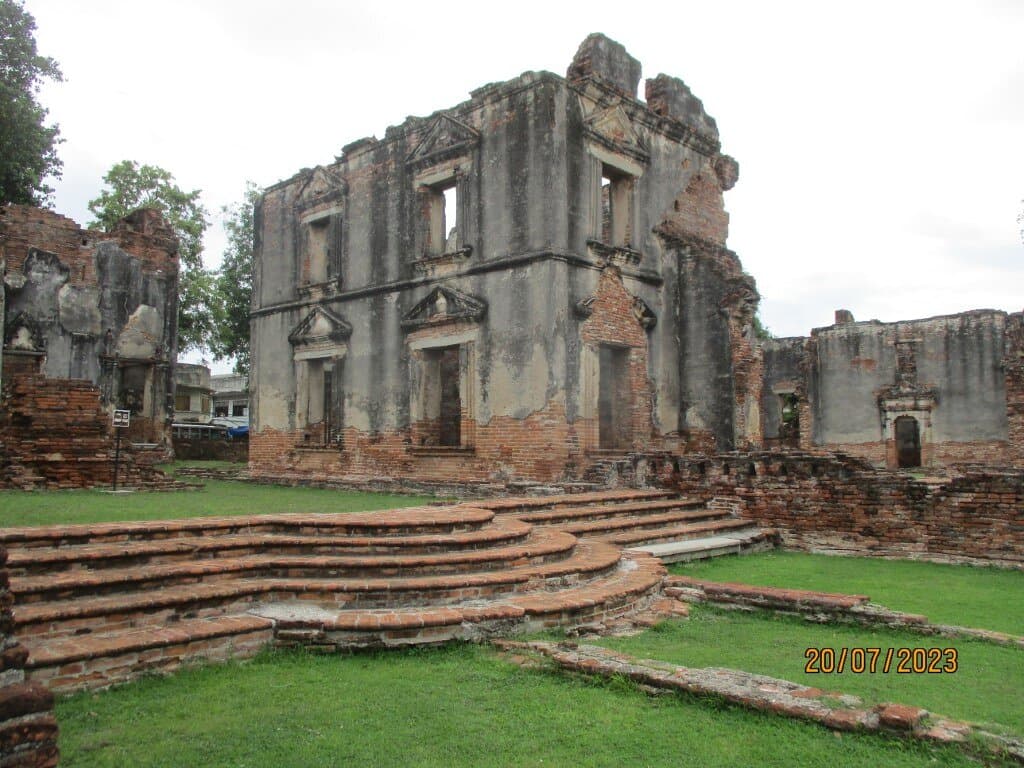
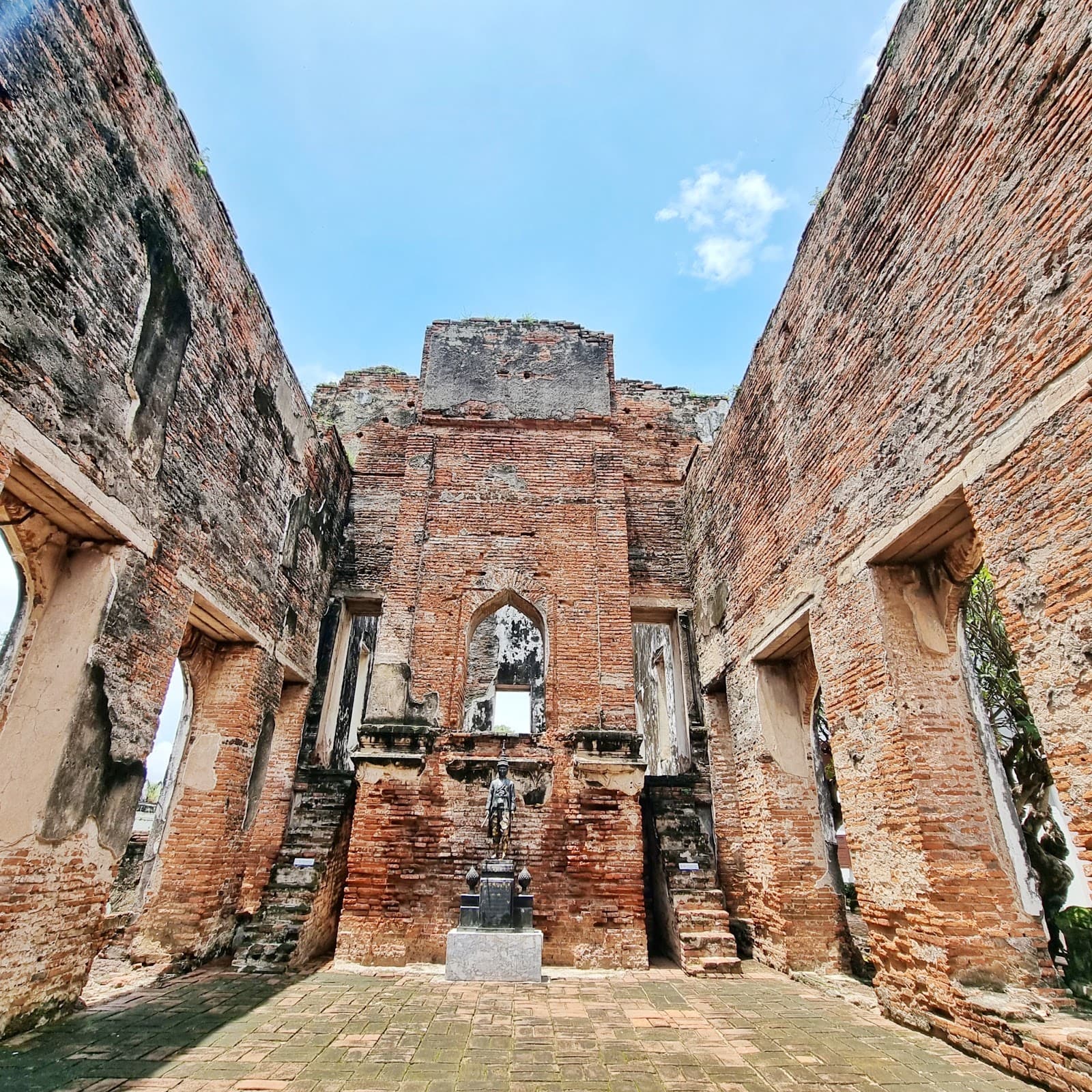
The most prominent remaining structure, hinting at its past grandeur as a church and observatory.
Historical Storyboard
Near entrance
Engaging displays that narrate the intriguing history of the Jesuit site and its connection to King Narai.

Foundational Remains
Surrounding area
Explore the scattered brick foundations that outline the original church and observatory complex.
Plans like a pro.
Thinks like you
Planning Your Visit
Embrace the History
Free Exploration
Best Times
Insider Tips
from TikTok, Instagram & Reddit
Free Admission! 🎉
No entrance fee required to explore this historical gem. Enjoy the site at your leisure.
Learn the History 📖
Scan the QR code for a video explaining the site's rich past and its connection to King Narai.
Small Parking Available 🚗
Convenient parking is on-site, making it easy to access this historical stop.
Combine with Other Sites 🏛️
San Paolo is a great addition to your Lopburi historical tour, offering a unique perspective.
Tips
from all over the internet
Free Admission! 🎉
No entrance fee required to explore this historical gem. Enjoy the site at your leisure.
Learn the History 📖
Scan the QR code for a video explaining the site's rich past and its connection to King Narai.
Small Parking Available 🚗
Convenient parking is on-site, making it easy to access this historical stop.
Combine with Other Sites 🏛️
San Paolo is a great addition to your Lopburi historical tour, offering a unique perspective.
What Travellers Say
Reviews Summary
Visitors find the San Paolo Jesuit Ruins to be an interesting and historically significant site, particularly for its connection to King Narai and the Jesuit missionaries. The free admission and well-maintained brick tower are frequently praised, though some note there isn't a vast amount to see beyond the main structure.
"Interesting site showing the history of Lopburi. No entrance fee. QR code shows a video explaining the history of this Jesuite site. Small parking place available. Well maintained."
Gerbrand van de Beek
"An old Catholic church that used to be a huge observatory back in hundreds years but have been ruined by time. Nothing much to see but you can learn its history and interesting story from a story board there. And no entry fee !"
Roonglawan J.
"Worth a visit, adds on to all the other historical sites."
Menno Tool
What People Like
What People Dislike
Frequently Asked Questions
🚇 🗺️ Getting There
The San Paolo Jesuit Ruins are located in Lopburi, Thailand. If you're arriving by car, there is a small parking area available. For those using public transport, you can inquire about local buses or songthaews that frequent the area.
Yes, the ruins are relatively easy to find within Lopburi. It's often mentioned alongside other historical attractions, so local signage or asking for directions to the 'Jesuit ruins' should suffice.
🎫 🎫 Tickets & Entry
No, there is no entrance fee to visit the San Paolo Jesuit Ruins. It's a free historical site for everyone to explore and learn from.
While there are no official posted hours, it's generally accessible during daylight hours. It's best to visit when there's ample natural light to appreciate the ruins.
No booking is required as there is no admission fee. You can visit spontaneously.
🎫 🧭 Onsite Experience
The main attraction is the well-preserved brick tower, which was part of the original church and observatory. You can also see the brick foundations of the former complex and read storyboards detailing its history.
Yes, there are storyboards and a QR code available that provides a video explaining the history of the Jesuit site, its connection to King Narai, and its former use as an observatory.
A visit to San Paolo Jesuit Ruins typically takes about 30 minutes to an hour, depending on your interest in exploring the ruins and reading the historical information.
Reviews indicate that the site is generally well-maintained, with the brick tower and foundations kept in good condition for visitors to appreciate.
📸 📸 Photography
The brick tower offers a striking focal point for photographs. The surrounding foundations and the open sky above also provide good opportunities for capturing the atmosphere of the ruins.
There are no specific regulations mentioned regarding drone photography. However, it's always advisable to be respectful of the historical site and any other visitors.
For Different Travelers
Tailored advice for your travel style
👨👩👧 Families with Kids
🏛️ History Buffs
🚶♀️ Budget Travelers
Deep Dives
In-depth insights and expert knowledge
A Glimpse into Royal History
The most striking feature of the San Paolo Jesuit Ruins is its brick tower, a testament to the architectural capabilities of the era. This tower is believed to have served as part of the church and also as an observatory, highlighting the dual purpose of the site. Exploring the surrounding brick foundations allows visitors to visualize the original layout of the complex and imagine its former scale. The site is well-maintained, ensuring that its historical integrity is preserved for future generations.
Visitors can learn more about the site's fascinating history through storyboards and a QR code that links to an explanatory video. This provides context about the Jesuit missionaries, their work in Siam, and the significance of this particular location. The absence of an entrance fee makes it an accessible and valuable stop for anyone interested in the history of Lopburi and Thailand's interactions with the West.
Exploring the Ruins
Beyond the tower, visitors can wander through the scattered brick foundations that outline the former church and observatory. These foundations offer a tangible connection to the past, allowing one to trace the footprint of the original buildings. The site is relatively compact, making it easy to explore on foot. A small parking area is available, adding to the convenience for those arriving by private vehicle.
To enhance the visitor experience, informative storyboards and a QR code are provided. Scanning the QR code unlocks a video that delves into the history of the Jesuit mission in Lopburi, the role of King Narai, and the scientific pursuits undertaken at the observatory. This multimedia approach makes the history accessible and engaging, transforming a simple ruin into a compelling narrative.
Social
from TikTok, Instagram & Reddit