
Liberiet Lund
Liberiet Lund: A historic medieval library, now a peaceful space for pilgrim activities, showcasing centuries of Lund's academic and religious heritag...
Highlights
Must-see attractions

Social
From TikTok & Reddit
Best Time
Fewer crowds, peaceful atmosphere
Liberiet Lund
Best Time
Fewer crowds, peaceful atmosphere
Highlights
Must-see attractions
Liberiet Lund: A historic medieval library, now a peaceful space for pilgrim activities, showcasing centuries of Lund's academic and religious heritage.
"A beautifully restored piece of history, perfect for a quiet moment of reflection."

Check Pilgrim Hours First
Access is primarily for pilgrim activities. Always check the Lund Cathedral's schedule before visiting. :calendar:
Appreciate the Restoration
The building has undergone recent renovations, showcasing its historical charm beautifully. :sparkles:
Highlights
Discover the most iconic attractions and experiences
Historic Architecture
Exterior of the building
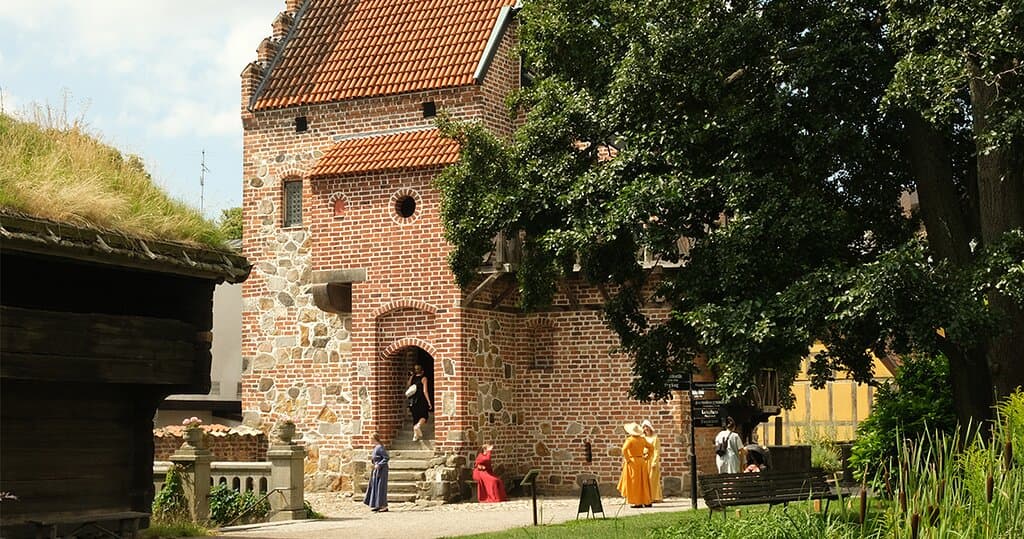
Admire the beautifully restored red brick building, a testament to medieval and later architectural styles.
Pilgrim Activities Space
Interior of the building
Experience the space as it's currently used for pilgrim activities, offering a peaceful and reflective atmosphere.

Medieval Library Legacy
Contextual understanding
Imagine this as a hub of knowledge, once housing chained manuscripts and rare texts for scholars.
Plans like a pro.
Thinks like you
Planning Your Visit
Timing Your Visit to Liberiet Lund
Understanding Liberiet's History
Best Times
Insider Tips
from TikTok, Instagram & Reddit
Check Pilgrim Hours First
Access is primarily for pilgrim activities. Always check the Lund Cathedral's schedule before visiting. :calendar:
Appreciate the Restoration
The building has undergone recent renovations, showcasing its historical charm beautifully. :sparkles:
Combine with Cathedral Visit
Liberiet is located right next to the Lund Cathedral, making it easy to visit both. :church:
Imagine its Past Life
Picture this space as a bustling medieval library filled with rare books and scholars. :books:
Tips
from all over the internet
Check Pilgrim Hours First
Access is primarily for pilgrim activities. Always check the Lund Cathedral's schedule before visiting. :calendar:
Appreciate the Restoration
The building has undergone recent renovations, showcasing its historical charm beautifully. :sparkles:
Combine with Cathedral Visit
Liberiet is located right next to the Lund Cathedral, making it easy to visit both. :church:
Imagine its Past Life
Picture this space as a bustling medieval library filled with rare books and scholars. :books:
What Travellers Say
Reviews Summary
Visitors appreciate Liberiet Lund for its historical significance and beautifully restored architecture, noting its peaceful atmosphere as a space for pilgrim activities. Its location adjacent to the Lund Cathedral makes it a convenient stop for those exploring the city's heritage. Some visitors note that access is limited to specific pilgrim hours, requiring prior checking of schedules.
"During the medieval time, the south vestry in the Lund Cathedral was used as library, which was possible while it only contained of a few volumes, due to the costly parchment on which the hand-made scripts were written. But, when book-printing become more common and books were printed on paper in cheaper and more handy volumes, the Chapters holding of books increased rapidly. During the second part of the 15th century, it was decided to build an independent library building outside the cathedral. This was the building which today is called Liberiet. The building is mentioned the first time in a source from 1499, when the archbishop Birger Gunnersen give his permission to capture 60 of charcoal in the cellar of this library building.
Nothing is left from the original furnishing, but there was probably lengthwise desks or shelves, and many of the oldest book in the Chapters collection shows signs from chains, which indicate that they probably were chained in an iron stick in the upper part of the desk. A latter description, by the priest Mogens Madsen, there were books at many different languages, Hebrew, Greek and Latin, written by the most distinguished authors, and all the students had fully access to the books. Most common was literature about theology, but also literature about justice, which shows that the Chapter also functioned as a legally centre, where both the canonic and profane justice were studied and construed.
During the 16th century, the number of books increased massively, but the library had an abrupt ending when the Danish king Christian III decided to move all valuable books to Copenhagen university library in 1537. The remaining books were transferred to Lund university in 1671. In 1687, a register was constituted, withholding the books that still was in the ownership of the Chapter, which was 13 handmade scripts and 386 printed books. 25 of them were so called incunables, which means books printed in the beginning of the book printing era, from 1450 until 1500. The most of this invaluable collection is nowadays located at the Lund university library. The books that was brought to Copenhagen was unfortunately burned when the Vetus Bibliotheca burned in 1728.
When the Lund university was opened in 1668, the philosophic faculty used the house Liberiet as an auditorium, and long time thereafter the building was called The Old Academy. In 1766 the top floor was used for fencing, and became the place where Per Henrik Ling, the father of physical education in Sweden, was teaching his students. The faculty of Medicine used the chapel of Sanct Dionysii as auditorium, which was situated in the east part of the Lund Cathedral. The faculty was moved to Liberiet in 1768.
Later on, minor restorations of Liberiet have been made, and from 1720s until 1890 the bottom floor was used as a private cellar and thereafter the cathedral used it as boiler room. Between 1966 and 1979, the building was empty, and after a restoration 2015-2016, the Cathedral uses it for their pilgrim activities.
In the south corner, a white crack is visible in the wall of the Liberiet building, it originates from the wall that during medieval time connected to the building, when the Cathedral area was surrounded in the medieval archbishop’s tower."
Jonny och Ann-Christine Andersson
"This red brick building sits in a nice spot between the cathedral and a few bars. Separating the two world's and providing a nice backdrop for people watching."
Viktor Erik Jensen
"The old library of Lund's old cathedral."
D Henrick
What People Like
What People Dislike
Frequently Asked Questions
🚇 🗺️ Getting There
Liberiet Lund is conveniently located next to the Lund Cathedral in the heart of the city. You can easily reach it by walking from Lund Central Station (about a 10-15 minute walk) or by taking a local bus to the 'Domkyrkan' stop. Parking is limited in the immediate vicinity, so public transport or walking is recommended.
Yes, Liberiet Lund is very accessible by public transport. The 'Domkyrkan' bus stop is just a short walk away, serving multiple local bus routes. If arriving by train, Lund Central Station is within walking distance.
Parking directly at Liberiet Lund is very limited. There are several paid parking garages and street parking options in the wider city center of Lund, but it's often easier and more convenient to use public transport or walk.
🎫 🎫 Tickets & Entry
Liberiet Lund is primarily used for pilgrim activities by the Lund Cathedral. Access is usually granted during these specific times. It's best to check the Lund Cathedral's official website or contact them directly for current opening hours and any potential entry requirements.
The opening hours for Liberiet Lund are not fixed and depend on its use for pilgrim activities. Visitors should consult the Lund Cathedral's schedule for the most up-to-date information on when the building is accessible.
As Liberiet Lund is part of the Lund Cathedral's operations and used for pilgrim activities, there is typically no separate admission fee. However, donations to the cathedral are always appreciated.
No, you cannot visit Liberiet Lund anytime. Its access is restricted to periods when it is open for pilgrim activities. Always verify the schedule in advance.
🎫 🏛️ Onsite Experience
At Liberiet Lund, you can explore the beautifully restored medieval building, imagine its history as a library, and experience the space as it's used for current pilgrim activities. It offers a quiet and reflective atmosphere.
Yes, the architecture of Liberiet Lund is quite photogenic, especially the exterior red brickwork and the restored interior. However, be mindful of its use for pilgrim activities and maintain a respectful demeanor.
Liberiet Lund was originally the library of the Lund Cathedral in the medieval period. It later served as an auditorium for Lund University and has a rich history tied to academia and religious life in Lund.
While not a primary tourist attraction in the same vein as the cathedral, Liberiet Lund is appreciated by those interested in history, architecture, and the quieter aspects of Lund's heritage. Its popularity is tied to its unique historical context.
🎫 📚 History & Context
The building known as Liberiet is first mentioned in a source from 1499, indicating its construction was around that period or slightly before, serving as the cathedral's library.
Historically, Liberiet Lund served as the south vestry library for the Lund Cathedral, later becoming an auditorium for Lund University, a fencing hall, and even housing the faculty of Medicine.
Many valuable books were moved to Copenhagen in 1537 and were lost in a fire. Remaining books were transferred to Lund University in 1671, with some of the most invaluable collection now at the Lund University Library.
The name 'Liberiet' likely derives from 'liberty' or 'library,' reflecting its original function as a place for books and knowledge.
For Different Travelers
Tailored advice for your travel style
👨👩👧 Families with Kids
Keep the visit concise, as the primary use is for pilgrim activities, meaning it's a place for quiet reflection. Combine the visit with the more interactive elements of the Lund Cathedral nearby. Ensure children understand the need for quiet behavior within the space.
📚 History Buffs & Architecture Enthusiasts
Understanding its context within the Lund Cathedral complex is key. The building's story is deeply intertwined with the intellectual and religious development of Lund. Take time to appreciate the restoration efforts that have preserved this historical gem, allowing you to step back in time and connect with centuries of Lund's past.
Deep Dives
In-depth insights and expert knowledge
The Evolution of Liberiet Lund: From Medieval Library to Modern Space
Over centuries, Liberiet Lund transitioned through various uses. Following the relocation of its valuable book collection, it was repurposed by the newly established Lund University in 1668, serving as an auditorium and later becoming known as 'The Old Academy.' The building even hosted fencing classes in the late 18th century, with the father of Swedish physical education, Per Henrik Ling, teaching there. The faculty of Medicine also utilized parts of the building. These transformations highlight Liberiet's adaptability and its enduring connection to Lund's academic and cultural life.
After periods of less prominent use, including serving as a private cellar and later a boiler room for the cathedral, Liberiet underwent a significant restoration between 2015 and 2016. Today, it serves a peaceful purpose as a space for the Cathedral's pilgrim activities. This modern function brings a sense of continuity, offering a tranquil environment for reflection and spiritual engagement, while preserving the building's historical essence for visitors to appreciate.
Liberiet Lund's Architectural Significance
A visible white crack in the south corner of the Liberiet building is a unique architectural feature. This crack originates from a wall that once connected to another structure, likely part of the medieval archbishop's tower that surrounded the cathedral area. This detail offers a tangible link to the past, hinting at the original layout and fortifications of the cathedral complex. The recent restoration has ensured the building's preservation, maintaining its historical integrity while making it accessible for its current functions.

Social
from TikTok, Instagram & Reddit