Salón de Embajadores Palacio Real Madrid
The Salón de Embajadores, a masterpiece of Nasrid art, features a celestial wooden ceiling and intricate stucco walls, serving as the historic throne ...
Highlights
Must-see attractions

Social
From TikTok & Reddit
Best Time
Fewer crowds, better light
Salón de Embajadores Palacio Real Madrid
Best Time
Fewer crowds, better light
Highlights
Must-see attractions
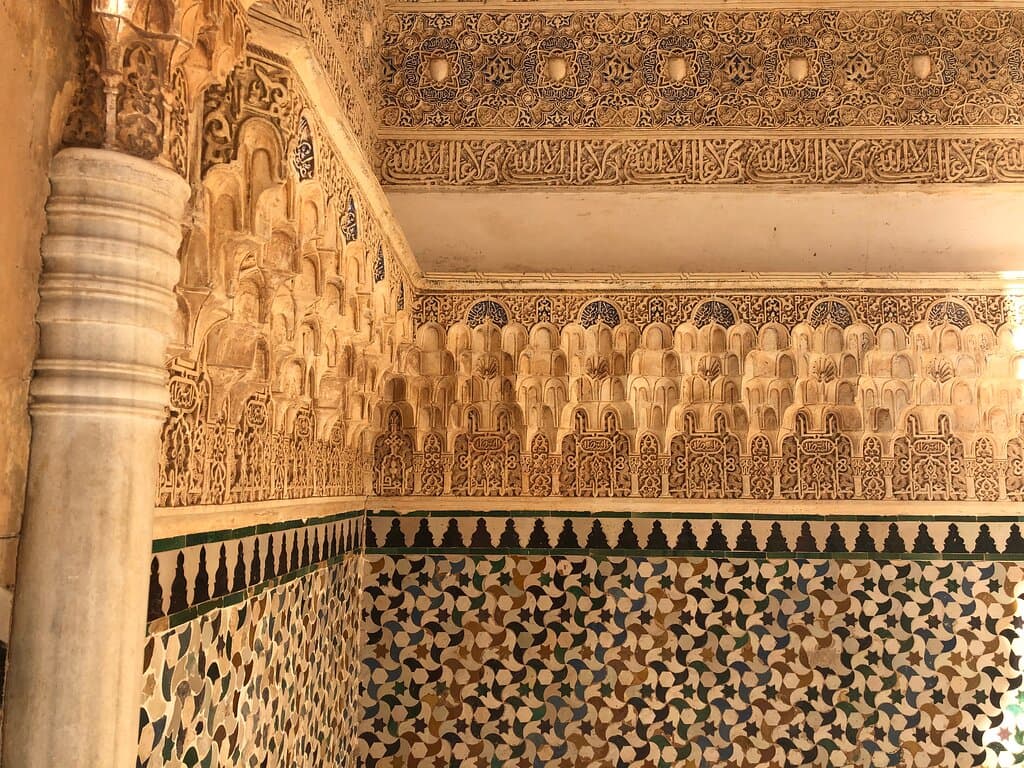
The Salón de Embajadores, a masterpiece of Nasrid art, features a celestial wooden ceiling and intricate stucco walls, serving as the historic throne room of Granada's sultans.
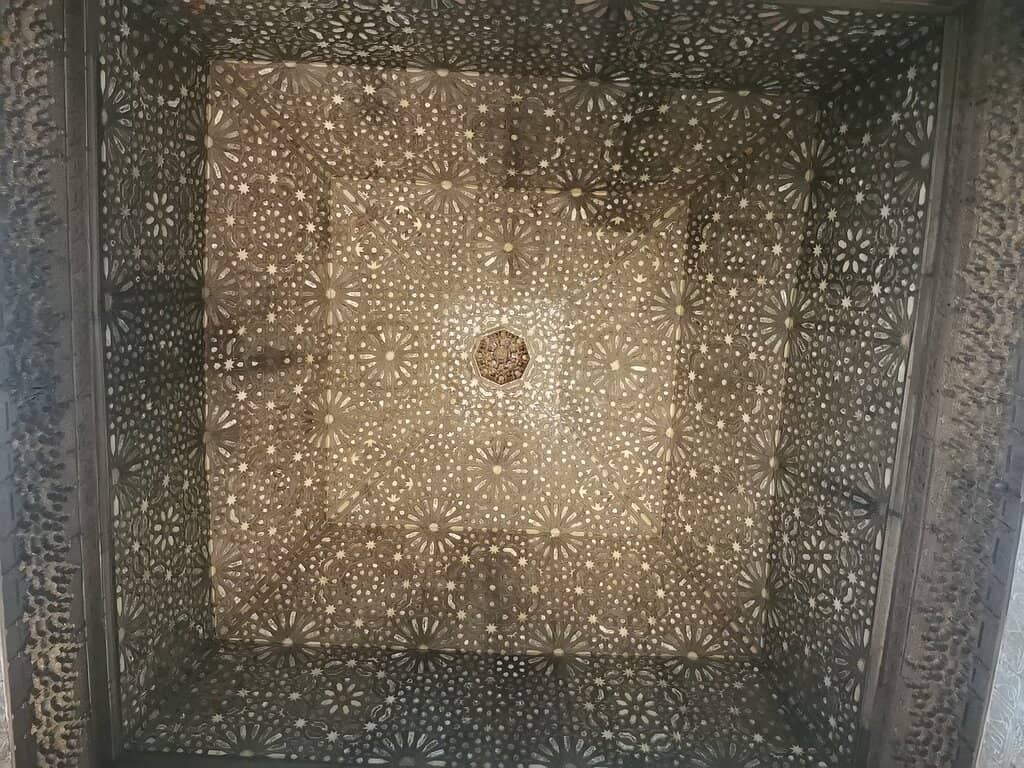
"The ceiling is a masterpiece of Granadan carpentry, representing the firmament with 8,017 pieces."
⏳ Book Alhambra Tickets Early
Tickets for the Alhambra sell out fast! Book online weeks or months in advance to guarantee entry to the Salón de Embajadores.
✨ Look Up at the Ceiling
Don't miss the incredible cedar wood ceiling representing the seven heavens. It's a true masterpiece of carpentry.
Highlights
Discover the most iconic attractions and experiences
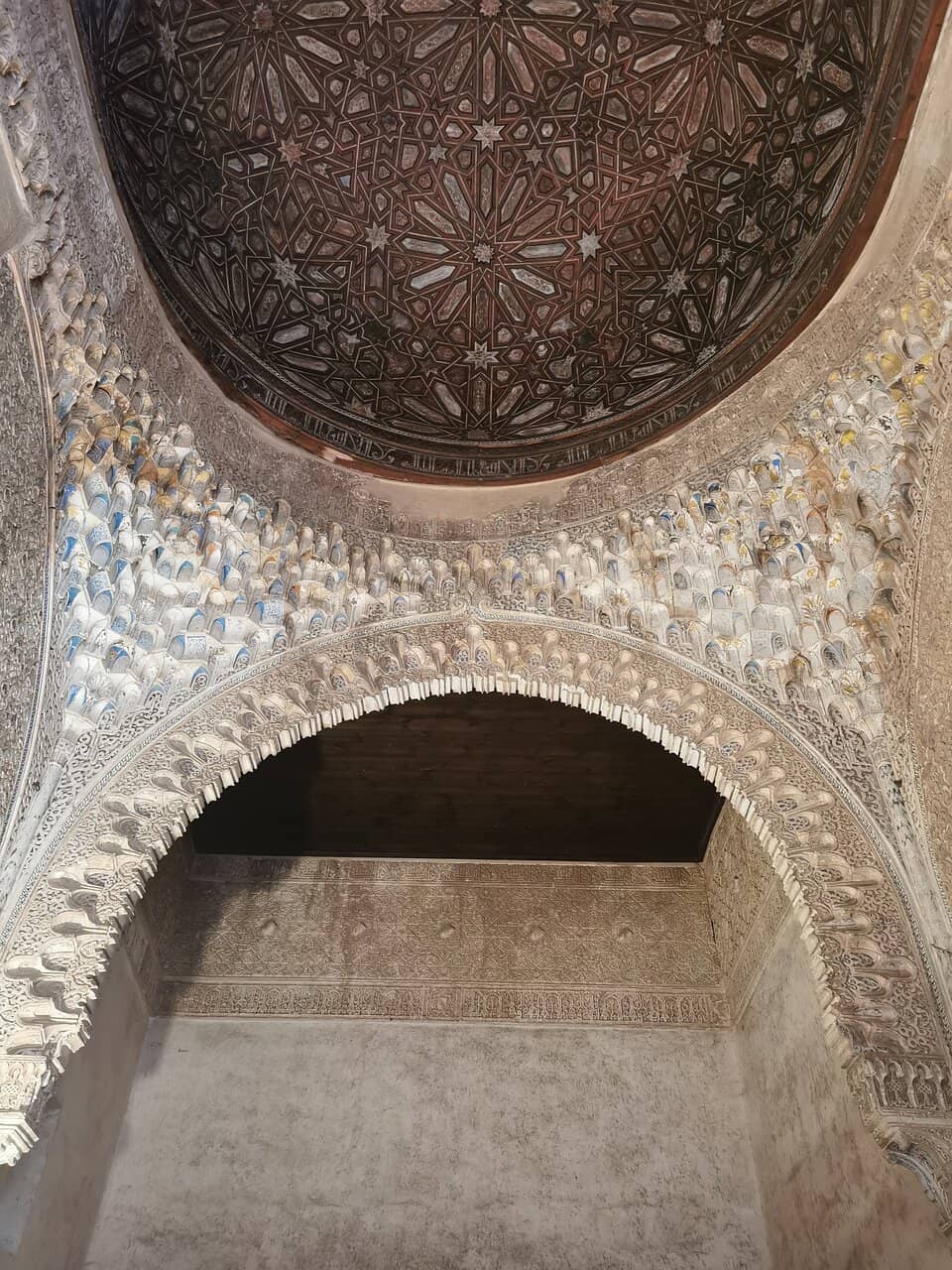
The Celestial Ceiling
Salón de Embajadores
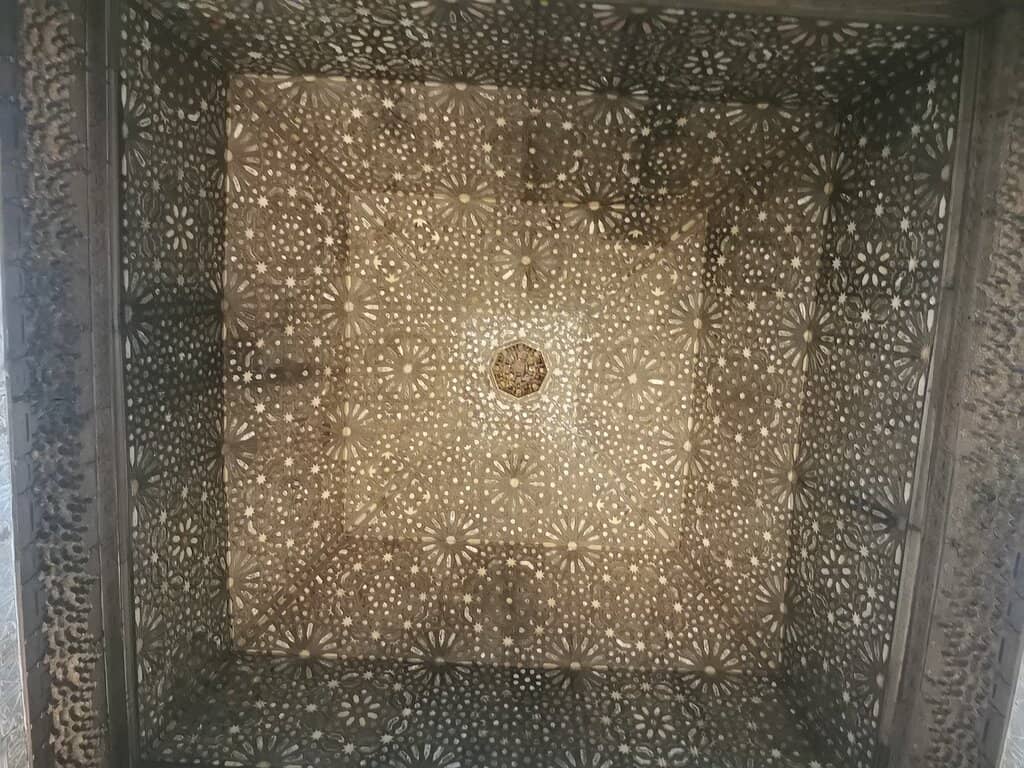
A breathtaking cedar wood dome representing the seven heavens, adorned with 8,017 pieces and symbolizing the universe.
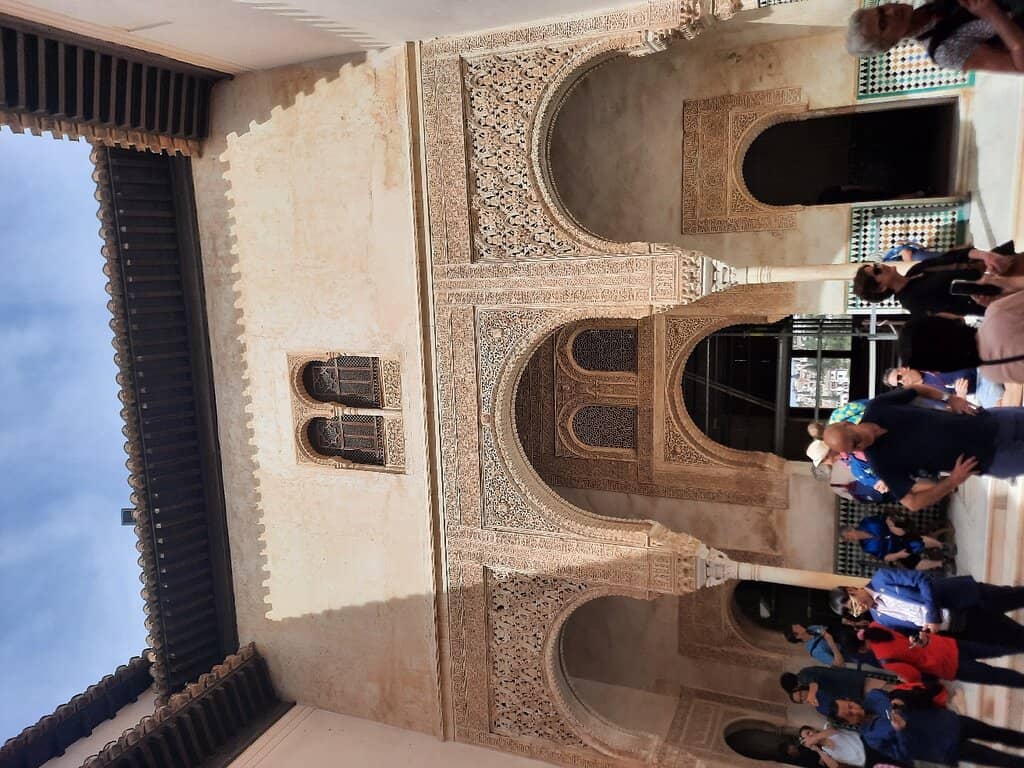
Intricate Stucco Work
Salón de Embajadores Walls
Walls covered in exquisite stucco featuring geometric patterns, praise to God, and Quranic verses.
Sultan's Alcove
Salón de Embajadores
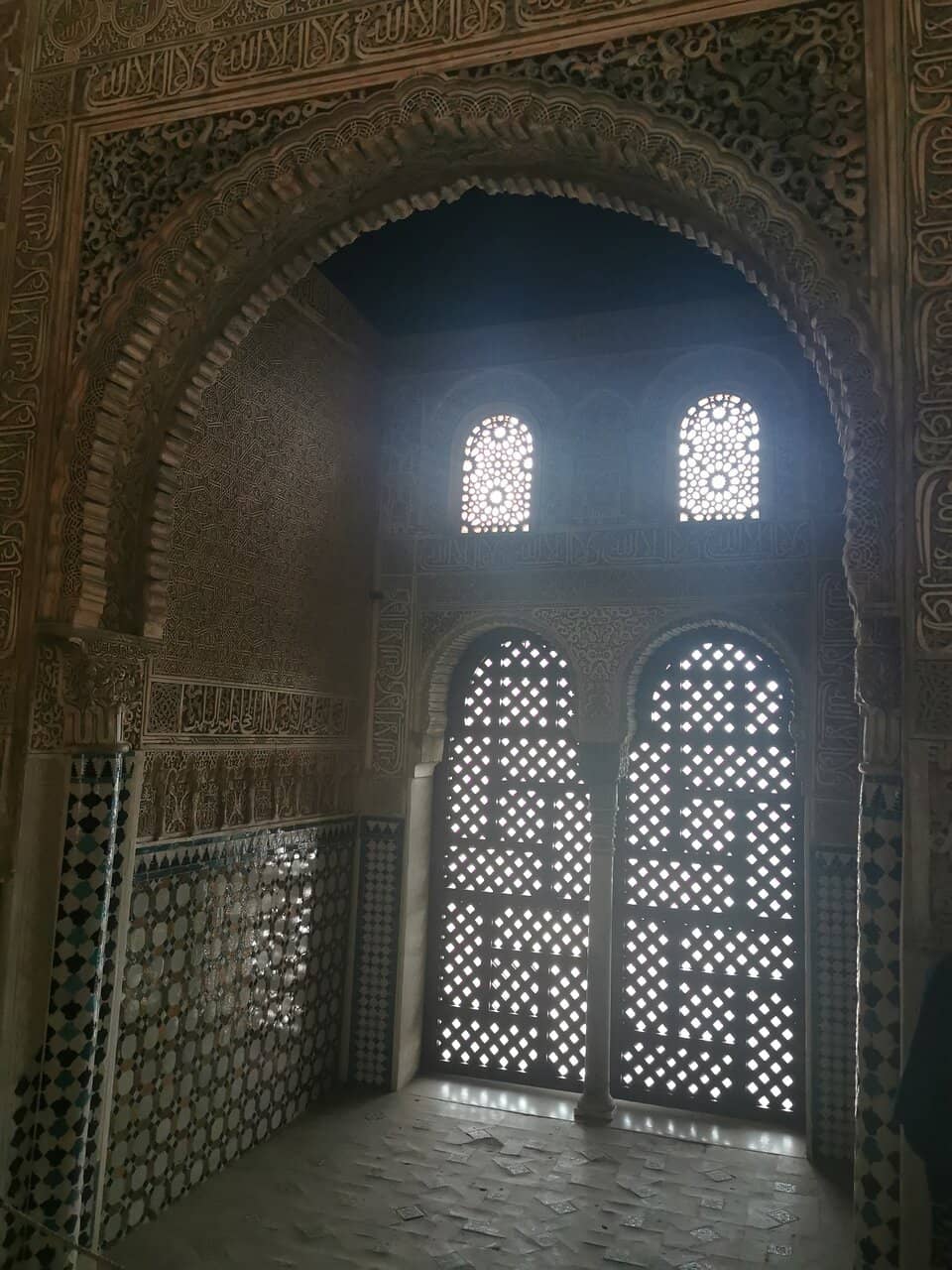
The central, more richly decorated alcove where the Sultan would receive ambassadors, designed to intimidate.
Plans like a pro.
Thinks like you
Planning Your Visit
Timing is Everything
Book Ahead for Alhambra
Best Times
Insider Tips
from TikTok, Instagram & Reddit
⏳ Book Alhambra Tickets Early
Tickets for the Alhambra sell out fast! Book online weeks or months in advance to guarantee entry to the Salón de Embajadores.
✨ Look Up at the Ceiling
Don't miss the incredible cedar wood ceiling representing the seven heavens. It's a true masterpiece of carpentry.
🧐 Admire the Wall Details
The stucco work on the walls is incredibly detailed with geometric patterns and inscriptions. Take your time to observe.
👑 Sultan's Seat
Imagine the Sultan receiving guests from his central alcove. The design is meant to impress and intimidate.
Tips
from all over the internet
⏳ Book Alhambra Tickets Early
Tickets for the Alhambra sell out fast! Book online weeks or months in advance to guarantee entry to the Salón de Embajadores.
✨ Look Up at the Ceiling
Don't miss the incredible cedar wood ceiling representing the seven heavens. It's a true masterpiece of carpentry.
🧐 Admire the Wall Details
The stucco work on the walls is incredibly detailed with geometric patterns and inscriptions. Take your time to observe.
👑 Sultan's Seat
Imagine the Sultan receiving guests from his central alcove. The design is meant to impress and intimidate.
What Travellers Say
Reviews Summary
Visitors consistently praise the Salón de Embajadores as a breathtaking highlight of the Alhambra, particularly marveling at its intricate celestial ceiling and detailed stucco work. The historical significance and the sheer artistry are frequently mentioned as awe-inspiring. Some note that the timed entry can feel rushed, and the sheer volume of visitors can detract from a truly serene experience.
"Hall of Ambassadors
The floor was glazed with white and blue ceramic tiles, where the coat of arms of the sultans of Granada could be seen as an ornament. It was slightly elevated, as it was customary to sit on the floor on cushions and look out the window from that position. The entire perimeter is covered with a tiled plinth. The ceiling is a masterpiece of Granadan carpentry. It is a vault that rises to 18 meters and represents the firmament. It is built with cedar wood and inlaid with other woods of different colors, a total of 8,017 pieces. The central part represents the Seventh Heaven or Islamic Paradise where Allah resides. This center can be reached by ascending the other six circles that surround it. The four diagonals symbolize the four rivers of Paradise.
In the Patio de los Arrayanes, the imposing Comares Tower stands out at one end; it is accessed through the Sala de la Barca (Barge Room). The Hall of Ambassadors, also called the Comares Hall, is the largest and highest room in the entire palace. It occupies the interior of the Comares Tower, overlooking the Darro Valley. Its construction dates back to the second third of the 14th century, during the reign of Yusuf I, the Nasrid Sultan of Granada. He probably did not see the work completed, ordering its construction and lavish decoration, as various inscriptions attribute its authorship to his son, Mohammed V. Its main function was to hold the sultan's private audiences.
In the center of the room, you can see a square with the name of Allah written on tiles. The walls are stuccoed (an exquisite work originating from Persia and Iraq) and feature repeated panels of praise to God, the legend "Only Allah is victorious," as well as the Emir and some fragments of the Quran, resulting in a rich poetic content. Every inch of the wall is covered with some decorative element.
On the sides of the hall are nine alcoves, three on each side, narrow and elongated (about two and a half meters deep). The central alcove on the north side belongs to the sultan, directly opposite the entrance door. The sultan sat there with his back to the exterior light, which, moreover, was directly facing the visiting ambassador, thus being at a disadvantage. In this space, verse inscriptions can be read describing the purpose of the space:
Although my companions [the other alcoves] are constellations of stars, to me alone, and not to them, belongs the glory of housing the Sun. My master Sultan Yusuf clothed me in a garment of splendor and excellence.
There are also a series of windows, formerly closed by wooden lattices and colored glass called cumarias (hence the name comares). The hall is polychrome: gold in the relief, light colors in the depths. The plinth is decorated with tiles. The original floor was made of white and blue glazed ceramic with coats of arms as ornamental motifs.
One of the most striking aspects of the Hall of Ambassadors is its cubic ceiling. It represents the seven heavens of Muslim culture, placed one above the other. The Quran states that the throne of God is above them; the entire ceiling is filled with stars, a total of one hundred and five.
The ceiling is a representation of the Universe, perhaps one of the finest representations from the Middle Ages. Made of cedar wood with inlaid woods of different colors, it depicts superimposed stars that form different levels. In the center, at the highest point, is the Footstool (عرش), on which God-Allah is established according to Quranic accounts. From this, the geometric figures that divide the ceiling into seven spaces are repeated, representing the seven heavens that descend consecutively to this world: 7 is one of the symbolic numbers par excellence. Between them all they form the Throne (كرس), which is the symbol of the entire creation."
Set Contreras
"This is the most majestic room in the Comares Palace, where the throne was located and official receptions were held.
It is square, originally with a marble floor, and is now made of clay tiles with the Alhamares coat of arms, executed in 16th-century tiles, in its center.
The walls of the room each feature three arches leading to three dressing rooms with twin balconies and windows above.
The room is filled with decorative inscriptions replete with poems.
I remember from my visits a feeling of majesty."
ANTONIO ORELLANA MARTIN
"The Comares Tower also houses the largest room in the complex: the Ambassadors' Hall, also known as the Throne Room.
Nine small alcoves, each identical in pairs, open into its walls, except for the central one opposite the entrance, reserved for the Sultan and more richly decorated.
The floor of this room, replaced on several occasions, retains most of its original gilded ceramic pieces in the center, to which similar ones were added later. It may have also had marble slabs. The vertical walls of the Hall are entirely covered with decoration. Its lower section retains various original tiled baseboards, upon which the rich plasterwork decoration alternates geometric shapes with ataurique and epigraphy. Originally, it was polychrome with vivid colors, reminiscent of a tapestry.
The ceiling, with its symbolic program, served to legitimize the Sultan, seated on his throne, presiding over the entire space of the Hall. The epigraphy of the entire Hall is full of court texts with a clear political-religious intention, emphasizing above all things the Divine supremacy."
C. Antonio González
What People Like
What People Dislike
Frequently Asked Questions
🚇 🗺️ Getting There
The Alhambra is located on a hill overlooking Granada. You can reach it by bus (lines C30 and C32 are popular), taxi, or a brisk uphill walk from the city center. Once inside the Alhambra complex, follow signs for the Nasrid Palaces, which house the Salón de Embajadores.
Yes, there is a paid parking lot near the Alhambra entrance. However, it can fill up quickly, and driving in Granada can be challenging due to narrow streets. Taking public transport or a taxi is often recommended.
No, the Salón de Embajadores is part of the Nasrid Palaces, which require a specific timed entry ticket as part of your general Alhambra admission. You cannot access it separately.
The Alhambra is vast. Consider downloading an audio guide or joining a guided tour to understand the history and significance of each area, including the Salón de Embajadores. Wear comfortable shoes!
While efforts have been made, some areas of the Alhambra, including parts of the Nasrid Palaces, have uneven terrain and stairs. It's advisable to check the official Alhambra website for the most up-to-date accessibility information.
🎫 🎫 Tickets & Entry
Ticket prices vary depending on the type of visit (e.g., general ticket, night visit). A standard general ticket includes access to the Nasrid Palaces, where the Salón de Embajadores is located. Check the official Alhambra website for current pricing.
The only official and recommended place to buy Alhambra tickets is through the official Alhambra website. Be wary of third-party sellers who may overcharge or sell invalid tickets.
Yes, your general Alhambra ticket will have a timed entry slot for the Nasrid Palaces, which includes the Salón de Embajadores. Arrive at the Nasrid Palaces entrance at your designated time.
If you miss your timed entry slot for the Nasrid Palaces, you will likely not be allowed to enter, as entry is strictly controlled. Plan your visit to arrive at the Nasrid Palaces entrance with ample time.
Discounts may be available for certain groups (e.g., children, seniors, EU citizens). Free entry days are rare and usually require advance booking through specific channels. Check the official website for details.
🎫 ✨ Onsite Experience
The Nasrid Palaces, including the Salón de Embajadores, typically require at least 1-2 hours to explore thoroughly. Factor in additional time for the rest of the Alhambra complex.
Focus on the stunning celestial ceiling, the intricate stucco work on the walls with its inscriptions, and the Sultan's central alcove. +1
Photography is generally allowed inside the Salón de Embajadores, but flash photography is usually prohibited to protect the delicate artwork. Always check for signage.
Yes, guided tours are available for the Alhambra, often including detailed explanations of the Salón de Embajadores. You can book these in advance or inquire upon arrival.
The inscriptions are primarily religious and poetic, featuring praise to God, verses from the Quran, and phrases like 'Only Allah is victorious.' They add a rich layer of meaning to the space.
🍽️ 🍽️ Food & Dining
Yes, there are cafes and restaurants within the Alhambra complex, offering various options from quick snacks to full meals. However, they can be pricey.
You can typically bring water and small snacks. However, large picnics or meals are usually not permitted inside the monument itself. Check the official rules.
The areas surrounding the Alhambra, particularly in the Albaicín and city center, offer a wide range of restaurants and tapas bars. You'll find everything from traditional Spanish cuisine to international options.
For a more authentic and potentially more affordable experience, many visitors prefer to eat in Granada's city center or the Albaicín neighborhood after their visit.
Granada is famous for its tapas culture, where you often get a free tapa with your drink. Expect dishes like 'tortilla del Sacromonte,' 'remojón granadino,' and various grilled meats and seafood.
📸 📸 Photography
The entire room is photogenic! Focus on capturing the grandeur of the ceiling, the intricate wall details, and the view from the Sultan's alcove.
Flash photography is generally prohibited inside the Nasrid Palaces, including the Salón de Embajadores, to preserve the artwork. Tripods may also be restricted. Always look for signage.
Early morning or late afternoon can offer softer light and fewer people, making for better photography conditions. The golden hour light can be particularly beautiful.
Given the potentially lower light, consider using a wider aperture (lower f-number) and a higher ISO if your camera handles it well. A tripod can be helpful if allowed, but be mindful of others.
Absolutely! The Generalife gardens, the Court of the Lions, and the Generalife patios offer stunning photographic opportunities with their architecture, water features, and greenery.
For Different Travelers
Tailored advice for your travel style
👨👩👧 Families with Kids
To make it more engaging, consider framing the visit as a treasure hunt for specific patterns or symbols on the walls. Pointing out the Sultan's special seat or imagining ambassadors arriving can add an element of storytelling. Ensure they have comfortable shoes for walking and that you've booked tickets well in advance, as queues can be long and tiring for little ones.
🏛️ History Buffs & Architecture Enthusiasts
Pay close attention to the symbolic meanings embedded in the design – from the celestial ceiling representing the cosmos to the inscriptions that reveal the court's ideology. Understanding the function of the room as a diplomatic reception hall and the strategic placement of the Sultan's throne provides a deeper appreciation for the political and cultural context of the era.
📸 Photographers

Aim for early morning or late afternoon visits to capture the best light and potentially fewer crowds. Remember to disable your flash to protect the delicate surfaces and respect other visitors. Experiment with wide-angle lenses to capture the full scope of the room and telephoto lenses to highlight intricate details in the stucco and ceiling.
Deep Dives
In-depth insights and expert knowledge
The Celestial Ceiling: A Universe in Wood
This celestial dome served a dual purpose: aesthetic and symbolic. It aimed to awe visitors and reinforce the Sultan's divine right to rule, positioning him at the center of this cosmic order. The sheer scale and complexity of the work, with its 8,017 pieces, are astonishing, especially considering it was created without modern tools. The craftsmanship is so precise that the different woods create a vibrant, almost three-dimensional effect, making it a truly immersive experience for anyone looking up.
When you stand beneath it, take a moment to appreciate the intricate details. The arrangement of stars and geometric shapes isn't random; it follows complex mathematical principles and astronomical observations of the time. It's a masterpiece that continues to inspire wonder centuries later, offering a glimpse into the worldview of the Nasrid dynasty.
The Sultan's Throne Room: Power and Diplomacy
The Sultan would sit in the central alcove, directly opposite the entrance. This position, with the light behind him and facing the incoming ambassador, was strategically chosen to create an imposing presence and potentially disorient the visitor. The inscriptions on the walls, such as 'Be of little speech, and you will leave in peace,' served as subtle yet firm diplomatic advice, underscoring the gravity of the proceedings.
Beyond its diplomatic function, the room was a symbol of the Sultan's dominion. The opulent decoration, the sheer size of the hall, and the symbolic representation of the cosmos above all served to impress upon visitors the might and prestige of the Nasrid rulers. It was a space where political and religious authority converged, designed to leave a lasting impression of grandeur and power on all who entered.
Artistry in Stucco and Tile
Below the stucco, a tiled plinth runs along the perimeter of the room. While much of the original tiling has been replaced over centuries, the remaining pieces and later restorations showcase the characteristic geometric designs and heraldic motifs of the Nasrid period. The colors, though perhaps faded, would have originally been vibrant, adding to the room's overall splendor.
These decorative elements were not just about beauty; they were integral to the Islamic artistic tradition, which often favored abstraction and intricate patterns over figurative representation. The repetition of motifs and the mathematical precision in the designs reflect a deep appreciation for order and harmony, mirroring the celestial order represented in the ceiling above.
Social
from TikTok, Instagram & Reddit