
Santa Chiara Monastery
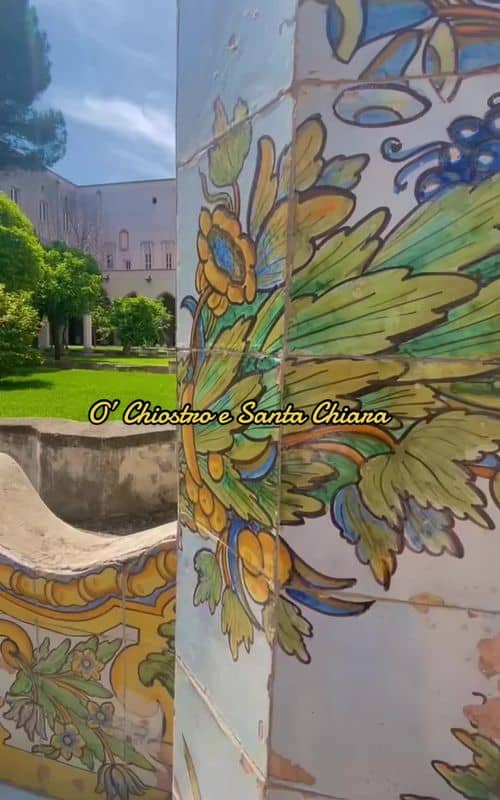
A 14th-century monastery in Naples, famed for its vibrant majolica-tiled cloister, offering a serene escape.
Highlights
Must-see attractions
Social
From TikTok & Reddit
Best Time
Perfect light for photos
Santa Chiara Monastery
Best Time
Perfect light for photos
Highlights
Must-see attractions
A 14th-century monastery in Naples, famed for its vibrant majolica-tiled cloister, offering a serene escape.
"An oasis of calmness in the middle of a bustling city."

📸 Capture the Colors
The majolica tiles are incredibly photogenic! Visit in the morning for the best light.
🚶♀️ Wander the Gardens
Take your time to stroll through the cloister gardens and admire the intricate tile work.

Highlights
Discover the most iconic attractions and experiences
Majolica Cloister
Cloister
Vibrant 18th-century majolica tiles adorn columns and benches, creating a dazzling, colorful garden oasis.
Gothic Architecture
Church and Monastery
Explore the historic Gothic church and the monastery's serene spaces, showcasing centuries of architectural evolution.

Frescoes and Art
Cloister Walls
Admire faded frescoes on cloister walls, hinting at the monastery's rich artistic past.
Plans like a pro.
Thinks like you
Planning Your Visit
Escape the Bustle: Find Your Oasis
Majolica Masterpiece Awaits
Best Times
Insider Tips
from TikTok, Instagram & Reddit
📸 Capture the Colors
The majolica tiles are incredibly photogenic! Visit in the morning for the best light.
🚶♀️ Wander the Gardens
Take your time to stroll through the cloister gardens and admire the intricate tile work.
🤫 Seek Serenity
This monastery is an oasis of calm in bustling Naples. Enjoy the peaceful atmosphere.
🏛️ History Buffs Rejoice
Learn about the monastery's 14th-century origins and its WWII restoration. 
Tips
from all over the internet
📸 Capture the Colors
The majolica tiles are incredibly photogenic! Visit in the morning for the best light.
🚶♀️ Wander the Gardens
Take your time to stroll through the cloister gardens and admire the intricate tile work.
🤫 Seek Serenity
This monastery is an oasis of calm in bustling Naples. Enjoy the peaceful atmosphere.
🏛️ History Buffs Rejoice
Learn about the monastery's 14th-century origins and its WWII restoration.
What Travellers Say
Reviews Summary
Visitors consistently praise the Santa Chiara Monastery for its stunning and unique majolica-tiled cloister, describing it as a peaceful oasis in the heart of bustling Naples. While the beauty of the tiles and the tranquil atmosphere are major draws, some find the church itself to be simpler than expected.
"Job me please"
Mirza Tasawar
"Great"
Floren Martha
"A place of peace and silence from which you can enjoy a splendid view of Mount Titano."
Dara G.
What People Like
What People Dislike
Frequently Asked Questions
🚇 🗺️ Getting There
The Monastery of Santa Chiara is centrally located in Naples, making it easily accessible. You can reach it by public transport, including buses and the metro. Many visitors find it a pleasant walk from other key attractions in the historic center.
Yes, the monastery is situated in the heart of Naples, close to many other popular sites like the historic center, the National Archaeological Museum, and the vibrant Spaccanapoli street.
Walking is often the best way to explore Naples' historic center and reach Santa Chiara. Alternatively, the local bus network is extensive, and the nearest metro stations are Dante and Università.
🎫 🎫 Tickets & Entry
Yes, there is an admission fee to enter the Monastery of Santa Chiara, which includes access to the museum and the stunning cloister. It's advisable to check the official website for current pricing and opening hours.
Opening hours can vary seasonally, so it's best to check the official website before your visit. Generally, it's open daily, but it's wise to confirm to avoid disappointment.
Typically, your admission ticket grants access to both the museum area and the famous majolica cloister. The church itself may have separate access or be part of the general visit.
Information on discounts for students, seniors, or groups is usually available on the official website. It's worth checking for any special offers or combined tickets with other attractions.
📸 📸 Photography
Photography is generally allowed in most areas of the Monastery of Santa Chiara, especially in the cloister, to capture its beauty. However, always be respectful of the space and other visitors.
The majolica-tiled cloister is the undisputed star for photography, with its vibrant colors and intricate patterns. The garden setting also provides beautiful backdrops.
For professional photography or the use of tripods, it's best to inquire with the monastery administration beforehand, as specific rules may apply to ensure the preservation of the site.
🎫 🏛️ History & Architecture
The Santa Chiara Monastery was originally built in the 14th century, starting in 1310. It has undergone significant renovations and restorations over the centuries, most notably after WWII bombing.
The majolica tiles, dating from the 18th century, were added to the cloister to create a more vibrant and decorative space. They feature floral motifs, fruits, and scenes of rural life, transforming the columns and benches into works of art.
Yes, the monastery's Gothic church was heavily damaged during World War II bombings. It was later rebuilt, preserving its historical significance while incorporating modern elements.
It was founded as a convent for the Poor Clares, an order of nuns. The monastery served as a place of religious devotion and community life for centuries.
For Different Travelers
Tailored advice for your travel style
👨👩👧 Families with Kids
While the historical aspects might be less engaging for very young children, the sheer visual appeal of the cloister can hold their attention. It's also a relatively peaceful environment, making it a good option for families looking for a break from the more chaotic attractions in Naples. Consider bringing a small notebook for kids to sketch their favorite tile patterns.
📸 Photographers & Art Lovers
+2Beyond the cloister, the monastery's Gothic architecture and the remnants of frescoes offer further photographic and artistic interest. The contrast between the serene cloister and the historic church provides diverse visual narratives. Visiting in the morning is highly recommended for the best natural light to capture the brilliance of the tiles.
🧘♀️ Seekers of Peace and Tranquility
Many visitors find the monastery to be an oasis of tranquility, a place to recharge before continuing their exploration of the city. The absence of overwhelming crowds, especially during off-peak hours, enhances this sense of peace. It’s a perfect spot to simply sit, breathe, and soak in the serene ambiance.
Deep Dives
In-depth insights and expert knowledge
The Enchanting Majolica Cloister
+2Visitors often describe the cloister as a peaceful sanctuary, perfect for quiet contemplation and appreciating the intricate craftsmanship. The sunlight filtering through the pillars, illuminating the colorful tiles and the lush greenery, creates a magical atmosphere. It's a place where history, art, and nature converge beautifully, offering a moment of tranquility and visual delight.
+1While the cloister is the star, don't overlook the faded frescoes that still adorn some of the cloister walls. These remnants offer a glimpse into the monastery's earlier artistic expressions and add another layer of historical depth to the experience.
A Glimpse into History and Resilience
+1The monastery's resilience is evident in its post-war restoration. The church, heavily impacted by bombings, was meticulously rebuilt to preserve its historical integrity. This act of reconstruction ensured that the monastery could continue to stand as a significant landmark in Naples, offering a connection to the city's past.
Exploring the monastery allows visitors to connect with this layered history, from its medieval origins to its modern-day preservation. It’s a place that tells a story of faith, art, and the enduring spirit of Naples.



Social
from TikTok, Instagram & Reddit