Resurrection Monastery Uglich
A 17th-century monastic complex in Uglich, known for its unique Rostov-style inlays and ongoing restoration, offering a peaceful spiritual experience.
Highlights
Must-see attractions

Social
From TikTok & Reddit
Best Time
Fewer crowds, peaceful atmosphere
Resurrection Monastery Uglich
Best Time
Fewer crowds, peaceful atmosphere
Highlights
Must-see attractions
A 17th-century monastic complex in Uglich, known for its unique Rostov-style inlays and ongoing restoration, offering a peaceful spiritual experience.
"Felt peace in the temple, inspired by this place."
🚶♀️ Explore at Your Own Pace
Some visitors feel rushed on guided tours; consider exploring independently to fully absorb the tranquility.
⛪ Check Service Times
As an active monastery, services are held. Inquire about schedules if you wish to attend or avoid them.
Highlights
Discover the most iconic attractions and experiences
Resurrection Cathedral
Central complex
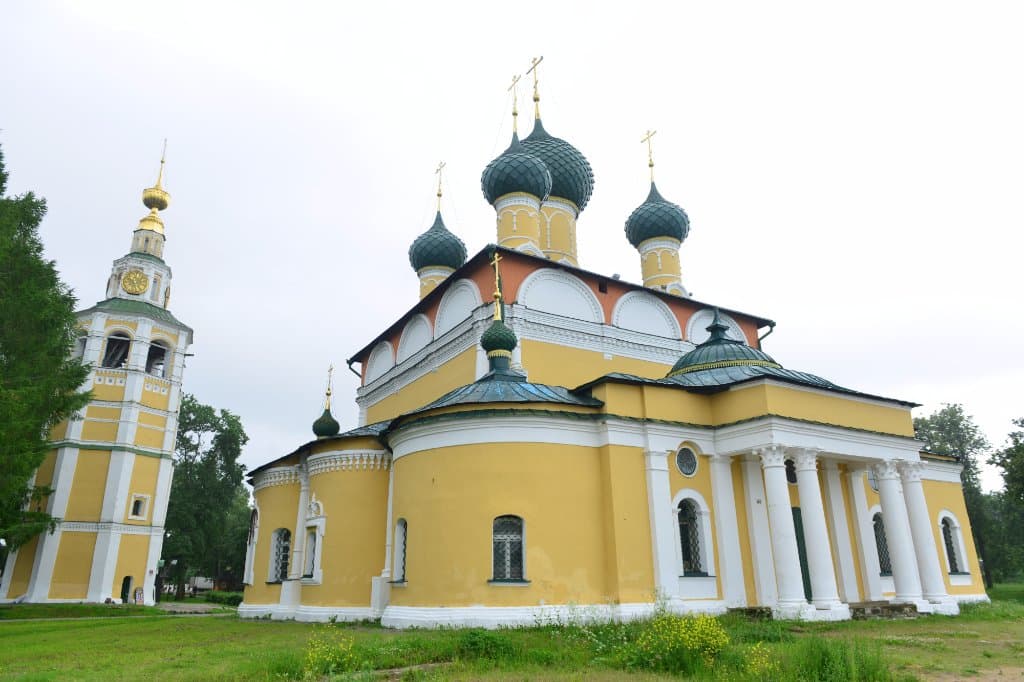
A grand 17th-century cathedral, a testament to the architectural prowess of its time, featuring unique inlays and preserved paintings.
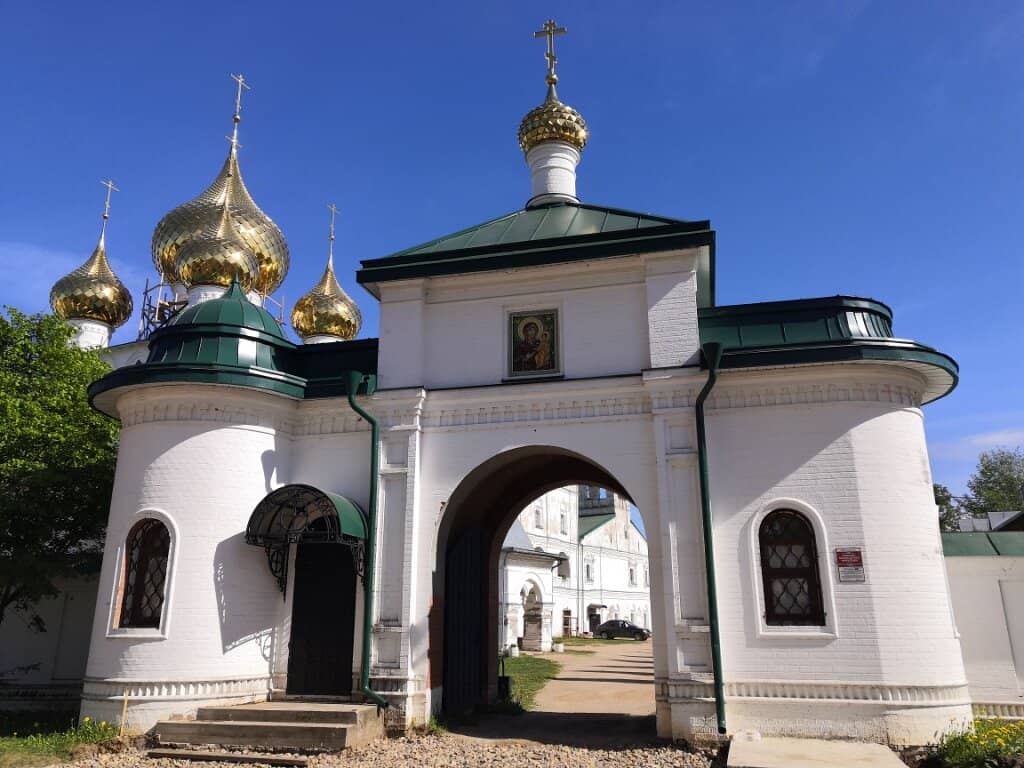
Gallery Walkway
Connecting buildings
Stroll along the elevated gallery connecting the monastery's structures, offering unique perspectives and access to different areas.
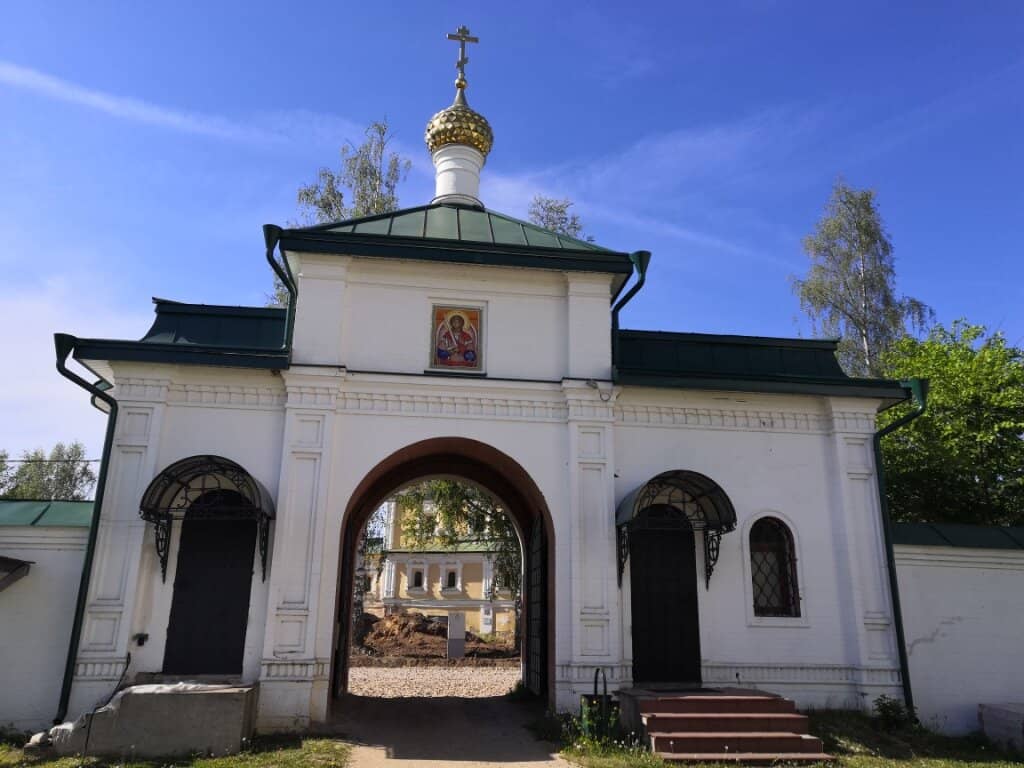
Monastery Walls
Perimeter
Admire the walls adorned with Rostov-style inlays depicting mythical creatures and historical scenes, hinting at turbulent pasts.
Plans like a pro.
Thinks like you
Planning Your Visit
Timing Your Visit for Tranquility
Understanding Restoration Progress
Best Times
Insider Tips
from TikTok, Instagram & Reddit
🚶♀️ Explore at Your Own Pace
Some visitors feel rushed on guided tours; consider exploring independently to fully absorb the tranquility.
⛪ Check Service Times
As an active monastery, services are held. Inquire about schedules if you wish to attend or avoid them.
📸 Respectful Photography
Be mindful of ongoing restoration and religious services when taking photos.
🚗 Parking Availability
Parking is usually available and spontaneous, with few visitors.
Tips
from all over the internet
🚶♀️ Explore at Your Own Pace
Some visitors feel rushed on guided tours; consider exploring independently to fully absorb the tranquility.
⛪ Check Service Times
As an active monastery, services are held. Inquire about schedules if you wish to attend or avoid them.
📸 Respectful Photography
Be mindful of ongoing restoration and religious services when taking photos.
🚗 Parking Availability
Parking is usually available and spontaneous, with few visitors.
What Travellers Say
Reviews Summary
Visitors find Resurrection Monastery Uglich to be a peaceful and historically significant site, appreciating its 17th-century architecture and unique wall inlays. While many areas are undergoing restoration, the active monastic life and the ongoing revival contribute to its spiritual atmosphere. Some visitors note that the restoration limits full interior exploration, but the overall experience is often described as inspiring and tranquil.
"The monastery was founded in the 14th century, although in a slightly different place. Later it was moved here, away from the steep bank, and rebuilt in stone. It was built by the same masters who later built the metropolitan courtyard in Rostov, the one we now call the Rostov Kremlin. Many of the architectural solutions are recognizable. Under Catherine II, the monastery became impoverished and fell into disrepair. And in Soviet times it was completely closed and used for economic purposes. Now the monastery has been returned to the church, monastic life is improving..."
Олег Васильевич
"This is one of the oldest city monasteries. It was probably founded in the second half of the 13th century, during the reign of Prince Roman the Saint. The wooden monastery buildings stood closer to the Volga, at the confluence of the now-buried Trinity Stream, which served as the western boundary of the settlement. The monastery suffered from flooding, and in the 17th century, Metropolitan Jonah of Rostov, known for his prolific construction work, decided to rebuild the monastery in stone further inland, commemorating his tonsure at the Resurrection Monastery.
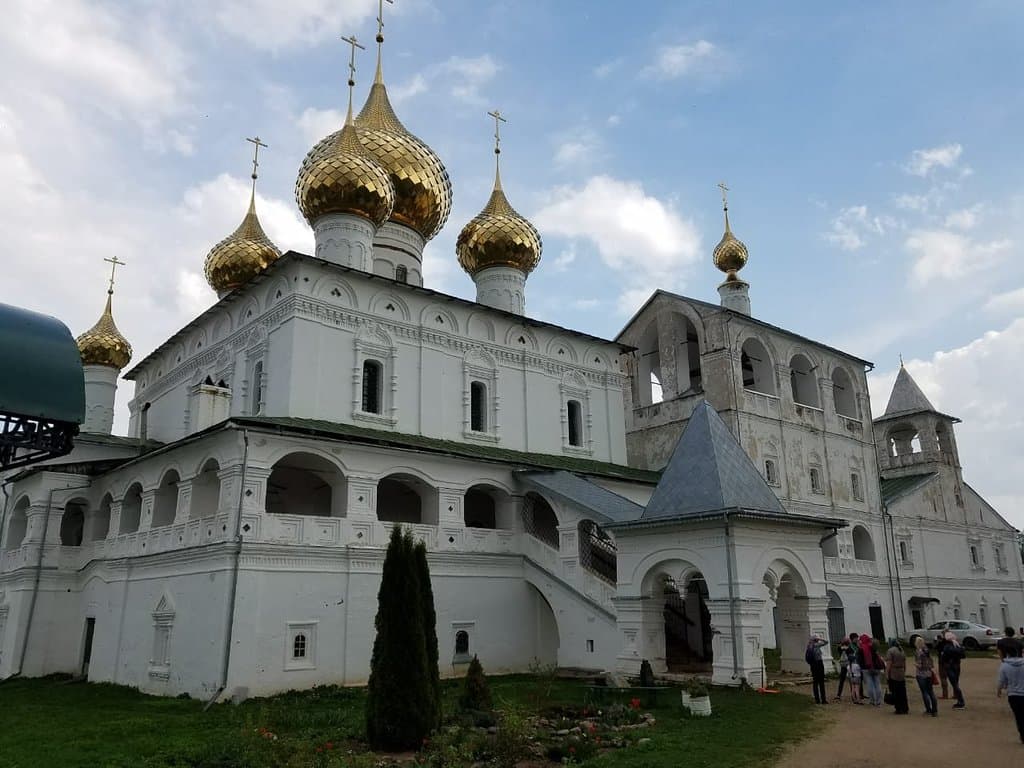
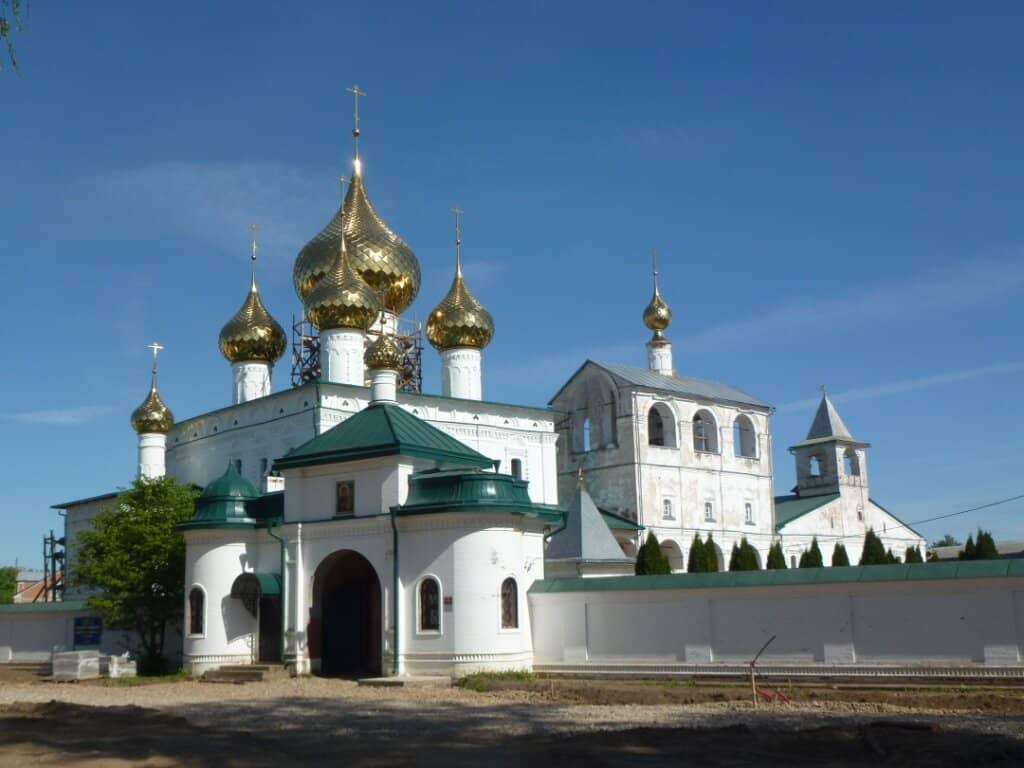
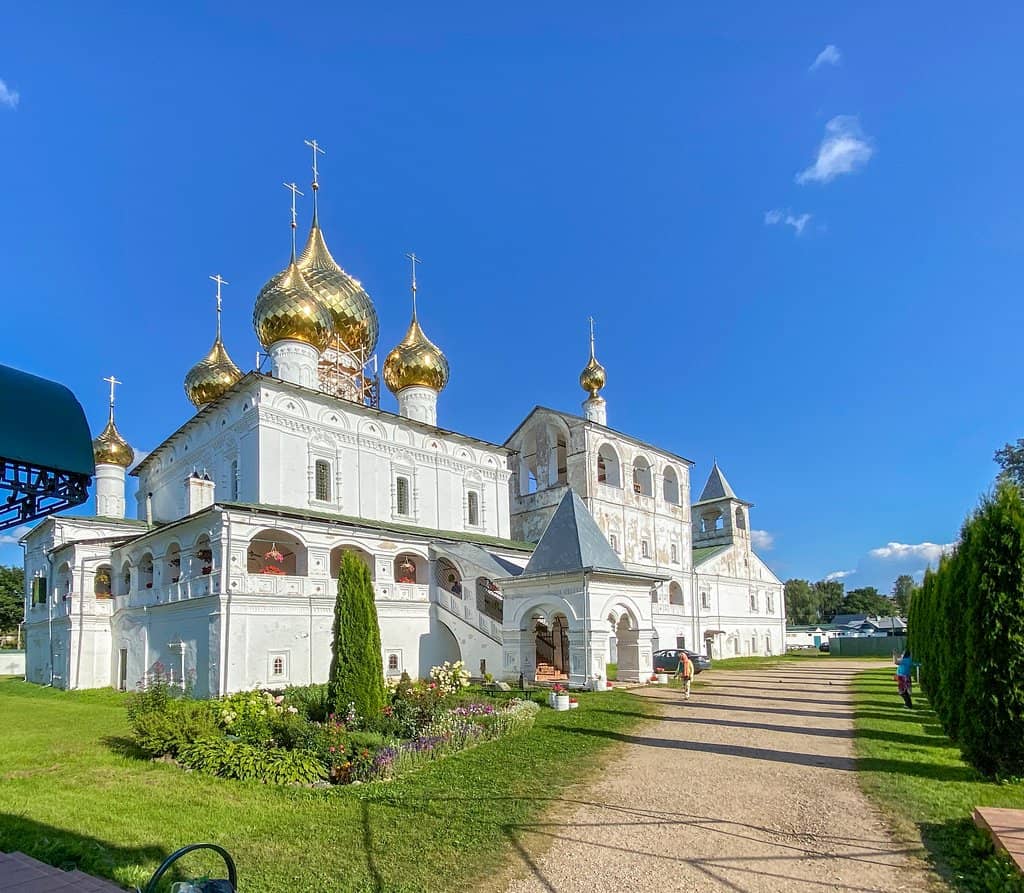
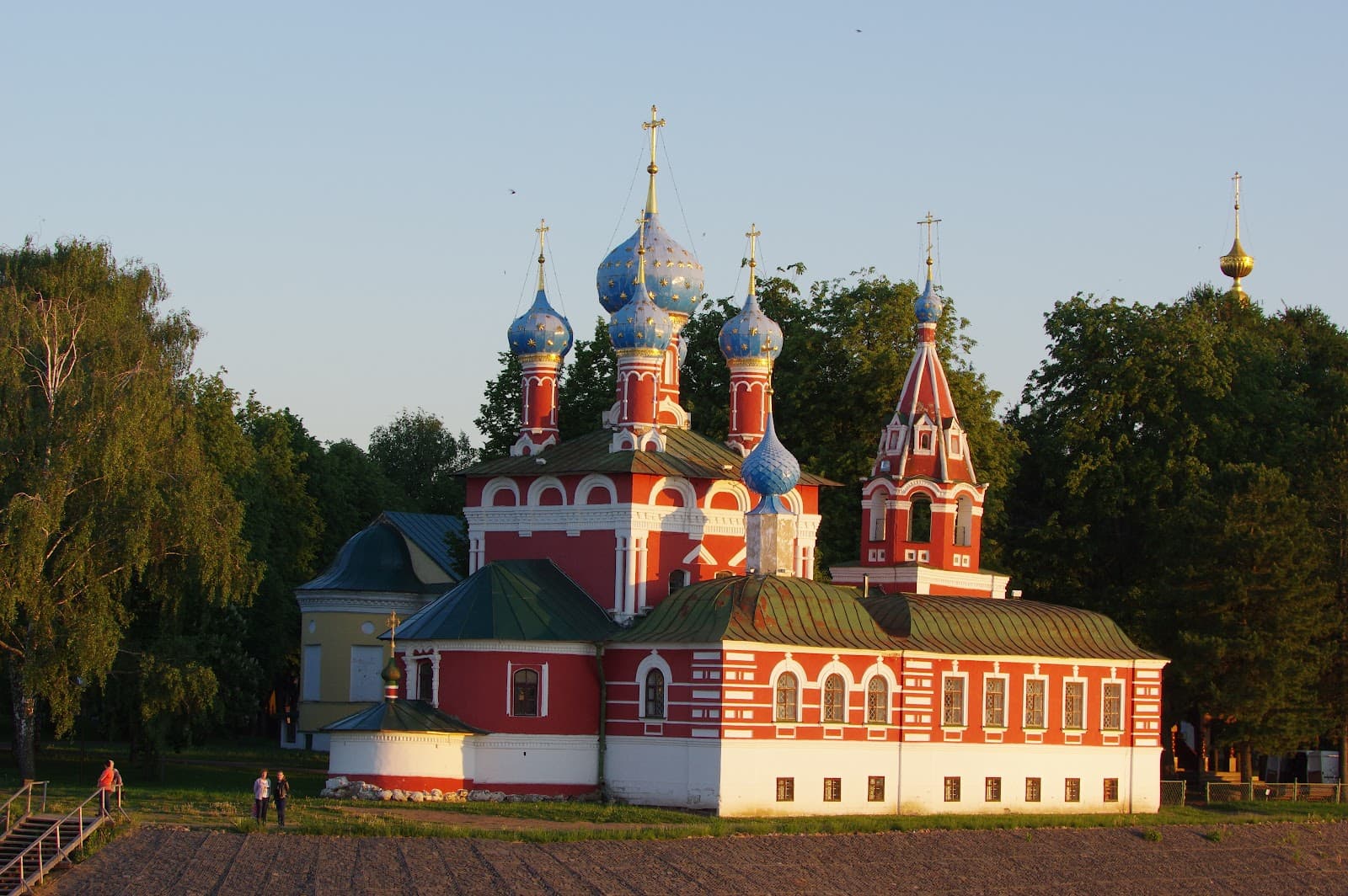
Erected in 1670, the grand complex embodied the concept of a monastery-city. It includes the Resurrection Cathedral with two aisles on the south and north sides, a three-bay belfry with the Church of St. Mary of Egypt, and a refectory with the Church of the Smolensk Icon of the Mother of God (Hodegetria of Smolensk). A clock tower, which once held a striking clock, rises above the refectory. All the buildings are raised on a high basement and connected by a gallery.
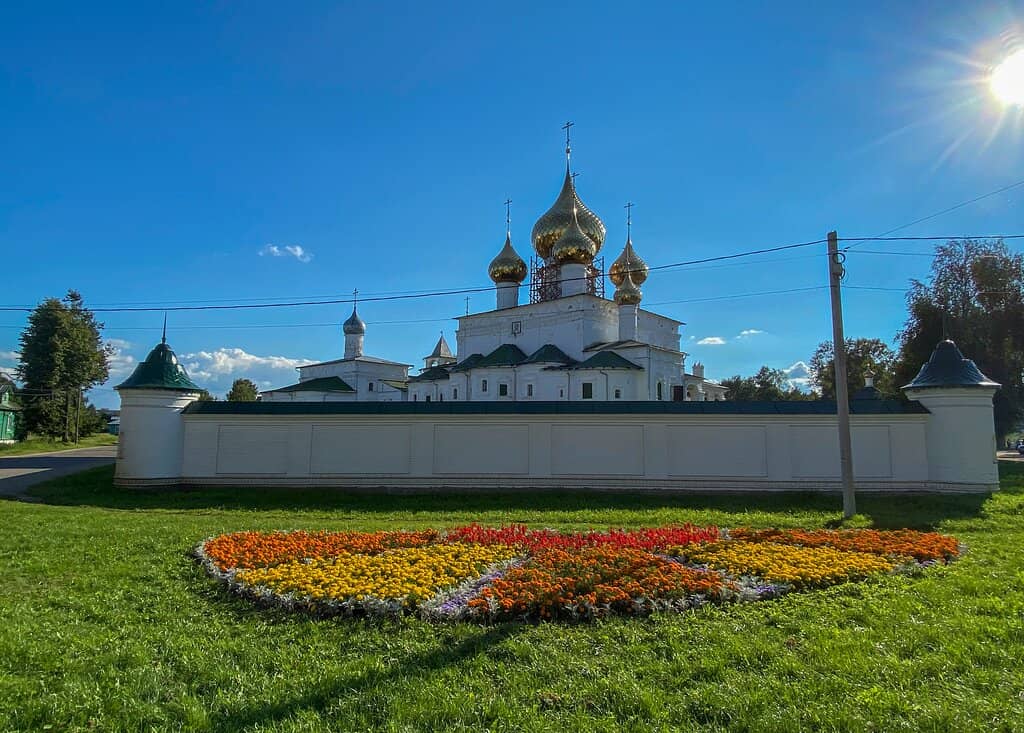
The monastery walls are decorated with inlays from Rostov. They depict mythical animals, double-headed eagles depicting scenes of the capture of the fortress, and horsemen with the inscription "The Pole is coming"—all reminiscent of the turbulent times.
In 1764, the monastery was abolished and converted into a parish church. In the early 19th century, the porch and roof were dismantled and rebuilt, and the cathedral was repainted. By the early 20th century, cracks had appeared in the cathedral's vaults due to subsidence. The situation worsened after the construction of a hydroelectric power station and the filling of Trinity Stream, and the building began to sink into the ground, which softened under the water.
Fragments of 17th-century paintings and 19th-century paintings have been preserved in the interiors. The monastery was transferred to the Russian Orthodox Church in 1999 and now functions as a monastery. The Resurrection Church is undergoing active restoration, and services are held in the bell tower, which can be reached by walking through the gallery."
Ксения Хлыстун
"The monastery grounds are clean and well-maintained, restoration work is underway inside. The territory itself is not very large. Parking in front of the monastery is spontaneous, but there are few people, so there is always space. Opposite there is an old church, which is not reflected on the maps, with an interesting history. Read the history of the church here on Instagram @jenshesta"
Podvig_1941_1945
What People Like
What People Dislike
Frequently Asked Questions
🚇 🗺️ Getting There
The monastery is located within the city of Uglich. If arriving by car, parking is generally available and spontaneous. Public transport options within Uglich would involve local buses or taxis to reach the monastery's vicinity.
While specific bus routes might vary, Uglich is served by public transport. Taxis are also a convenient option to reach the monastery directly from your accommodation or the city center.
Uglich is accessible by train or bus from major cities like Moscow and Yaroslavl. Once in Uglich, local transport will be needed to reach the monastery.
🎫 🎫 Tickets & Entry
As an active monastery, entry to the grounds is generally free. However, specific areas or tours might have associated fees, especially if restoration work limits access. It's advisable to check on-site for any potential charges.
Being an active monastic site, hours can be variable, especially with ongoing restoration. It's best to visit during daylight hours and inquire locally about specific access to buildings or services.
Monasteries are typically open year-round, though access to certain buildings might be restricted due to weather or restoration efforts.
The Resurrection Cathedral is a central part of the complex. While undergoing restoration, parts of it may be accessible, or services might be held in other parts of the monastery like the bell tower.
🎫 🧭 Onsite Experience
Visitors can admire the 17th-century architecture, including the Resurrection Cathedral, the belfry, and the refectory. The monastery walls with unique inlays and the connecting gallery are also points of interest.
Yes, a stroll along the walls and grounds can provide a good overview, especially if some interiors are closed for restoration.
Information on guided tours can be limited, and some visitors prefer to explore independently to fully appreciate the atmosphere. Inquire on-site for any available options.
Reading about its founding in the 15th century, its rebuilding in the 17th century, and its subsequent history of closure and restoration will enhance your visit.
Yes, Resurrection Monastery Uglich is an active monastery, with monastic life being re-established.
📸 📸 Photography
The monastery walls with their intricate inlays, the grand facade of the Resurrection Cathedral, and the elevated gallery offer excellent photographic opportunities.
Photography rules can vary, especially inside active religious sites or areas undergoing restoration. It's best to be discreet and respectful, and check for any posted restrictions.
Early morning or late afternoon light can enhance the architectural details and create a serene atmosphere for photography.
For Different Travelers
Tailored advice for your travel style
👨👩👧 Families with Kids
Keep in mind that access to certain areas might be limited due to ongoing work. The grounds are clean and safe for walking, and a visit can be combined with exploring other historical sites in Uglich. It's advisable to manage expectations regarding full interior access and focus on the visual and historical aspects of the monastery.
🏛️ History Enthusiasts
Understanding the monastery's journey through periods of prosperity, decline, and Soviet-era closure, followed by its recent revival and ongoing restoration, provides a compelling historical arc. The architectural style, reminiscent of other significant Rostov-Suzdal architectural schools, adds another layer of historical context.
Deep Dives
In-depth insights and expert knowledge
Architectural Marvels and Historical Layers
Key architectural features include the buildings being raised on a high basement and interconnected by a gallery, creating a unified and imposing structure. The monastery walls are notably decorated with inlays from Rostov, depicting mythical animals, double-headed eagles, and scenes of historical conflict, reflecting the turbulent times of its construction. These decorative elements offer a glimpse into the artistic and symbolic expressions of the era.
The monastery's history is marked by periods of prosperity and decline. It was abolished under Catherine II in 1764 and later used for economic purposes during the Soviet era. Significant damage occurred due to the construction of a hydroelectric power station and the filling of a nearby stream, causing the building to sink. Since its return to the Russian Orthodox Church in 1999, active restoration has been underway, with monastic life gradually being re-established.
Restoration and Present-Day Monastic Life
Visitors often note the ongoing work, with many areas being 'dazzling white' due to fresh restoration. While this might mean some historical elements are not yet fully visible, it signifies a vibrant revival of the monastery. The pace of restoration means that the experience can be more about appreciating the structure and the spiritual atmosphere rather than exploring fully completed interiors.
Despite the restoration, the monastery grounds offer a sense of peace. The clean and well-maintained territory, combined with the historical significance of the site, makes it a worthwhile visit. It's recommended to check locally for the most up-to-date information on accessible areas and service schedules.
Social
from TikTok, Instagram & Reddit