
Trajan's Bridge
A historic, wide bridge in Timisoara, connecting neighborhoods and offering scenic river views. A vital city artery with early Art Deco influences.
Highlights
Must-see attractions

Social
From TikTok & Reddit
Best Time
Fewer crowds, great light
Trajan's Bridge
Best Time
Fewer crowds, great light
Highlights
Must-see attractions
A historic, wide bridge in Timisoara, connecting neighborhoods and offering scenic river views. A vital city artery with early Art Deco influences.
"One of the most trafficked bridges, offering a view of Begej and a beautifully landscaped quay to walk along."
📸 Capture the Bridge's Grandeur
The bridge is a popular crossing; try early morning or late evening for fewer cars and better light for photos.
🚶♀️ Stroll the Quays
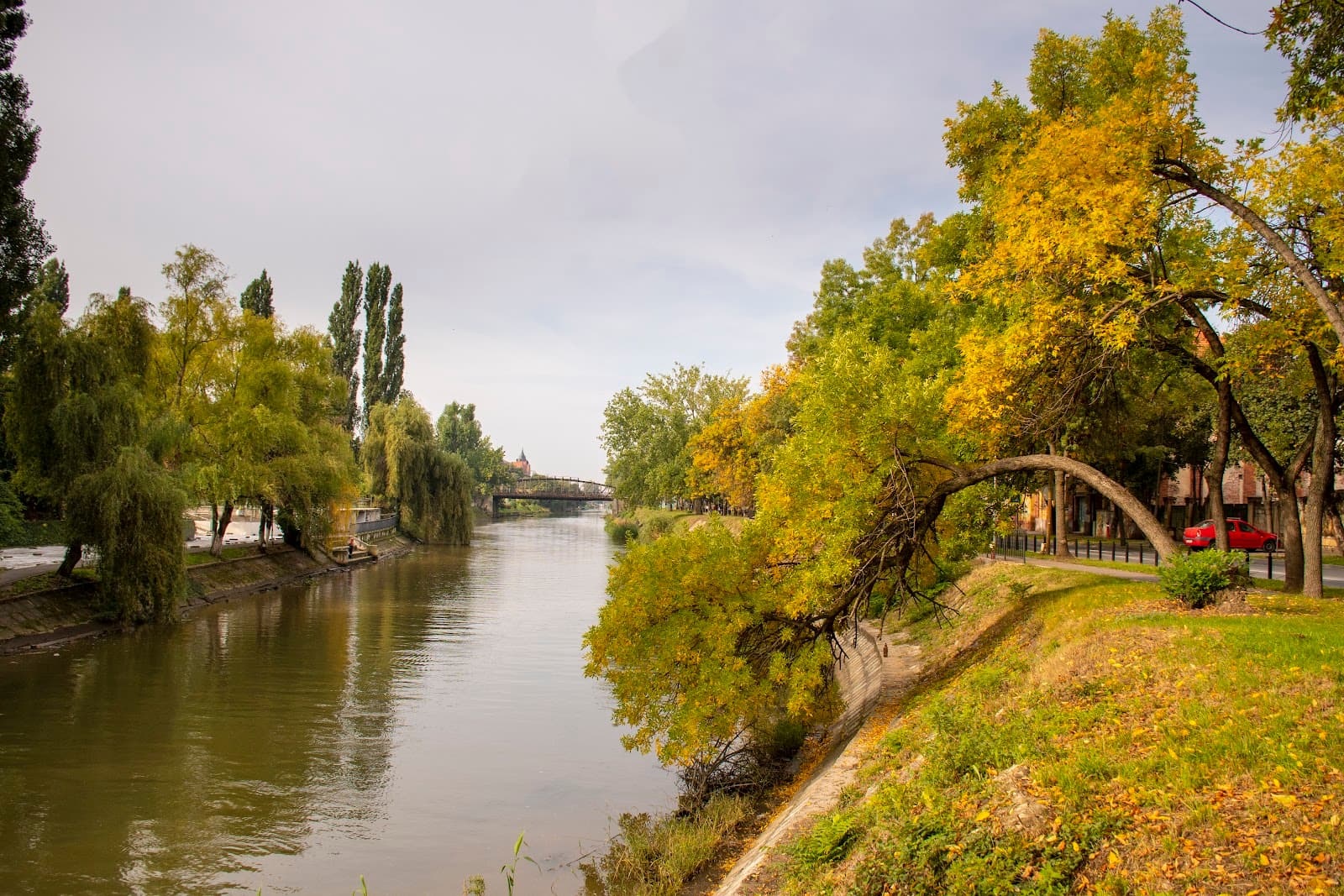
Enjoy the landscaped quays along the Begej river for a pleasant walk with views of the bridge.
Highlights
Discover the most iconic attractions and experiences
Trajan's Bridge Architecture
Timisoara, Romania
Admire the early Art Deco style of this wide, historic bridge, a vital link between Timisoara's neighborhoods.
Begej River Views
Along Trajan's Bridge
Enjoy scenic vistas of the Begej river and its landscaped quays, perfect for a leisurely stroll.
Plans like a pro.
Thinks like you
Planning Your Visit
Timing is Key for Trajan's Bridge
Navigating Timisoara's Bridges
Best Times
Insider Tips
from TikTok, Instagram & Reddit
📸 Capture the Bridge's Grandeur
The bridge is a popular crossing; try early morning or late evening for fewer cars and better light for photos.
🚶♀️ Stroll the Quays
Enjoy the landscaped quays along the Begej river for a pleasant walk with views of the bridge.
🚗 Traffic Awareness
As a main thoroughfare, expect traffic. Plan your visit to avoid peak commuting times if you prefer a quieter experience.
Tips
from all over the internet
📸 Capture the Bridge's Grandeur
The bridge is a popular crossing; try early morning or late evening for fewer cars and better light for photos.
🚶♀️ Stroll the Quays
Enjoy the landscaped quays along the Begej river for a pleasant walk with views of the bridge.
🚗 Traffic Awareness
As a main thoroughfare, expect traffic. Plan your visit to avoid peak commuting times if you prefer a quieter experience.
What Travellers Say
Reviews Summary
Trajan's Bridge is a historically significant and highly functional landmark in Timisoara, praised for its architectural evolution and its role as a vital city connector. Visitors appreciate the pleasant views of the Begej river and the surrounding landscaped quays, making it a good spot for a stroll. However, its primary function as a busy traffic route means it can be noisy and crowded, which might detract from a more tranquil experience.
"TRAIAN'S BRIDGE
The connection between the Cetate and the Iosefin and Elisabetin neighborhoods
The Traian Bridge, "Maria Bridge" or "Huniade Bridge" is located in the center of today's Timisoara, to the right of the Metropolitan Cathedral. The year of construction is not known, but it is assumed that it was made after a drawing by Gustave Eiffel.
The bridge connected the old Cetate with the Iosefin and Elisabetin neighborhoods and was rebuilt over the years, first of metal, then of concrete, reaching its present form after the last rehabilitation that took place in 2006.
Located at the exit of the Citadel at the Petrovaradin gate, the Traian Bridge was originally built of wood. In 1871, it was torn down and replaced by a metal one. The metal structure of the bridge was brought from the bridge factory of Reşita Factories, where it was executed. The bridge was made of iron and was supported on pillars.
In 1889, with the electrification of the tram, until then the horse-drawn tram was used, the bridge was consolidated. Over time it became unsuitable for the existing traffic, it was not wide and solid enough and it was decided to restore it.
In 1913, the old metal bridge was dismantled and moved downstream, where it was rebuilt in 1917, becoming today's "Metal Bridge", and a reinforced concrete bridge was built in its place.
Designed since 1911 by engineer Károly Lád and architect Elemér Wachtel, the construction of the bridge began in March 1913 and was only completed in 1916 due to the First World War. In 1916, the bridge was only used by pedestrians, traffic was allowed only in 1917, and the tram only started running in 1918.
The bridge has a width of 32.8 meters and a length of 40 meters. The tram tracks are seven meters wide and both sidewalks are two meters each. It is one of the widest old bridges in Timisoara.
Different names
Over time, the bridge had several names, influenced by political periods. In the city plan of 1849, its name was "Great Bridge". After the Austro-Hungarian agreement of 1867, the bridge took the name of Losonczy, the last defender of the Timisoara Citadel, before it was conquered by the Ottomans in 1552. Later it was named the Huniade Bridge after the military commander and statesman John Hunyadi. After 1919, the name of the bridge is what it is today, namely the Traian Bridge, named after the great Roman emperor.
The architecture of the bridge is simple, and the architecture of the upper part confirms the early period of the Art Deco style. In the last version of the bridge, the towers, galleries and ornamental elements, provided for in the consolidation and reconstruction project, were abandoned."
Petre Mitrea (QoL Research)
"One of the most trafficked bridges. Both by trams or trolleybuses and by private cars. It's the fastest way to the center."
Fevronia
"A view of Begej and a beautifully landscaped quay to walk along"
Ana Stojsavljevic
What People Like
What People Dislike
Frequently Asked Questions
🚇 🗺️ Getting There
Trajan's Bridge is centrally located in Timisoara, connecting the Cetate district with Iosefin and Elisabetin neighborhoods. It's easily accessible by public transport, including trams and trolleybuses, and is a main route for cars. Walking from the city center is also a convenient option.
Yes, Trajan's Bridge is a major road bridge and is very much accessible by car. However, it's one of the most trafficked bridges in Timisoara, so be prepared for potential traffic congestion, especially during peak hours.
Absolutely! Trams and trolleybuses frequently cross Trajan's Bridge, making it very accessible via public transport. It's a key artery for the city's transit system.
🎫 🎫 Tickets & Entry
No, Trajan's Bridge is a public thoroughfare and does not require a ticket for access. You can walk or drive across it freely at any time.
Trajan's Bridge is open 24/7 as it's a public road and pedestrian bridge. There are no specific opening or closing hours.
🎫 🧭 Onsite Experience
While primarily a functional bridge, you can enjoy the views of the Begej river and the city from its span. The surrounding quays are also nicely landscaped for walking and relaxing.
Yes, Trajan's Bridge offers good photographic opportunities, especially during sunrise or sunset when the light is softer and traffic might be lighter. The architecture and river views are appealing.
Originally built of wood, it was replaced by a metal bridge in 1871, then a reinforced concrete bridge in 1916. It has been known by various names throughout history, including 'Maria Bridge' and 'Huniade Bridge', before being named Trajan's Bridge after the Roman emperor.
It's one of the widest old bridges in Timisoara and a vital connection between key city districts. Its architectural style reflects early Art Deco influences.
🍽️ 🍽️ Food & Dining
Yes, being in the city center, there are numerous cafes and restaurants in the vicinity of Trajan's Bridge, offering various dining options.
📸 📸 Photography
For the best light and fewer distractions from traffic, aim for early morning or late evening. The bridge is also quite scenic when illuminated at night.
Try capturing the bridge from the landscaped quays along the Begej river for a full view. Shots from either end of the bridge, looking down its length, are also effective.
For Different Travelers
Tailored advice for your travel style
👨👩👧 Families with Kids
🚶♀️ Pedestrian Explorers
Deep Dives
In-depth insights and expert knowledge
The Evolving History of Trajan's Bridge
The current reinforced concrete bridge was constructed between 1913 and 1916, designed by engineer Károly Lád and architect Elemér Wachtel. Its completion was delayed by World War I, and it only opened for full traffic in 1917, with trams starting service in 1918. The bridge's width of 32.8 meters makes it one of the widest old bridges in Timisoara, accommodating tram tracks and sidewalks.
Throughout its existence, the bridge has been known by several names, reflecting different historical periods and influences. It was once called 'Great Bridge', then 'Losonczy Bridge', followed by 'Huniade Bridge', before finally being named Trajan's Bridge in honor of the Roman emperor. The architecture, while simple, exhibits early Art Deco style elements, though some ornamental features initially planned were omitted in later reconstructions.
Experiencing Trajan's Bridge Today
While the bridge itself is a functional piece of infrastructure, its historical significance and central location make it a point of interest. Photographers can find appealing shots, especially during the golden hours of sunrise and sunset, or when the bridge is illuminated at night. The surrounding area also provides access to cafes and other amenities, making it a convenient spot to explore the city.

Social
from TikTok, Instagram & Reddit