Baba Daimon Keyaki Avenue
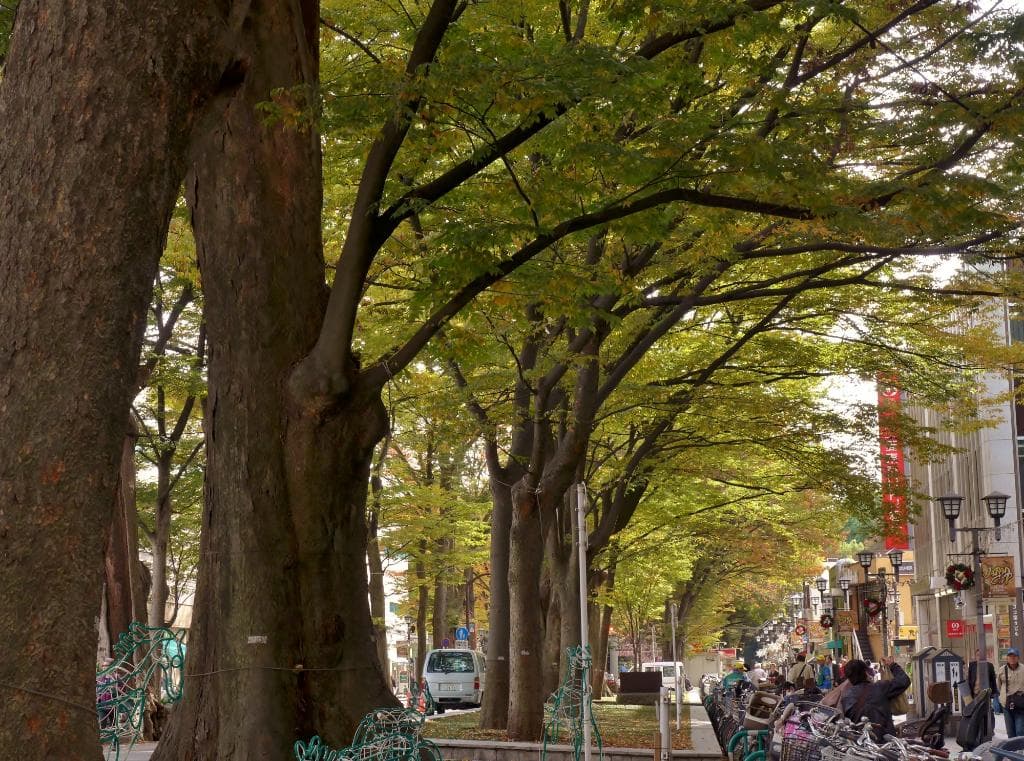
A historic, National Natural Monument avenue of ancient zelkova trees, serving as a grand approach to Okunitama Shrine.
Highlights
Must-see attractions

Social
From TikTok & Reddit
Best Time
Serene atmosphere, fewer crowds
Baba Daimon Keyaki Avenue
Best Time
Serene atmosphere, fewer crowds
Highlights
Must-see attractions
A historic, National Natural Monument avenue of ancient zelkova trees, serving as a grand approach to Okunitama Shrine.
"A magnificent row of zelkova trees with history and dignity, a symbol of Fuchu City."
🚶♀️ Stroll to Okunitama Shrine
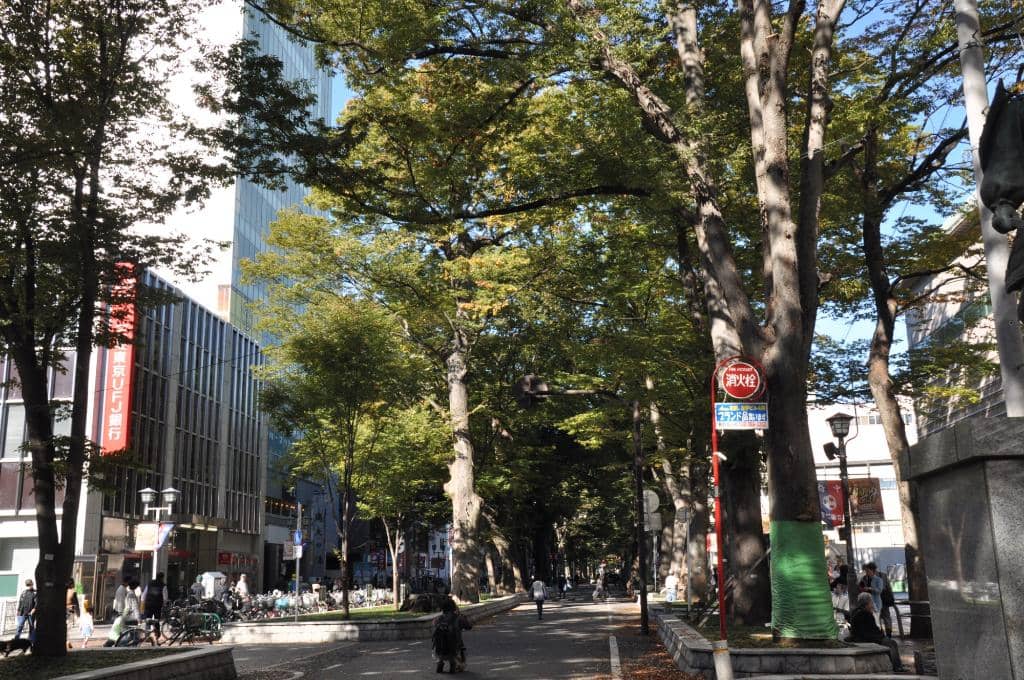
Walk the avenue to Okunitama Shrine for a magnificent, historic approach. :shinto_shrine:
🌳 Appreciate the Ancient Trees
Take time to admire the centuries-old zelkova trees, some with impressive hollows. :evergreen_tree:
Highlights
Discover the most iconic attractions and experiences
The Majestic Zelkova Avenue
Stretching 600m from Okunitama Shrine's torii gate
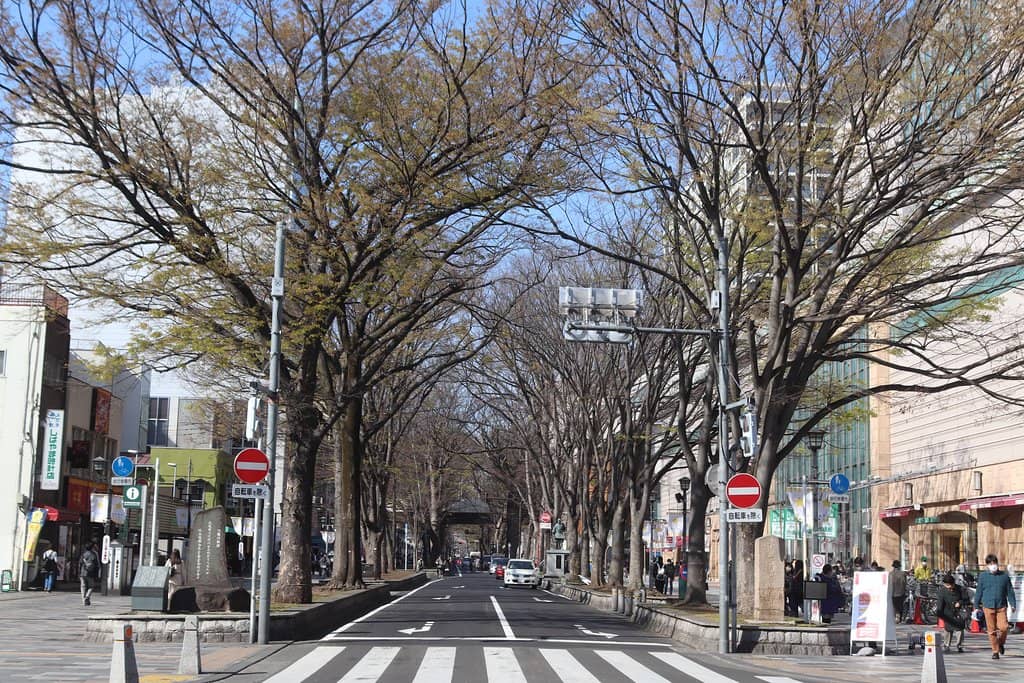
A breathtaking 600m stretch of ancient zelkova trees, a designated National Natural Monument.
Okunitama Shrine Approach
Northern end of the avenue
The avenue serves as a grand approach to the revered Okunitama Shrine, enhancing its spiritual ambiance.
Ancient Zelkova Trees
Throughout the avenue
Marvel at the oldest surviving zelkova, estimated at 400 years old, a testament to nature's resilience.
Plans like a pro.
Thinks like you
Planning Your Visit
Timing Your Visit for Tranquility
Understanding the History
Best Times
Insider Tips
from TikTok, Instagram & Reddit
🚶♀️ Stroll to Okunitama Shrine
Walk the avenue to Okunitama Shrine for a magnificent, historic approach. :shinto_shrine:
🌳 Appreciate the Ancient Trees
Take time to admire the centuries-old zelkova trees, some with impressive hollows. :evergreen_tree:
📅 Check for Events
National holidays often make it a pedestrian zone, offering a unique experience. :calendar:
👟 Comfortable Walking Shoes
You'll want to walk the entire length, so wear comfortable footwear. :athletic_shoe:
Tips
from all over the internet
🚶♀️ Stroll to Okunitama Shrine
Walk the avenue to Okunitama Shrine for a magnificent, historic approach. :shinto_shrine:
🌳 Appreciate the Ancient Trees
Take time to admire the centuries-old zelkova trees, some with impressive hollows. :evergreen_tree:
📅 Check for Events
National holidays often make it a pedestrian zone, offering a unique experience. :calendar:
👟 Comfortable Walking Shoes
You'll want to walk the entire length, so wear comfortable footwear. :athletic_shoe:
What Travellers Say
Reviews Summary
Visitors praise Baba Daimon Keyaki Avenue for its historical significance and the majestic beauty of its ancient zelkova trees, especially as a grand approach to Okunitama Shrine. While some note the aging condition of certain trees, the ongoing conservation efforts are appreciated, making it a cherished natural monument.
"A nationally designated natural monument.
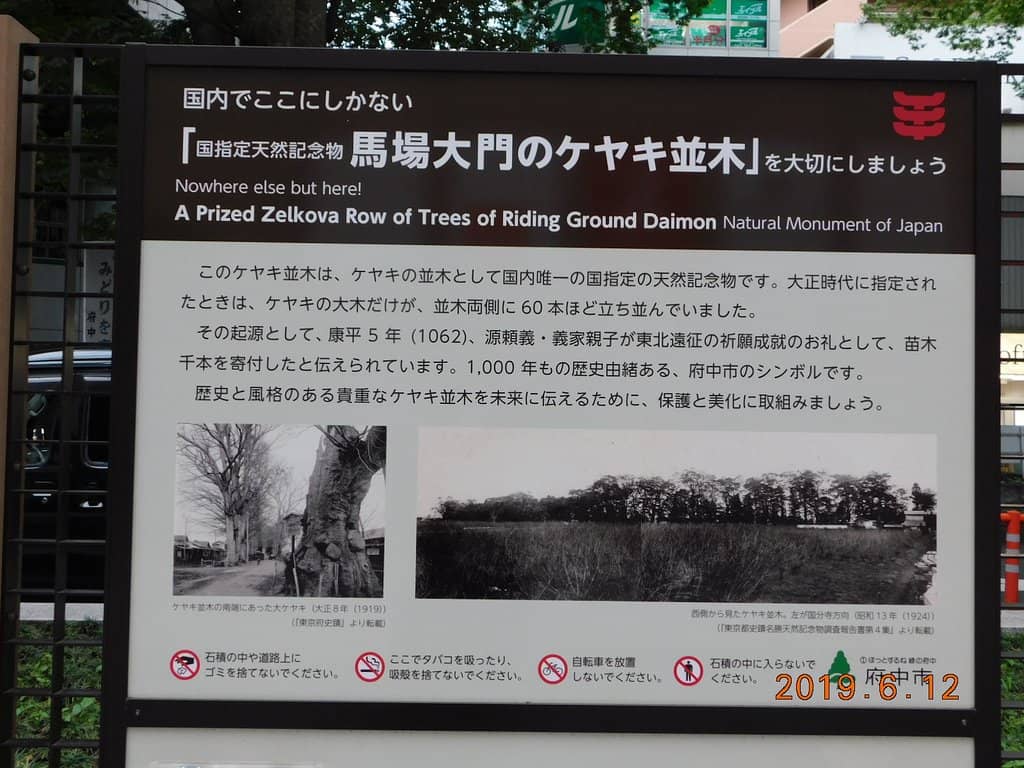
A well-known legend holds that the zelkova tree-lined street originated in the mid-Heian period, when the Chinjufu Shogun, Minamoto no Yoriyoshi, and his son, Hachiman Taro Yoshiie, donated 1,000 saplings as a pilgrimage of thanks for their victorious campaign in the Oshu region.
It is also said that Tokugawa Ieyasu, inspired by this story, prayed for victory at Okunitama Shrine during the Battle of Osaka, and planted zelkova saplings and donated a riding ground as a pilgrimage of thanks.
However, no contemporary historical documents exist to support this.
In any case, based on the results of age measurements of old trees conducted in 1977, it can be said with certainty that zelkova trees were here at least around the 14th century.
Additionally, a sign from the seventh year of Kanbun in the early Edo period reads, "...saplings planted on the banks of the riding field must not be uprooted or discarded..." This raises the possibility that zelkova seedlings were planted before then.
The oldest surviving zelkova tree is located next to the great torii gate and is estimated to be 400 years old, which coincides with the period when the sign was issued.
The term "riding field" also comes from the fact that horse markets have been held around Okunitama Shrine since the Ritsuryo period.
According to legend, there was a ranch near Ono where horses from Kai, Shinano, Mutsu, and others were gathered. It is said that military horses for the aforementioned Oshu Conquest and Osaka Campaign were also procured here.
This horse market continued until it was moved to Azabu around the Kyoho era in the mid-Edo period, but horse races (komakurabe) are still held at Okunitama Shrine today, conveying the atmosphere of the time.
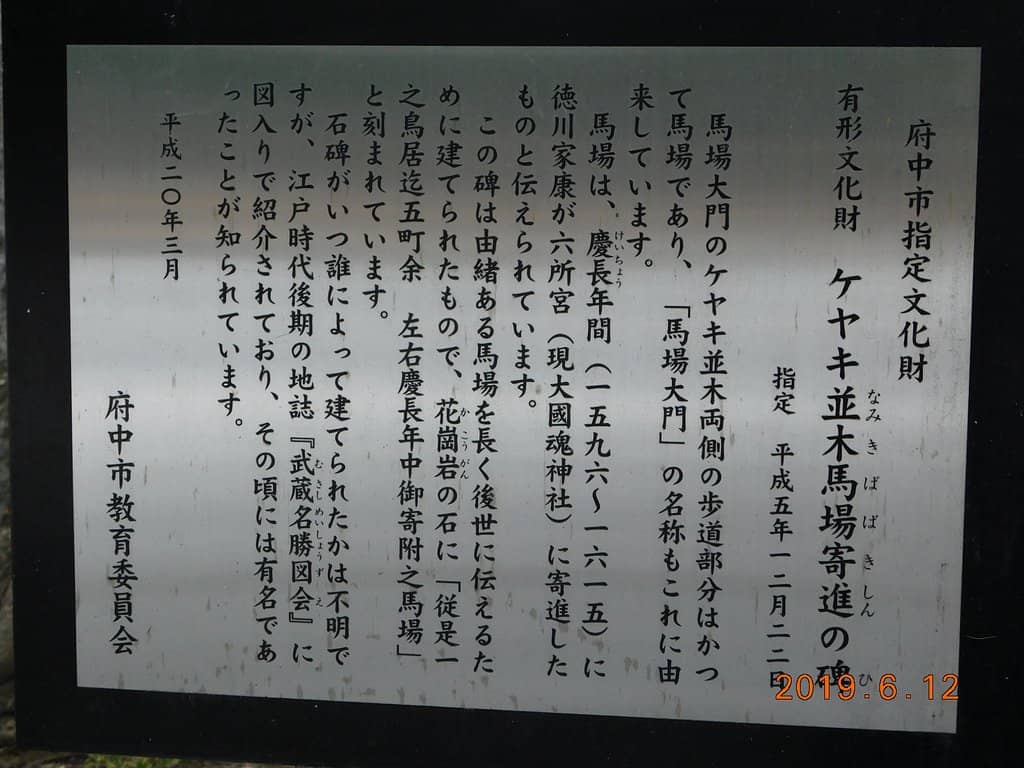
The horse racing ceremony is said to have taken place on a riding field donated to the shrine by Tokugawa Ieyasu as described above, and is thought to have been located on both sides of the current road (around the sidewalk). (It was approximately 550 meters long and 9 meters wide.)
About 30% of the trees are old, and many have large hollows that appear to be at risk of falling over.
A contractor was there selecting new trees, and as the trees are a symbol of the town, it seemed that a lot of money was being spent on their maintenance."
山田万歳
"It also serves as the approach to Okunitama Shrine.
The planting of zelkova trees dates back to after Minamoto no Yoriyoshi and his son Yoshiie conquered Oshu. The prototype of the current tree-lined avenue was created after Ieyasu arrived in Edo. He donated two horse riding grounds, which created the avenue.
A large horse market was held at the riding grounds, and many people visited to see the military horses of Musashi Province.
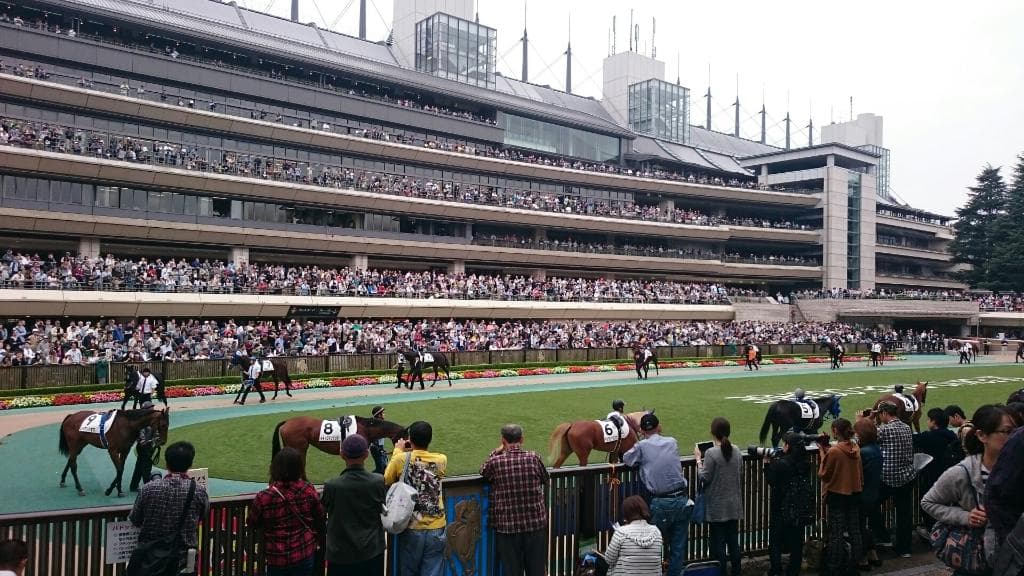
Today, the town is famous as the home of Tokyo Racecourse, and many people visit to see the racehorses."
豊尾
"A symbol of Fuchu City, a precious row of zelkova trees with a history and dignity
It is said that in 1062, Minamoto no Yoriyoshi and Yoshiie donated 1,000 saplings as a thank you for the fulfillment of their prayers for the Tohoku expedition.
It is the only row of zelkova trees in Japan that is designated as a national natural monument.
Today is a national holiday, so car traffic has been restricted and it has become a pedestrian precinct.
The scenery leading to Okunitama Shrine is magnificent!"
期待の若鷹(HAWKS)
What People Like
What People Dislike
Frequently Asked Questions
🚇 🗺️ Getting There
The most convenient way to reach Baba Daimon Keyaki Avenue is by taking the Keio Line to Fuchu Station. From there, it's a short walk to the northern end of the avenue, which leads directly to Okunitama Shrine.
While there might be limited street parking, it's advisable to use public transportation. Parking near Okunitama Shrine is available but can be busy, especially on weekends and holidays.
Yes, several bus routes stop near Okunitama Shrine and Fuchu Station, providing good access to the avenue. Check local bus schedules for the most up-to-date information.
The avenue is generally flat and paved, making it accessible for wheelchairs. However, some older sections or areas around the shrine might have uneven terrain.
The best way to explore is on foot. You can start from Fuchu Station and walk the entire length towards Okunitama Shrine, or vice versa.
🎫 🎫 Tickets & Entry
No, Baba Daimon Keyaki Avenue is a public thoroughfare and does not require an entrance ticket. You can visit and stroll along it freely.
As an outdoor public space, the avenue is accessible 24/7. However, the best experience is during daylight hours to fully appreciate the trees and the approach to Okunitama Shrine.
Okunitama Shrine itself is free to enter. There may be fees for specific inner areas or events within the shrine grounds.
Generally, there are no major restrictions. However, on national holidays, the avenue may be closed to vehicle traffic and become a pedestrian precinct, which is a great time to visit.
Baba Daimon Keyaki Avenue was designated a National Place of Scenic Beauty and Natural Monument in December 1924.
🎫 🌳 Onsite Experience
The avenue is steeped in history, with legends of Minamoto no Yoriyoshi and Yoshiie donating saplings in the Heian period, and Tokugawa Ieyasu donating horse riding grounds. It's a National Natural Monument with trees dating back centuries.
The 'riding grounds' were areas historically used for horse markets and races, particularly associated with military horses. The name 'Baba' itself is said to originate from this historical use.
Efforts are continuously made to maintain the ancient zelkova trees, with locals actively involved in conservation. Despite some trees showing signs of age, significant resources are dedicated to their upkeep.
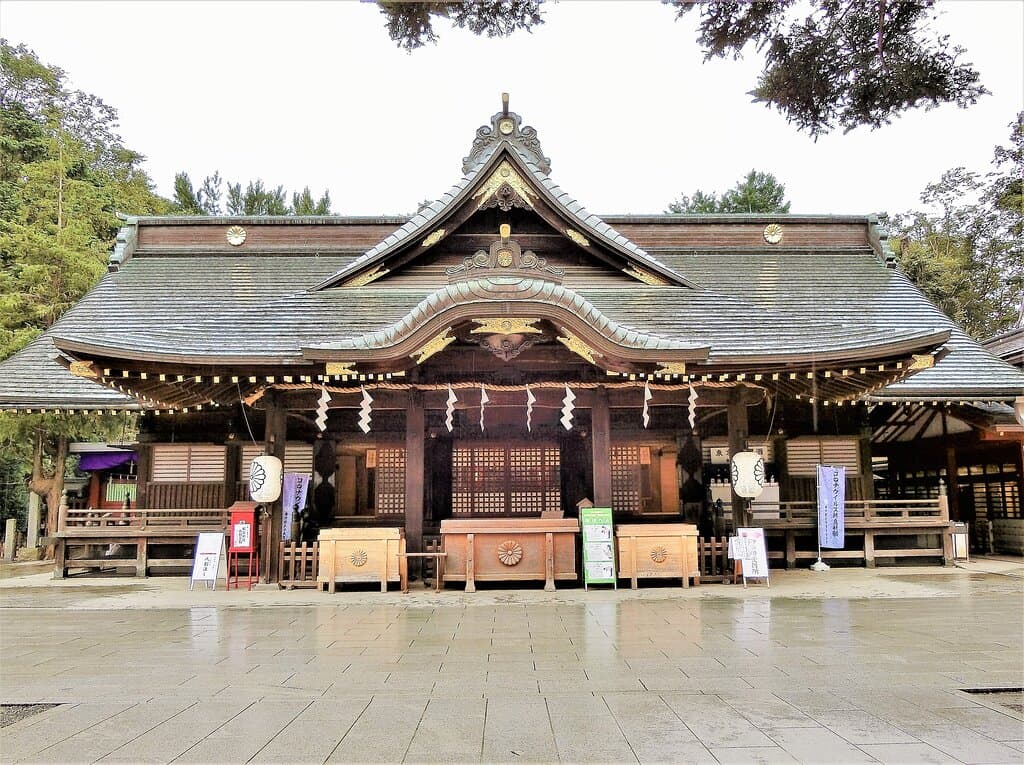
Okunitama Shrine is a significant Shinto shrine with a long history. You can explore its main hall, various sub-shrines, and experience the spiritual atmosphere, especially after walking the grand avenue.
Yes, the long, tree-lined avenue leading to the shrine offers beautiful photographic opportunities, especially during the golden hour or when the trees are in full bloom.
🍽️ 🍽️ Food & Dining
Yes, the area around Fuchu Station and Okunitama Shrine offers a variety of dining options, from casual eateries to more traditional Japanese restaurants.
While Fuchu is not as widely known for specific culinary specialties as some other regions, you can find delicious local Japanese cuisine, including ramen, udon, and sushi.
You might find a few cafes or small eateries near the shrine or Fuchu Station, but the avenue itself is primarily a natural monument and pedestrian walkway.
There are parks and public spaces near Okunitama Shrine where you might be able to enjoy a picnic, but be mindful of local regulations regarding food consumption in public areas.
Exploring local izakayas (Japanese pubs) or family restaurants near Fuchu Station can offer a good taste of Japanese dining culture.
📸 📸 Photography
Early mornings or late afternoons offer the best light for photography, creating a beautiful ambiance. Weekdays are also ideal to avoid crowds and get unobstructed shots.
The long, straight stretch of zelkova trees leading towards the grand torii gate of Okunitama Shrine is particularly iconic. The ancient trees themselves, with their unique shapes, also make for great subjects.
Drone usage is generally restricted in public spaces and near shrines to ensure safety and respect. It's best to check local regulations or avoid using drones.
A wide-angle lens is great for capturing the full sweep of the avenue, while a telephoto lens can be useful for isolating details of the ancient trees or the shrine architecture.
Photography is usually permitted in the outer areas of Okunitama Shrine, but it's always respectful to check for any signage regarding restrictions within sacred spaces.
For Different Travelers
Tailored advice for your travel style
👨👩👧 Families with Kids
While there aren't specific playgrounds directly on the avenue, the surrounding areas near Fuchu Station and Okunitama Shrine offer green spaces where children can play. Pack some snacks and water, and make it a family outing to connect with nature and experience a piece of Japanese heritage.
🚶♀️ Solo Travelers & Walkers
Combine your walk with a visit to Okunitama Shrine to add a cultural and spiritual dimension to your exploration. The avenue provides a beautiful, unhurried transition into the shrine grounds, making it a rewarding experience for those seeking tranquility and a connection with local history.
Deep Dives
In-depth insights and expert knowledge
The Enduring History of the Zelkova Avenue
Later, during the Edo period, Tokugawa Ieyasu is credited with further developing the area by donating two horse riding grounds, which solidified the avenue's layout and its association with equestrian activities. The name 'Baba,' meaning 'horse riding ground,' is believed to stem from this period. These grounds were not just for show; they hosted large horse markets, attracting many visitors and serving as a procurement site for military horses. The oldest surviving zelkova tree, estimated to be 400 years old, stands as a silent witness to this rich past, coinciding with historical mentions of zelkova plantings from the early Edo period.
Today, the avenue continues to be a symbol of Fuchu City and is recognized as a National Natural Monument. Despite the challenges of urban development and the aging of some trees, local residents have dedicated decades to its conservation and environmental improvement, ensuring that this historic landscape continues to thrive and convey its stories to future generations. The avenue's role as the grand approach to Okunitama Shrine further enhances its cultural and spiritual significance.
Conservation Efforts and Tree Health
Recognizing the importance of these trees as a symbol of the town, considerable effort and resources are dedicated to their maintenance and preservation. Local authorities and community groups are actively involved in conservation projects, including the selection and planting of new saplings to ensure the avenue's future. This commitment reflects the deep respect and value placed on this historic natural monument by the residents of Fuchu City.
Visitors can appreciate the ongoing efforts to balance the preservation of ancient trees with the need for public safety and the continued aesthetic beauty of the avenue. The presence of contractors working on tree selection and maintenance highlights the continuous care provided to this unique landscape.
Social
from TikTok, Instagram & Reddit