Yamadadera Ruins
Serene Asuka period temple ruins offering a tranquil journey through ancient Japanese history and its evocative ancient road.
Highlights
Must-see attractions

Social
From TikTok & Reddit
Best Time
Blooming wisteria adds beauty.
Yamadadera Ruins
Best Time
Blooming wisteria adds beauty.
Highlights
Must-see attractions
Serene Asuka period temple ruins offering a tranquil journey through ancient Japanese history and its evocative ancient road.
"Embrace the quiet and step back in time on the ancient road of Yamadadera Ruins."
🚶♀️ Walk the Ancient Path
Embrace the 'Yamadadera-no-michi' for a full historical immersion. It's a journey back in time!
🏛️ Visit the Asuka Museum
See excavated artifacts from Yamadadera to enhance your understanding of the site.
Highlights
Discover the most iconic attractions and experiences
The Ancient Road (Yamadadera-no-michi)
Walk the historic path that once connected ancient capitals, feeling the echoes of centuries past. A truly immersive historical journey.
Ruins of the Cloister
Explore the foundations of the grand cloister, a significant architectural discovery from the Asuka period. Imagine its former glory.
White Wisteria Trellis
A poignant memorial, the white wisteria adds a touch of natural beauty and remembrance to the historical site.
Plans like a pro.
Thinks like you
Planning Your Visit
Embrace the Tranquility
Connect with History
Best Times
Insider Tips
from TikTok, Instagram & Reddit
🚶♀️ Walk the Ancient Path
Embrace the 'Yamadadera-no-michi' for a full historical immersion. It's a journey back in time!
🏛️ Visit the Asuka Museum
See excavated artifacts from Yamadadera to enhance your understanding of the site.
🌸 Appreciate the Wisteria
If visiting in spring, the white wisteria trellis offers a beautiful, poignant sight.
🧘♀️ Embrace the Quiet
The ruins are known for their peaceful atmosphere. Enjoy the serenity and historical ambiance.
Tips
from all over the internet
🚶♀️ Walk the Ancient Path
Embrace the 'Yamadadera-no-michi' for a full historical immersion. It's a journey back in time!
🏛️ Visit the Asuka Museum
See excavated artifacts from Yamadadera to enhance your understanding of the site.
🌸 Appreciate the Wisteria
If visiting in spring, the white wisteria trellis offers a beautiful, poignant sight.
🧘♀️ Embrace the Quiet
The ruins are known for their peaceful atmosphere. Enjoy the serenity and historical ambiance.
What Travellers Say
Reviews Summary
Visitors appreciate Yamadadera Ruins for its profound sense of peace and historical depth, offering a tranquil escape into Japan's Asuka period. The expansive grounds and the evocative ancient road are highlighted as key attractions. While some note the lack of extensive structures, many find beauty in the preserved atmosphere and the opportunity for quiet contemplation.
"「磐余・山田の道/万葉の道」巻八の二の十三 桜井市大字山田
Yamada town, Sakurai city, Nara prefecture.
山田寺跡(やまだでら あと)Historic Site, Yamadadera Temple
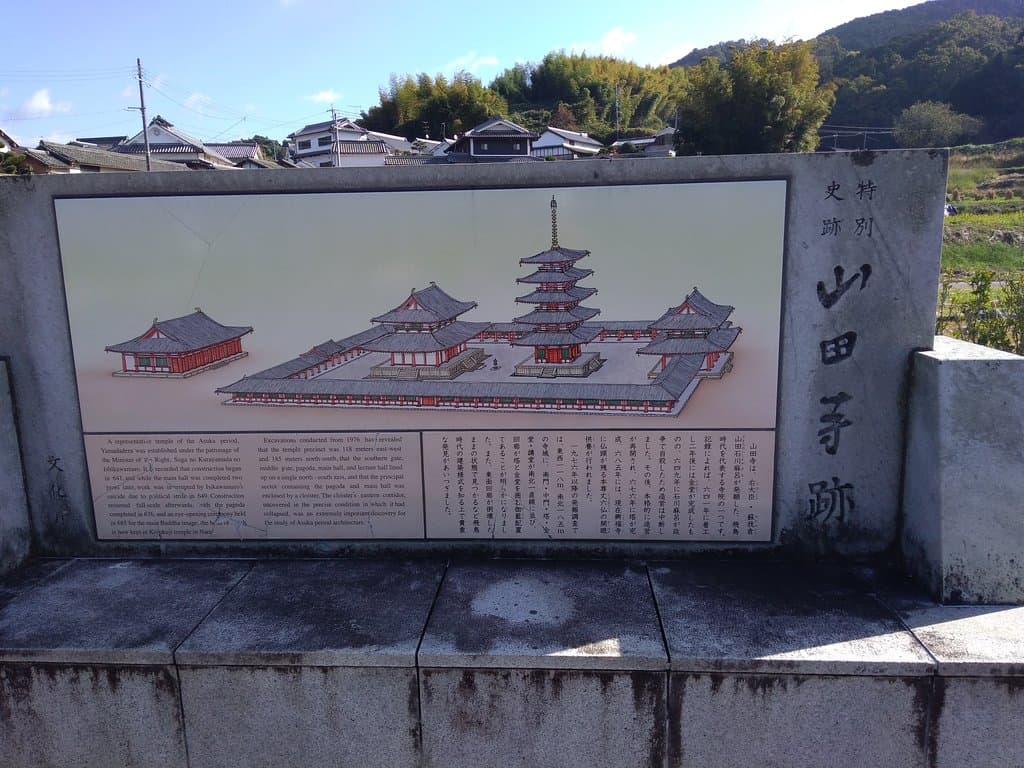
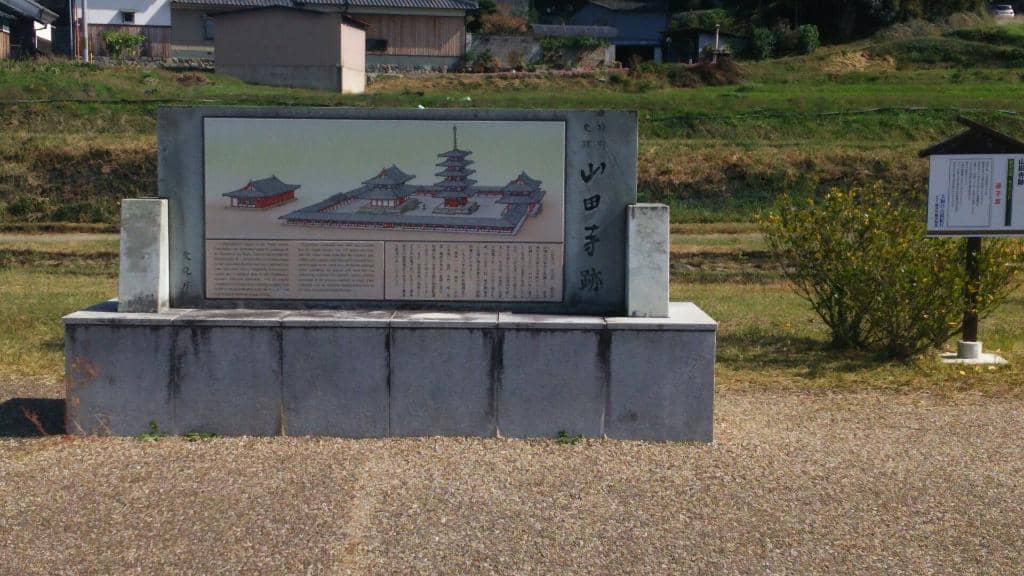
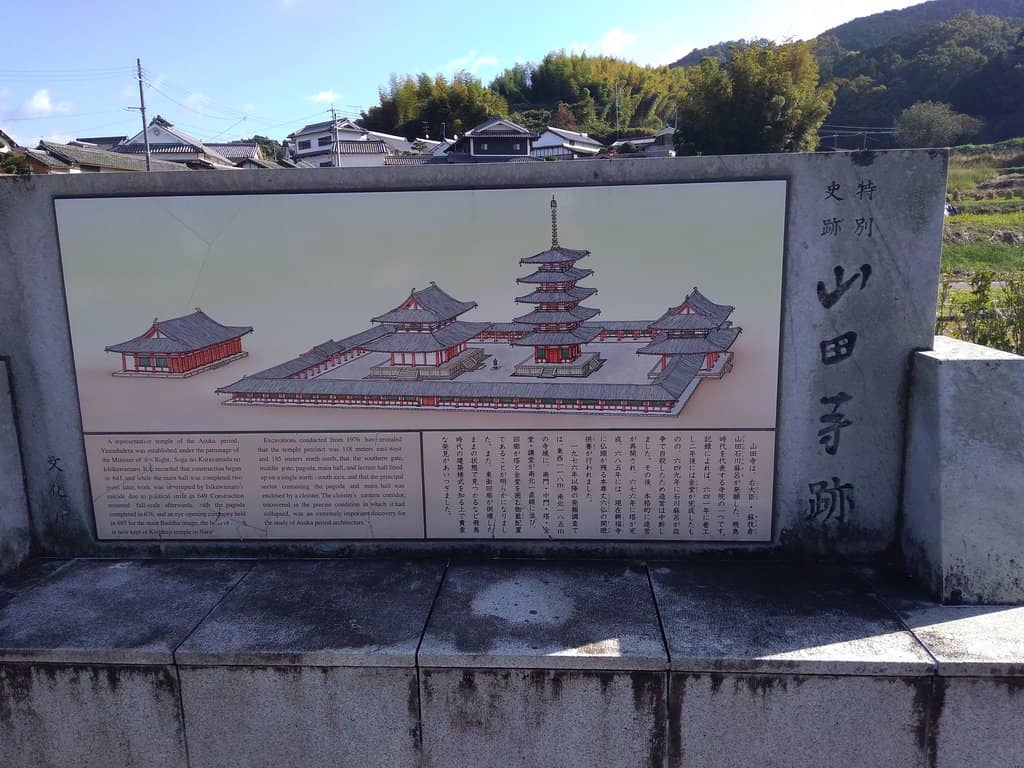
"A representative temple of the ASUKA period, Yamadadera-temple was established under the patronage of the Minister of the Right, Soga no Kurayamada no Ishikawamaro. It is recorded that construction began in 641, and while the main hall was completed two years later, work was interrrupted by Ishikawamaro's suicide due to political strife in 649.
Construction resumed full-scale afterwards, with the pagoda* completed in 676, and an eye-opening ceremony held in 685 for the main Buddha image, the head of which is now kept in Kofukuji temple in NARA.
Excavations conducted from 1976 have revealed that the temple precinct was 118 meters east-west and 185 meters north-south axis, and that the principal sector containing the pagoda and main hall was enclosed by a cloister. The cloister's eastern corridor, uncovered in the precise condition in which it had collapsed, was an extremely important discovery for the study of ASUKA period architecture."
Informed by Agency for Cultural Affairs, Government of Japan
pagoda* ; unknown as three stories or five
eastern corridor ; saved and exibited in ASUKA HISTORICAL MUSEUM
7世紀の主要道路だった「山田の道」は、おおよそ桜井市谷と明日香村を繋いでいた古道です。
万葉集の巻十三には
百足(ももた)らず 山田の道を 浮雲の 愛(うつく)し妻と 語らはず 別れし来れば 速川の 行きも知らず 衣手の かへりも知らず 馬じもの 立ちてつまづき せむすべの.....
巻十三-3276 相聞歌
波雲のように美しい愛しい妻と契りも交わさずに別れてきたので、この山田の道を行くともつかず帰るともつかず、馬のように立ちながらつまづいて.....など山田の緩く長い坂道を表現した歌が収載されています。山田寺に続くこの長い道は、途中でふと後ろを振り返ったりしてしまいそうな後ろ髪ひかれる迷いの道であったとされています。
そんな坂道を登りつめて旧街道の『磐余道』にはいり下ると静まり返った街道に”あれ?時代が30年ほどスリップしたか?”と、ともすれば勘違いしたかも知れない感覚に陥りながら、「山田公民館」「夫婦で営む護摩木造り工場」「庚申さん」などに迎えられてやがて山田寺跡に辿り着きます。
『山田寺跡』は、「山田の道」も含め、繋がれた「磐余」の静寂を共有する独特の「沈黙」とも言える世界観の中に存在するような気がします。それはきっと山田寺で果てた蘇我倉山田石川麻呂の最後に求めた安らぎが連綿と流れていることを我々が識っているからこそだとも云えます。"
Jaddy OSAKA
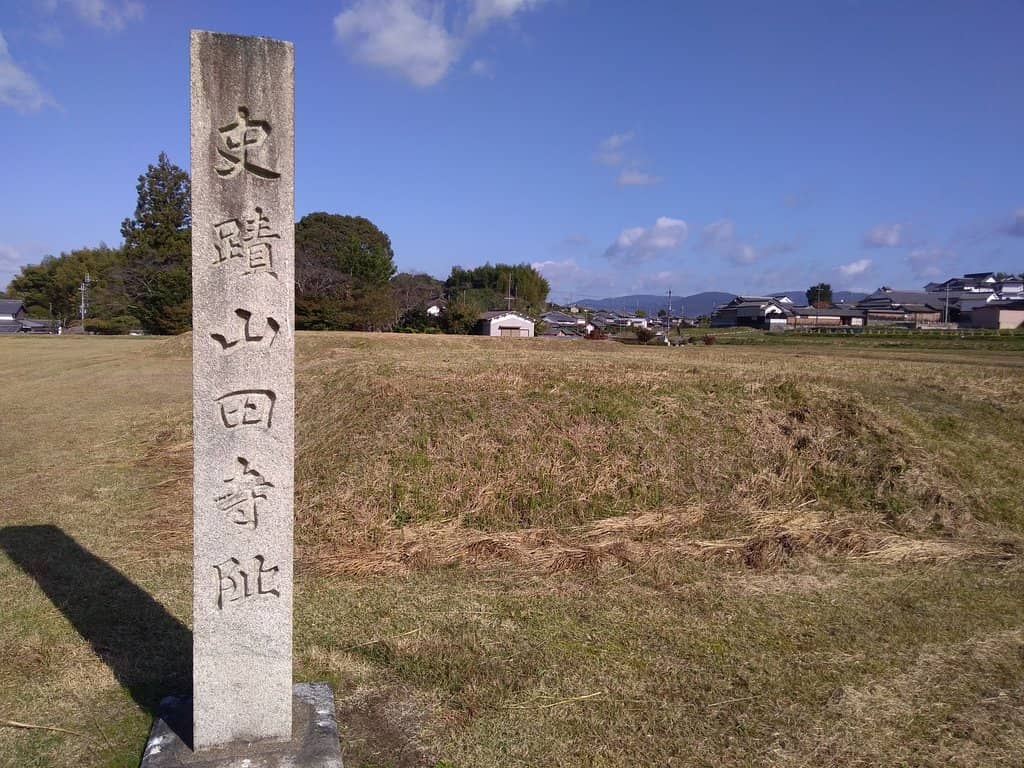
"The Yamada-dera Temple ruins are said to be the site of Yamada-dera, one of the most representative temples of the Asuka period. Construction began in 641 by Soga no Umako's grandson, Soga no Kurayamada Ishikawamaro.
A World Heritage Site, it is one of the imperial capitals of Kashihara and Asuka.
The only Yamada-dera Temple ruins is located in Sakurai City, Nara Prefecture.
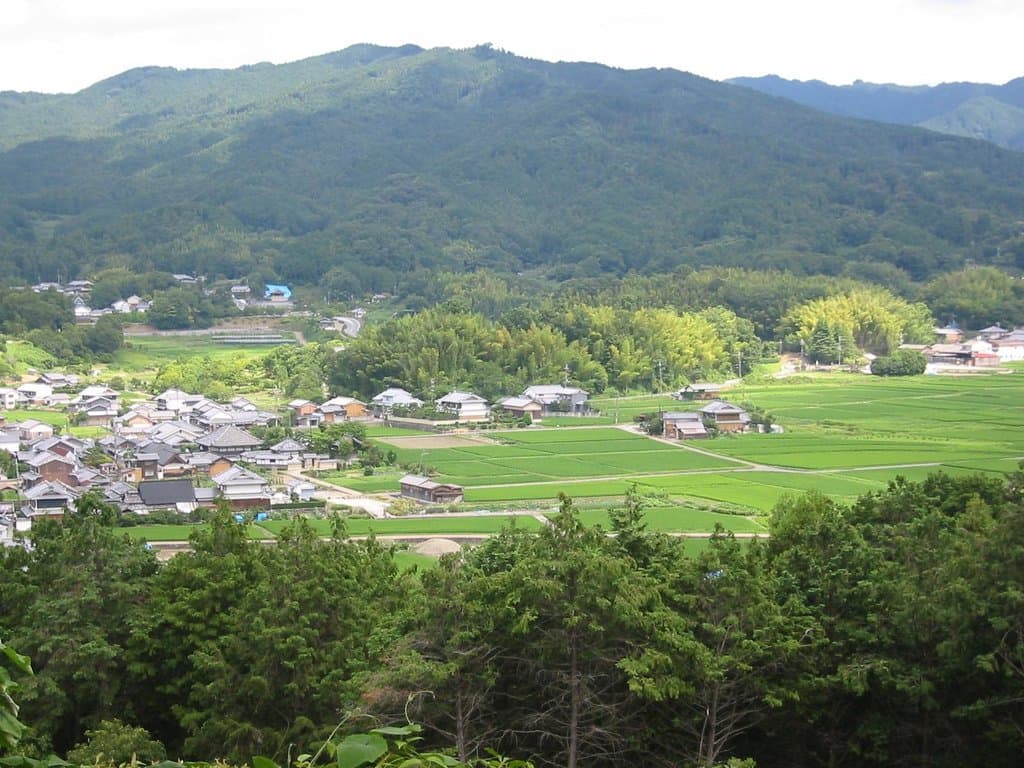
Like the Fujiwara Palace ruins, it is spacious and surrounded by vast nature, including mountains.
There's nothing here, but that's what makes it great.
Slip back in time to the era of the ancient capital.
Come and take a deep breath and forget about your daily life in this vast, otherworldly space!"
みっふぃ.
"I believe there was once a large temple, Yamada-dera, here. Many items excavated from Yamada-dera Temple are on display at the nearby Asuka Museum of the Nara National Research Institute for Cultural Properties, so I stopped by to see it."
og “og” og
What People Like
What People Dislike
Frequently Asked Questions
🚇 🗺️ Getting There
From Nara Station, take the JR Yamatoji Line to Tenri Station, then transfer to the JR Sakurai Line (Manyo Mahoroba Line) to Sakurai Station. From Sakurai Station, you can take a local bus or taxi to the Yamadadera Ruins. The journey can take approximately 1-1.5 hours.
Yes, public transport is available. Buses from Sakurai Station are the most common way to reach the ruins. Check local bus schedules in advance as they may be infrequent.
Yes, driving is an option, and there is likely parking available. This offers more flexibility, especially if you plan to visit other Asuka period sites in the area.
Many visitors combine a trip to Yamadadera Ruins with other historical sites in the Asuka region. Renting a bicycle from Sakurai Station can be a great way to explore the scenic countryside and historical landmarks at your own pace.
The closest major train station is Sakurai Station on the JR Sakurai Line. From there, you will need to use local transportation to reach the ruins themselves.
🎫 🎫 Tickets & Entry
Yamadadera Ruins are generally considered an open historical site, and there is typically no admission fee to walk the grounds. However, it's always a good idea to check for any updates or specific areas that might have charges.
As an open-air historical site, the ruins are usually accessible during daylight hours. There are no strict opening or closing times, allowing for flexible visits.
Typically, there is no entrance fee for the Yamadadera Ruins themselves. The site is preserved as a historical landmark for public access.
Yes, Yamadadera Ruins can be visited year-round. Each season offers a different perspective, from spring blossoms to autumn foliage.
While official guided tours might not be readily available on-site, you can often find local guides or information pamphlets that provide historical context. Visiting the nearby Asuka Museum can also offer insights.
🎫 🧭 Onsite Experience
You can explore the foundations of the original temple complex, including the cloister and pagoda sites. The 'Yamadadera-no-michi' (ancient road) is a key feature, offering a sense of historical scale.
A visit to Yamadadera Ruins can take anywhere from 1 to 2 hours, depending on your interest in exploring the grounds and imagining the historical context.
Basic facilities like restrooms may be available, but it's advisable to check beforehand or use facilities in Sakurai town before heading to the ruins.
Yes, the site is suitable for walking. The grounds are relatively flat, and the ancient road provides a clear path for exploration. Comfortable walking shoes are recommended.
The white wisteria trellis is a memorial, adding a touch of natural beauty and poignancy to the site, particularly during the spring blooming season.
📸 📸 Photography
The expansive grounds, the ancient road, and the remnants of the cloister offer great photographic opportunities. The white wisteria in spring is also a beautiful subject.
Yes, photography is generally allowed at Yamadadera Ruins. It's a historical site meant for visitors to appreciate and document.
Early morning or late afternoon light can create beautiful shadows and a serene atmosphere for photography. Consider the season for unique shots, like wisteria in bloom.
Drone usage regulations can vary. It's best to check local rules and regulations regarding drone photography in historical or protected areas before flying.
Generally, there are no specific restrictions on photography for personal use. However, always be respectful of the historical nature of the site.
For Different Travelers
Tailored advice for your travel style
👨👩👧 Families with Kids
To enhance the experience for children, a visit to the nearby Asuka Historical Museum is highly recommended. Seeing excavated artifacts can spark their imagination and provide a tangible connection to the past. Encourage them to imagine what life was like in the Asuka period, making the ruins come alive. Comfortable walking shoes are essential for everyone, as there will be a fair amount of walking on the ancient road and around the ruin sites.
🚶♀️ Solo Travelers & History Buffs
To maximize your visit, consider researching the history of Soga no Kurayamada Ishikawamaro and the Taika Reforms beforehand. Visiting the Asuka Historical Museum is also highly recommended to see excavated artifacts that provide concrete evidence of the temple's past grandeur. The lack of crowds at Yamadadera makes it an ideal location for focused historical exploration and photography without distraction.
Deep Dives
In-depth insights and expert knowledge
The Historical Significance of Yamadadera
The ruins are not just remnants of a temple; they are a testament to the turbulent political landscape of the time. Soga no Kurayamada Ishikawamaro's downfall and suicide at Yamadadera underscore the intense power struggles that characterized the Asuka period. The temple's subsequent completion with imperial support highlights its importance in the national consciousness. Today, the site offers a unique opportunity to connect with this formative period of Japanese history, allowing visitors to walk the same grounds where significant events unfolded.
Many artifacts excavated from Yamadadera are now housed at the nearby Asuka Historical Museum, offering a deeper understanding of the temple's grandeur and the daily lives of its inhabitants. Visiting the museum in conjunction with the ruins provides a more comprehensive historical experience, bridging the gap between the physical remnants and the vibrant past they represent.
Experiencing the Yamadadera-no-michi
The road is described in ancient poetry, evoking images of long journeys and the emotions of separation and return. Its length and the surrounding natural beauty contribute to a feeling of stepping out of time. The experience is often described as one of profound tranquility and contemplation, a stark contrast to the modern world. Visitors are encouraged to take their time, breathe in the atmosphere, and imagine the historical figures who once traversed this very path.
This ancient road is a key element that enhances the overall experience of visiting Yamadadera Ruins. It provides context for the temple's location and its role within the broader historical landscape of Asuka. The serene, expansive nature of the road and its surroundings contribute to the unique, almost otherworldly ambiance that many visitors find so captivating about Yamadadera.
Social
from TikTok, Instagram & Reddit