Hichihouji Temple
A sacred training ground with a stunning collection of Buddhist statues, including a colossal golden deity, set amidst serene countryside.
Highlights
Must-see attractions

Social
From TikTok & Reddit
Best Time
Pleasant weather for hiking
Hichihouji Temple
Best Time
Pleasant weather for hiking
Highlights
Must-see attractions
A sacred training ground with a stunning collection of Buddhist statues, including a colossal golden deity, set amidst serene countryside.
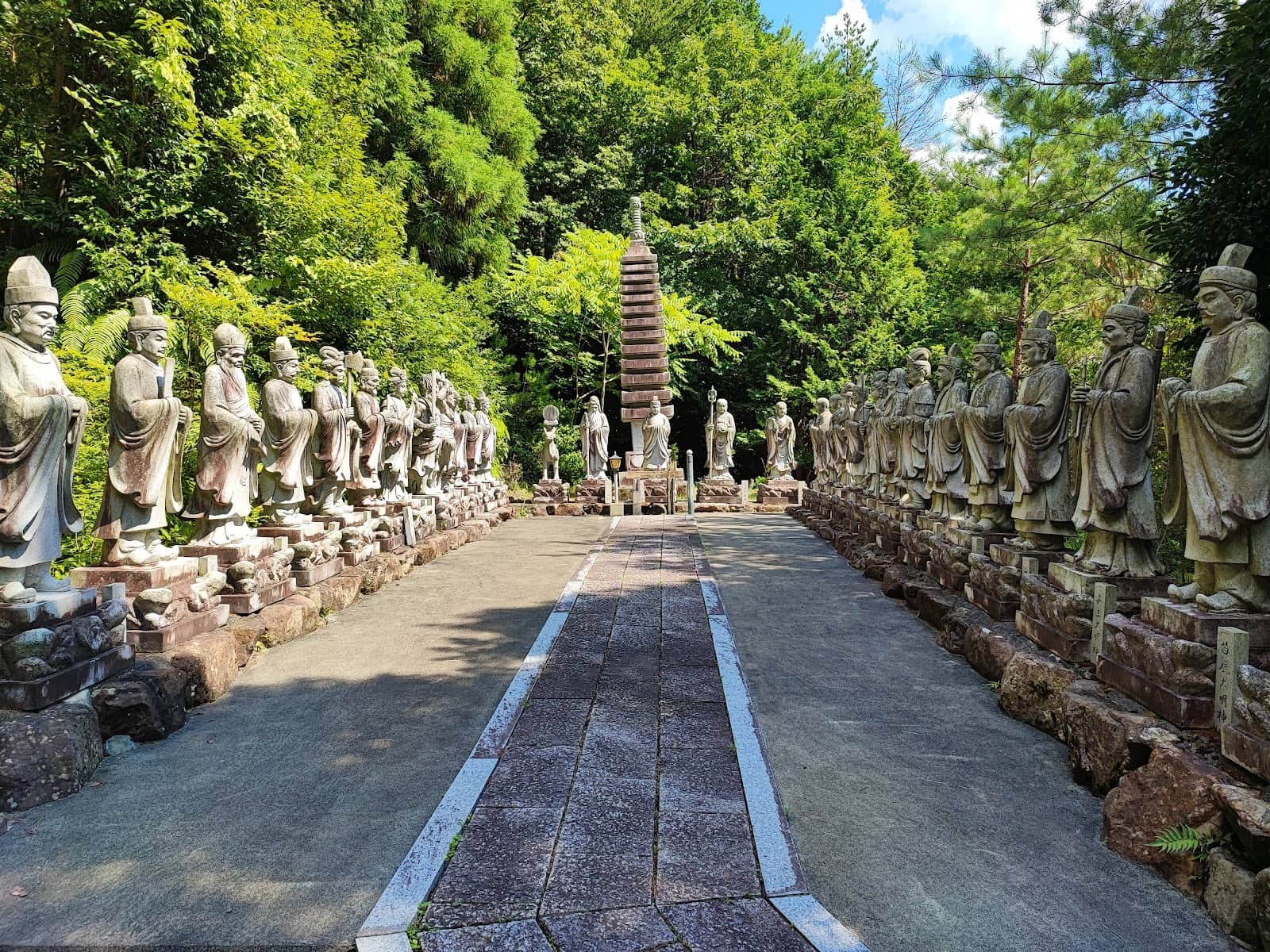
"Fantastic array of Buddhas in good condition. Set in lovely peaceful countryside. Very worth the steep walk."
👟 Wear Sturdy Shoes
The paths are steep and can be uneven. Comfortable, supportive footwear is a must for the hike.
💧 Bring Plenty of Water
Stay hydrated on your climb! There are limited places to buy drinks once you start ascending.
Quick Facts
Rating
4.4 · 79 reviews
Type
Place of Worship
Highlights
Discover the most iconic attractions and experiences
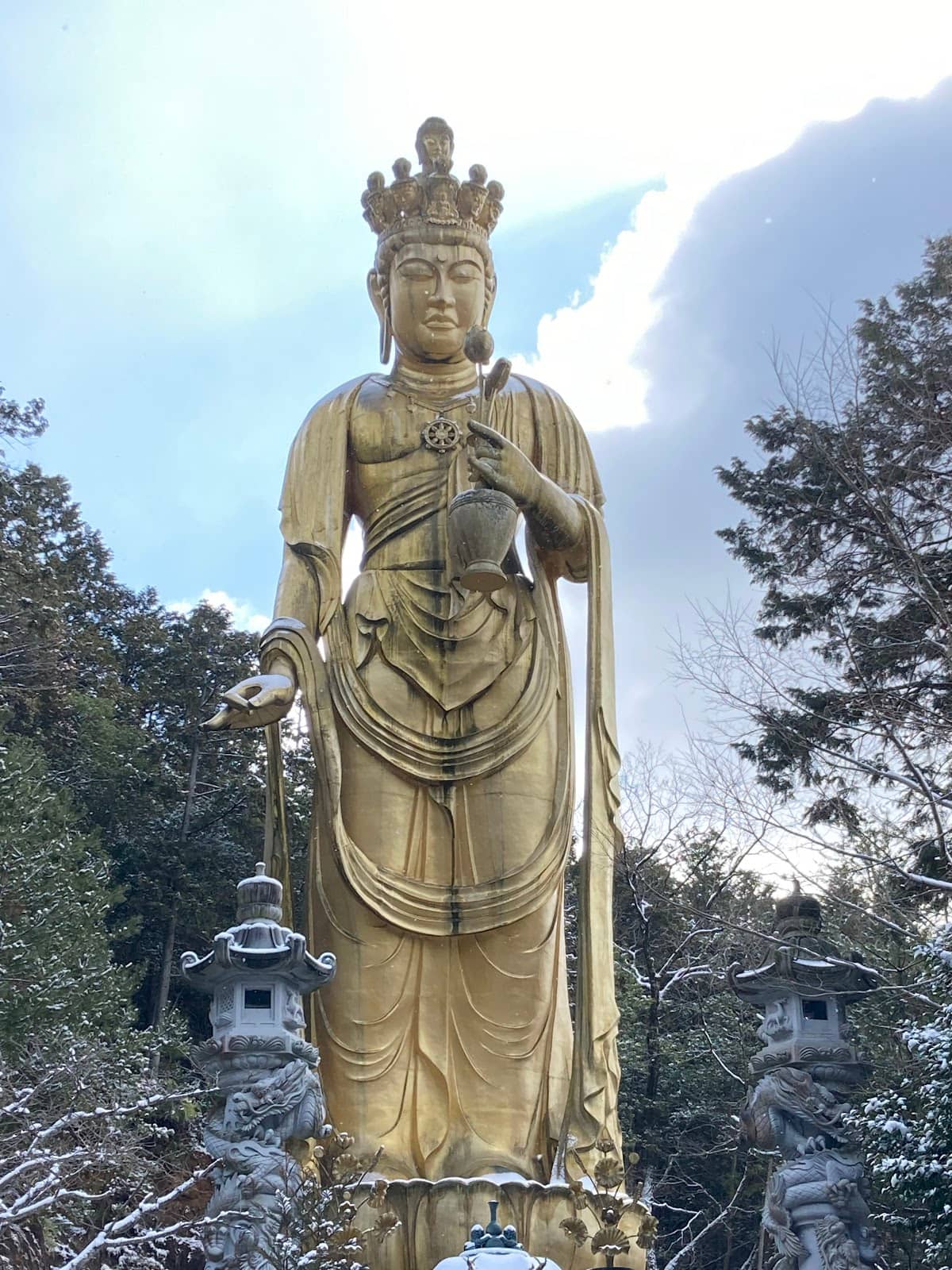
Gigantic Golden Shichimen Daimyojin
Main Temple Grounds
A towering 28-meter golden statue of the seven-faced spiritual god, a truly awe-inspiring sight.
Reclining Buddha
Upper Mountain Path
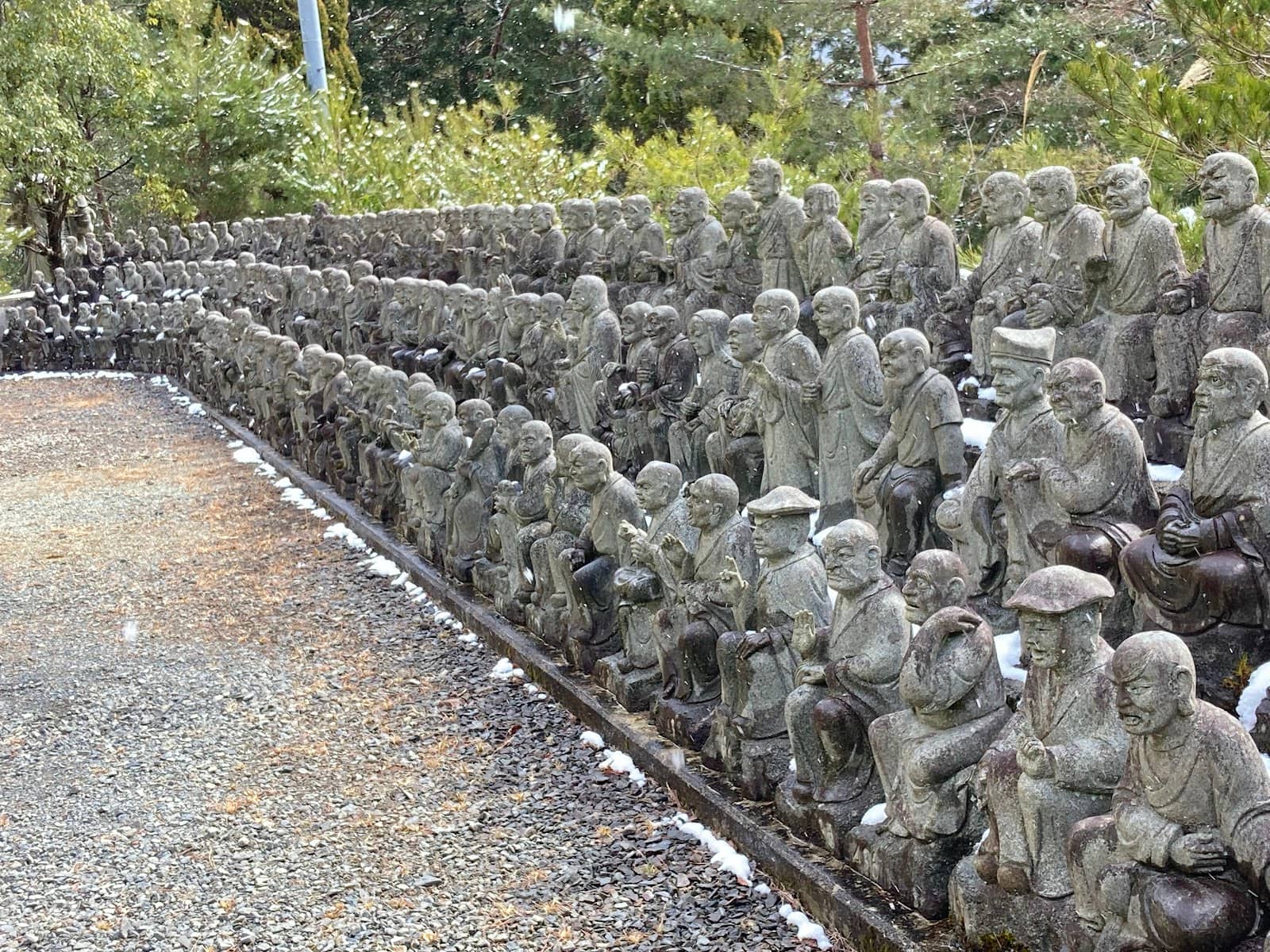
A magnificent golden Buddha statue lying in repose, surrounded by hundreds of unique figurines.
Seated Buddha & Town Views
Upper Mountain Path
A dark, seated Buddha statue offers panoramic views of Nose-cho below.
Five-Story Pagoda
On the way down
A striking red pagoda structure, a beautiful architectural element on your descent.
Plans like a pro.
Thinks like you
Planning Your Visit
Steep Climb Ahead!
Respect the Sacred Ground
Best Times
Insider Tips
from TikTok, Instagram & Reddit
👟 Wear Sturdy Shoes
The paths are steep and can be uneven. Comfortable, supportive footwear is a must for the hike.
💧 Bring Plenty of Water
Stay hydrated on your climb! There are limited places to buy drinks once you start ascending.
🚶♀️ Allow Ample Time
The temple grounds are extensive, and the hike takes time. Plan for at least 2-3 hours to explore fully.
📸 Capture the Details
Each statue has unique expressions. Take your time to appreciate the artistry and details.
Tips
from all over the internet
👟 Wear Sturdy Shoes
The paths are steep and can be uneven. Comfortable, supportive footwear is a must for the hike.
💧 Bring Plenty of Water
Stay hydrated on your climb! There are limited places to buy drinks once you start ascending.
🚶♀️ Allow Ample Time
The temple grounds are extensive, and the hike takes time. Plan for at least 2-3 hours to explore fully.
📸 Capture the Details
Each statue has unique expressions. Take your time to appreciate the artistry and details.
What Travellers Say
Reviews Summary
Visitors praise Hichihouji Temple for its fantastic array of well-preserved Buddhist statues, set against a backdrop of peaceful countryside. The steep but well-maintained hike is considered worth the effort, offering impressive views and a unique spiritual experience. Some note that it's an active training ground, so respect for the site is paramount.
"Fantastic array of Buddhas in good condition. Set in lovely peaceful countryside. Very worth the steep walk, albeit a good path. Impressive views all the way up and down. Take water to drink."
Brian Rendall
"We can learn Japan Buddhist History of the Bagoda"
Khant Koko
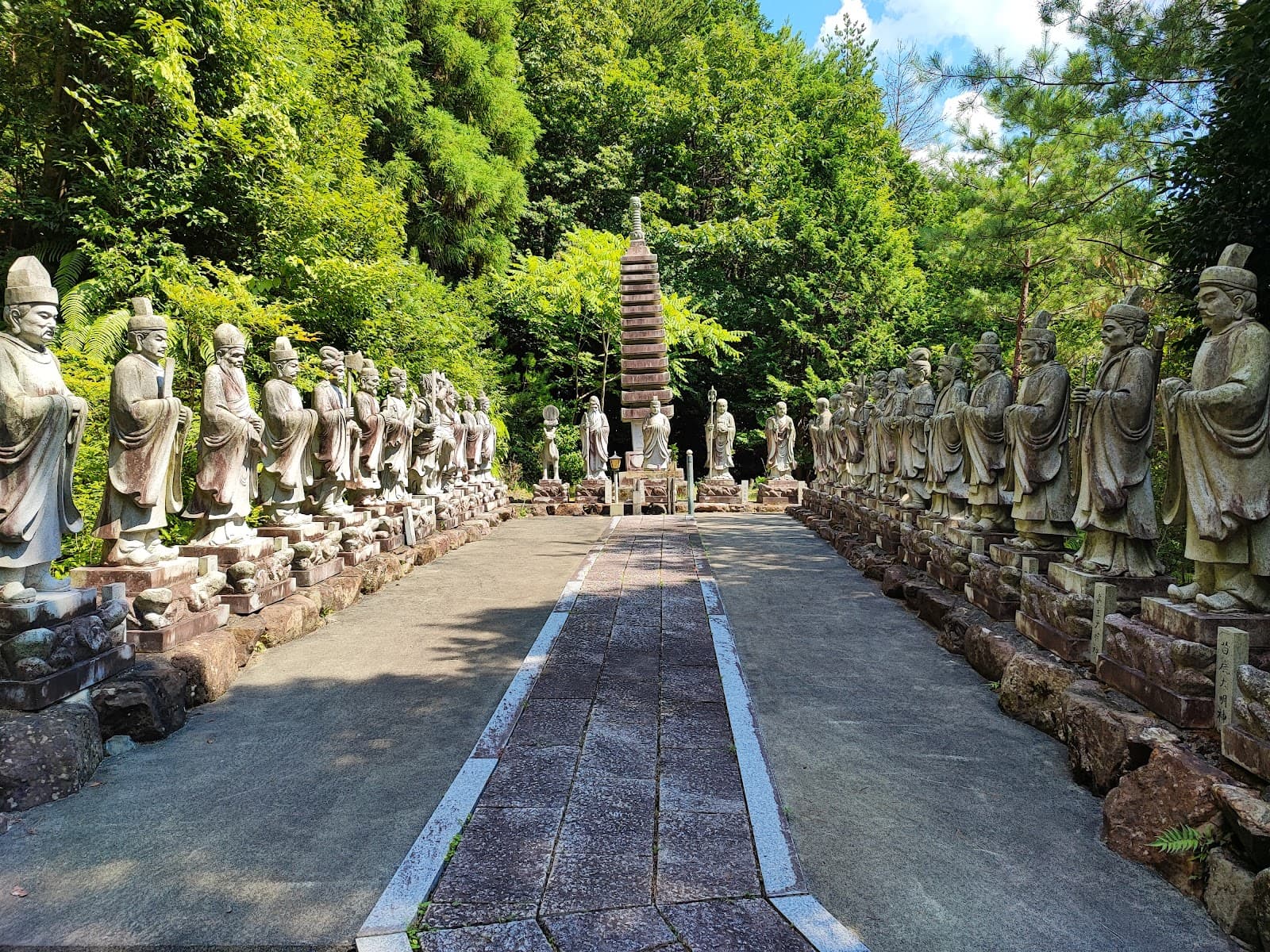
"Shichihoji Temple 七面山七寶寺 This mysterious temple with many gigantic statues built up on a mountain of Shakagaike is located in a town of Nose-cho. The location of the town is near a boundary point between Kameoka City of Kyoto Prefecture and north-end of Osaka Prefecture. The temple belongs to Nichiren sect of Buddhism established in this location as a sacred training ground in 1927. The origin of its establishment can be traced back to a time when a group of saints saw an image of Shichimen Daimyojin in their dreams which is a spiritual god with seven faces which later embodied in a form of gigantic golden statue stands as tall as 28 meters in this temple. After the encounter of Shichimen Daimyojin the saints built Shichimen Hall to enshrine its spirit in this ground in 17th century. There is a map explaining how to go around its extensive precincts of this temple. Since the temple is a sacred training ground it is not very accommodating to a visit of tourists or the purpose of casual site seeing, but you are welcomed to have a look around inside. There is long mountain path making a loop course which requires a bit of hiking leads your way to other 2 large statues. One is a golden Buddha stature lying up on a sacred hall of prayer. Another one is a dark colored statue of Buddha in sitting position up on a long stairs. From this point you can command a nice view of the entire town of Nose-cho. There is a red tall 5 story pagoda-like structure on your way down. It would be interesting to see various facial expressions on each stone statues in this temple. When you reached the top part of the main temple property where there are temple halls, you would notice there is a wooden gate with two guardian statues standing on each side. This path leads to their sacred training ground. You are not allowed to go through inside.
Trans-word+ : TGM Japan Guide"
Trans-word plus TGM
What People Like
What People Dislike
Frequently Asked Questions
🚇 🗺️ Getting There
Hichihouji Temple is located near the border of Kyoto and Osaka Prefectures. Public transport can be challenging, often involving multiple train and bus transfers. Many visitors opt for a rental car for easier access to this more remote location. Check local transit schedules carefully if relying on public transport.
While possible, it requires careful planning with trains and buses, often from Kameoka City or Osaka. It's best to research current routes and schedules as they can change.
From Kyoto, you might take a train towards Kameoka City and then look for local bus connections. The journey can be lengthy, so consider a rental car for convenience.
Yes, parking is generally available for visitors, which is a significant advantage if you're driving.
The travel time can vary significantly depending on your mode of transport and connections, but expect at least 1.5 to 2 hours by car, and potentially longer by public transport.
🎫 🎫 Tickets & Entry
While the temple is a sacred training ground and not primarily a tourist attraction, there is typically no explicit entrance fee for general visitors. However, donations are appreciated to help maintain the grounds.
The temple is generally open for visitors during daylight hours. As it's an active training ground, it's best to visit during reasonable daytime hours and be mindful of any scheduled ceremonies or practices.
Yes, you can visit on weekends. However, be aware that it is an active training ground, so some areas might be restricted during specific religious activities.
No advance booking is typically required for general visits. The temple welcomes visitors to explore its grounds.
Yes, as a sacred training ground, certain areas are designated as off-limits to visitors to ensure the privacy and sanctity of the monks' practices. Always respect signage and guidance.
🎫 🧭 Onsite Experience
The terrain involves a steep, albeit well-maintained, mountain path. Expect a good hike with inclines to reach the various statues and viewpoints.
To fully appreciate the statues and enjoy the views, plan for at least 2-3 hours. The hike itself requires a significant portion of this time.
Restroom facilities are available, but it's advisable to use them before starting your ascent, as they might be more limited higher up the mountain.
While children can visit, the steep hike might be challenging for very young ones. Ensure they are supervised and have appropriate footwear.
You'll be rewarded with impressive panoramic views of the Nose-cho town and the surrounding countryside from various points on the mountain path.
📸 📸 Photography
Photography is generally permitted in most outdoor areas of the temple grounds. However, always be mindful of any signs indicating restricted photography zones, especially near sacred halls or during ceremonies.
The areas around the gigantic golden statue, the reclining Buddha with its surrounding figurines, and the viewpoints overlooking Nose-cho offer excellent photographic opportunities. The five-story pagoda is also a picturesque subject.
Drone usage is likely restricted due to the temple's status as a sacred training ground and its proximity to residential areas. It's best to assume drones are not permitted unless explicitly stated otherwise.
Early morning or late afternoon light can create beautiful shadows and highlight the statues. Golden hour can be particularly stunning for capturing the golden Buddha.
Don't miss capturing the sheer scale of the Shichimen Daimyojin, the intricate details of the hundreds of figurines around the reclining Buddha, and the sweeping vistas from the higher points.
Social
from TikTok, Instagram & Reddit