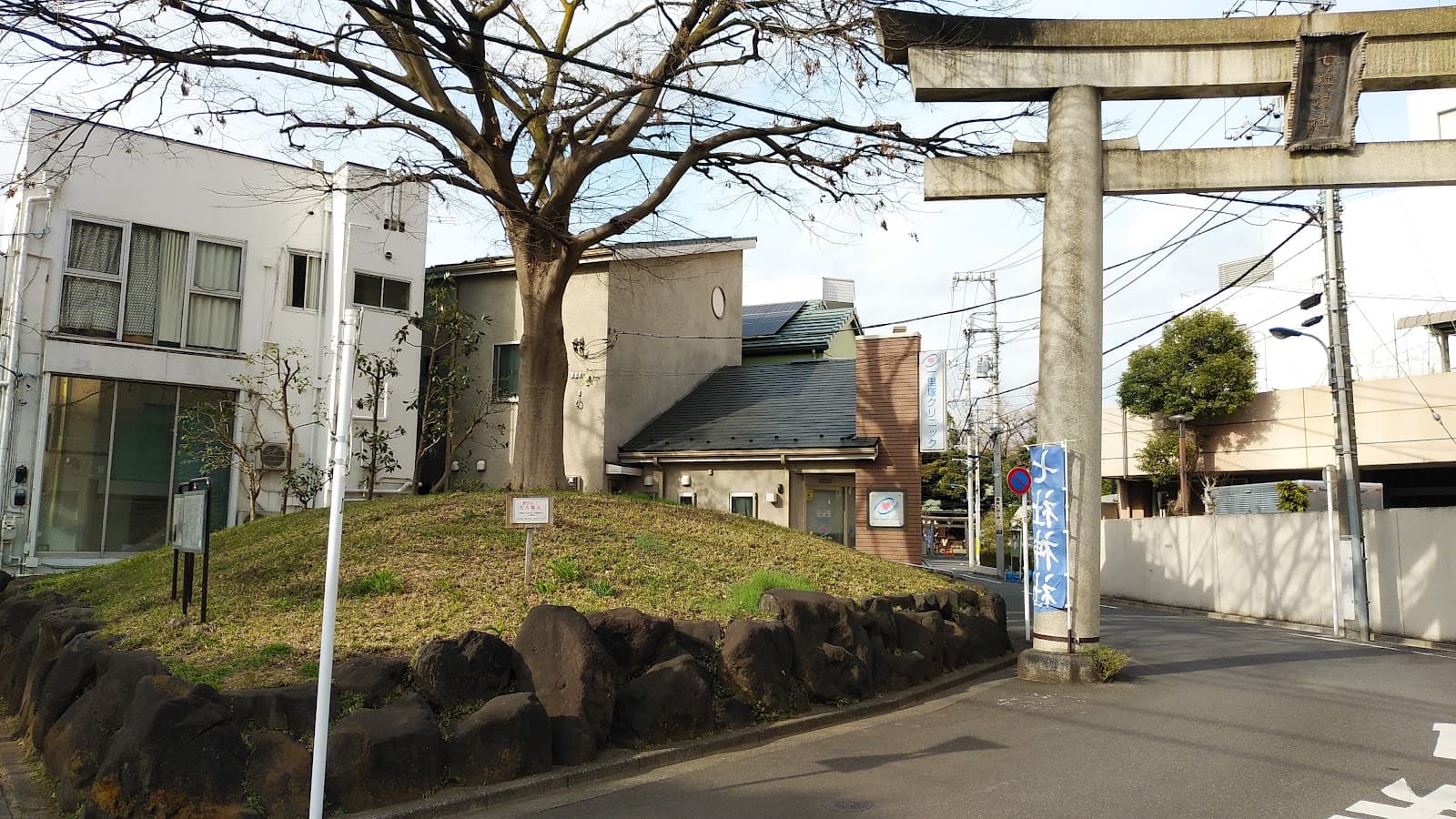
Senju Ichirizuka
A preserved Edo-period milepost, offering a glimpse into historical travel routes and a testament to community preservation efforts.
Highlights
Must-see attractions

Social
From TikTok & Reddit
Best Time
Quiet reflection time
Senju Ichirizuka
Best Time
Quiet reflection time
Highlights
Must-see attractions
A preserved Edo-period milepost, offering a glimpse into historical travel routes and a testament to community preservation efforts.
"A precious cultural asset, preserved through local collaboration, offering a tangible link to Edo-period journeys."
Look for the Signage
Without the info board, it's easily missed. Look for signs near Takinogawa Police Station. :informationdeskperson:
Understand its Purpose
These were mileposts for the shogun's journeys on the Nikko Onari Road. 📜

Quick Facts
Hours
Rating
3.7 · 30 reviews
Type
Historical Landmark
Highlights
Discover the most iconic attractions and experiences
The East Mound
Original location on the old road
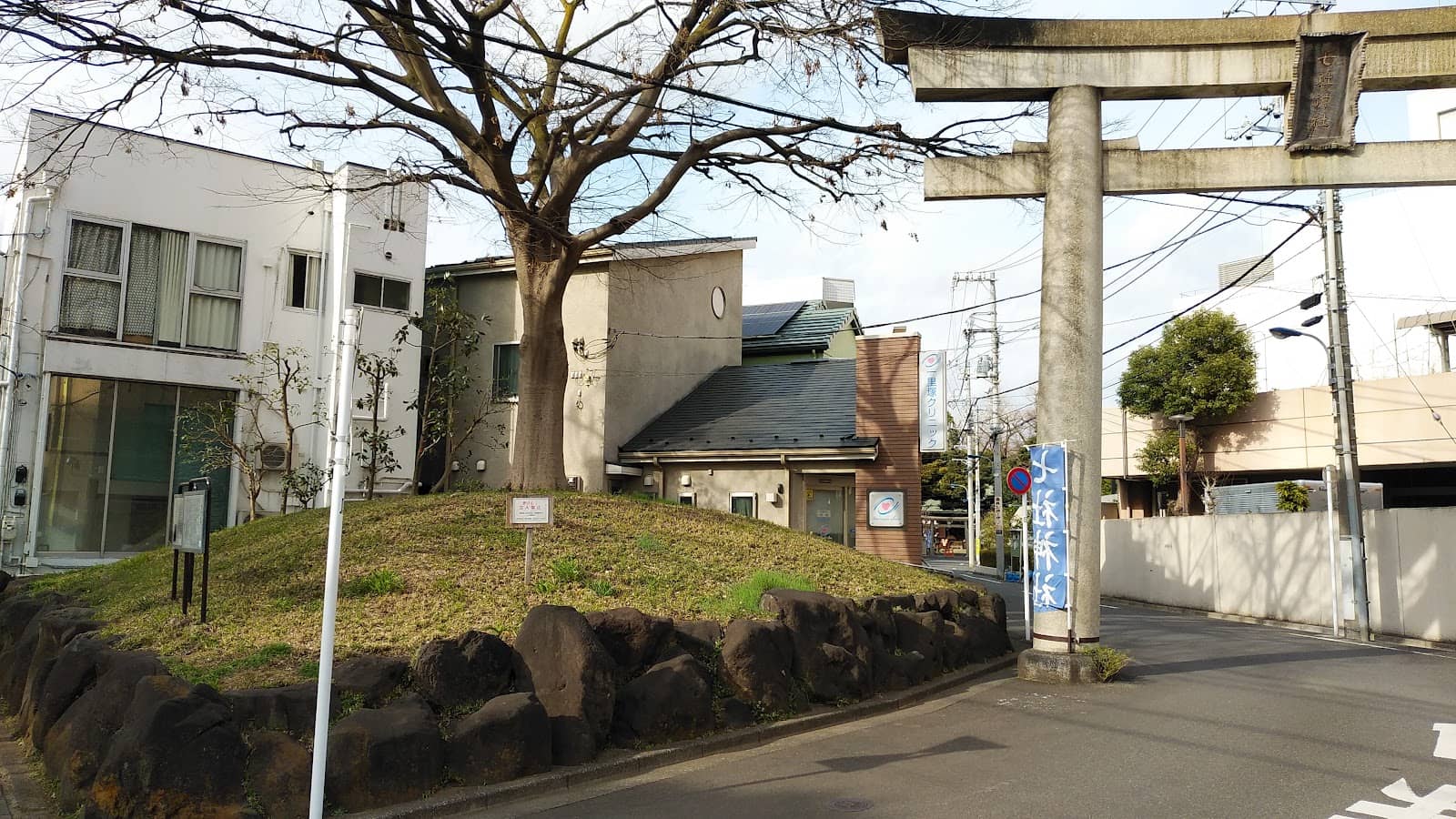
The best-preserved of the two mounds, offering a tangible connection to Edo-period travel and the shogun's journeys.
Preservation Monument
Near the East Mound
A monument detailing the history of the site and the successful efforts to save it from removal during road construction.
The West Mound (Median Strip)
Old road alignment
Though less intact, the West Mound still signifies the original pair of mileposts, illustrating the scale of the historical road.
Plans like a pro.
Thinks like you
Planning Your Visit
Timing is Key for a Glimpse of History
Respecting a Designated Historic Site
Best Times
Insider Tips
from TikTok, Instagram & Reddit
Look for the Signage
Without the info board, it's easily missed. Look for signs near Takinogawa Police Station. :informationdeskperson:
Understand its Purpose
These were mileposts for the shogun's journeys on the Nikko Onari Road. 📜
Appreciate Preservation Efforts
A testament to local collaboration saving a historic site. :handshake:
Near Nishigahara Station
Easily accessible via the Subway Namboku Line. :train2:
Tips
from all over the internet
Look for the Signage
Without the info board, it's easily missed. Look for signs near Takinogawa Police Station. :informationdeskperson:
Understand its Purpose
These were mileposts for the shogun's journeys on the Nikko Onari Road. 📜
Appreciate Preservation Efforts
A testament to local collaboration saving a historic site. :handshake:
Near Nishigahara Station
Easily accessible via the Subway Namboku Line. :train2:
What Travellers Say
Reviews Summary
Visitors appreciate Senju Ichirizuka as a preserved piece of Edo-period history, noting its significance as a milepost on the Nikko Onari Road and the successful community efforts to save it. While its historical value is recognized, some find it easily overlooked without the informational signage.
"Nationally Designated Historic Site (Designated March 8, 1922)
Nishigahara Ichirizuka
In February 1604, the Edo Shogunate ordered the construction of mileposts along major roads throughout Japan, starting from Edo Nihonbashi, to serve as guideposts for road distances.
Nishigahara Ichirizuka is the next milepost after Hongo Oiwake and the second milepost on the Nikko Onari Road from Nihonbashi.
The main route of the Nikko Onari Road within Tokyo is currently Hongo-dori, but it crossed Kawaguchi-juku by boat from Iwabuchi-juku, then traveled north through the post towns of Hatogaya, Daimon, and Iwatsuki, before joining the Nikko Kaido at Satte-juku.
The name stuck because it was used exclusively by the shogun when visiting Nikko Toshogu Shrine, but it was also called the Iwatsuki Kaido because it was used as a route for the lord of Iwatsuki domain during his alternate attendance and as an official route for the domain. A pair of mounds still remain on either side of the old road. These precious cultural assets are Tokyo's mileposts, preserved in their original locations.
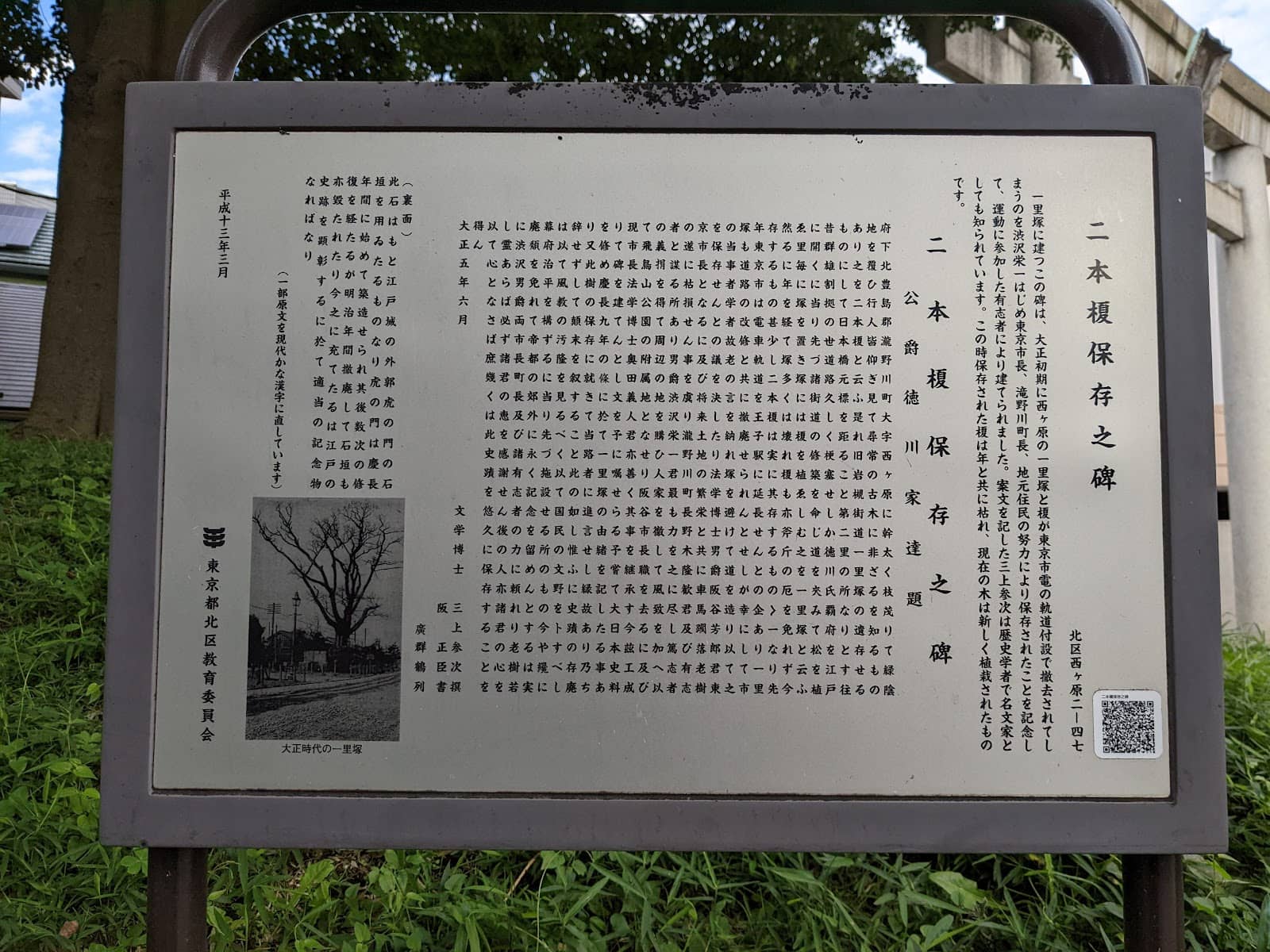
The mound located within the roadway bears a monument dated June 1916, titled "Monument for the Preservation of Two Enoki Trees."
At the time, Nishigahara Milestone was located on the Tokyo City Tramway extension line, and was threatened with removal during road construction work.
The monument inscribes this history and the successful preservation efforts of local residents led by Eiichi Shibusawa and the mayors of Tokyo and Takinogawa.
Nishigahara Milestone is also monumental as an example of successful collaboration between intellectuals and local residents in the Taisho era to preserve a cultural asset.
[Excerpt from on-site information board]
Located at the entrance to Shichisha Shrine, next to Takinogawa Police Station.
Without the information board, it would easily be overlooked as simply a pile of earth."
中山家範
"This is the first milepost on the Nikko Onari Road, which started at Hongo-Oiwake on the Nakasendo road and stretched to Satte-juku on the Nikko road, and was used by successive Tokugawa Shoguns, including Ieyasu, on their pilgrimages.
The East Mound remains more or less in its original form, but the West Mound remains like a median strip.
It's right next to Nishigahara Station on the Subway Namboku Line."
むぺる
"There is a traffic light on Hongo-dori called "Ichirizuka" and I wondered if there was a milepost nearby, and there was. There is a sign for it next to the Takinogawa Police Station."
J佐藤
What People Like
What People Dislike
Frequently Asked Questions
🚇 🗺️ Getting There
Senju Ichirizuka is conveniently located near Nishigahara Station on the Tokyo Metro Namboku Line. From the station, it's a short walk. Look for signage near the Takinogawa Police Station and the entrance to Shichisha Shrine.
Specific parking information for Senju Ichirizuka is not widely available. It's recommended to use public transportation, as it's easily accessible via the Namboku Line to Nishigahara Station.
The mileposts are situated along the old road alignment. The East Mound is more intact, and the West Mound is visible as a median strip. Access is generally straightforward from the nearby street.
🎫 🎫 Tickets & Entry
No, Senju Ichirizuka is a public historical site and does not require an entrance fee. You can visit and explore the mounds freely during daylight hours.
As an outdoor historical site, Senju Ichirizuka does not have set opening hours. It is accessible during daylight hours. However, to best view the mounds and read the information, visiting when it's light is recommended.
Yes, Senju Ichirizuka is a nationally designated historic site, recognized for its importance in Japanese history, particularly during the Edo period.
🎫 🧭 Onsite Experience
You can see the remnants of two historical mileposts, the East Mound and the West Mound, which served as markers on the Nikko Onari Road during the Edo period. There is also a monument detailing its preservation history.
A visit to Senju Ichirizuka is typically brief, often taking around 15-30 minutes. It's a site for historical appreciation rather than extensive exploration.
While children can visit, the site's appeal might be limited as it's primarily historical mounds and informational signage. It's best for those interested in history or as a brief stop on a larger itinerary.
Yes, photography is permitted at Senju Ichirizuka. It's a great opportunity to capture a piece of Tokyo's historical road infrastructure.
📸 📸 Photography
The East Mound, with its more intact form, and the preservation monument offer good photographic subjects. Capturing the context with the nearby shrine or police station can also add to the historical narrative.
Daylight hours are essential for clear visibility of the mounds. Early morning or late afternoon can offer softer light, but the primary goal is to see the historical features clearly.

Social
from TikTok, Instagram & Reddit