Shimosa Kokubun-niji Ruins
Explore the historical foundation stones of Shimousa Kokubunji, a significant Nara-period temple, offering a glimpse into ancient Japanese religious a...
Highlights
Must-see attractions

Social
From TikTok & Reddit
Best Time
Peaceful exploration
Shimosa Kokubun-niji Ruins
Best Time
Peaceful exploration
Highlights
Must-see attractions
Explore the historical foundation stones of Shimousa Kokubunji, a significant Nara-period temple, offering a glimpse into ancient Japanese religious architecture.
"A quiet place to reflect on history, with remnants of a once grand temple and a reconstructed gate."
🚗 Driving Caution Advised
Roads near the temple are narrow; drive slowly and be mindful of oncoming traffic. Parking is available.
👟 Comfortable Footwear Essential
You'll be walking on uneven ground to see the foundation stones. Sturdy shoes are a must!
Highlights
Discover the most iconic attractions and experiences
Foundation Stones
Throughout the grounds
Explore the remnants of the original temple layout, including the Kondo, Lecture Hall, and Tower foundations.
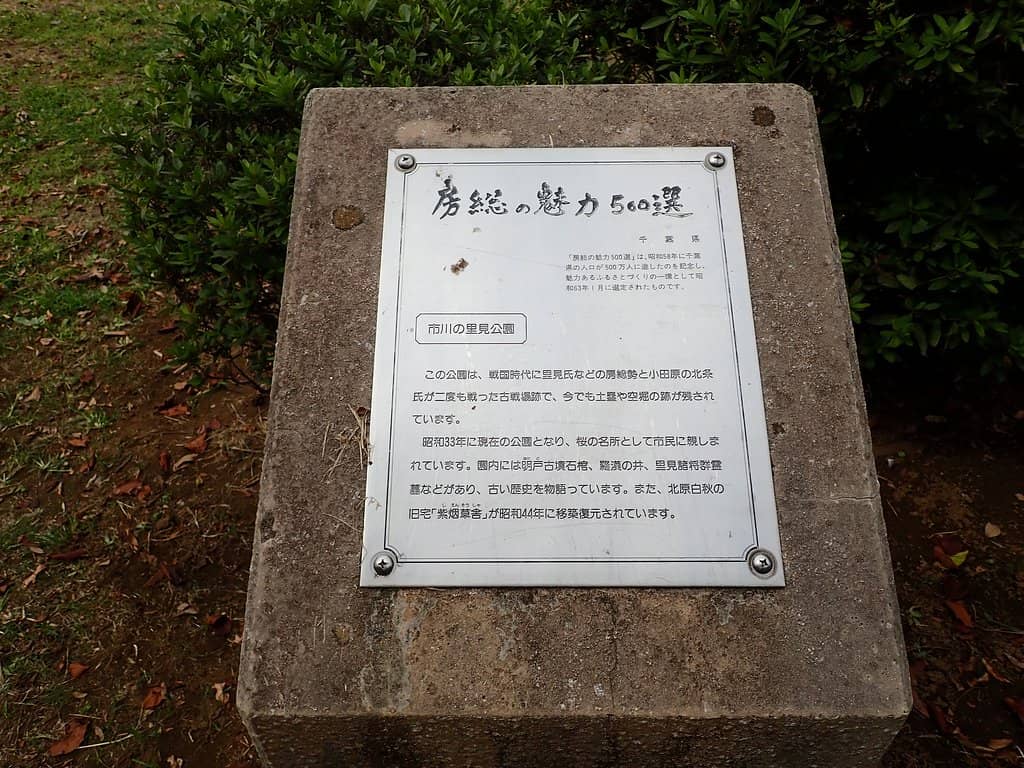
Great South Gate (Nandaimon)
Main entrance
A reconstructed vermilion gate housing impressive Agyo and Ungyo Nio statues, offering a glimpse of past grandeur.
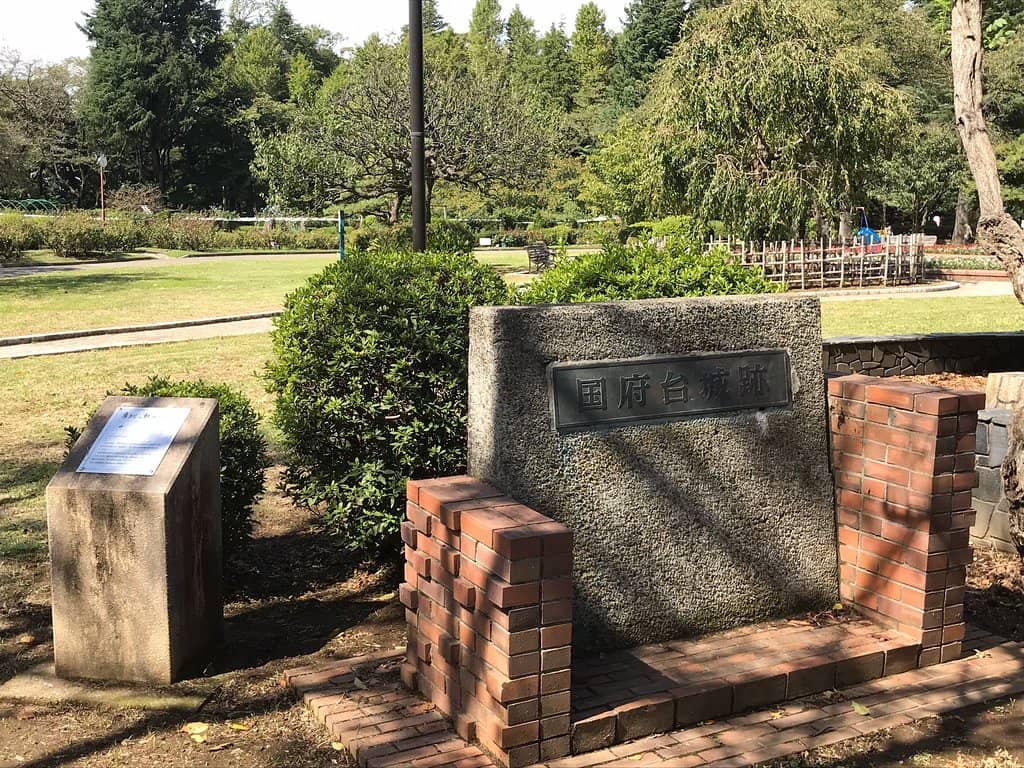
Three Jizo Statues
Near the memorial tower
Poignant statues erected in memory of students lost in a tragic ferry accident, a touching historical marker.
Plans like a pro.
Thinks like you
Planning Your Visit
Timing Your Visit
Navigating the Site
Best Times
Insider Tips
from TikTok, Instagram & Reddit
🚗 Driving Caution Advised
Roads near the temple are narrow; drive slowly and be mindful of oncoming traffic. Parking is available.
👟 Comfortable Footwear Essential
You'll be walking on uneven ground to see the foundation stones. Sturdy shoes are a must!
🗺️ Site Map is Key
Grab a map near the main gate to understand the layout of the original temple ruins.
📜 Goshuin Available
Polite staff offer temple seals (goshuin) featuring Yakushi Nyorai or Bishamonten.
Tips
from all over the internet
🚗 Driving Caution Advised
Roads near the temple are narrow; drive slowly and be mindful of oncoming traffic. Parking is available.
👟 Comfortable Footwear Essential
You'll be walking on uneven ground to see the foundation stones. Sturdy shoes are a must!
🗺️ Site Map is Key
Grab a map near the main gate to understand the layout of the original temple ruins.
📜 Goshuin Available
Polite staff offer temple seals (goshuin) featuring Yakushi Nyorai or Bishamonten.
What Travellers Say
Reviews Summary
Visitors appreciate the historical significance of the Shimosa Kokubun-niji Ruins as a remnant of an important Nara-period temple, finding the foundation stones and reconstructed gate to be particularly interesting. The peaceful atmosphere and the opportunity to receive a goshuin are also highlighted as positive aspects. However, some note the lack of original structures and the challenging narrow roads leading to the site.
"[Temple Pilgrimage]
◉ Kokubunji Temple 📍 Ichikawa City, Chiba Prefecture
I visited Kokubunzan Kokubunji, which stands on the site of Shimousa Kokubunji, one of the Kokubunji temples built by imperial edict of Emperor Shomu during the Nara period.
I visited at 12:08 PM, and the place was quiet with almost no people around.
🛕 Kokubunzan Kokubunji
☆Mountain Name: Kokubunzan
☆Temple Name: Kokubunji
☆Denomination: Shingon Buddhism Buzanha
☆Principal Image: Yakushi Nyorai Statue
☆History
The "Edict for the Construction of Kokubunji Temples" issued by Emperor Shomu on February 14, 741, ordered the construction of Kokubunji Temples and Kokubunji Nunneries.
Kokubunso-ji Temple was named "Konkomyo Shitenno Gokoku-no-ji Temple" and was called "Kokubunsan Konkomyo-ji Temple" until 1889, and is now called "Kokubunsan Kokubun-ji Temple."
The ruins of Shimousa Kokubunso-ji Temple, which was erected by imperial decree in roughly the same location as the current Kokubunji Temple, were built in the same layout as Horyuji Temple in Nara Prefecture (Horyu-ji-style temple layout).
☆Kondo
Below the current main hall is the Kondo's foundation, made of compacted earth in multiple layers, measuring 31.5m east to west and 19m north to south.
☆Audience Hall
Near the center of the cemetery is the foundation of the lecture hall, measuring 26m east to west and 18m north to south.
☆Tower
39m west of the center of the Kondo's foundation, are the remains of a square tower measuring 18m on each side.
☆Kokubu Goro Memorial Tower
The origins date back to when Goro Tanemichi (Kokubu Goro), the fifth son of Chibanosuke Tsunetane, a nobleman of the Kanto region descended from Emperor Kanmu, ruled Kokubu in Katsushika County, Shimousa Province (around Horinouchi, Ichikawa City), and named the area "Kokubu."
☆Sakai Kurayaki Haiku Monument
This monument features a haiku by a senryu poet who served as a judge for the Senryu Dan (a society of senryu poets) from the early Meiji period to the early Showa period and led a senryu reform movement.
☆Three Jizo
In 1913 (Taisho 2), during a field trip for students from Yushima Elementary School, the Edogawa Kuriichi ferry connecting Koiwa and Kokubudai capsized, killing three students.
Three Jizo statues were erected where their bodies were discovered and later moved to the temple grounds.
◉ Impressions/Route
There's a large parking lot within the Kokubunji temple grounds that can accommodate about 30 cars, but the roads around the temple are narrow (making passing difficult), so driving caution is advised.
As you enter the temple grounds, there's a map of the foundations of the original Shimousa Kokubunji temple to the right of the main gate, and an explanatory board about the Great South Gate to the left, so be sure to check them out.
The vibrant vermilion Great South Gate is home to the impressive Agyo and Ungyo statues of the Nio.
The Great South Gate and Ungyo statues were destroyed by fire in 1891 and rebuilt in 1978.
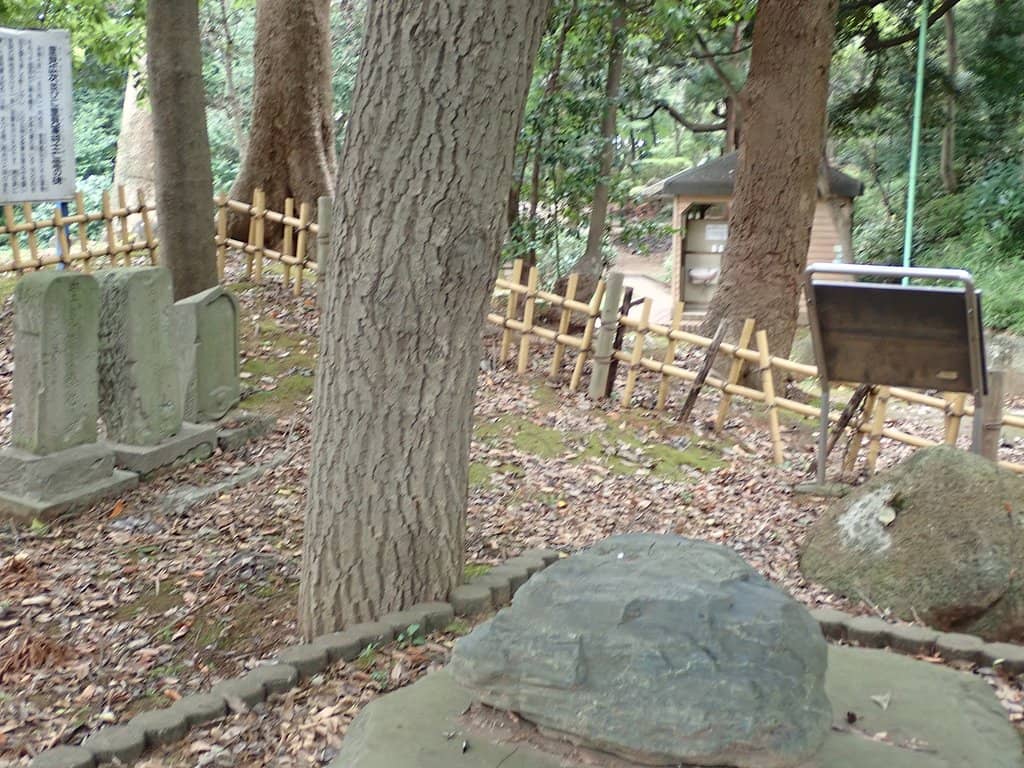
Passing through the gate, the shrubbery on the left side of the approach is lined with temple signposts and foundation stones made from foundation stones from Shimousa Kokubun-ji Temple. To the right of the approach are the bell tower and guardhouse (restroom), followed by the east gate and memorial tablet hall. Further back are the Ichikawa Seven Lucky Gods Bishamonten, a memorial tower for Kokubun Goro, the Three Jizo statues, and a stone monument with a haiku by Sakai Kurage.
Continuing on the left side of the shrubbery are the Muenzuka (Muenzuka mound), Hokyoin pagoda, and Renge-do Hall.
Going from the space between the main hall and the front shoin at the back of the approach to the cemetery at the back, you will find the lecture hall base at the back right and the seven-story base on the left.
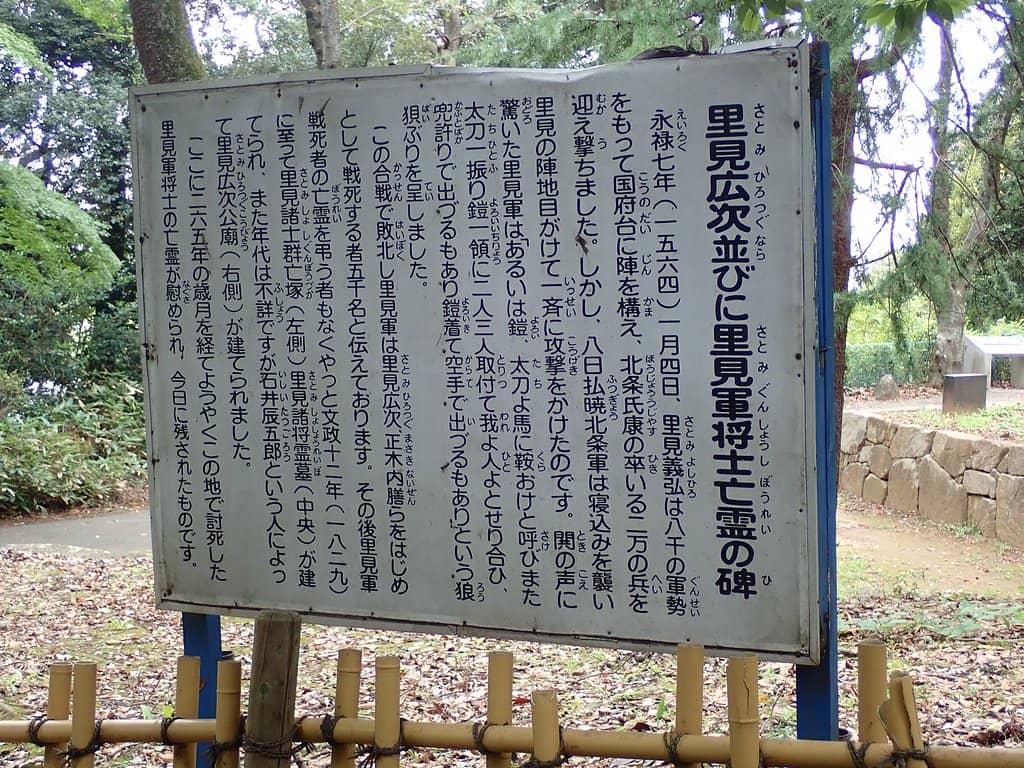
Many kokubun-ji temples and kokubun-nunneries have fallen into disuse for various reasons, and Kokubunyama Kokubun-ji (Shimousa Kokubun-ji) is no exception. Due to repeated fires and destruction during the Battle of Kokubundai between the Satomi and Hojo clans, none of the original buildings still remain.
However, each time they were rebuilt, many people have rebuilt them, and the temple has survived to this day.
I was able to relax and pray while reminiscing about the past.
Thank you very much.
◉Address
3-20-1 Kokubu, Ichikawa City, Chiba Prefecture
◉Access
🚊1.7 km (approximately a 26-minute walk) from the north exit of Ichikawa-Mama Station on the Keisei Main Line."
Taka ガロン
"Apparently it used to be a much larger temple.
Many people visit the graves during the equinox."
Kazuk Hiros
"I received a goshuin (temple seal).
The staff were very polite.
There seem to be two types: Yakushi Nyorai, the principal image of the temple, and Bishamonten, one of the Ichikawa Seven Lucky Gods."
森本博志
What People Like
What People Dislike
Frequently Asked Questions
🚇 🗺️ Getting There
From the north exit of Ichikawa-Mama Station on the Keisei Main Line, it's about a 1.7 km walk, taking approximately 26 minutes.
While there is parking, the roads leading to the temple are narrow and can be difficult for cars to pass each other, so caution is advised.
The closest station is Ichikawa-Mama Station on the Keisei Main Line. From there, it's a walk or a short taxi ride.
Information on direct bus routes is limited, but local buses may serve the Ichikawa-Mama Station area, from where you can walk.
The site consists of foundation stones and uneven ground, which may pose challenges for those with mobility issues.
🎫 🎫 Tickets & Entry
The site is generally open and accessible without an entrance fee, as it is a historical ruin and temple grounds.
As it's an open historical site and temple, it's typically accessible during daylight hours. Specific temple building hours may vary.
While the ruins themselves are free to explore, there might be a small fee or donation requested for specific temple buildings or halls.
Yes, visitors can receive a goshuin from the temple staff, with options for Yakushi Nyorai or Bishamonten.
The site may see increased visitors during equinox periods for grave visits. It's advisable to check for any local event schedules.
🎫 🧭 Onsite Experience
You can see the foundation stones of the original temple buildings, including the Kondo, Lecture Hall, and Tower, as well as the reconstructed Great South Gate and Three Jizo statues.
A leisurely exploration of the foundation stones and temple grounds can take about 1-2 hours, depending on your interest.
Restrooms are available near the guardhouse. There are no cafes on site, so it's recommended to bring your own refreshments.
Photography is generally permitted within the temple grounds and around the ruins, but always be respectful of any posted restrictions.
It was one of the Kokubunji temples built by imperial edict during the Nara period, with a layout similar to Horyuji Temple in Nara.
📸 📸 Photography
The reconstructed Great South Gate with its Nio statues, the various foundation stones, and the Three Jizo statues offer good photographic opportunities.
Morning and late afternoon light can be beautiful for capturing the atmosphere of the ruins and the gate.
Drone usage is typically restricted at historical and religious sites. It's best to check local regulations and temple policies before flying.
A standard DSLR or mirrorless camera with a versatile lens (e.g., 24-70mm) is suitable. A wide-angle lens can be useful for the gate.
The juxtaposition of ancient foundation stones with the reconstructed gate and the serene temple atmosphere provides unique visual narratives.
For Different Travelers
Tailored advice for your travel style
👨👩👧 Families with Kids
Tips for families: Wear comfortable shoes as the terrain is uneven. Bring snacks and drinks, as facilities are limited. Consider bringing a small ball or frisbee for open grassy areas if the children need to burn off energy, but be mindful of the cemetery. The walk from Ichikawa-Mama Station is manageable for older children, but a stroller might be challenging on some paths.
🚶 Solo Travelers & History Buffs
Recommendations: Take your time to read the historical markers and visualize the temple's original layout. Consider visiting on a weekday to fully appreciate the quiet atmosphere. The opportunity to receive a goshuin adds a traditional element to the visit, and the serene environment is perfect for contemplation and photography.
Deep Dives
In-depth insights and expert knowledge
The Historical Significance of Kokubunji Temples
Despite the imperial decree, many Kokubunji temples faced challenges over centuries, including fires, natural disasters, and periods of conflict, leading to their decline or destruction. The Shimosa Kokubun-ji was no exception, suffering damage during battles between the Satomi and Hojo clans. While none of the original structures remain standing, the site preserves the foundation stones of key buildings like the Kondo (main hall), Lecture Hall, and a pagoda, offering a tangible connection to its past grandeur. The ongoing efforts to maintain and interpret the site, including the reconstruction of the Great South Gate, highlight its enduring historical value.
Visiting the Shimosa Kokubun-niji Ruins provides a unique opportunity to step back in time and visualize the scale and layout of these ancient religious complexes. The presence of explanatory boards and maps helps visitors understand the significance of each foundation stone and the overall temple structure. It's a place where history is not just read about but can be felt through the remnants of its past architecture.
Exploring the Temple Grounds and Memorials
As you proceed along the approach, the grounds are dotted with various points of interest. Shrubbery lines the path, interspersed with temple signposts and foundation stones salvaged from the original structures. You'll also find the bell tower, a guardhouse (which includes restrooms), and the east gate. Further into the grounds, the Ichikawa Seven Lucky Gods Bishamonten, a memorial tower for Kokubun Goro, and the Three Jizo statues are notable landmarks. The latter are particularly poignant, erected in memory of three students who tragically drowned in the Edogawa River. A stone monument featuring a haiku by Sakai Kurage adds a touch of literary art to the serene setting.
The rear of the temple grounds leads to the cemetery, where the lecture hall base and the seven-story pagoda base are located. These remnants allow visitors to appreciate the scale of the original temple complex. Despite the absence of original buildings, the site offers a contemplative experience, allowing visitors to reflect on the history and the resilience of the temple through its various reconstructions and enduring presence. Receiving a goshuin from the polite temple staff can be a meaningful way to commemorate your visit.


Social
from TikTok, Instagram & Reddit