Yushukan Museum
A museum dedicated to Japan's military history from 1894 to 1945, showcasing artifacts and a nationalistic perspective.

Highlights
Must-see attractions

Social
From TikTok & Reddit
Best Time
Fewer crowds, more contemplative
Yushukan Museum
Best Time
Fewer crowds, more contemplative
Highlights
Must-see attractions
A museum dedicated to Japan's military history from 1894 to 1945, showcasing artifacts and a nationalistic perspective.
"Offers a unique, albeit controversial, perspective on Japan's military past."
📸 Photography Allowed (Mostly)
Capture most exhibits, but respect restrictions on photos of fallen soldiers' pictures.
⏳ Allow Ample Time
Plan for 2-3 hours to fully absorb the extensive displays and historical context.
Highlights
Discover the most iconic attractions and experiences
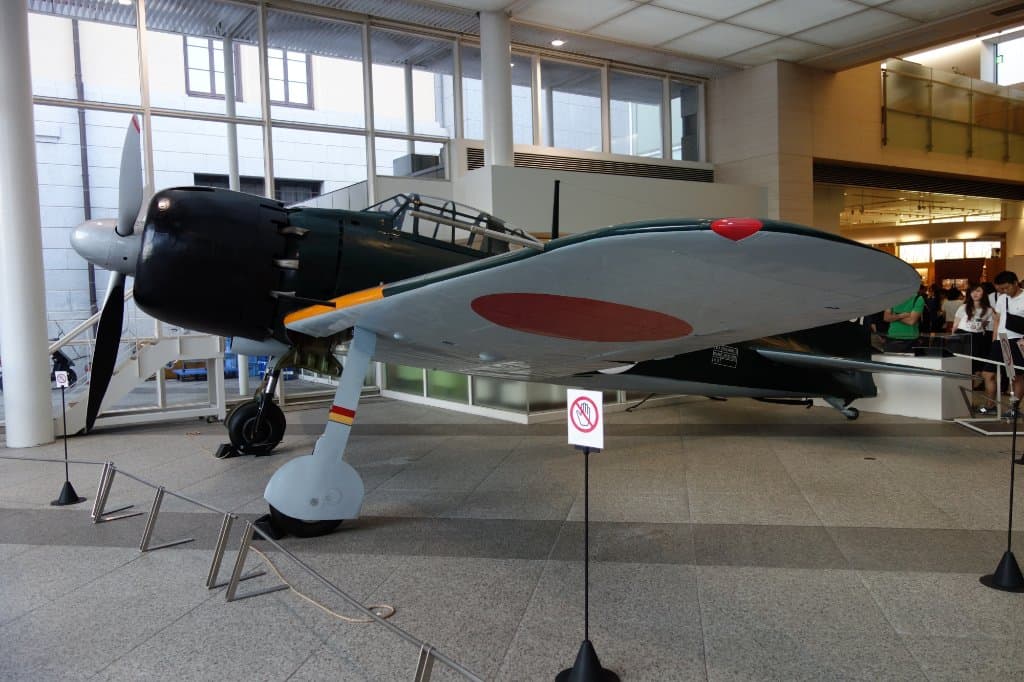
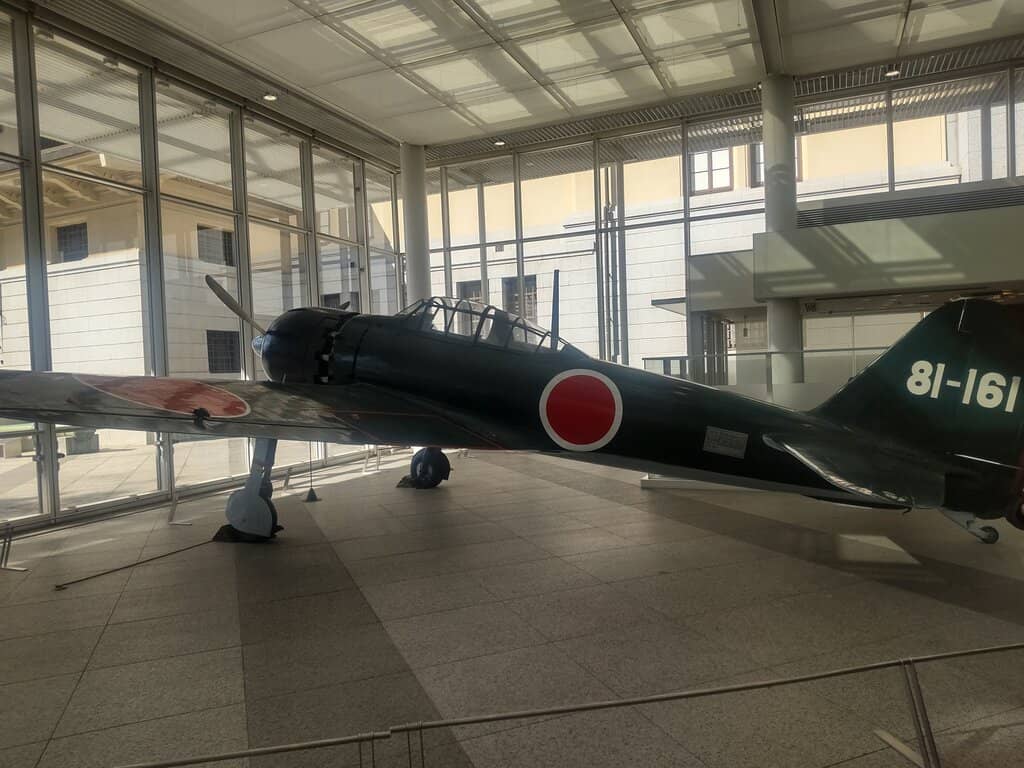
Mitsubishi Zero Fighter
Ground Floor Lobby
The iconic WWII fighter plane, a symbol of Japanese aerial prowess and a powerful centerpiece.
Thai-Burma Railway Locomotive
Ground Floor
A C56 steam locomotive from the infamous 'Death Railway,' a poignant reminder of wartime labor and suffering.
Samurai Swords and Military Artifacts
Second Floor
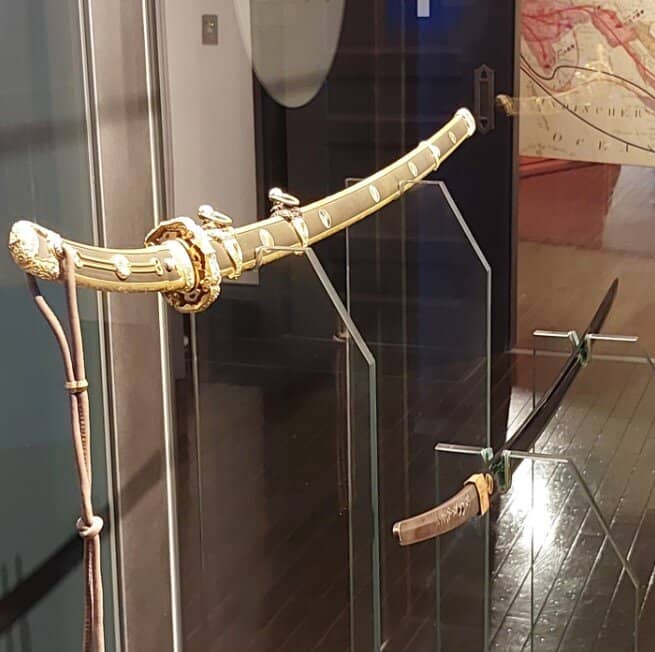
Exquisite swords and a vast collection of rifles, uniforms, and flags showcasing Japan's military evolution.
Farewell Letters and Portraits
Second Floor
Heartfelt letters and portraits of soldiers, offering a deeply human and emotional perspective on war.
Plans like a pro.
Thinks like you
Planning Your Visit
Understand the Perspective
 +1
+1Plan Your Visit
Best Times
Insider Tips
from TikTok, Instagram & Reddit
📸 Photography Allowed (Mostly)
Capture most exhibits, but respect restrictions on photos of fallen soldiers' pictures.
⏳ Allow Ample Time
Plan for 2-3 hours to fully absorb the extensive displays and historical context.
🗣️ English Information Available
Most displays have English translations, making it accessible for international visitors.
🤔 Prepare for a Unique Perspective
The museum presents a specific nationalistic viewpoint on history.
Tips
from all over the internet
📸 Photography Allowed (Mostly)
Capture most exhibits, but respect restrictions on photos of fallen soldiers' pictures.
⏳ Allow Ample Time
Plan for 2-3 hours to fully absorb the extensive displays and historical context.
🗣️ English Information Available
Most displays have English translations, making it accessible for international visitors.
🤔 Prepare for a Unique Perspective
The museum presents a specific nationalistic viewpoint on history.
🚶♀️ Wear Comfortable Shoes
You'll be doing a lot of walking to see all the exhibits. :athletic_shoe:
What Travellers Say
Reviews Summary
The Yushukan Museum offers a comprehensive look at Japan's military history with impressive artifacts like the Zero fighter and various weaponry. While praised for its collection and historical displays, many visitors note its highly nationalistic perspective and lack of accountability for wartime atrocities, leading to a controversial yet thought-provoking experience.
"A comprehensive journey through the history of Japan’s military. It’s well-dated and comes with English translations. 1000 yen for Adults.
There are some reviews criticizing the way certain historical moments are described.
In the museum there is a small paragraph on the “mistakes” made in Nanking where it’s claimed that the military leaders of Japan did acknowledge the wrongdoing of their subordinates.
The information could be more reflective on what happened but I would say this is standard practice for countries on the “losing” side.
For example, I am American and many museums here do not fully account what actually occurred in places like Vietnam or the Middle East, possibly out of respect for those who lost their lives during the conflicts.
In general from my travels around Japan they don’t seem ashamed of their Imperial period at all. There is imperial memorabilia in the gift shop.
Is this right or wrong? That is your personal opinion.
Initially there is a room with several well preserved Samurai outfit and swords for viewing .
The museum information begins with the struggle between the shogunate and Emperor. This led to power returning to the Emperor and the birth of a national, centralized military.
There is lots of information on the Sino-Japanese conflicts and Manchuria conflicts that I feel is not well-known outside of the sphere.
There is a room with information about the Royal family during the Wars until present day, starting with Emperor Meiji and ending with the current Emperor. Has information on their Empresses also.
The tour ends with a large showroom of machinery from the time period.
The gift shop has pins of planes, tanks and warships used during the time, along with some Imperial memorabilia.
The shrine next to the museum is dedicated to the soldiers lost during the conflicts.
I enjoyed my time and visited twice."
Yoster Daniel
"This was a very interesting experience to say the least. Being an American, I mainly went to see the other side of the war, and came away a bit surprised and confused as to the omission of certain details and information from their exhibits.
War makes animals out of all of us, but this is why it’s very important to not omit, hide, or revise certain historical details, so that future generations learn not to repeat the same mistakes.
Aside from that exhibit, the inclusion of artifacts, photos, and information from Japan’s history was utterly fascinating and definitely makes the museum worthy of a visit at least once. The merch shop has a lot of cool things for sale, as well."
Alex García
"On 1 August 2025, we decided to explore one of the city’s most fascinating and often debated cultural landmarks — the Yūshūkan Museum.
As two visitors from Malaysia, stepping into this museum meant stepping into a world where history, remembrance and national pride all converge.
The museum first opened its doors in 1882, making it Japan’s oldest military museum. Over the years it has been rebuilt and expanded, most notably after World War II and again in 2002, when it underwent significant modernization. Its stated mission is to honor those who fought for Japan from the Meiji Restoration through World War II.
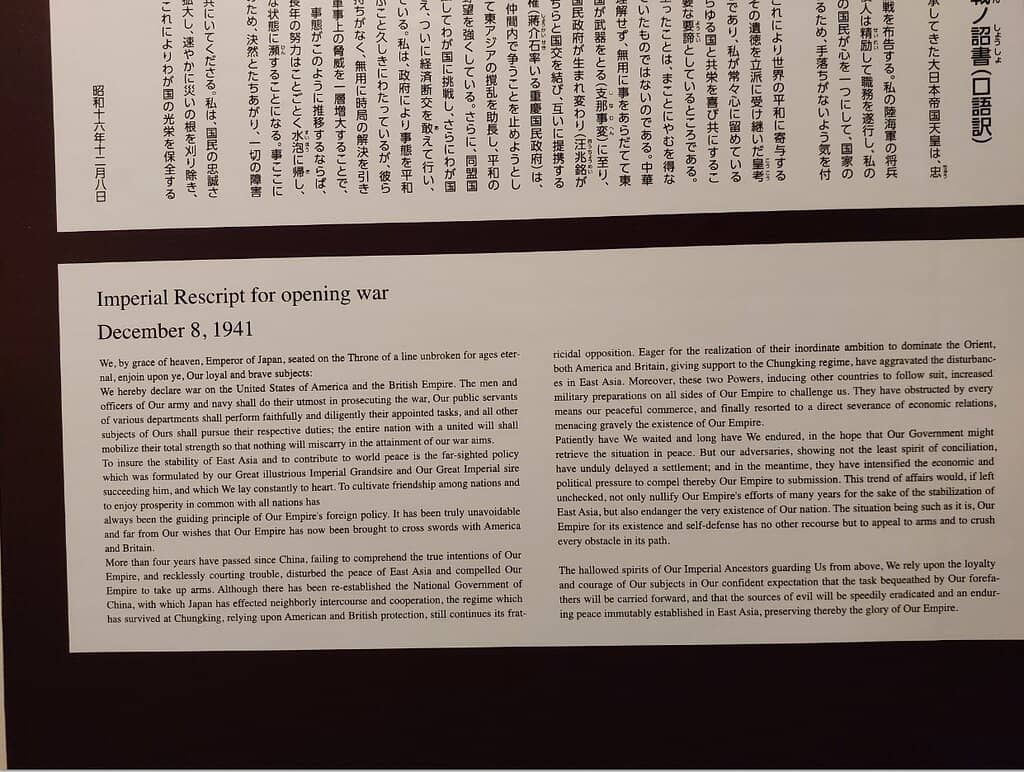
Yet what makes Yūshūkan unique is not just its impressive collection of artifacts, but also its perspective. Exhibits highlight the courage and sacrifice of Japanese soldiers while often avoiding detailed discussion of the war’s darker consequences.
The ground floor immediately sets the tone with a dramatic centerpiece: the Mitsubishi Zero fighter aircraft. To see this legendary plane up close was extraordinary. Its sleek frame, once the pride of the Imperial Japanese Navy, reminded us why it was both feared and admired during the Pacific War.
Moving further in, we encountered the C56 steam locomotive that once ran on the infamous Thai–Burma Railway. For us Malaysians, this exhibit had a powerful resonance. Known as the “Death Railway,” the line was built through forced labor and claimed thousands of lives. The museum presents the locomotive as part of engineering history, but standing before it, we could not help but reflect on the immense suffering that lay behind its operation.
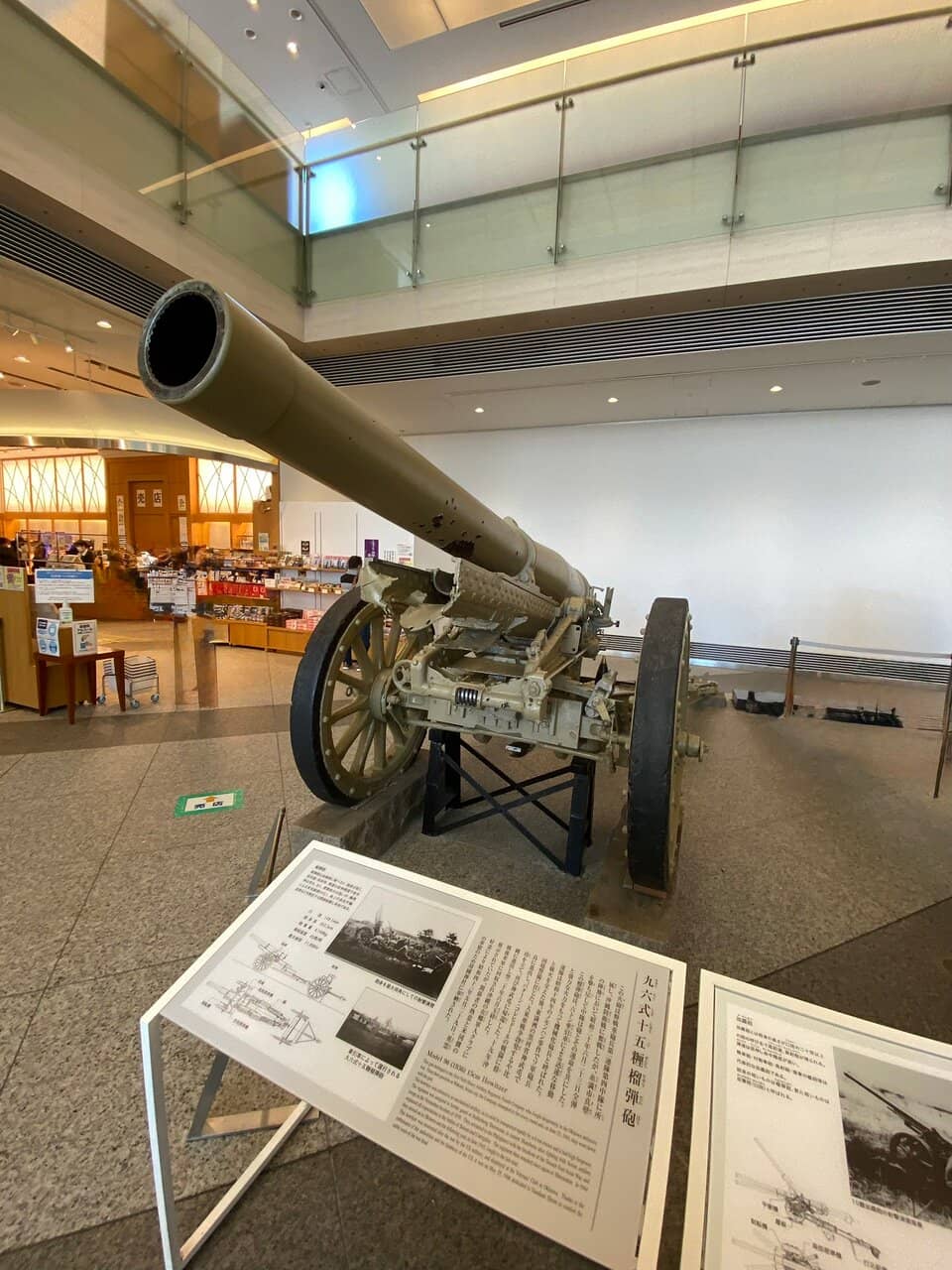
Outside in the covered portico, the focus shifts to artillery. The Model 89 15cm cannon and the Model 96 howitzer stood as imposing examples of Japan’s wartime firepower. These weapons were used in the defense of Okinawa and other late-war battles.
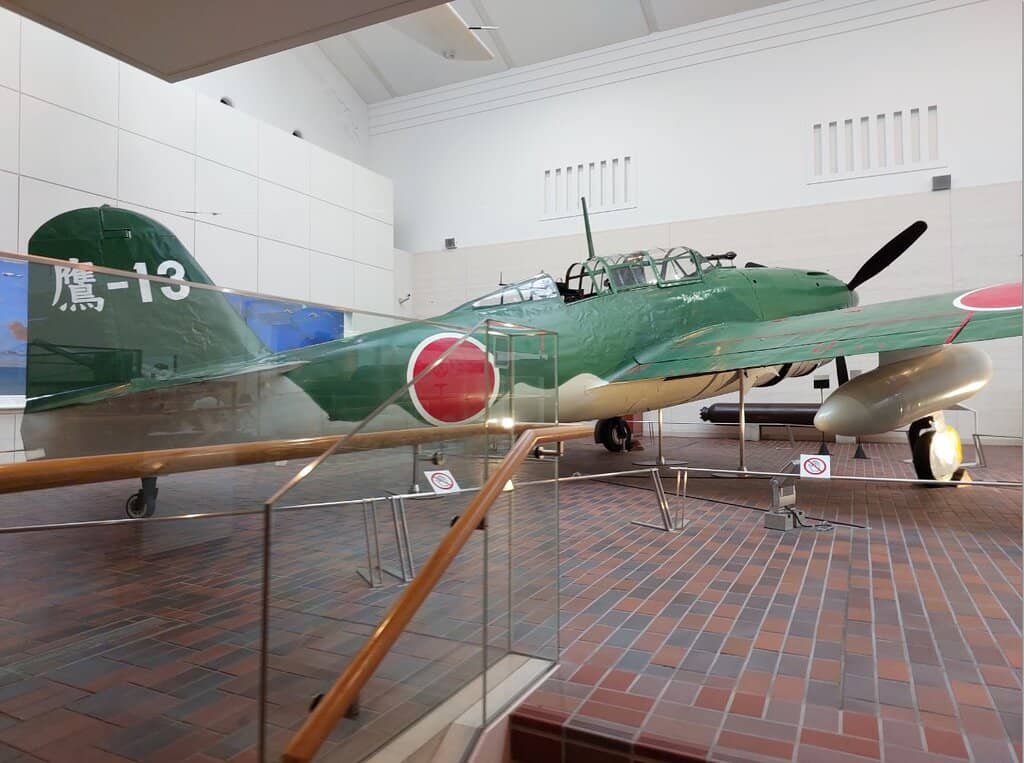
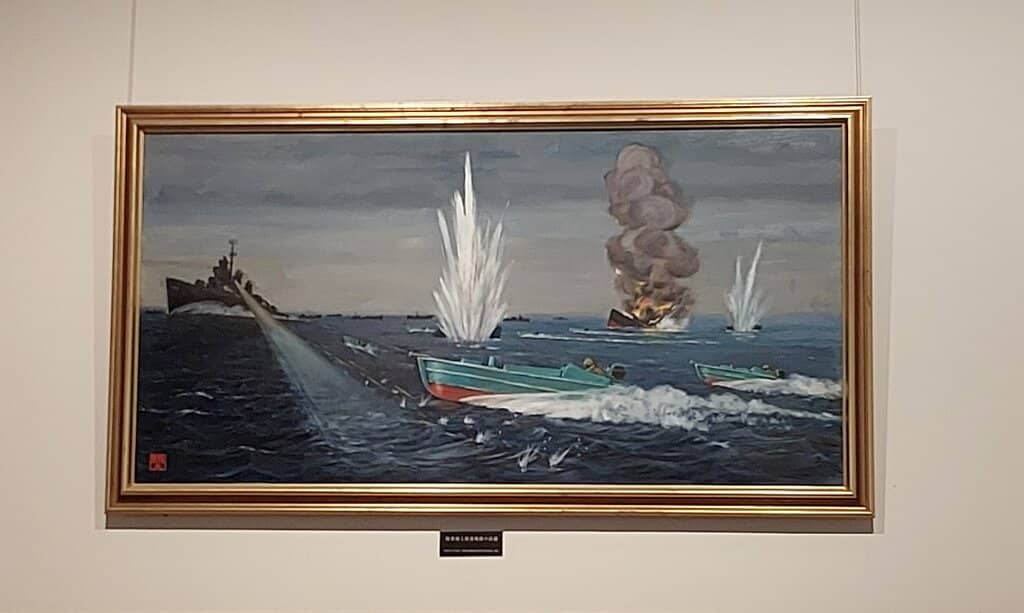
The Grand Exhibition Hall on the same floor expanded the scope further. Tanks, naval guns, torpedoes and experimental weapons such as the Ohka suicide aircraft and the Shin’yō motor boat filled the space.
Upstairs, the emphasis shifted from machines to people. The second floor opened with galleries tracing Japan’s rise as a modern power through the Meiji and Russo-Japanese Wars. Photographs, medals, and campaign maps charted how Japan emerged onto the global stage. The transition into the Pacific War exhibits introduced glass cases filled with rifles, swords, uniforms and regimental flags. Among these, the swords stood out most vividly, beautifully crafted and symbolic of how samurai traditions carried into modern military life.
The most poignant section, however, was the gallery of farewell letters and portraits. Many young soldiers wrote final notes to their families before leaving for battle. Even without fully understanding the Japanese language, the emotion was unmistakable. These letters humanized the war in a way that the tanks and planes downstairs could not.
As Malaysians, our reflections were layered. We admired the craftsmanship, the engineering brilliance, and the preservation of history on display. Yet we also remembered how these same weapons and soldiers once marched through Southeast Asia, leaving a legacy that is still remembered in our part of the world. Yūshūkan’s narrative emphasizes heroism and sacrifice, often minimizing the costs of war, but this contrast actually made our visit richer. It reminded us how history is never one story, but many, depending on where you stand.
Tickets cost JPY1,000 for adults.
From the grandeur of the Zero fighter in the lobby to the intimate poignancy of soldiers’ letters upstairs, the museum offered a powerful journey through Japan’s modern military history.
It was not just about weapons or battles; it was about memory, identity, and how a nation chooses to honor its past. For us, it was an enriching experience — one that deepened our understanding of Japan, while reminding us of the shared and often painful history of our region."
Azmi Mahamad
What People Like
What People Dislike
Frequently Asked Questions
🚇 🗺️ Getting There
The Yushukan Museum is located within the grounds of Yasukuni Shrine. You can reach it via public transport. The nearest stations are Kudanshita Station (Toei Shinjuku Line, Toei Chiyoda Line, Tokyo Metro Hanzomon Line) or Chidorigafuchi Station (Tokyo Metro Hanzomon Line). From there, it's a short walk.
Yes, it is accessible by train. Kudanshita Station is a convenient option, offering access from multiple subway lines.
The Toei Shinjuku Line, Toei Chiyoda Line, and Tokyo Metro Hanzomon Line all serve Kudanshita Station, making it a well-connected option.
While Yasukuni Shrine has parking facilities, it's generally recommended to use public transportation due to potential congestion.
Absolutely! The Yushukan Museum is a significant cultural site and can be easily incorporated into a day of exploring Tokyo's attractions.
🎫 🎫 Tickets & Entry
Admission to the Yushukan Museum is ¥1,000 for adults.
Information on specific discounts is not widely publicized, but it's always worth checking the official website or inquiring at the ticket counter.
The museum typically opens around 9:00 AM and closes at 5:00 PM, with last admission usually around 4:30 PM. It's advisable to check the official website for the most up-to-date hours.
Advance booking is generally not required for individual visitors. Tickets can be purchased at the museum.
No, the Yushukan Museum has a separate admission fee and is not included with entry to Yasukuni Shrine itself.
🎫 🧭 Onsite Experience
The museum features a vast collection of military artifacts, including aircraft like the Mitsubishi Zero, tanks, artillery, samurai swords, and personal mementos of soldiers. It covers Japan's wars from 1894 to 1945. +1
While it displays military hardware, the museum's content and perspective may be more suited for older children and adults who can engage with historical and political themes.
Photography is generally permitted for most exhibits, but there are specific areas, such as rooms displaying personal photographs of fallen soldiers, where photography is prohibited.
Most visitors spend around 2 to 3 hours exploring the museum's extensive exhibits.
The museum offers a nationalistic narrative, emphasizing Japanese sacrifice and heroism, often with limited discussion of wartime atrocities. +1
📸 📸 Photography
You can generally take photos of the exhibits, including the aircraft and weaponry. However, photography is strictly prohibited in the room dedicated to the portraits and personal effects of fallen soldiers.
The Mitsubishi Zero fighter plane in the lobby and the various artillery pieces and tanks outside are popular subjects for photography.
It's best to avoid using flash photography, especially in areas with delicate artifacts or where it might disturb other visitors. Check for any posted signs regarding flash usage.
The exterior displays of tanks and artillery offer good opportunities. Inside, the Zero fighter is a dramatic subject.
A camera with good low-light capabilities is beneficial for indoor exhibits. A wide-angle lens can be useful for capturing larger artifacts like aircraft and tanks. :camerawithflash:
For Different Travelers
Tailored advice for your travel style
👨👩👧 Families with Kids
Parents should be prepared to discuss the historical context and the museum's perspective. The exhibits on soldiers' letters and portraits can be emotionally impactful, and it's advisable to gauge a child's sensitivity to such content. Consider visiting Yasukuni Shrine first to provide a broader context before entering the museum.
🤔 History Enthusiasts
It's essential for history enthusiasts to approach the museum with a critical eye, understanding that the narrative presented is a specific interpretation. Engaging with the exhibits while cross-referencing with other historical sources will provide a more balanced understanding of the periods covered.
✈️ International Visitors
+1While the museum provides English translations for many exhibits, it's highly recommended to do some prior reading on Japan's modern military history to better contextualize the displays. Be prepared for a narrative that emphasizes national pride and sacrifice, and be mindful of the sensitivities surrounding Japan's wartime past, particularly for visitors from neighboring Asian countries.
Deep Dives
In-depth insights and expert knowledge
Understanding the Yushukan Museum's Narrative
Visitors will find displays showcasing military hardware, personal accounts, and historical interpretations that highlight Japan's role in various conflicts. However, it's important to note that the museum's portrayal of events, particularly concerning wartime actions and their consequences, differs significantly from international historical consensus. Critics often point to the lack of accountability for war crimes and the framing of Japan as a 'liberator' of Asia.
This unique perspective makes the Yushukan Museum a complex and thought-provoking destination. It offers a window into how a segment of Japanese society views its past, prompting reflection on the multifaceted nature of historical interpretation and national memory.
Key Artifacts and Exhibits
Other significant exhibits include the C56 steam locomotive from the notorious Thai-Burma Railway, a stark reminder of the human cost of wartime infrastructure projects.
Inside, the Grand Exhibition Hall is filled with weaponry, including rifles, uniforms, and regimental flags. The second floor delves into Japan's rise as a modern power and features poignant displays of farewell letters and portraits from soldiers, offering a deeply personal glimpse into the human side of conflict.
Visiting Yasukuni Shrine and Yushukan Museum
+1While the shrine itself is a place of remembrance and reflection, the Yushukan Museum provides a more detailed, albeit controversial, historical narrative. Visitors often combine a visit to both, experiencing the solemnity of the shrine and then delving into the museum's exhibits.
+1It's worth noting that Yasukuni Shrine and the Yushukan Museum are subjects of international controversy due to the enshrinement of Class A war criminals. Understanding this context is crucial for a comprehensive visit.
Social
from TikTok, Instagram & Reddit