
Santa Maria in Aquiro Rome
A serene, ancient church in Rome's heart, Santa Maria in Aquiro offers Baroque beauty and a peaceful escape from city crowds.
Highlights
Must-see attractions

Social
From TikTok & Reddit
Best Time
Quiet and light atmosphere
Santa Maria in Aquiro Rome
Best Time
Quiet and light atmosphere
Highlights
Must-see attractions
A serene, ancient church in Rome's heart, Santa Maria in Aquiro offers Baroque beauty and a peaceful escape from city crowds.
"A well-hidden church that gives nothing away from the outside. Inside, however, you’re met with a burst of Baroque beauty."
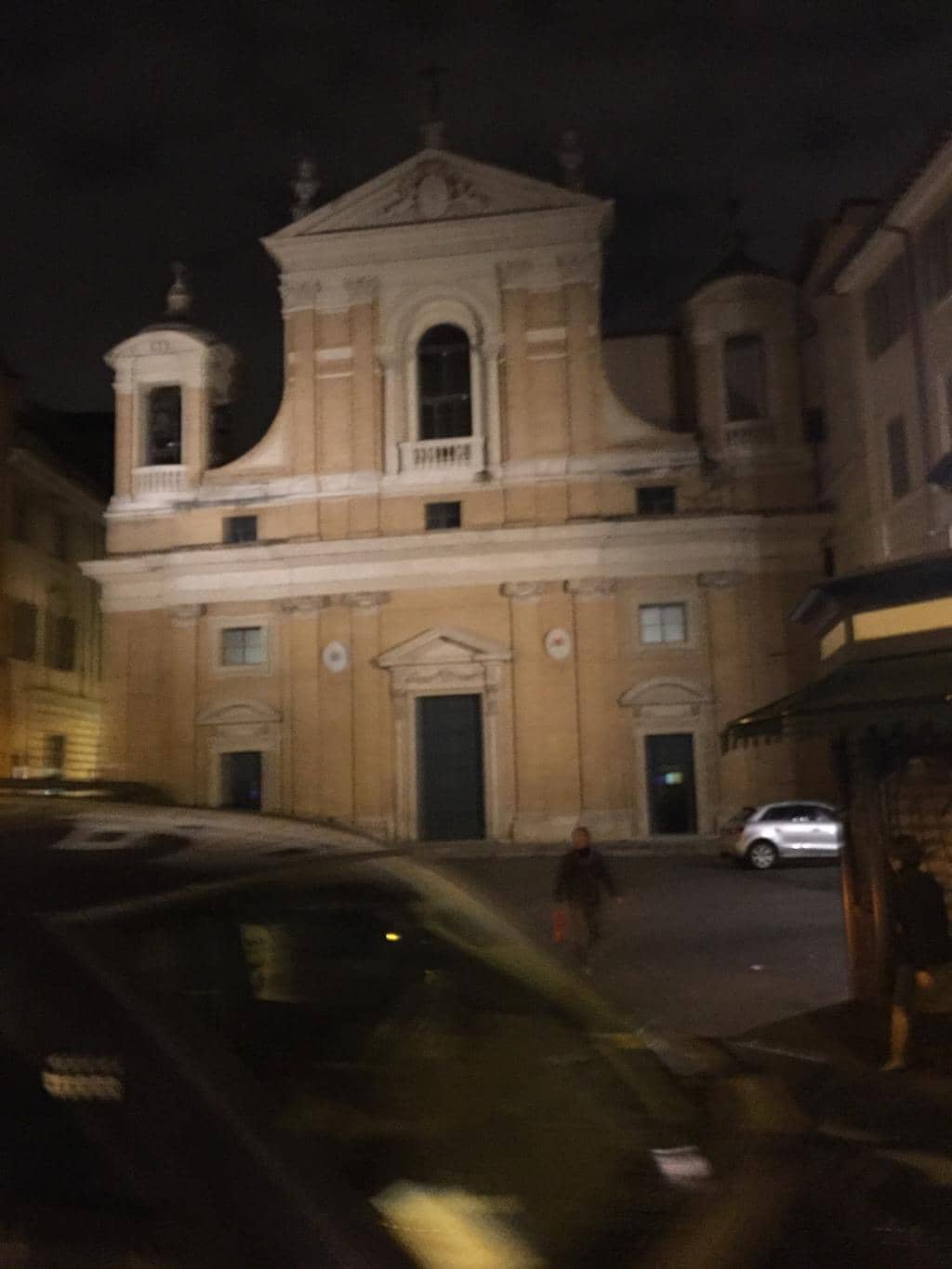
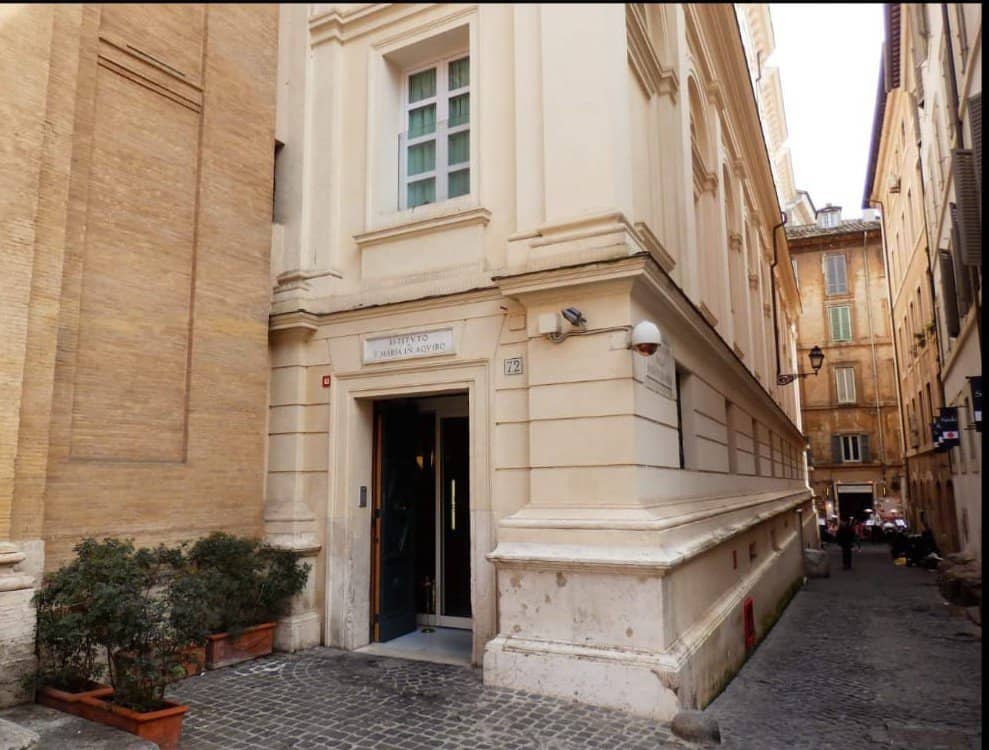
🎯 Look for the unassuming entrance
The exterior is modest, but inside awaits Baroque splendor.
🧘♀️ Find peace and quiet
Perfect for a calming moment away from the crowds.
Highlights
Discover the most iconic attractions and experiences
Madonna and Child with St Stephen
High Altar
A stunning 14th-century painting, a masterpiece from the school of Pietro Cavallini.
Baroque Interior
Main Nave
Experience a burst of Baroque beauty with pastel frescoes and ornate stucco frames.
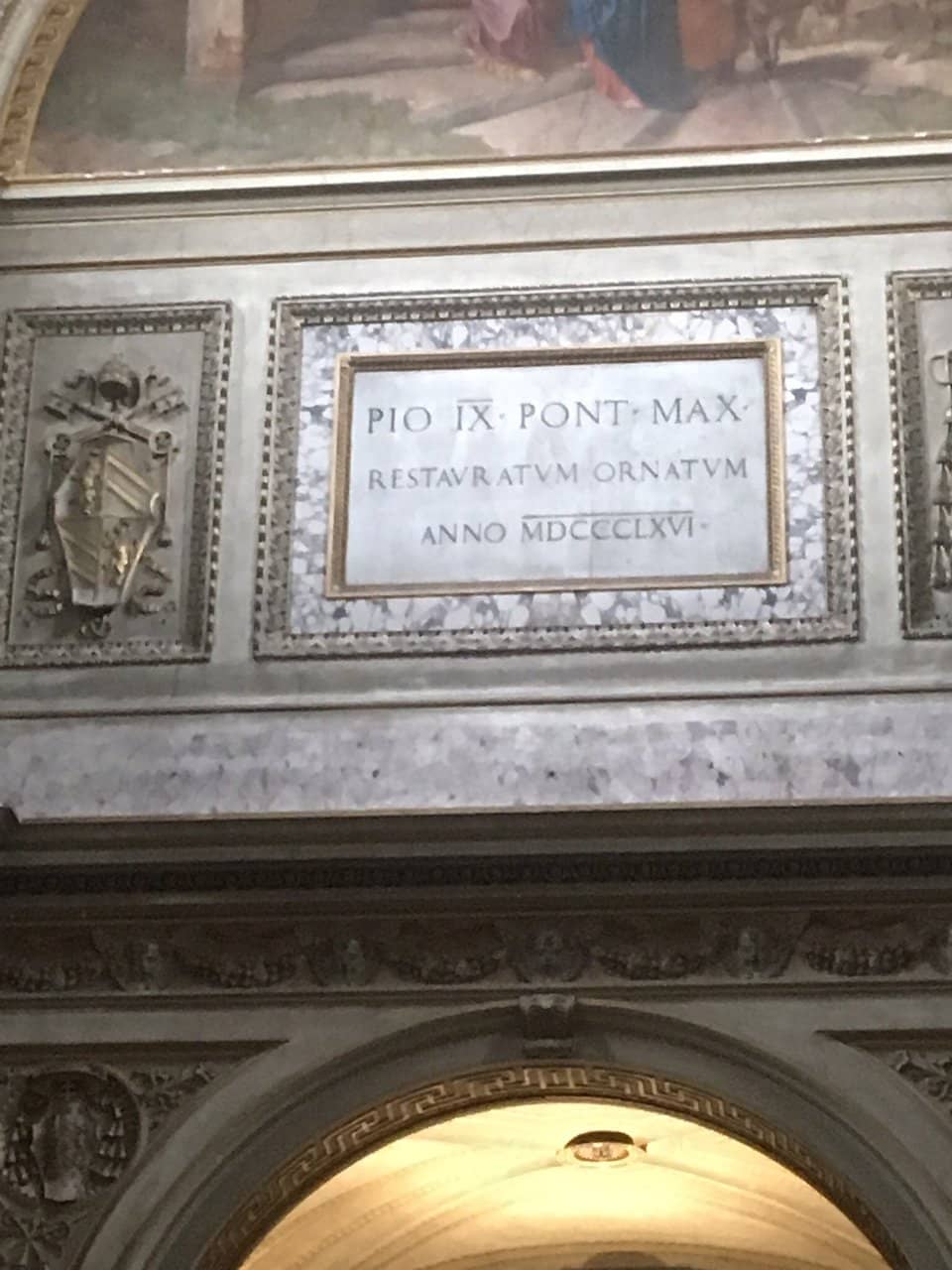
Medieval Vestibule
Vestibule
Discover funeral lapidary monuments from the medieval church of Santo Stefano del Trullo.
Plans like a pro.
Thinks like you
Planning Your Visit
Finding This Hidden Gem
A Moment of Tranquility
Best Times
Insider Tips
from TikTok, Instagram & Reddit
🎯 Look for the unassuming entrance
The exterior is modest, but inside awaits Baroque splendor.
🧘♀️ Find peace and quiet
Perfect for a calming moment away from the crowds.
🖼️ Read artwork descriptions
Hand-written English descriptions in each chapel are very informative.
🎁 Free postcards available
Visitors can receive free postcards from the chapel on the right.
Tips
from all over the internet
🎯 Look for the unassuming entrance
The exterior is modest, but inside awaits Baroque splendor.
🧘♀️ Find peace and quiet
Perfect for a calming moment away from the crowds.
🖼️ Read artwork descriptions
Hand-written English descriptions in each chapel are very informative.
🎁 Free postcards available
Visitors can receive free postcards from the chapel on the right.
What Travellers Say
Reviews Summary
Visitors describe Santa Maria in Aquiro as a beautifully hidden gem offering a peaceful escape from Rome's crowds. Its Baroque interior, historical significance, and the community's evident care are frequently praised, providing a serene and welcoming experience. Some find it a bit tricky to locate, but the tranquility and artistic treasures make it a worthwhile discovery.
"Located in Piazza Capranica, in the heart of the Rione Colonna, the Church of Santa Maria in Aquiro is very ancient, possibly dating back to the 5th century.The title ‘Aquiro’ is of uncertain origin: according to the theory most widely accepted by historians, it originates from the probable alteration of ‘A Cyro’, the name of a historical figure related to the church, while other hypotheses refer to ‘Equirria’, an ancient Roman feast for the god Mars, or to ‘Aqua’, due to the nearby presence of a stretch of the Vergine Aqueduct. Over time, it underwent numerous reconstructions and restorations: mentioned in the Liber Pontificalis of Pope Gregory III, it was enlarged in the 8th century at the behest of the same pontiff ‘in qua antea diaconia et parvum oratorium fuit’ (where previously there was a diaconia and a small oratory). In 1540, the church, also called ‘degli orfanelli' (of the little orphans), was entrusted to the Confraternity of the Orphans - approved by Pope Paul III with a motu proprio in the same year. The charity institution took care of the children who lost their families after the Sack of Rome.At the end of the 16th century, Cardinal Antonio Maria Salviati commissioned the architect Francesco Capriani da Volterra to rebuild the church; the works, interrupted by the architect's death, were resumed in 1601 by Carlo Maderno and Filippo Breccioli, who also took care of the extension of the orphanage to create a wing for the new College, which would have guaranteed education for the most deserving orphans. The upper part of the facade of the sacred building, only partly completed by Maderno and Breccioli, was finished in 1744 by Pietro Camporese the Elder. Starting in the second half of the 19th century, under the pontificate of Pius IX, the church underwent impressive restoration works entrusted to Gaetano Morichini and, for the interior, to the painter Cesare Mariani.The two-order façade, flanked by two bell towers with small domes, is characterised by three portals surmounted by tympanums - triangular for the central one and semi-circular for the two side ones - in the lower part. In the upper part, a large window is crowned by a triangular tympanum with two angels holding a coat of arms and, at the top, a cross in the centre of two flaming vases. The three-nave interior, divided by eight pillars, has three chapels on each side and is richly decorated with stuccoes, paintings and frescoes. Among the works are paintings by the Roman School, Francesco Nappi, Carlo Saraceni, Maestro Jacopo, Anonimo Caravaggesco, Gherardo delle Notti (Gherard van Honthorst) and Giovan Battista Speranza. On the high altar is the splendid 14th-century Madonna and Child with St Stephen by the school of Cavallini, coming from the lost Church of Santo Stefano del Trullo, as the tombstones in the vestibule."
Misiu martino
"A well-hidden church that gives nothing away from the outside. Inside, however, you’re met with a burst of Baroque beauty: pastel frescoes, ornate stucco frames, and light streaming through a small oval oculus in the dome. If you stumble in here, you’ll appreciate the peace and almost homely vibe, far from the crowds yet just around the corner from the hustle. Perfect spot for a quiet moment after the city chaos. :)"
Michael Nae
"Gorgeous church. I don't know if I could find it again."
HERM PAZ
What People Like
What People Dislike
Frequently Asked Questions
🚇 🗺️ Getting There
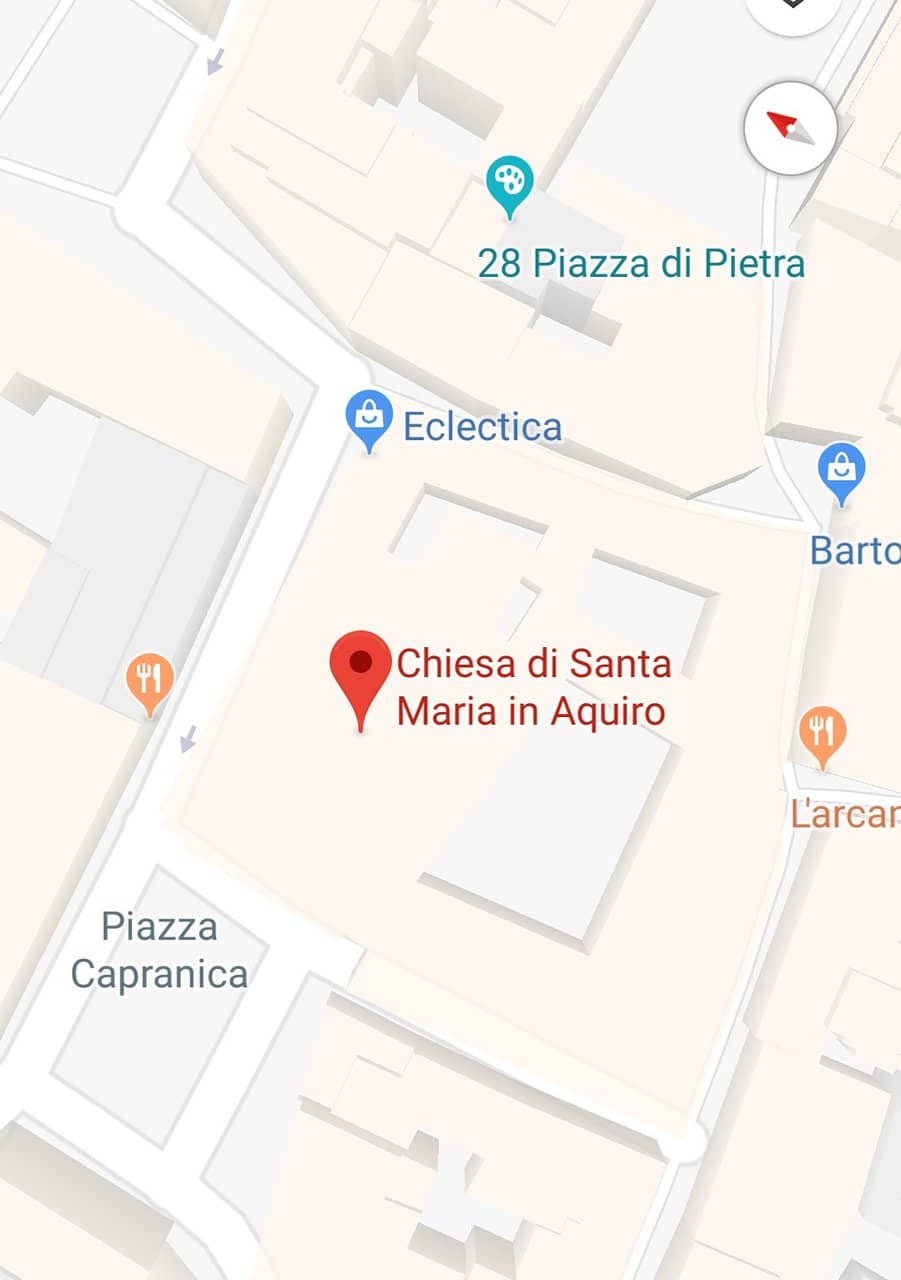
Santa Maria in Aquiro is located in Piazza Capranica, near the Pantheon. You can easily walk there from many central Rome attractions. Public transport options include nearby bus stops.
It's a well-hidden church, so keep an eye out for its entrance in Piazza Capranica. Many visitors stumble upon it unexpectedly.
Approaching from the Pantheon area is a popular and convenient route. Enjoy the walk through Rome's charming streets.
🎫 🎫 Tickets & Entry
Entry to Santa Maria in Aquiro is generally free. There are no prices listed for offerings, and postcards are often given freely.
Opening hours can vary, but it's often open in the mornings and afternoons. It's best to check locally or visit during typical daytime hours.
No, admission is typically free, making it an accessible cultural experience in Rome.
While no offering is requested, visitors are welcome to place an offering if they wish, for example, when lighting candles.
🎫 🏛️ Onsite Experience
The interior is described as a burst of Baroque beauty with a peaceful, almost homely vibe. It's a perfect spot for a quiet moment.
Key artworks include the 14th-century 'Madonna and Child with St Stephen' and various paintings by artists from the Roman School.
It's considered an underrated and overlooked church, offering a quiet experience, especially in the morning, away from the main tourist crowds.
The church features pastel frescoes, ornate stucco frames, and an oval oculus in the dome. Informative, hand-written descriptions of artworks are available in English.
Yes, it's a very ancient church, possibly dating back to the 5th century, with a rich history of reconstructions and restorations.
📸 📸 Photography
Photography is generally permitted inside churches in Rome, but it's always respectful to check for any specific signage or ask permission.
The Baroque interior with its frescoes and stucco work offers beautiful photographic opportunities. The high altar with the Madonna painting is also a focal point.
It's advisable to avoid using flash photography inside churches to protect the artworks and maintain a respectful atmosphere.
For Different Travelers
Tailored advice for your travel style
👨👩👧 Families with Kids
Consider visiting during less busy times, like the morning, to ensure a more tranquil experience. The readily available, hand-written descriptions of artworks in English can also be a helpful tool for parents wanting to share a bit of history and art with their children in an accessible way.
🚶♀️ Solo Travelers & Peace Seekers
Take your time to absorb the details, read the informative descriptions, and perhaps light a candle. The caretakers are often noted for their kindness, adding to the welcoming and genuine feel of the place, making it a memorable stop for a solo exploration of Rome's hidden gems.
Deep Dives
In-depth insights and expert knowledge
A Glimpse into History
The church's architectural evolution is marked by significant rebuilding efforts. Cardinal Antonio Maria Salviati commissioned Francesco Capriani da Volterra to rebuild it at the end of the 16th century. These works were continued by Carlo Maderno and Filippo Breccioli, who also expanded the adjacent orphanage. The facade was completed in 1744 by Pietro Camporese the Elder, and further restorations occurred in the 19th century under Pius IX.
Today, Santa Maria in Aquiro stands as a testament to Rome's layered history, blending its ancient origins with Baroque embellishments. The interior, divided into three naves, is richly decorated with stuccoes, paintings, and frescoes, showcasing works by various artists and housing the significant 14th-century 'Madonna and Child with St Stephen.'
Artistic Treasures Within
The church houses several notable artworks. The most significant is the 14th-century painting of the Madonna and Child with St Stephen located on the high altar, attributed to the school of Pietro Cavallini. This masterpiece was brought from the medieval church of Santo Stefano del Trullo.
Other artistic highlights include paintings by artists from the Roman School, Francesco Nappi, Carlo Saraceni, Maestro Jacopo, an Anonimo Caravaggesco, Gherardo delle Notti, and Giovan Battista Speranza.
Social
from TikTok, Instagram & Reddit