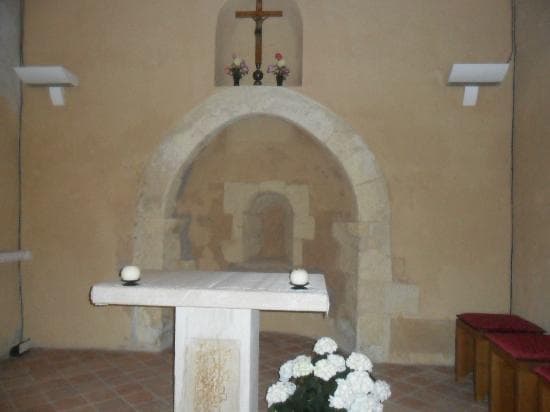
Chiesa di Santa Maria di Cepola
A hidden 11th-century Romanesque church with historical artifacts, offering a glimpse into Sardinia's past.

Highlights
Must-see attractions

Social
From TikTok & Reddit
Best Time
Rarely open, check local listings
Chiesa di Santa Maria di Cepola
Best Time
Rarely open, check local listings
Highlights
Must-see attractions
A hidden 11th-century Romanesque church with historical artifacts, offering a glimpse into Sardinia's past.
"A mystical atmosphere by candlelight in a church characterized by simplicity... a highly appreciated concert."

Check Opening Days
This church is open only a few days a year. Verify local schedules before visiting. :calendar:
Appreciate the Courtyard
Don't miss the surrounding courtyard with its historical artifacts and exposed masonry. :statueofliberty:

Highlights
Discover the most iconic attractions and experiences
Proto-Romanesque Architecture
Exterior and interior
Discover the 11th-century Romanesque style with visible limestone blocks and remnants of frescoes.

Courtyard Artifacts
Surrounding courtyard
Explore the courtyard featuring ancient columns, agricultural tools, and Roman-era materials.

Fresco Remnants
Interior walls
Glimpse faded frescoes on the single nave's walls, offering a hint of its past artistry.
Plans like a pro.
Thinks like you
Planning Your Visit
Access & Timing
Preserving the Past
Best Times
Insider Tips
from TikTok, Instagram & Reddit
Check Opening Days
This church is open only a few days a year. Verify local schedules before visiting. :calendar:
Appreciate the Courtyard
Don't miss the surrounding courtyard with its historical artifacts and exposed masonry. :statueofliberty:
Seek Out Events
Special events like candlelight concerts offer a unique and mystical experience. :musical_note:
Tips
from all over the internet
Check Opening Days
This church is open only a few days a year. Verify local schedules before visiting. :calendar:
Appreciate the Courtyard
Don't miss the surrounding courtyard with its historical artifacts and exposed masonry. :statueofliberty:
Seek Out Events
Special events like candlelight concerts offer a unique and mystical experience. :musical_note:
What Travellers Say
Reviews Summary
This small, 11th-century Romanesque church is a hidden gem, appreciated for its historical significance and the unique artifacts in its courtyard. While its beauty is somewhat obscured by modern buildings and access is limited, visitors find it a worthwhile stop to connect with the past. Special events, like candlelight concerts, are particularly praised for their mystical atmosphere.
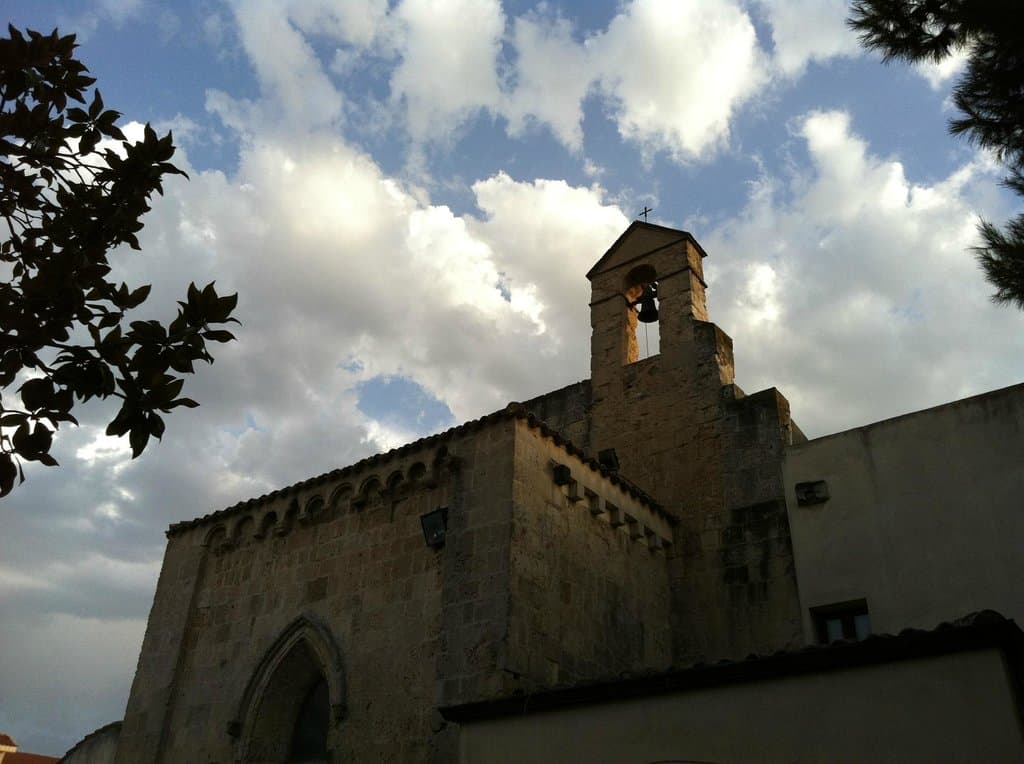
"On Via Santa Maria in the Cepola district of Quartu Sant'Elena, easily reached from Viale Colombo. It is located within a gated courtyard and is completely surrounded by nearby buildings. It is a small Romanesque church from the 11th century. It is difficult to distinguish its style as it is completely surrounded by adjacent buildings and has a plastered façade. The façade is surmounted by a small bell gable. The interior, consisting of a single nave, is covered with wooden trusses. Remnants of frescoes can be seen on the walls. To the right, looking at the altar, is the entrance to the sacristy, from which a portion of the exposed masonry can be seen. The external courtyard is also worth a visit, containing remains of columns, agricultural tools, and various objects."
Lorena Lai
"The church of S. Maria is included in the town of Quartu Sant’Elena and still maintains the name of
Cepola (of uncertain etymology), which derives from the toponym documented in numerous variants in medieval
sources. The title “sancte Marie de Sapullo” was donated in 1089 by the judge of Cagliari Costantino-Salusio
II de Lacon-Gunale to the abbey of S. Vittore di Marsiglia and is listed among the possessions of the Vittorini until 1218. The
proto-Romanesque structures of the building denote styles attributable to the craftsmen active in the curatoria of
Campidano between the end of the 11th and the beginning of the 12th century. The hall is the result of numerous alterations and
remakes, which have altered its original appearance. The layout is single-nave with an apse to the northeast; from
the beginning the roof must have been wooden. Of the proto-Romanesque walls, in medium and large limestone blocks, only an external section of the southern side is visible, where an arched portal opens, and the apse, with a frontal arch that is now very low due to the raising of the floor level compared to the original one. The axial single-lancet window, filled in, is strongly splayed towards the inside. A double-striped cornice runs along the end of the side. It can be assumed that at least the facade was crowned by small arches, as one with a double flush-cut ring is preserved in the garden surrounding the church; architectural materials from the Roman era, recovered on the site, are stored in the same space."
Michele Marras
"A very beautiful little church tucked away in the street between recently built houses that obscure its beauty. It's worth a visit to understand a little about our past."
Paolo brambilla
What People Like
What People Dislike
Frequently Asked Questions
🚇 🗺️ Getting There
The church is located on Via Santa Maria in the Cepola district of Quartu Sant'Elena, accessible from Viale Colombo. It's situated within a gated courtyard, surrounded by other buildings.
It can be tricky to find as it's tucked away in a street and obscured by newer buildings. Look for signs indicating the Cepola district.
Quartu Sant'Elena is well-connected by public transport from Cagliari. Buses are a common and convenient option.
🎫 🎫 Tickets & Entry
Generally, there is no admission fee for the church itself, but it's only open on specific days. Special events might have separate ticketing.
The church has very limited opening hours, often only a few days a year. It's crucial to check local listings or inquire locally for any scheduled openings.
The courtyard is part of the church's property and access is typically tied to the church's opening hours. Inquire locally for specific access.
🎫 🧭 Onsite Experience
It's a small Romanesque church dating back to the 11th century, featuring proto-Romanesque structures with medium and large limestone blocks.
The interior consists of a single nave covered with wooden trusses. You can see remnants of frescoes on the walls and the entrance to the sacristy.
Yes, the external courtyard is noteworthy, containing remains of columns, agricultural tools, and various objects, including architectural materials from the Roman era.
The name 'Cepola' is documented in medieval sources and the church was historically linked to the abbey of S. Vittore di Marsiglia.
Given its historical nature and potential for uneven surfaces in the courtyard, accessibility might be limited. It's advisable to inquire locally.
📸 📸 Photography
Photography is generally permitted for personal use, but always be respectful of the sacred space and any specific signage.
The courtyard with its artifacts offers unique photographic opportunities. Inside, focus on capturing the fresco remnants and the wooden trusses.
Drone usage is typically restricted in urban areas and around historical sites. Check local regulations before flying a drone.
For Different Travelers
Tailored advice for your travel style
History Enthusiasts
Be prepared for limited access, as the church is only open on select days. This exclusivity can enhance the feeling of discovery for dedicated history buffs. The surrounding courtyard, with its collection of columns and tools, further enriches the experience, allowing for a deeper understanding of the site's historical context.
Culture Seekers
While the church itself is small and its access limited, these special events offer a unique way to appreciate its historical ambiance and architectural simplicity. It's a chance to experience a blend of history, art, and local culture in an intimate setting.
Deep Dives
In-depth insights and expert knowledge
Historical Significance
The church's layout is a single nave with an apse oriented towards the northeast, originally covered by a wooden roof. An external section of the southern side reveals an arched portal, and the apse, though its frontal arch is now lower due to floor level changes, still shows its original form. An axial single-lancet window, now filled in, was strongly splayed inwards. A double-striped cornice runs along the end of the side, hinting at the original decorative elements. Architectural materials recovered from the Roman era are also stored in the surrounding garden, further emphasizing the site's deep historical layers.
Visitors often remark on the church's ability to transport them back in time, offering a glimpse into the region's past. The mystical atmosphere, especially during events like candlelight concerts, is frequently highlighted, making it a poignant experience for those interested in history and heritage.
Architectural Features and Courtyard
The surrounding courtyard is an integral part of the visitor experience. It houses a collection of historical artifacts, including remnants of columns, agricultural tools, and various objects. Notably, architectural materials recovered from the Roman era are stored here, underscoring the long history of human settlement in the area. A preserved small arch with a double flush-cut ring, likely from the facade, is also found in the garden. This collection of elements transforms the courtyard into an open-air museum, offering a broader context for the church's existence and the historical layers of the site.

Social
from TikTok, Instagram & Reddit