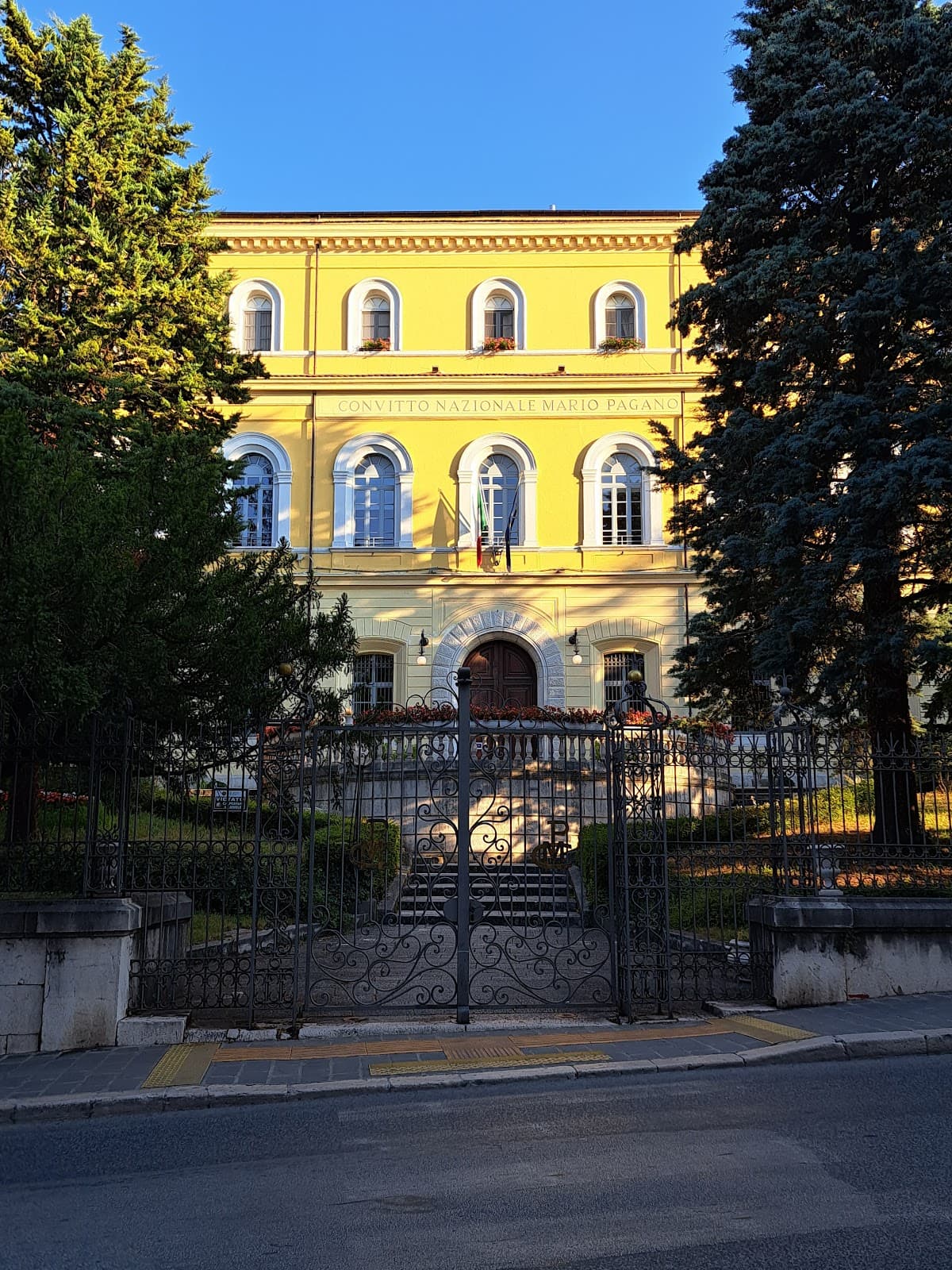
Convitto Nazionale Mario Pagano
A national monument blending history, art, and a unique botanical garden, offering a glimpse into Italy's educational past.
Highlights
Must-see attractions

Social
From TikTok & Reddit
Best Time
Open for public tours
Convitto Nazionale Mario Pagano
Best Time
Open for public tours
Highlights
Must-see attractions
A national monument blending history, art, and a unique botanical garden, offering a glimpse into Italy's educational past.
"A treasure trove of beauty and art, some unexpected, revealing the richness of this historic institution."

Book Guided Tours
Enhance your visit with expert-led tours to uncover hidden gems and historical context.
Wear Comfortable Shoes
You'll be doing a lot of walking to explore the expansive grounds and historic building.

Highlights
Discover the most iconic attractions and experiences
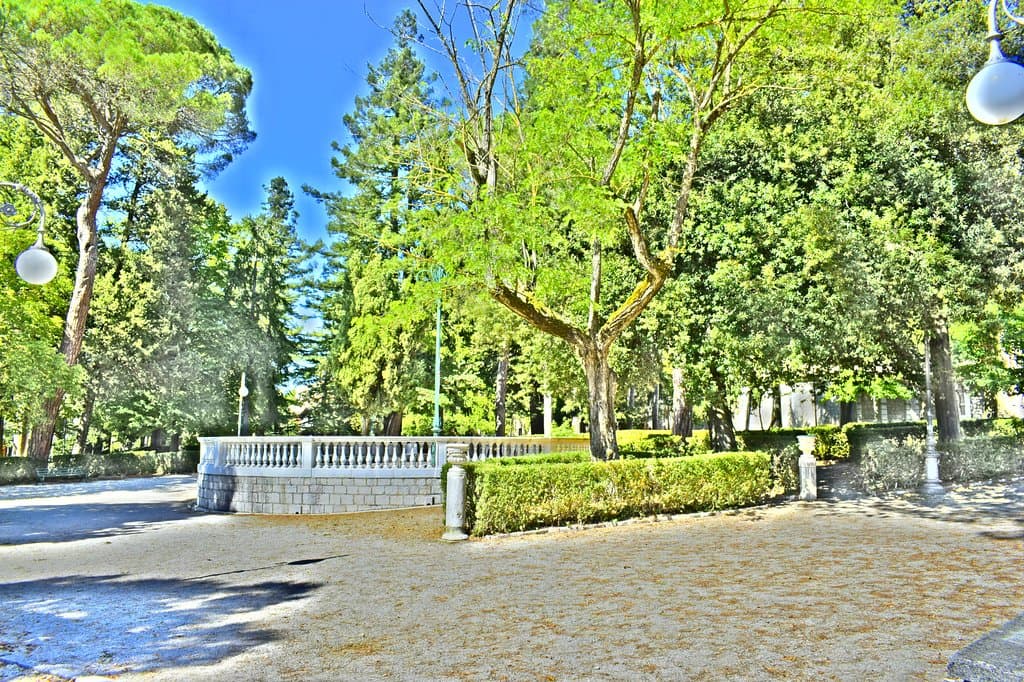
The Historic Garden
Convitto Nazionale Mario Pagano
A botanical jewel with rare species like giant sequoia and Lebanese cedar, offering a serene escape and natural beauty.
Artistic Heritage
Chapel and Main Hall
Admire frescoes by Amedeo Trivisonno, 18th-century Florentine paintings, and works by local artists depicting Molise traditions.
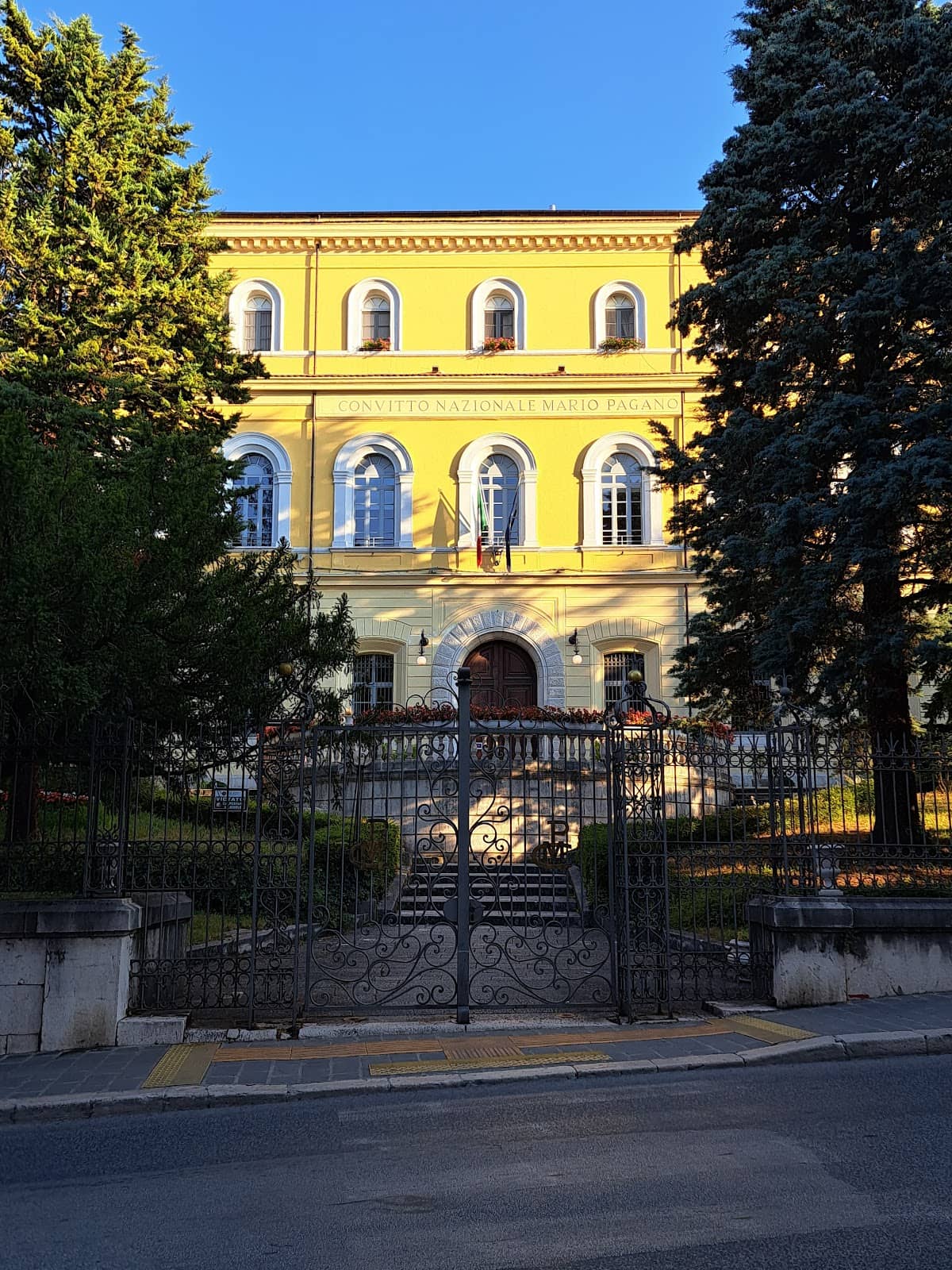
Architectural Grandeur
Main Building
Explore the elegant corridors and rooms of this national monument, a testament to over two centuries of history and education.
Plans like a pro.
Thinks like you
Planning Your Visit
Discover the History
Experience Cultural Tours
Best Times
Insider Tips
from TikTok, Instagram & Reddit
Book Guided Tours
Enhance your visit with expert-led tours to uncover hidden gems and historical context.
Wear Comfortable Shoes
You'll be doing a lot of walking to explore the expansive grounds and historic building.
Check for Events
The Convitto hosts various cultural events, check their schedule for a richer experience.
Respect the History
This is a national monument; treat the art and architecture with care and admiration.
Tips
from all over the internet
Book Guided Tours
Enhance your visit with expert-led tours to uncover hidden gems and historical context.
Wear Comfortable Shoes
You'll be doing a lot of walking to explore the expansive grounds and historic building.
Check for Events
The Convitto hosts various cultural events, check their schedule for a richer experience.
Respect the History
This is a national monument; treat the art and architecture with care and admiration.
What Travellers Say
Reviews Summary
Visitors praise the Convitto Nazionale Mario Pagano as an immersive experience rich in beauty, art, and history. Its well-maintained grounds, artistic treasures, and significant historical background are frequently highlighted as major draws. However, some note that accessibility could be improved for visitors with limited mobility.
"An immersive experience of great charm. The Mario Pagano National Boarding School is a treasure trove of beauty and art, some unexpected. The tour, led by experts from the "Enzo Nocera" Cultural Observatory of the "MoliseRadici" Association, allowed us to appreciate the richness of an institution that is so precious to the city of Campobasso. The cultural tours through the corridors and rooms revealed its historical and artistic treasures, works of faith, and exquisite craftsmanship, in all their prestige. Many artists were recognized in the cultural sphere. This is a valuable and much-appreciated initiative, promoted by the Boarding School, to promote awareness of the significant heritage it preserves."
Maria Pantalea Morello
"Ancient school.
It was initially called the "Sannitico College" on March 12, 1816, and was located in the Antonian Monastery because it was unsuitable as a school building. After completing the necessary renovations, the college was inaugurated on November 16 of the following year, taking on the prefix "Real" by royal decree of January 25, 1854. The college remained closed until early 1857, when Canon Berardo Palombieri was appointed its director, elevating it to a high school. On March 4, 1865, at the suggestion of the Ministry of Education, with a decree signed in Milan by King Victor Emmanuel II, the college took its current name of "Mario Pagano" National Boarding School, in honor of the Italian jurist, politician, and patriot Mario Pagano.
Ciao from Roby and Lucy from Sant'Anastasia (Naples)"
ROBERTO RIVIECCIO
"Convitto Mario Pagano, a National Monument "School"
The Convitto Nazionale Mario Pagano in Campobasso is much more than an educational institution: it is a true national monument, embodying over two centuries of history, culture, and education in the heart of Molise. Founded as the "Collegio Sannitico" by decree of March 12, 1816, and inaugurated on November 16, 1817, in the former Antoniani monastery, the institution took the name "Royal Collegio Sannitico" in 1854. On March 4, 1865, by decree of Vittorio Emanuele II, it was renamed in honor of Francesco Mario Pagano, jurist, Enlightenment philosopher, and martyr of the Neapolitan Republic of 1799, a symbolic figure of the revolutionary and republican attempt.
One of the Convitto's treasures is its garden, planted in the late 19th century and considered a botanical jewel. Surrounded by an artistic fence, it is home to rare and valuable species such as the giant sequoia, the Lebanese cedar, the yew, and the Ginkgo biloba, making it an ornament for the city and a place for naturalistic study. Documented in the 1926 Yearbook, the garden not only enhances the building's architecture but also represents an oasis of biodiversity overlooking Via Mazzini and Piazza Gabriele Pepe, making the Convitto an aesthetic and environmental landmark.
The Convitto preserves an artistic heritage of extraordinary value, which enriches its spaces and underscores its cultural role. In the chapel, three frescoes by Amedeo Trivisonno and two 18th-century Florentine paintings, deposited by the Uffizi in 1897, capture the attention. A Nativity scene, located on the altar, recalls the 18th-century Venetian style and was loaned by the Galleria dell'Accademia in Venice. In the main hall, paintings by Romeo Musa and Marcello Scarano illustrate Molise customs and traditions, while in the rector's office, two works by Nicola Scarano stand out, and numerous other paintings by local artists such as Casertano, Pettinicchi, Guacci, and Fratianni adorn the corridors and foyer, along with prints by Alfredo Trombetta and commemorative plaques dedicated to figures such as Achille Sannia, Guido Pittarelli, and the boarders who fell in the Great War.
The Convitto has hosted distinguished students and faculty, but the most famous figure is Giovanni Gentile, an idealistic philosopher and Minister of Education during the twenty-year period. He taught philosophy at the gymnasium from 1899 to 1901. Gentile, commemorated with a portrait at the institute, contributed to raising the Convitto's prestige, leaving a significant mark on its educational history. His 1923 school reform, known as the "Gentile Reform," transformed the Italian education system, emphasizing humanistic education and state access to education, principles that also influenced the evolution of the Convitto. Other illustrious figures include mathematicians such as Giacobbe Mola and boarders such as Leopoldo Montini and Enrico Muricchio, both recipients of gold medals for military valor.
The Convitto Mario Pagano is not just an educational institution, but a place of memory and culture, open to the public with the "Domenica al Convitto" project. Its history, artwork, garden, and the people who have passed through it make it a national monument, a crossroads between tradition and modernity. Although accessibility could be improved for visitors with limited mobility, the experience of visiting this place is unique, a journey through the history of Molise and Italy. The symbolic entrance fee and the hospitality of the staff make the visit an unmissable opportunity for students, tourists, and enthusiasts."
Andrea Grosso
What People Like
What People Dislike
Frequently Asked Questions
🚇 🗺️ Getting There
The Convitto Nazionale Mario Pagano is located in the heart of Campobasso. You can reach it by public transport within the city or by car, with parking available nearby. +1
Parking availability can vary, especially during peak hours or events. It's advisable to check local parking options in advance or consider public transport.
Yes, the Convitto is centrally located, making it easily accessible on foot from most parts of Campobasso's city center.
🎫 🎫 Tickets & Entry
A symbolic entrance fee is usually required for visits, especially for guided tours. It's best to check the official website or contact them for the most current pricing.
Opening hours can vary, particularly for public access versus special events. The 'Domenica al Convitto' project often opens it on Sundays. Check their official channels for up-to-date information.
Yes, guided tours are highly recommended to fully appreciate the Convitto's historical and artistic significance. These are often led by experts from cultural associations.
While some areas might be accessible independently, guided tours offer the most comprehensive experience and access to detailed information about the site.
The 'Domenica al Convitto' project is a notable initiative that opens the Convitto to the public on Sundays, offering a great opportunity for a visit.
🎫 🏛️ Onsite Experience
You can explore its historic garden with rare plants, admire frescoes and paintings in the chapel and halls, and learn about its rich history as a national monument and educational institution.
While the Convitto is a historic building, accessibility for visitors with limited mobility could be improved. It's advisable to inquire about specific access points beforehand.
The garden is a botanical treasure planted in the late 19th century, featuring rare species like the giant sequoia and Ginkgo biloba, making it an oasis of biodiversity.
Yes, the Convitto houses frescoes by Amedeo Trivisonno, 18th-century Florentine paintings, and works by various local artists, alongside commemorative plaques.
Yes, it remains an active educational institution, a national boarding school, while also serving as a significant cultural and historical site.
📸 📸 Photography
Photography is generally allowed for personal use, but it's always good practice to check for any specific restrictions, especially in sensitive areas like the chapel.
The historic garden, the chapel with its frescoes, and the grand interiors offer excellent photographic opportunities.
As it's a historic monument and an active educational institution, drone photography is likely restricted. Always check local regulations and obtain necessary permissions.
For Different Travelers
Tailored advice for your travel style
👨👩👧 Families with Kids
Consider visiting during the 'Domenica al Convitto' events for a more relaxed and family-friendly atmosphere. While the historical content might be dense, the sheer scale of the building and the beauty of the garden can captivate children's imaginations. Remember to check for any specific family-oriented activities or tours that might be available during your visit.
🏛️ History Buffs
The architectural details, the preserved artworks, and the meticulously curated garden all contribute to a rich historical narrative. Engaging with the expert-led tours will provide in-depth insights into the Convitto's past, making it a deeply rewarding experience for anyone passionate about history and cultural heritage.
🌿 Nature Lovers & Garden Enthusiasts
Beyond the garden, the Convitto itself is an aesthetically pleasing environment. The interplay between the historic architecture and the natural surroundings creates a unique atmosphere. Photographers and those seeking a tranquil escape will find the garden particularly appealing.
Deep Dives
In-depth insights and expert knowledge
A Journey Through History
Throughout its existence, the Convitto has been a hub for intellectual and cultural development. It has hosted distinguished students and faculty, including the idealistic philosopher Giovanni Gentile, who taught philosophy there and later implemented a significant reform of the Italian education system. The Convitto's legacy is intertwined with the history of Italian education, reflecting evolving pedagogical approaches and societal changes.
Today, the Convitto continues its dual role as an active educational institution and a preserved national monument. Initiatives like 'Domenica al Convitto' aim to open its doors to the public, allowing visitors to connect with its past and appreciate its enduring cultural significance. It stands as a testament to the importance of preserving historical educational sites for future generations.
The Botanical Oasis: Mario Pagano's Garden
Visitors can marvel at specimens such as the majestic giant sequoia, the fragrant Lebanese cedar, the ancient yew, and the distinctive Ginkgo biloba. These trees not only enhance the architectural beauty of the Convitto but also serve as an important site for naturalistic study. Documented in the 1926 Yearbook, the garden's presence overlooking Via Mazzini and Piazza Gabriele Pepe makes the Convitto an aesthetic and environmental landmark for Campobasso.
The garden is more than just a collection of plants; it's an integral part of the Convitto's identity, representing an oasis of biodiversity that complements the historical and artistic treasures within the building. It provides a unique space for reflection and appreciation of nature's grandeur, adding another layer to the visitor experience.
A Treasure Trove of Art
The main hall and other common areas are equally impressive, featuring paintings by artists like Romeo Musa and Marcello Scarano, which vividly illustrate the customs and traditions of the Molise region. The rector's office showcases two notable works by Nicola Scarano, and numerous other paintings by local artists such as Casertano, Pettinicchi, Guacci, and Fratianni adorn the corridors and foyer. The collection is further enriched by prints from Alfredo Trombetta and commemorative plaques dedicated to significant figures like Achille Sannia and Guido Pittarelli, as well as boarders who lost their lives in the Great War.
This extensive collection of art transforms the Convitto into an open-air museum, offering visitors a deep dive into regional history, artistic talent, and the cultural narrative of Molise. Each piece tells a story, contributing to the immersive and enriching experience of exploring this historic institution.

Social
from TikTok, Instagram & Reddit