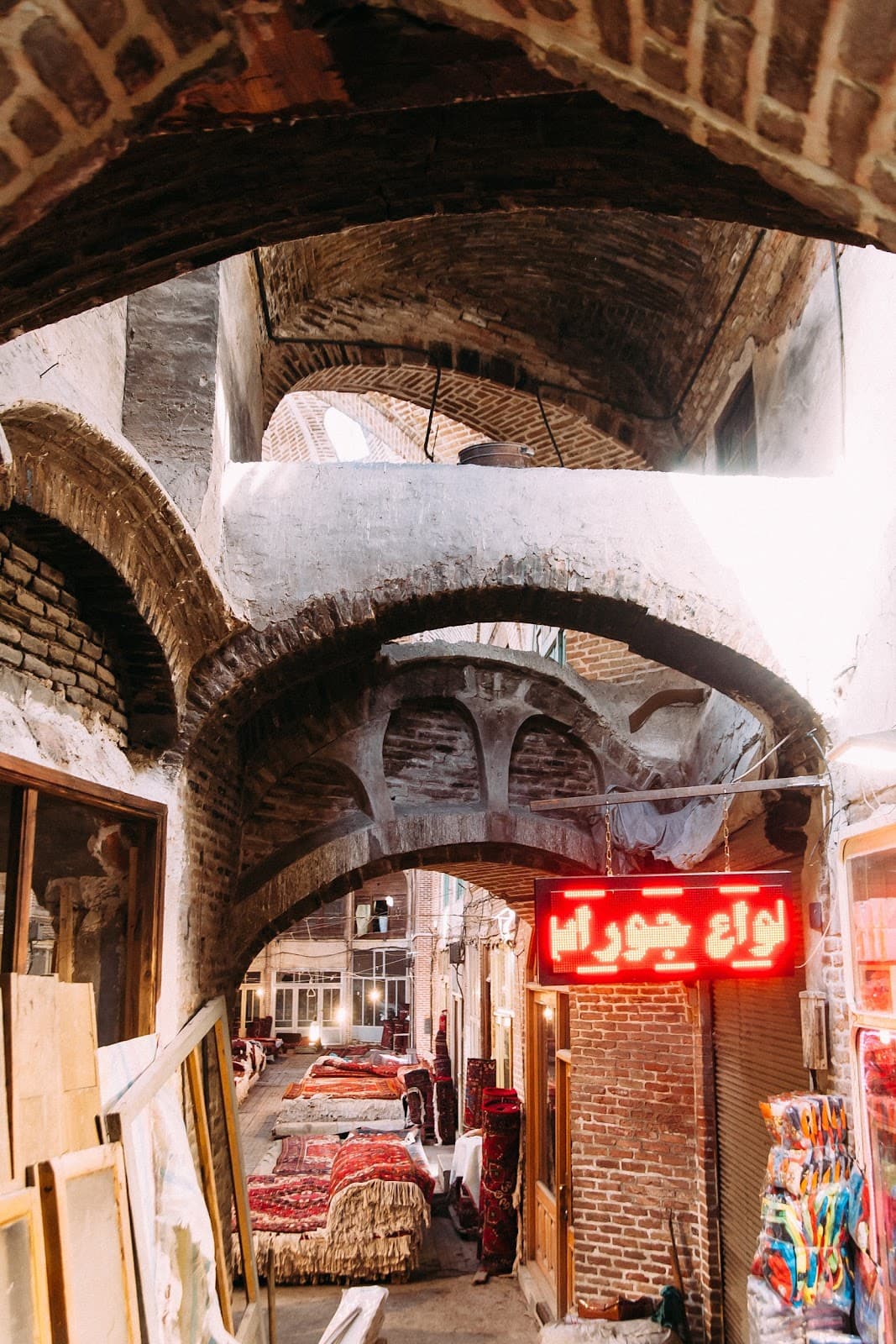
Tabriz Historic Bazaar Complex
A UNESCO World Heritage site, this vast, ancient bazaar is a vibrant hub of commerce and culture on the historic Silk Road.
Highlights
Must-see attractions

Social
From TikTok & Reddit
Best Time
Fewer crowds, authentic feel
Tabriz Historic Bazaar Complex
Best Time
Fewer crowds, authentic feel
Highlights
Must-see attractions
A UNESCO World Heritage site, this vast, ancient bazaar is a vibrant hub of commerce and culture on the historic Silk Road.
"The most impressive Bazaar of Iran, a unique marvel in the heart of Tabriz!"

🗺️ Download an Offline Map
The bazaar is a maze! A map is essential to navigate its many alleys and sections.
👟 Wear Comfortable Shoes
You'll be doing a lot of walking on uneven surfaces. Comfort is key for exploring!

Highlights
Discover the most iconic attractions and experiences
The Grand Architecture
Throughout the complex
Marvel at the intricate brickwork and soaring vaulted ceilings, a testament to centuries of Persian craftsmanship.
Carpet Shopping Paradise
Carpet sections (Qaleh-ye Bazaar)
Discover exquisite Persian carpets, a tradition deeply rooted in Tabriz's history. A must-see for textile enthusiasts.

Local Crafts and Goods
Various souks
Wander through stalls brimming with spices, handicrafts, jewelry, and traditional clothing. A feast for the senses!
Plans like a pro.
Thinks like you
Planning Your Visit
Navigate the Labyrinth
Best Time to Explore
Best Times
Insider Tips
from TikTok, Instagram & Reddit
🗺️ Download an Offline Map
The bazaar is a maze! A map is essential to navigate its many alleys and sections.
👟 Wear Comfortable Shoes
You'll be doing a lot of walking on uneven surfaces. Comfort is key for exploring!
💰 Bargain Respectfully
Haggling is part of the experience, but always do it with a smile and respect for the vendors.
📸 Capture the Details
The intricate architecture and vibrant displays make for stunning photos. Don't forget your camera!
Tips
from all over the internet
🗺️ Download an Offline Map
The bazaar is a maze! A map is essential to navigate its many alleys and sections.
👟 Wear Comfortable Shoes
You'll be doing a lot of walking on uneven surfaces. Comfort is key for exploring!
💰 Bargain Respectfully
Haggling is part of the experience, but always do it with a smile and respect for the vendors.
📸 Capture the Details
The intricate architecture and vibrant displays make for stunning photos. Don't forget your camera!
⏳ Allow Ample Time
This isn't a quick visit. Give yourself at least a few hours to truly explore and get lost.
What Travellers Say
Reviews Summary
Visitors consistently praise the Tabriz Historic Bazaar Complex for its impressive traditional architecture and its status as a vital historical commercial center. Many cherish it as a place of childhood memories and a must-see attraction in Iran. However, some find its vastness disorienting, recommending a map to navigate its many alleys.
"Highly recommended tourist attraction in East Azerbaijan in Iran. It is a historical market situated in the city Tabriz and one of the most important commercial centers on the Silk Road.
Tabriz and its Bazar were at their most prosperous in the 16th century, when the town became the capital city of the Safavid kingdom. Looking for an exquisite Persian carpet, it's a market not to miss!
This bazar was inscribed as a World Heritage Site by UNESCO in July 2010."
Yashar Harzandi
"Best of my childhood memories happened here with my grandma' and grandpa'. The unique marvel in the heart of Tabriz. Simply a must see!"
Nima G
"Amazing and impressive traditional architecture in the center of Tabriz."
Kaveh Heidary
What People Like
What People Dislike
Frequently Asked Questions
🚇 🗺️ Getting There
The bazaar is centrally located in Tabriz. Taxis are readily available and a convenient option. Many local buses also stop nearby. If you're staying in the city center, it's often walkable.
Parking can be challenging in the immediate vicinity due to its historic nature and central location. It's advisable to use public transport or taxis.
Wandering is the best way! However, downloading an offline map or getting a physical one is highly recommended to avoid getting lost in the labyrinthine alleys.
Yes, ride-sharing apps are generally available in Tabriz and can be a convenient way to reach the bazaar.
The bazaar's historic architecture, with its uneven surfaces and narrow passages, can present challenges for those with mobility issues. It's best to inquire locally about specific accessible routes if needed.
🎫 🎫 Tickets & Entry
No, entry to the Tabriz Historic Bazaar Complex is generally free. It's a living, working market, so you can explore its vast network of alleys and shops without an admission fee.
The bazaar is typically open from morning until evening, but individual shop hours can vary. It's a functional market, so expect it to be most active during daylight hours.
While many shops may have reduced hours or be closed on Fridays (the Islamic day of prayer), the bazaar generally remains partially open. Major holidays might see closures.
While not always formally advertised, you can often find local guides in the vicinity who can offer insights into the bazaar's history and significance.
Yes, photography is generally allowed, but it's always polite to ask permission before taking close-up photos of vendors or their goods.
🎫 🛍️ Shopping & Souvenirs
Look for exquisite Persian carpets, intricate metalwork, traditional textiles, spices, and local handicrafts. Tabriz is particularly famous for its carpets.
Yes, bargaining is a common practice in Iranian bazaars. Approach it with a friendly attitude and be prepared to negotiate respectfully for a fair price.
Explore the various sections dedicated to crafts. Look for stalls selling hand-painted ceramics, wood carvings, and traditional copperware.
Yes, the bazaar is traditionally divided into sections for different trades, such as carpet sellers, coppersmiths, and spice merchants.
The quality can vary, but you can find very high-quality, authentic items, especially in specialized sections like carpets and metalwork. It's worth taking your time to find the best.
🍽️ 🍽️ Food & Dining
Absolutely! You'll find numerous traditional teahouses (chaikhaneh) and small restaurants serving delicious local cuisine, from kebabs to stews.
Don't miss trying 'kufteh Tabrizi' (a large meatball dish), various kebabs, and local sweets. Enjoying tea in a traditional teahouse is a must.
While meat dishes are prevalent, you can often find vegetarian options like vegetable stews, lentil dishes, and fresh bread. Ask about ingredients.
Prices are generally very reasonable, especially in the smaller, more traditional eateries within the bazaar. You can enjoy a hearty meal without breaking the bank.
Yes, numerous small stalls sell fresh juices, dried fruits, nuts, and traditional sweets, perfect for a quick snack while you explore.
📸 📸 Photography
Focus on the intricate brickwork, the vaulted ceilings, the vibrant displays of goods, and the interactions between vendors and shoppers. The light filtering through the arches is also beautiful.
It's always best practice to ask for permission before taking close-up photos of individuals, especially vendors. Many are happy to oblige if asked politely.
Mornings offer softer light and fewer crowds, making it easier to capture details. The late afternoon can also provide beautiful, warm light.
Drone photography is generally not permitted in such historic and crowded public spaces without special permits. It's best to avoid using drones.
A versatile lens (like a 24-70mm) is useful for capturing both wide architectural shots and details. A prime lens can be great for low-light conditions.
For Different Travelers
Tailored advice for your travel style
👨👩👧 Families with Kids

It's advisable to keep a close eye on children due to the crowds and the maze-like nature of the bazaar.
💰 Budget Travelers
When it comes to shopping for larger items like carpets or handicrafts, remember that bargaining is key.
Don't be afraid to negotiate respectfully to get the best possible price. Eating at the smaller, traditional eateries within the bazaar can also be very budget-friendly, offering delicious local meals at reasonable costs. 📸 Photography Enthusiasts
Capture the vibrant colors of textiles, spices, and handicrafts, as well as the candid interactions of daily life within the bazaar. Mornings offer the best light and fewer crowds, allowing for more focused shots.
Experiment with different angles to showcase the scale of the architecture and the details of the goods on display. Remember to be respectful when photographing people, always asking for permission before taking close-up shots. Deep Dives
In-depth insights and expert knowledge
A Journey Through Time: The History of Tabriz Bazaar
+1 Tabriz itself has been a crucial hub for cultural interaction since antiquity, and its bazaar was a vital commercial artery. During the 16th century, when Tabriz served as the capital of the Safavid kingdom, the bazaar reached its zenith of prosperity. This era saw significant architectural development and an explosion of trade. The Venetian traveler Marco Polo even mentioned the bazaar, highlighting its importance on the global stage.
Today, this UNESCO World Heritage site continues to be one of Iran's most important commercial centers, preserving its historical significance and vibrant atmosphere. The complex is a remarkable series of interconnected, covered structures, buildings, and enclosed spaces, each designed for specific functions. This intricate network of alleys, courtyards, and caravanserais showcases impressive traditional Persian architecture.
Exploring its depths feels like stepping back in time, offering a glimpse into the enduring spirit of commerce and community that has defined Tabriz for generations. Navigating the Labyrinth: Tips for Exploring the Bazaar
Comfortable footwear is essential, as you'll be doing a considerable amount of walking on potentially uneven surfaces.
Remember that bargaining is an expected part of the shopping experience in Iranian bazaars. Approach it with a friendly demeanor and a smile, aiming for a price that is fair for both you and the vendor. Allow ample time for your visit; a few hours is usually necessary to truly appreciate the scale and atmosphere of the bazaar.
A Shopper's Paradise: What to Find in the Bazaar
Beyond carpets, you'll discover a dazzling variety of local handicrafts. Look for beautifully hand-painted ceramics, detailed wood carvings, and traditional copperware that showcase the skill of local artisans.
When exploring, take note of the different sections, as the bazaar is traditionally organized by trade. This can help you locate specific items more efficiently.
Social
from TikTok, Instagram & Reddit