
Kadisoka Temple
An unfinished ancient temple, partially excavated and shaped by volcanic forces, offering a glimpse into history and geology.
Highlights
Must-see attractions

Social
From TikTok & Reddit
Best Time
See more of the temple
Kadisoka Temple
Best Time
See more of the temple
Highlights
Must-see attractions
An unfinished ancient temple, partially excavated and shaped by volcanic forces, offering a glimpse into history and geology.
"A fascinating glimpse into an unfinished past, shaped by nature's power."

📞 Contact the Caretaker
Essential to arrange your visit as access can be limited.
🏞️ Explore the Surroundings
Enjoy the rice fields and ponds; it's a scenic spot for a peaceful stroll.
Quick Facts
Hours
Rating
5 · 10 reviews
Type
Tourist Attraction
Highlights
Discover the most iconic attractions and experiences
The Unfinished Base
Temple grounds
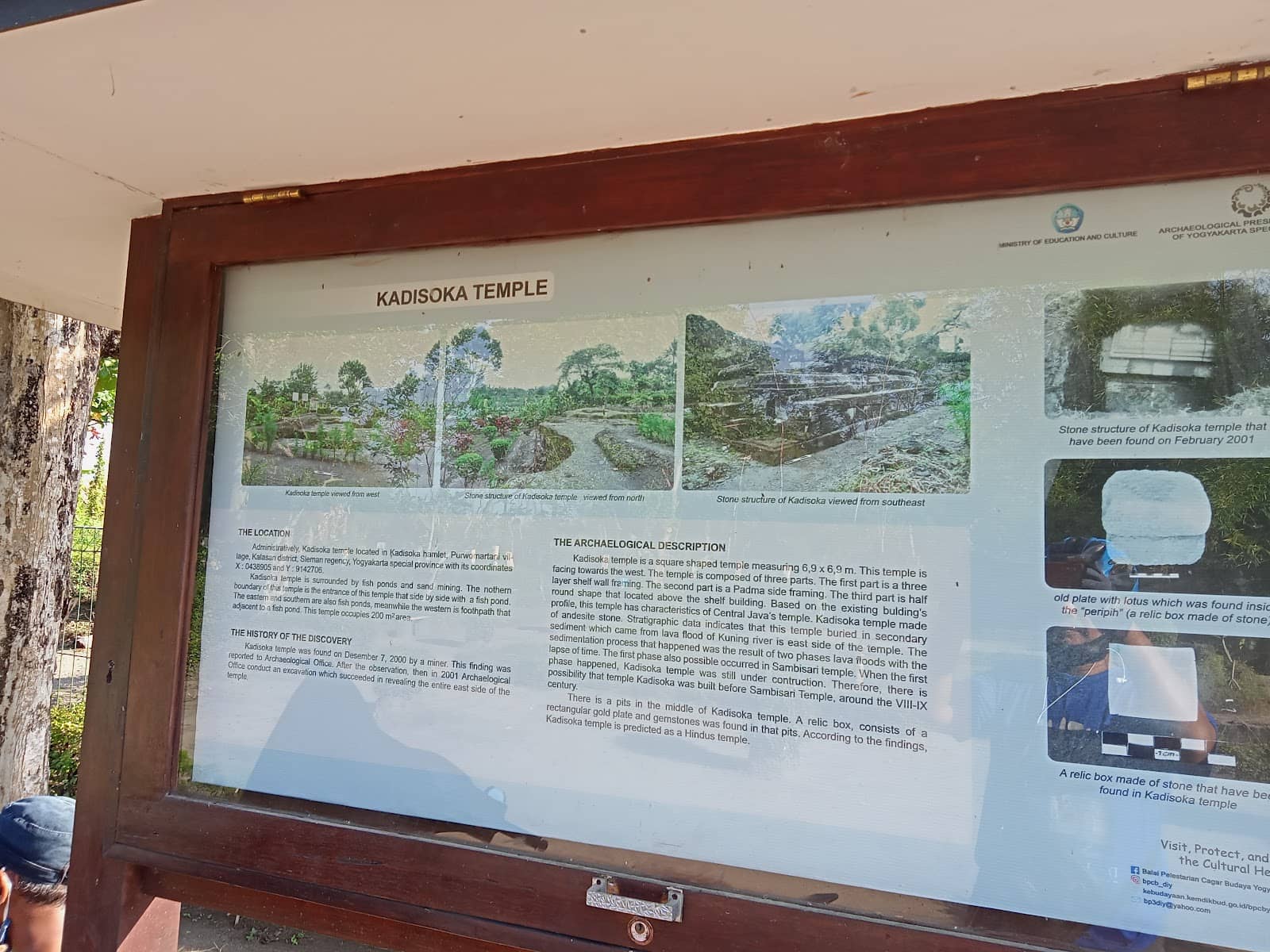
Marvel at the meticulously carved base layers, a testament to ancient craftsmanship, partially submerged by volcanic mud.
Geological Context
Surrounding area
Understand its connection to the ancient Nglanggeran Volcano and the impact of Merapi's eruptions.

Archaeological Finds
Excavation site
Learn about the discovery of semi-precious stones, gold fragments, and a unique deposit box.
Plans like a pro.
Thinks like you
Planning Your Visit
Timing is Key for Kadisoka Temple
Understanding Kadisoka's Unfinished Story
Best Times
Insider Tips
from TikTok, Instagram & Reddit
📞 Contact the Caretaker
Essential to arrange your visit as access can be limited.
🏞️ Explore the Surroundings
Enjoy the rice fields and ponds; it's a scenic spot for a peaceful stroll.
🎓 Educational Visit
Great for learning about temple construction and geological history.
🚫 No Entrance Fee
Report to the guard upon arrival; donations are appreciated.
Tips
from all over the internet
📞 Contact the Caretaker
Essential to arrange your visit as access can be limited.
🏞️ Explore the Surroundings
Enjoy the rice fields and ponds; it's a scenic spot for a peaceful stroll.
🎓 Educational Visit
Great for learning about temple construction and geological history.
🚫 No Entrance Fee
Report to the guard upon arrival; donations are appreciated.
What Travellers Say
Reviews Summary
Kadisoka Temple is a unique archaeological site, appreciated for its historical intrigue and geological context, though its unfinished state and limited visibility are noted. Visitors find the story of its construction and the surrounding natural beauty appealing, but some mention the need to coordinate with caretakers for full access.
"Religion: Unknown.
Main feature: Single temple; facing west.
State of preservation: Only the base remains.
Description: This huge temple has not been entirely excavated yet and only part of it is visible. It faces west and was covered by 3m of volcanic mud.
The sanctuary was left unfinished: only five layers of the base were built. It measures 6,90m north south and 6,40m east west. The temple is not perfectly orientated around the cardinal points (the difference is approximately 10°).
Miscellaneous archaeological finds:
The temple pit was excavated in February 2001. At its bottom were found small semi-precious stones, fragments of gold and a square deposit box (peripih). The box contained, together with earth, a gold plaque carved with an opened lotus flower (Laporan pengankatan Kadisoka 2001)."
ivancov catalin
"Kadisoka Temple is located in the rice fields and surrounded by many ponds. The temple that looks part of the temple building is precisely on the east side of the building. Unfortunately, the complete form of the temple building is not yet known. For friends who are curious to see the temple, please come visit there."
Tunggal Purwarsono
"Kadisoka Temple was found around a fishing pond in the Kadisoka area. The religious background of this temple is unknown because only the foundation of the temple's foot was found, while the body of the temple was not found. Most likely this temple was not finished when the eruption of Mount Merapi buried this temple. The top of the temple can be seen the hardened sediment of the Merapi eruption like cement covering the temple.
There is no entrance ticket to this temple, just report to the guard. The opening hours of the temple are very short, so if you want to visit, try to come in the morning. If you come late like me, you can still see from outside the fence. This temple can be used as an educational reference to see the process of making the temple because the foundation of the temple is carved very smoothly and for geological education."
Keperluan Penelitian
What People Like
What People Dislike
Frequently Asked Questions
🚇 🗺️ Getting There
Kadisoka Temple is located in the Kadisoka area, not far from the main road. Access is typically from the north, passing through fish ponds and rice paddies. It's often mentioned as part of excursions exploring the ancient Nglanggeran Volcano region.
While not far from the main road, it's situated amidst rice fields and ponds, so following local directions or using a GPS is recommended.
Many visitors arrive by private vehicle or motorbike, as it offers flexibility to explore the surrounding natural landscape.
🎫 🎫 Tickets & Entry
No, there is no entrance ticket required for Kadisoka Temple. Visitors are asked to report to the guard upon arrival.
The opening hours are quite short, so it's best to visit in the morning. If you arrive late, you might only be able to see it from outside the fence.
Booking is not applicable as there's no ticket system, but contacting the caretaker beforehand is highly recommended to ensure access.
It's advisable to visit during daylight hours, especially in the morning, due to the limited opening times and the nature of the site.
🎫 🧭 Onsite Experience
You can see the base of the temple, which is partially excavated and faces west. The complete structure is unknown as it was likely unfinished and buried by volcanic mud.
No, the temple has not been entirely excavated. Only part of it is visible, primarily the base layers.
It's significant for its archaeological finds, including semi-precious stones and gold fragments, and as an educational site for understanding ancient temple construction and geological events.
Yes, it can be a quick visit, especially if you're interested in its historical and geological aspects. However, arranging access with the caretaker can enhance the experience.
The religious background is unknown as only the foundation was found, and the main body of the temple was not discovered.
📸 📸 Photography
Capture the unique texture of the partially excavated base and the surrounding scenic rice fields and ponds. The interplay of ancient stone and nature is quite photogenic.
Photography is generally allowed, but always be respectful of the site. The main focus for photos is the visible temple base and its surroundings.
No specific restrictions are usually mentioned, but it's always good practice to be mindful and avoid intrusive photography, especially if there are any caretakers present.
Morning light can be beautiful for capturing the details of the temple base and the serene landscape.


Social
from TikTok, Instagram & Reddit