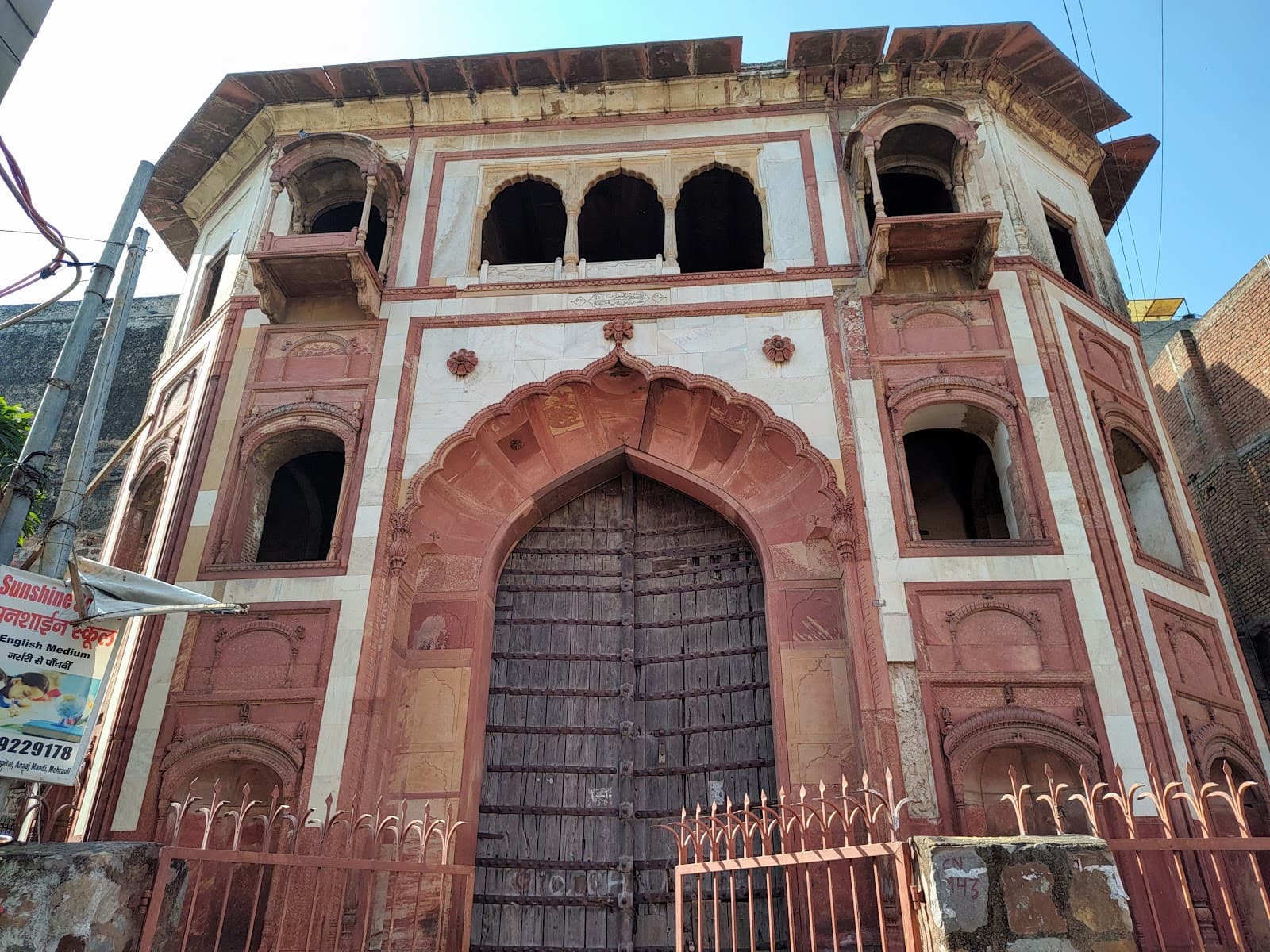
Zafar Mahal Mehrauli
The last monumental structure of the Mughal era, Zafar Mahal whispers tales of exile and unfulfilled wishes, with a poignant empty grave.
Highlights
Must-see attractions

Social
From TikTok & Reddit
Best Time
Beat the heat and crowds
Zafar Mahal Mehrauli
Best Time
Beat the heat and crowds
Highlights
Must-see attractions
The last monumental structure of the Mughal era, Zafar Mahal whispers tales of exile and unfulfilled wishes, with a poignant empty grave.
"A poignant historical site, largely in ruins, but deeply significant for the story of the last Mughal emperor. "

Free Entry! 🎉
No entry fee to explore Zafar Mahal, making it an accessible historical stop.
Combine with Qutub Minar 🕌
Easily visit Zafar Mahal as part of a larger trip to the nearby Qutub Minar complex.
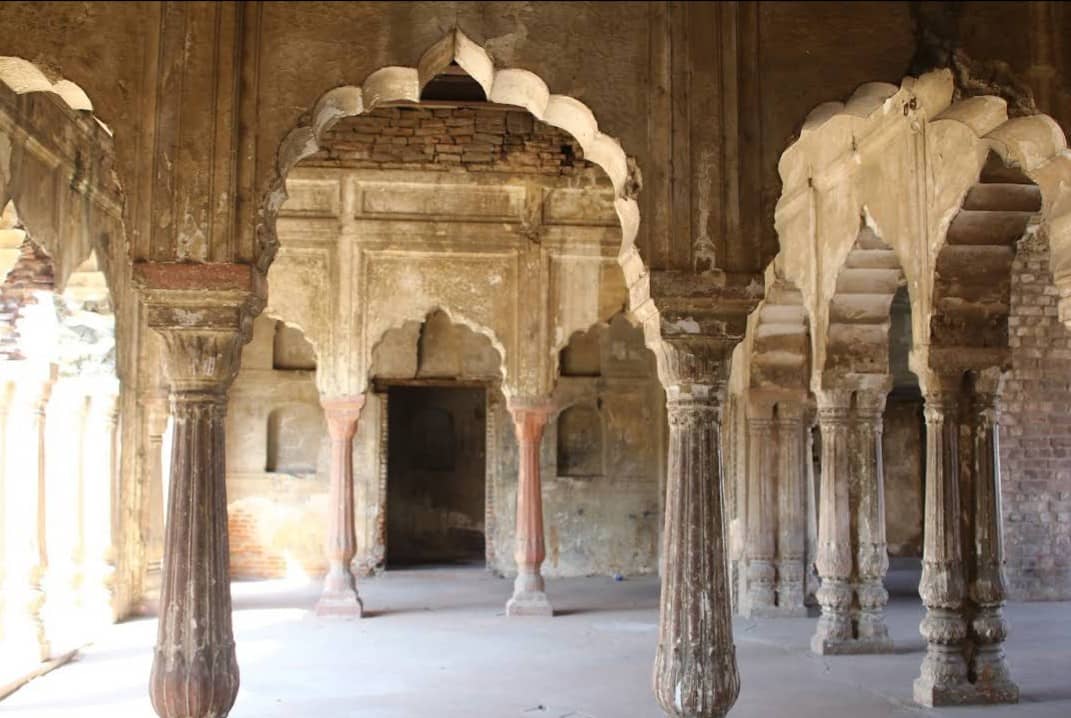
Quick Facts
Hours
Rating
4 · 561 reviews
Type
Historical Landmark
Highlights
Discover the most iconic attractions and experiences
Bahadur Shah Zafar's Empty Grave
Inside Zafar Mahal
A poignant, unnamed marble grave symbolizing the last Mughal emperor's exile and unfulfilled wish to be buried here.
Hathi Gate
Entrance to Zafar Mahal
The grand 19th-century entrance, wide enough for an elephant with a howdah, showcasing late Mughal architectural elements.

Moti Masjid
Adjacent to Zafar Mahal
A beautiful, three-domed white marble mosque built by Bahadur Shah I, offering a glimpse of serene Mughal artistry.
Plans like a pro.
Thinks like you
Planning Your Visit
Manage Expectations: A Ruin with History
Combine with Nearby Attractions
Best Times
Insider Tips
from TikTok, Instagram & Reddit
Free Entry! 🎉
No entry fee to explore Zafar Mahal, making it an accessible historical stop.
Combine with Qutub Minar 🕌
Easily visit Zafar Mahal as part of a larger trip to the nearby Qutub Minar complex.
Wear Comfortable Shoes 👟
The site is spread out and uneven, so comfortable footwear is a must for exploring.
Bring Water 💧
Especially during warmer months, stay hydrated as there are limited facilities on-site.
Tips
from all over the internet
Free Entry! 🎉
No entry fee to explore Zafar Mahal, making it an accessible historical stop.
Combine with Qutub Minar 🕌
Easily visit Zafar Mahal as part of a larger trip to the nearby Qutub Minar complex.
Wear Comfortable Shoes 👟
The site is spread out and uneven, so comfortable footwear is a must for exploring.
Bring Water 💧
Especially during warmer months, stay hydrated as there are limited facilities on-site.
What Travellers Say
Reviews Summary
Visitors find Zafar Mahal historically significant, particularly for its connection to the last Mughal emperor, Bahadur Shah Zafar, and his poignant empty grave. However, many are disappointed by its dilapidated state and lack of preservation, noting it's largely in ruins despite being an ASI-protected monument. The adjacent Moti Masjid is often praised for its beauty.
"It is called zafar mahal because the last Mughal ruler Bahadur Shah Zafar wished to be buried in the palace but unfortunately was exiled to rangoon by the British.
The palace currently is in ruins with modern flats surrounding it. There is also a white marble mosque and an unnamed marble grave inside the premises.
The place is not well preserved as one can see from the pictures also"
Shahnawaz Mukhtar
"Zafar Mahal is last monumental structure built as a summer palace during the fading years of the Mughal era. The building has two parts-The palace which was built first by Akbar Shah II in the 18th century, and the entrance gate called Hathi gate that was reconstructed in the 19th century by Bahadur Shah Zafar II. Bahadur Shah Zafar wished to be buried in the precincts of the Zafar Mahal but was deported by the British to Rangoon, after the First War of Indian Independence in 1857, where he died of old age.
A masjid called the Moti Masjid built by Bahadur Shah I was a private mosque of the royal family, which has now become part of the palace compound. The mosque is a small and unique three-domed structure made of white marble. The austere mosque has the mihrab on the west direction of prayer but is unusually not embellished, except for little border of floral carving on the south at the top edge of a dado
Hathi gate is so called because a full decorated elephant with the howdah could pass through it. An inscription on the main arch credits building of the gate by Bahadur Shah II in the eleventh year of his accession as Emperor in 1847-48 AD. A broad Chhajja built in the Mughal style is a striking feature of the arch. At the entrance gate, there are small projecting windows flanked by curved and covered Bengali domes. On both sides of the arch, two ornate medallions in the form of large lotuses have been provided. The gateway also depicts a classic tripolia or three-arch opening."
Vikas Singh
"Visited Zafar Mahal, The resting place od Last Mughal Emperor Bahadur Shah Zafar. Sadly, the experience was disappointing. The place, full of history, is not cared for.
Built in the early 19th century, considered the last monumental structure of the Mughal era.
This Resting Palace Served as a summer palace, particularly during the "Phoolwaalon ki sair" festival celebrating Sufi saint Hazrat Qutubuddin Bakhtiyar Kaki (whose tomb is also next to this Palace) and this palace witness to the waning years of the Mughal dynasty, mirroring the empire's declining financial resources in its simpler construction compared to other grand Mughal palaces.
Upon arrival i noticed, There's only one guard around, who seemed to be there merely for formality. The lack of care and proper security results in the almost vandalised condition of the site. It's was disheartening to see such a significant historic monument being neglected in this manner.
Furthermore, instead of visitors paying their respects, I observed a group of elderly people playing cards near the premises. This disrespect towards the monument is a reflection of the lack of maintenance and oversight.
Bahadur Shah Zafar's empty grave at Zafar Mahal tells a poignant tale of his fate and the decline of the Mughal Empire. It's a powerful reminder of history's twists and turns, left unnoticed amidst the neglect. As Zafar himself wrote,
"کتنا ہے بد نصیب ظفرؔ دفن کے لیے
دو گز زمین بھی نہ ملی کوئے یار میں"
"kitnā hai bad-nasīb 'zafar' dafn ke liye
do gaz zamīn bhī na milī kū-e-yār meñ"
This poetic line hints at the tragic irony of his burial, adding depth to the site's significance.
Nearby, Moti Masjid, a beautiful mosque, suffers the same fate. It's a shame for such significant places to be forgotten.
Moti Masjid, located next to Zafar Mahal, is a replica of the one in Agra's Red Fort. It's a gem of architecture, and it aslo suffers the same fate
The grand entrance is named as Hathi Gate for its wide design allowing an elephant with a seat (houdah) to pass through.
I hoped the Archaeological Survey of India would do better. They must act to protect and restore Zafar Mahal, the grave, and Moti Masjid. These places deserve respect and care.
Despite its importance, the neglect makes visiting Zafar Mahal less enjoyable. I hope it gets the care it deserves soon.
Timings:
Open daily from 10:00 AM to 5:00 PM.
Entry Fees:
No fee for visiting Zafar Mahal.
Nearby Metro Station- Qutub Minar"
Ehramul Haque
What People Like
What People Dislike
Frequently Asked Questions
🚇 🗺️ Getting There
The nearest metro station to Zafar Mahal is Qutub Minar on the Yellow Line. From there, you can take an auto-rickshaw or a short taxi ride to reach the monument.
Yes, Zafar Mahal is accessible by car, but parking can be challenging in the Mehrauli area due to its popularity and narrow lanes.
For convenience, consider using ride-sharing apps or hiring a taxi for a direct trip. Public transport via the metro is also a budget-friendly option.
Several local bus routes pass through Mehrauli. You can check with local transport authorities for the most convenient bus numbers.
Zafar Mahal is located in South Delhi, relatively close to other historical sites like Qutub Minar, making it convenient for a day of sightseeing.
🎫 🎫 Tickets & Entry
No, there is no entry fee to visit Zafar Mahal. It is a free-access historical site.
Zafar Mahal is typically open daily from 10:00 AM to 5:00 PM. It's always a good idea to confirm timings before your visit.
Since there is no entry fee, booking tickets in advance is not necessary for Zafar Mahal.
Yes, Zafar Mahal is an ASI-protected monument, indicating its historical significance and efforts towards preservation.
Generally, Zafar Mahal is open all days of the week. However, it's advisable to check for any public holidays or special closures.
🎫 🧭 Onsite Experience
Zafar Mahal is largely in ruins, with some parts undergoing restoration. While it's historically significant, it's not as well-preserved as other Mughal monuments.
You can see the Hathi Gate, the empty grave of Bahadur Shah Zafar, and the adjacent Moti Masjid. The palace structure itself is mostly in ruins.
Yes, Zafar Mahal offers unique photographic opportunities, especially capturing the contrast between the ruins and the surrounding modern city, and the details of the Moti Masjid.
Official guides may not be readily available. It's recommended to do some research beforehand or use audio guides if available to understand the history.
Zafar Mahal served as a resting place during the 'Phoolwaalon ki Sair' festival, celebrating Sufi saint Hazrat Qutubuddin Bakhtiyar Kaki, whose tomb is nearby.
🍽️ 🍽️ Food & Dining
No, there are no food or dining facilities available inside Zafar Mahal.
Mehrauli village and the surrounding areas offer a variety of local eateries and restaurants serving North Indian and Mughlai cuisine.
You can find authentic street food, traditional Indian thalis, and Mughlai delicacies in the restaurants near Zafar Mahal.
Yes, you can find cafes and coffee shops in the vicinity of Mehrauli, especially closer to the Qutub Minar complex.
While street food can be tempting, it's advisable to choose vendors with good hygiene practices if you decide to try them.
📸 📸 Photography
The Hathi Gate, the Moti Masjid, and the poignant empty grave are excellent subjects. The contrast of ruins against the sky also makes for striking shots.
Yes, photography is generally allowed inside Zafar Mahal for personal use. However, professional photography might require special permissions.
Early morning or late afternoon offers the best light for photography, creating softer shadows and a more atmospheric feel.
Drone photography is typically restricted at historical monuments in India. It's best to avoid using drones without explicit permission.
Yes, the Urdu calligraphy on the graves is a significant detail and can be captured. It adds a layer of historical depth to your photographs.

Social
from TikTok, Instagram & Reddit