South Stoa
A historically significant administrative and judicial center in ancient Athens, believed to be a site of pivotal events and sermons.
Highlights
Must-see attractions

Social
From TikTok & Reddit
Best Time
Fewer crowds, better photos
South Stoa
Best Time
Fewer crowds, better photos
Highlights
Must-see attractions
A historically significant administrative and judicial center in ancient Athens, believed to be a site of pivotal events and sermons.
"A place where ancient history truly comes alive, despite minimal visible remains."
View from Above
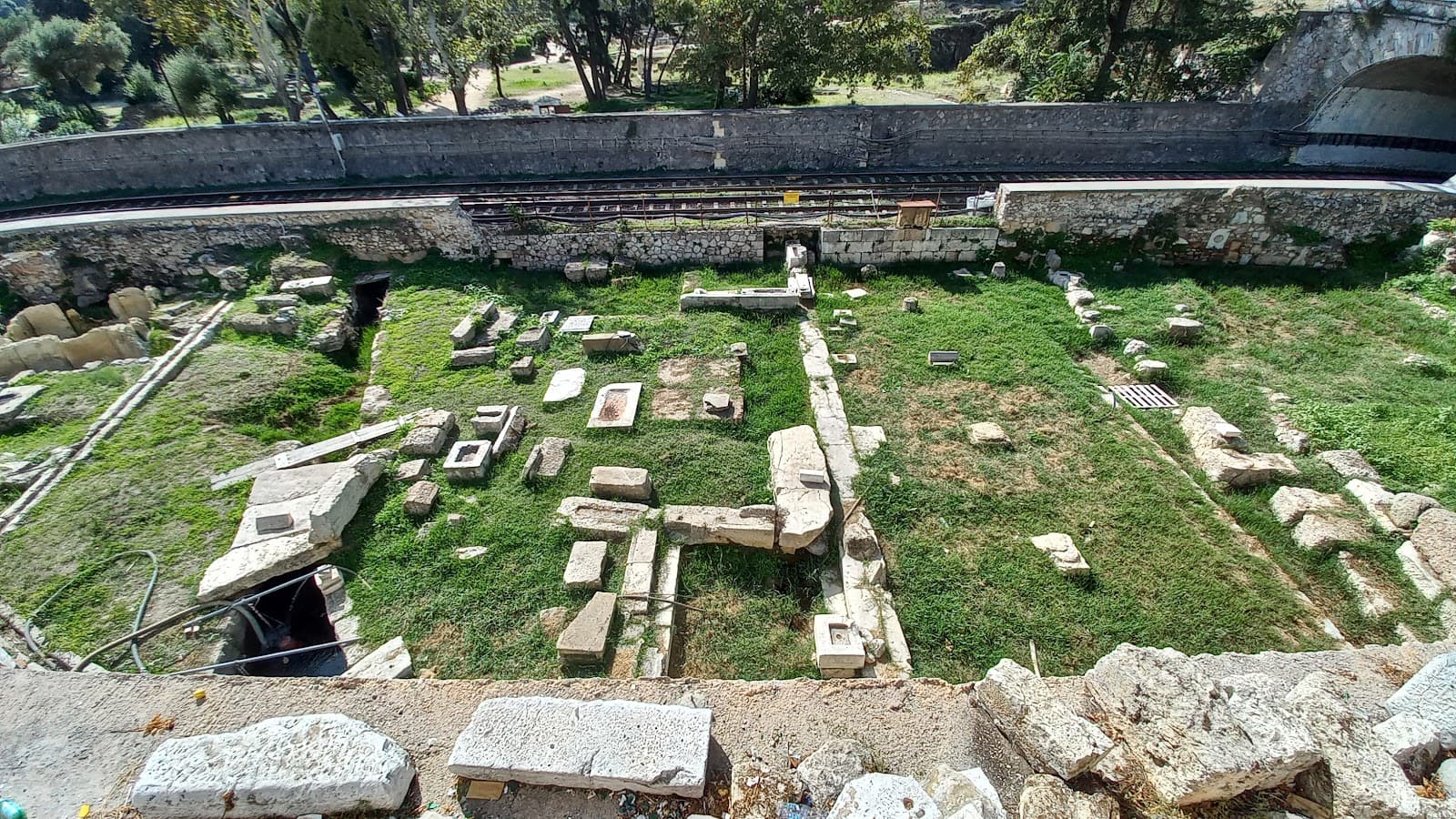
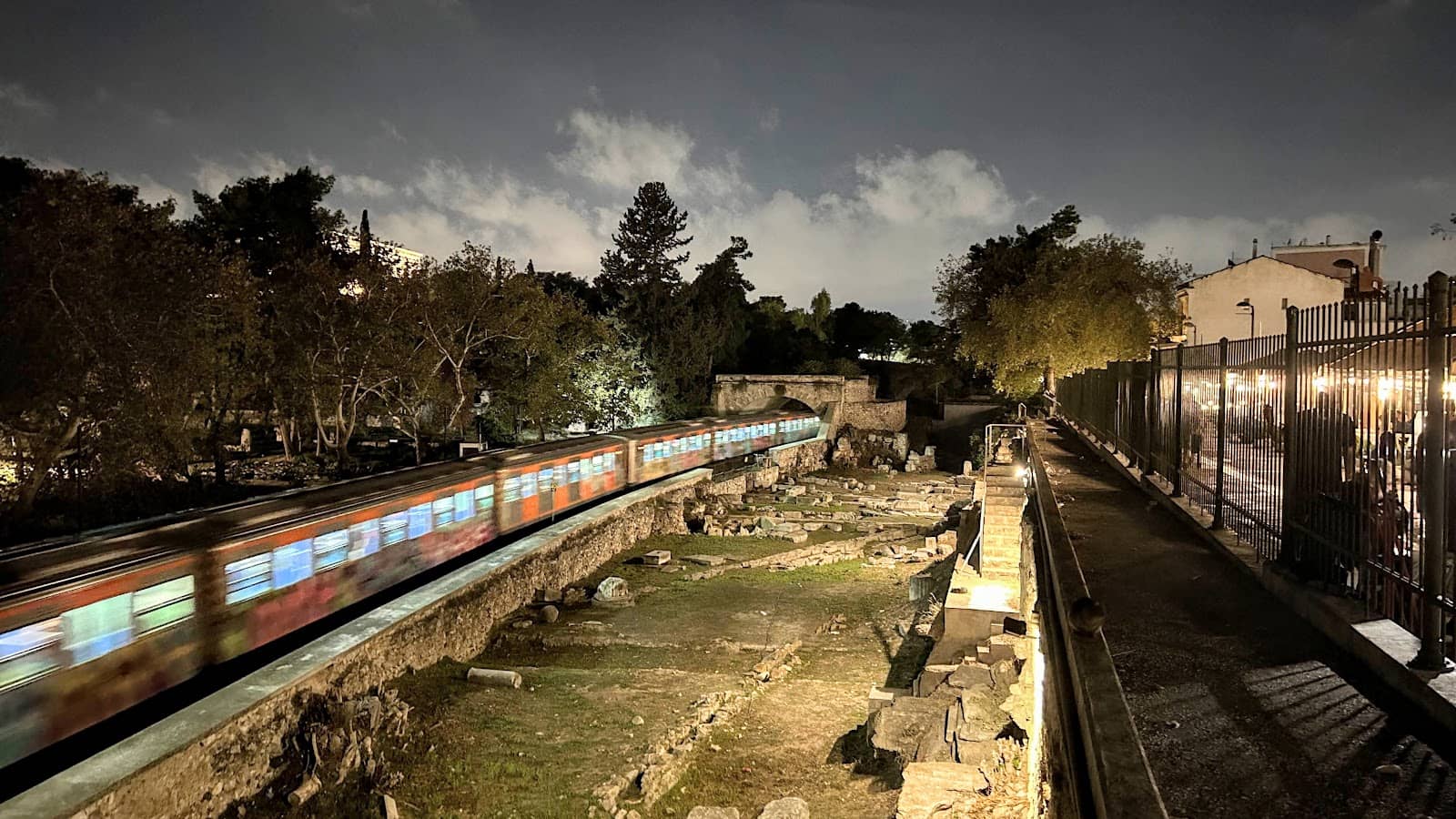
The best views are often from the elevated train tracks. Look for remnants of the stoa's base and columns. :camerawithflash:
Context is Key
Understand its role in the Ancient Agora to appreciate the few remaining structures. :world_map:
Highlights
Discover the most iconic attractions and experiences
Historical Significance
Ancient Agora of Athens
Imagine Apostle Paul preaching or Socrates facing judgment at this very spot. A place steeped in ancient Athenian history.
Architectural Remnants
Ancient Agora of Athens
See the foundational base and column plinths that hint at the stoa's former impressive colonnaded facade.
Plans like a pro.
Thinks like you
Planning Your Visit
Understanding the South Stoa's Significance
Navigating the Site
Best Times
Insider Tips
from TikTok, Instagram & Reddit
View from Above
The best views are often from the elevated train tracks. Look for remnants of the stoa's base and columns. :camerawithflash:
Context is Key
Understand its role in the Ancient Agora to appreciate the few remaining structures. :world_map:
Combine with Agora Visit
The South Stoa is part of the larger Ancient Agora complex. Explore it as part of a broader visit. :ticket:
Tips
from all over the internet
View from Above
The best views are often from the elevated train tracks. Look for remnants of the stoa's base and columns. :camerawithflash:
Context is Key
Understand its role in the Ancient Agora to appreciate the few remaining structures. :world_map:
Combine with Agora Visit
The South Stoa is part of the larger Ancient Agora complex. Explore it as part of a broader visit. :ticket:
What Travellers Say
Reviews Summary
Visitors acknowledge the South Stoa's immense historical significance, particularly its potential connection to Apostle Paul and Socrates. However, many note that due to its ruined state and modern infrastructure, there is very little to see beyond foundational remnants, making it less visually impressive than other Agora structures.
"As the place where the council of the Areopagus met on occasions, there is a good chance that the Apostle Paul preached the Gospel and the resurrection of Jesus Christ from the dead to the ancient Athenians from this very spot during his short stay in Athens (Acts 17). The other location is obviously the Areopagus itself south of the agora."
Jesús D
"Its original form has a rectangular plan, with the three walls built and a colonnaded facade of 8 columns, while a second, internal colonnade of 4 columns supported the double roof. At the beginning of the 4th c. BC at the northern and southern end two wings of lower height were added, with the result that the whole stoa became "Π" shaped. Basileios Stoa remained in use, accepting repairs and reconstructions, at least until the 4th century A.D."
Ioannis Paisis
"You can only see it from above due to the train tracks."
Cookie Chan
What People Like
What People Dislike
Frequently Asked Questions
🚇 🗺️ Getting There
The South Stoa is located within the Ancient Agora of Athens. You can reach the Ancient Agora via the Monastiraki or Thissio metro stations. From there, it's a short walk to the site.
While the South Stoa is part of the Ancient Agora, direct access to the specific remnants can be limited. It's often viewed from elevated points due to modern infrastructure like train tracks.
Look for the remnants of the stoa's base and column plinths within the northern section of the Ancient Agora. Informational signs within the Agora complex may help pinpoint its location.
🎫 🎫 Tickets & Entry
No, the South Stoa is part of the Ancient Agora of Athens. A single ticket for the Ancient Agora grants you access to explore the entire archaeological site, including the remnants of the South Stoa.
The South Stoa's hours are the same as the Ancient Agora of Athens. These typically vary by season, so it's best to check the official Hellenic Ministry of Culture and Sports website for the most up-to-date information.
Yes, there is an entrance fee for the Ancient Agora, which includes access to the South Stoa. Consider purchasing a combined ticket if you plan to visit other archaeological sites in Athens.
🎫 🏛️ Onsite Experience
Today, you can see the foundational base and a few column plinths of the South Stoa. Its original form was a rectangular building with colonnades, but much of it is no longer standing.
The South Stoa is not extensively preserved. What remains are primarily the foundational elements and a few scattered architectural pieces, offering a glimpse into its past rather than a complete structure.
The South Stoa is historically significant as the office and courtroom of the Athenian chief archon. It's also believed to be a site where Apostle Paul preached and where Socrates may have been tried.
While specific tours for the South Stoa might be rare, many guided tours of the Ancient Agora will cover its historical context and significance as part of the broader archaeological site.
📸 📸 Photography
The best photographic opportunities are often from slightly elevated positions, such as the pathways or the areas overlooking the ruins, which allow you to capture the stoa's remnants within the context of the Ancient Agora.
Yes, photography is generally permitted within the Ancient Agora, including the area of the South Stoa. However, always be respectful of the archaeological site and other visitors.
For Different Travelers
Tailored advice for your travel style
History Enthusiasts
Focus on understanding its original function as the Royal Stoa and its significance in Athenian justice and administration. Imagine the debates, trials, and pronouncements that took place here. The limited remains serve as a powerful prompt for historical imagination.
Day-Trippers to Athens
Prioritize seeing the South Stoa as part of your exploration of the Agora. Its historical context is key, so consider a brief stop to absorb its significance before moving on to other major attractions like the Acropolis.
Deep Dives
In-depth insights and expert knowledge
The Historical Heart of Athenian Governance
Beyond its administrative functions, the South Stoa holds profound religious and historical significance. It is believed to be the location where Apostle Paul preached the Gospel to the Athenians during his visit, a pivotal moment in early Christianity. Furthermore, it is thought to be the site where Socrates faced trial and was ultimately sentenced to death, a testament to its role in Athenian justice and philosophy.
Today, the South Stoa is primarily visible as a foundational base and a few scattered column plinths. Modern infrastructure, including train tracks, runs through the area, impacting its preservation and visibility. Despite its ruined state, standing at the South Stoa offers a powerful connection to the ancient world, allowing visitors to imagine the pivotal moments in history that unfolded here.
Navigating the Ancient Agora's Remnants
Signage at the Ancient Agora can sometimes be minimal, making it beneficial to have a map or a guide to help locate specific structures like the South Stoa. Its proximity to modern infrastructure, like the train lines, means that direct, ground-level access to the stoa's ruins might be restricted. However, this unique juxtaposition of ancient and modern also offers a distinct visual narrative of Athens' continuous history.
When visiting, it's recommended to approach the South Stoa with an understanding of its historical importance rather than expecting a fully reconstructed monument. Appreciating the foundational elements and imagining its past grandeur will enhance the experience. Combining a visit to the South Stoa with a broader exploration of the Ancient Agora, including the Temple of Hephaestus and the Stoa of Attalos, provides a comprehensive understanding of Athenian civic life.
Social
from TikTok, Instagram & Reddit