St Ulrich's Chapel
A unique Romanesque double chapel within the grand Imperial Palace of Goslar, housing Emperor Henry III's heart.
Highlights
Must-see attractions

Social
From TikTok & Reddit
Best Time
Pleasant weather, fewer crowds
St Ulrich's Chapel
Best Time
Pleasant weather, fewer crowds
Highlights
Must-see attractions
A unique Romanesque double chapel within the grand Imperial Palace of Goslar, housing Emperor Henry III's heart.
"A thousand years ago, the German kings used to rule the power from a number of royal castles."

⏳ Allow ample time
Explore the entire Kaiserpfalz complex, not just the chapel, to fully appreciate its history.
🧐 Understand the history
Remember it's a 19th-century reconstruction, adding context to its medieval splendor.

Highlights
Discover the most iconic attractions and experiences
The Double Chapel Design
St. Ulrich's Chapel
A unique 12th-century architectural marvel with a cruciform lower chapel and an octagonal upper floor.
Heart of Emperor Henry III
Lower Chapel of St. Ulrich's Chapel
See the gilded capsule containing the embalmed heart of Emperor Henry III, a poignant historical relic.

Imperial Palace Grandeur
Kaiserpfalz Goslar
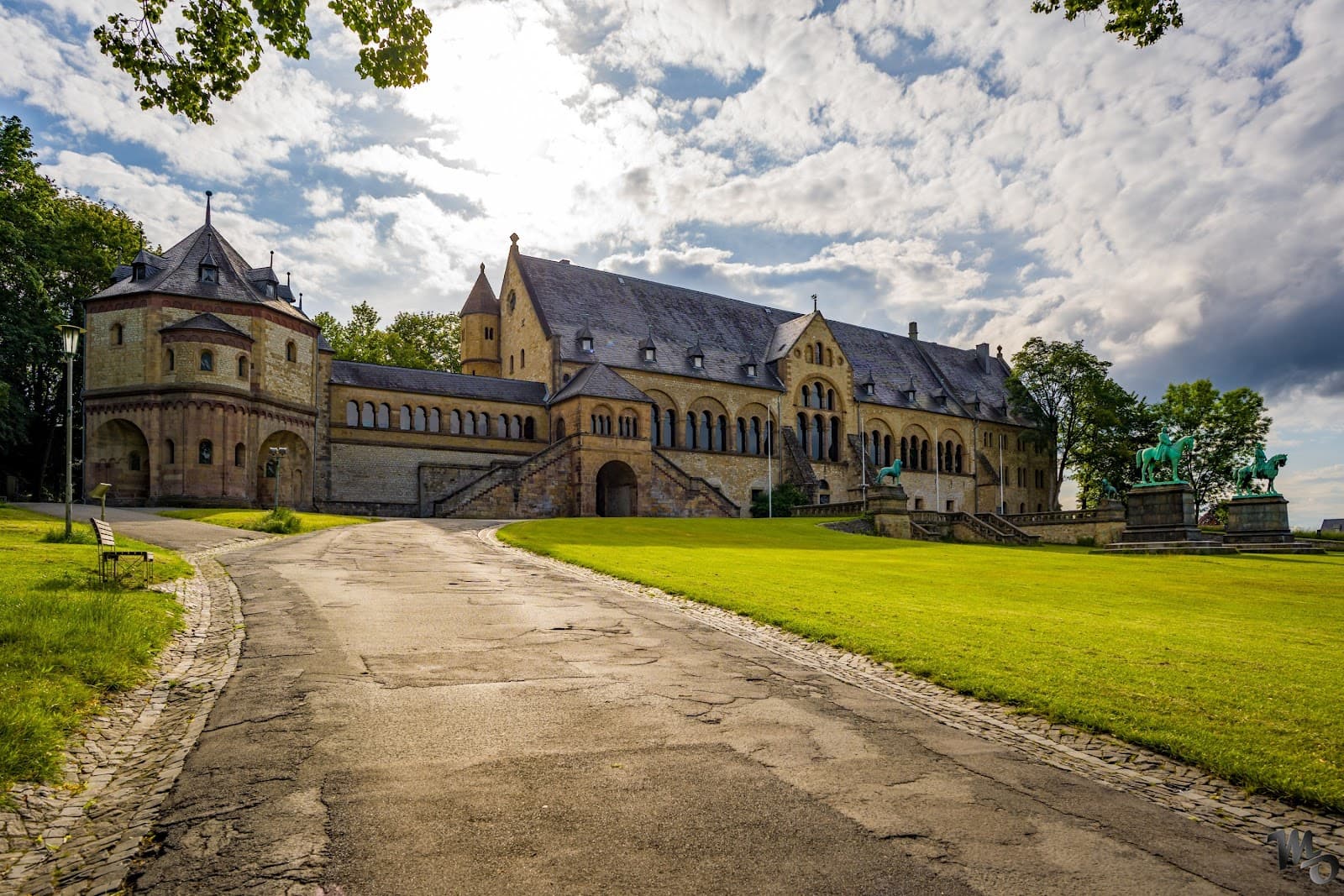
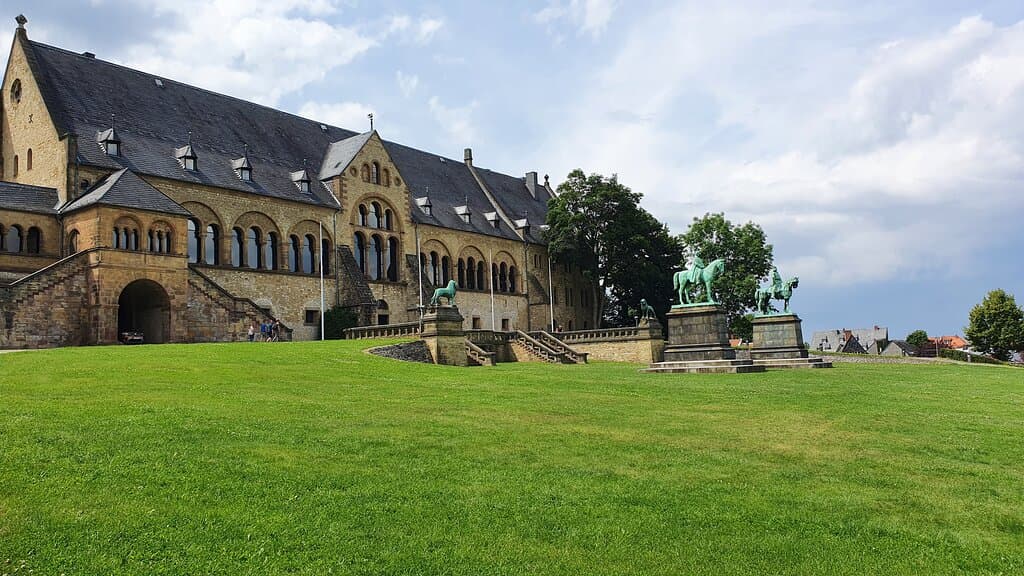
Explore the impressive Romanesque architecture and sandstone facade of the former royal residence.
Symbolic Bronze Lions
Entrance to Kaiserpfalz Goslar
Majestic bronze lions guarding the staircase, symbolizing vigilance, nobility, and imperial power.
Plans like a pro.
Thinks like you
Planning Your Visit
A Glimpse into Imperial History
Understanding the Reconstruction
Best Times
Insider Tips
from TikTok, Instagram & Reddit
⏳ Allow ample time
Explore the entire Kaiserpfalz complex, not just the chapel, to fully appreciate its history.
🧐 Understand the history
Remember it's a 19th-century reconstruction, adding context to its medieval splendor.
📸 Capture the details
Focus on the unique double chapel design and historical artifacts within.
🚶♂️ Stroll the grounds
Don't miss the cemetery and beautifully designed gravestones behind the chapel.
Tips
from all over the internet
⏳ Allow ample time
Explore the entire Kaiserpfalz complex, not just the chapel, to fully appreciate its history.
🧐 Understand the history
Remember it's a 19th-century reconstruction, adding context to its medieval splendor.
📸 Capture the details
Focus on the unique double chapel design and historical artifacts within.
🚶♂️ Stroll the grounds
Don't miss the cemetery and beautifully designed gravestones behind the chapel.
What Travellers Say
Reviews Summary
Visitors are consistently impressed by the historical significance and unique architecture of St. Ulrich's Chapel and the Imperial Palace of Goslar. The chapel's double design and the preserved heart of Emperor Henry III are standout features. While many appreciate the 19th-century reconstruction for preserving medieval splendor, some note the lack of original fabric.
"The Romanic St Ulrich's chapel scrupulously reconstructed in the nineteenth century marks the southern wing of the imperial palace of Goslar.
A thousand years ago, as Germany consisted of many single states and dispersed territories and there was still no capital, the German kings used to rule the power from a number of royal castles. Those imperial palaces are called Pfalz, and the Kaiserpfalz Goslar is one of them.
Though it is supposed to be a residence of major importance, it is to consider that the ensemble is a romantic reconstruction dated in the late nineteenth century when Germany became united under the belligerent emperor William who led the empire into World War One and therefore into the abyss.
However, the imperial palace of Goslar shows Medieval splendor like no other!"
gecko
"The Imperial Palace of Goslar (Kaiserpfalz) is one of Germany's most impressive treasures of Romanesque architecture. Built in the 11th century during the reign of Emperor Henry III, it served as the residence of the Holy Roman Emperors when they visited the region. Its sandstone façade and large windows reflect the empire's solidity and power. Imperial meetings, trials, and solemn ceremonies were held inside. Adjacent to the palace are the Chapel of St. Ulrich and the remains of the former cathedral, forming a unique monumental complex declared a UNESCO World Heritage Site.
In front of the building stands an impressive sculptural ensemble that adds visual power and historical symbolism. Two majestic bronze lions, placed on either side of the staircase, guard the entrance as symbols of vigilance, nobility, and power. Although not original, they faithfully represent the style and meaning of medieval imperial sculptures.
Presiding over the scene from above is the equestrian statue of Emperor Wilhelm I, added in the 19th century. Mounted on horseback and bearing regally, he represents the first emperor of the unified German Empire. This statue not only pays tribute to Wilhelm I but also visually connects the grandeur of the medieval past with the national pride of the 19th century.
The entire complex—the palace, the lions, the staircase, and the statue—creates a majestic atmosphere that reflects centuries of German imperial history. It is a place that impresses not only for its beauty but also for the symbolic meaning it conveys: power, continuity, and tradition."
Angelica N
"Beautiful old double chapel in the Imperial Palace.
The architecturally unique St. Ulrich Chapel was the "house church" of the German emperors. Built in the 12th century, it has a cruciform central structure below and an octagonal floor plan above. To this day, the heart of Henry III (who died in 1056) is kept in a gilded metal capsule on its ground floor.
The building has been repeatedly restored over the centuries and is well preserved today.
Behind the chapel is a kind of cemetery and some beautifully designed old gravestones."
Zape Ute
What People Like
What People Dislike
Frequently Asked Questions
🚇 🗺️ Getting There
St. Ulrich's Chapel is located within the Imperial Palace (Kaiserpfalz) in Goslar. You can reach Goslar by train or car. From the city center, it's a pleasant walk to the palace complex. Parking is available nearby, though it can be busy during peak season.
Yes, Goslar is well-connected by public transport. Buses and trains serve the city, and from the main station, you can take local buses or enjoy a walk to the Kaiserpfalz.
The Kaiserpfalz is about a 15-20 minute walk from Goslar train station. Taxis are also available, or you can take a local bus route that stops close to the palace.
Yes, there are several parking lots near the Imperial Palace in Goslar. Some are paid parking. It's advisable to check local signage for the most convenient options.
Absolutely! Goslar is a popular day trip destination, and the Kaiserpfalz, including St. Ulrich's Chapel, is a central attraction that can be comfortably explored within a few hours.
🎫 🎫 Tickets & Entry
Entry to the Imperial Palace complex is generally free, but specific exhibitions or guided tours within the palace, which may include access to the chapel, might require a ticket. It's best to check the official Kaiserpfalz Goslar website for current admission policies.
The opening hours for the Imperial Palace and its attractions, including St. Ulrich's Chapel, typically align with museum hours. These can vary seasonally, so checking the official website is recommended.
While the grounds of the Imperial Palace are often accessible, there may be fees for entering specific buildings or for guided tours. Information on admission fees can be found on the official Kaiserpfalz Goslar website.
For specific tours or exhibitions that include the chapel, advance booking might be advisable, especially during peak tourist seasons. Check the official Kaiserpfalz Goslar website for booking options.
It's always a good idea to check the official Kaiserpfalz Goslar website for any announcements regarding special events, temporary closures, or maintenance work that might affect your visit to St. Ulrich's Chapel.
🎫 🧭 Onsite Experience
St. Ulrich's Chapel was the 'house church' for German emperors. It's architecturally unique with its double chapel design and houses the heart of Emperor Henry III.
Inside, you'll find the architecturally distinct double chapel, the sarcophagus of Emperor Henry III, and a capsule containing his heart. The upper chapel connects to the Imperial Palace.
Photography is generally allowed inside historical sites, but check for any specific restrictions. The unique architecture and historical artifacts offer great photo opportunities.
Yes, guided tours are often available for the Imperial Palace complex, which can provide deeper insights into the history and significance of St. Ulrich's Chapel. Inquire at the visitor center.
The chapel is part of the larger Imperial Palace (Kaiserpfalz) complex, which includes the palace building itself, the remains of the cathedral, and impressive sculptural ensembles like the bronze lions and the statue of Emperor Wilhelm I.
📸 📸 Photography
Capture the unique double chapel interior, the sarcophagus of Henry III, and the exterior architecture. The surrounding Kaiserpfalz grounds also offer scenic views.
Photography policies can vary. While often permitted for personal use, flash photography might be restricted to protect artifacts. Always look for signage or ask staff.
Given potential low light conditions inside, a camera with good low-light performance or a tripod (if allowed) can be beneficial. Consider a wide-angle lens for the chapel's interior.
Drone usage is typically restricted in historical sites and urban areas due to privacy and safety regulations. It's best to assume drones are not permitted.
The Romanesque facade of the palace, the imposing bronze lions at the entrance, the equestrian statue of Wilhelm I, and the intricate details of the chapel itself are all highly photogenic.
For Different Travelers
Tailored advice for your travel style
👨👩👧 Families with Kids
Encourage kids to look for the bronze lions guarding the palace entrance – they're impressive and make for great photos. Exploring the vast palace grounds can feel like stepping back in time. Consider a guided tour if available, as engaging guides can make history come alive for younger visitors. Wear comfortable shoes, as there's a good amount of walking involved in exploring the entire complex.
🏛️ History Buffs
Pay close attention to the 19th-century reconstruction aspect; understanding how this era interpreted and rebuilt medieval structures adds another layer to the historical appreciation. The sculptural ensembles, including the bronze lions and Wilhelm I's statue, provide insights into later periods of German history and national identity.
Deep Dives
In-depth insights and expert knowledge
The Architectural Marvel of St. Ulrich's Chapel
While the chapel has undergone restorations over the centuries, its core structure and historical significance remain. The reconstruction of the larger Imperial Palace complex in the 19th century aimed to recreate the medieval splendor, and St. Ulrich's Chapel stands as a testament to this effort, offering visitors a tangible link to a bygone era. The chapel's design is not just aesthetically pleasing but also symbolic, emphasizing the emperor's spiritual connection and authority.
Visitors often marvel at the intricate details and the sense of history that permeates the chapel. The preservation of Emperor Henry III's heart is a particularly striking element that draws considerable interest, offering a unique and somewhat somber historical connection. The chapel's role as a private imperial sanctuary adds another layer to its historical narrative, making it a must-see within the Goslar Imperial Palace.
The Imperial Palace of Goslar: A Seat of Power
It's crucial to understand that the current appearance of the Kaiserpfalz is largely a result of a 19th-century reconstruction. This ambitious project sought to revive the grandeur of the medieval palace, which had fallen into disrepair over centuries. While not original, the reconstruction faithfully captures the spirit and scale of the Romanesque architecture, providing an impressive visual representation of imperial might. The sandstone facade and the overall monumental scale are designed to evoke a sense of historical continuity and national pride.
The palace grounds are further enhanced by significant sculptural elements. The majestic bronze lions flanking the main staircase are powerful symbols of vigilance and nobility, reminiscent of medieval imperial sculptures. Crowning the scene is the equestrian statue of Emperor Wilhelm I, a tribute to the first emperor of the unified German Empire. Together, these elements create a compelling narrative of German imperial history, from its medieval origins to its 19th-century resurgence.


Social
from TikTok, Instagram & Reddit