Brusttuch House
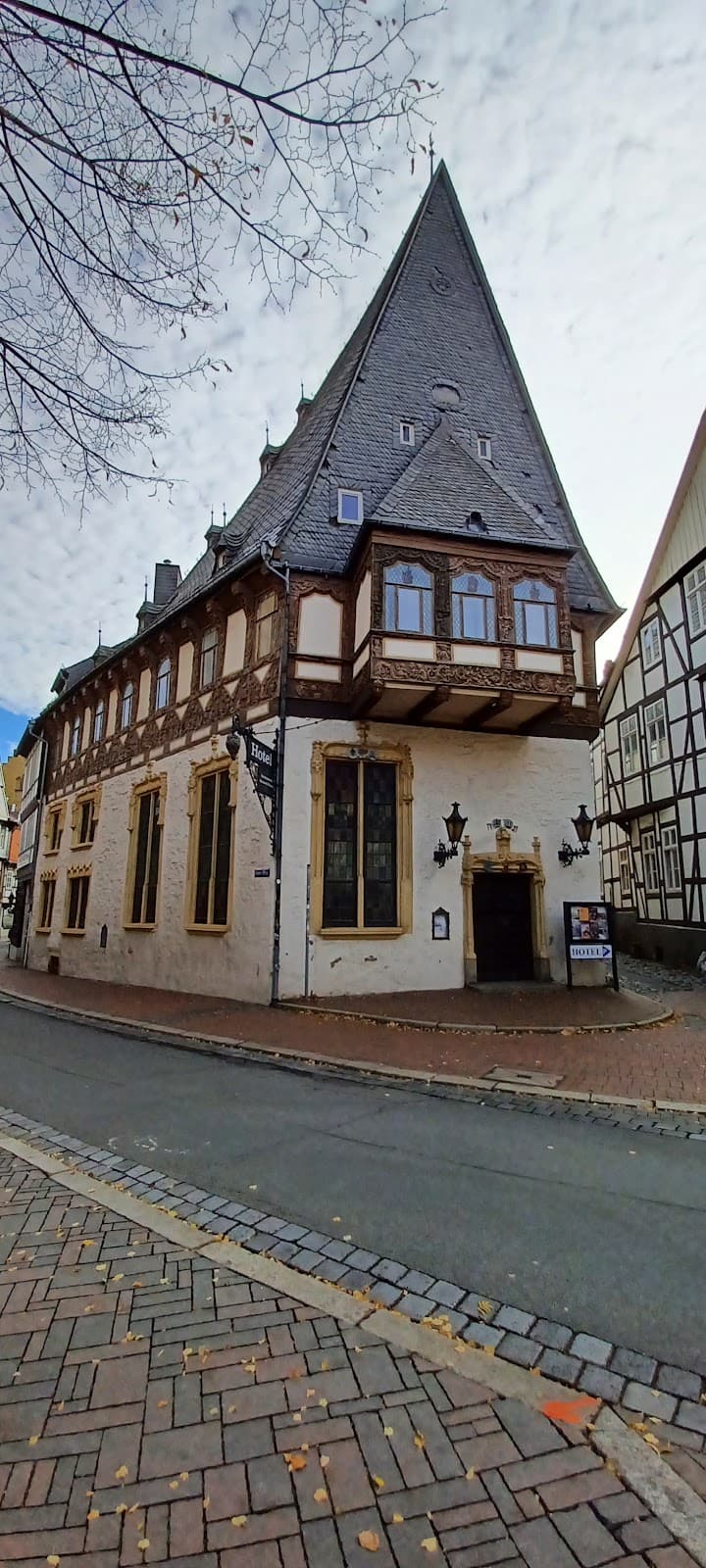
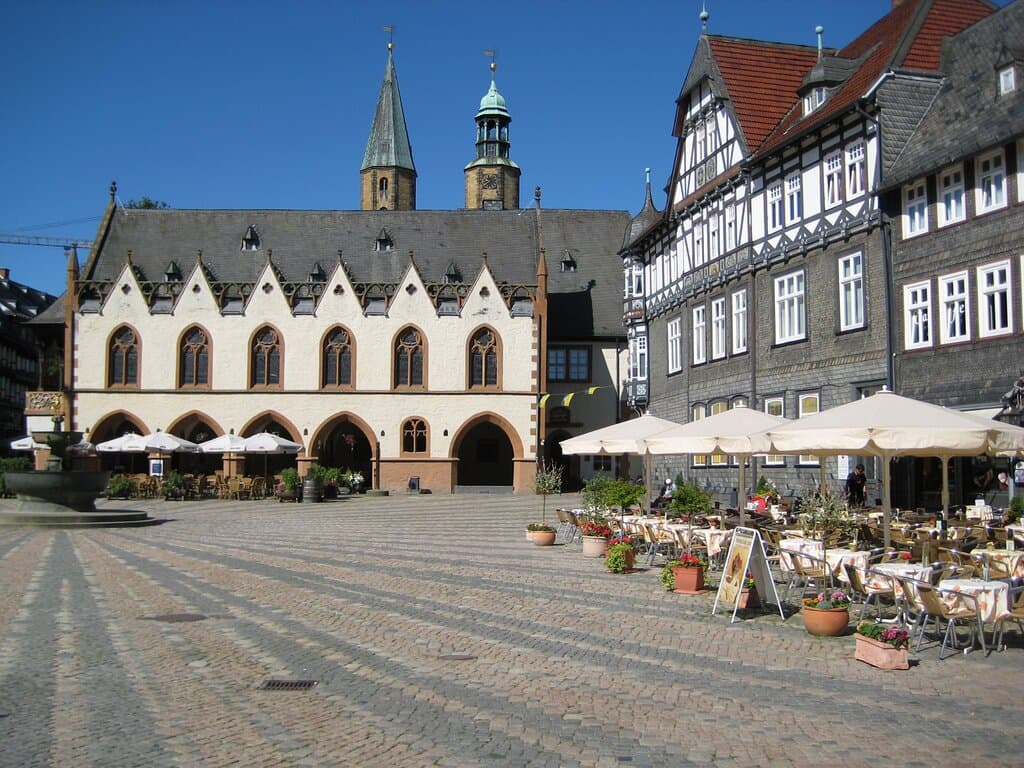
A stunning 16th-century Renaissance gem in Goslar, Brusttuch House boasts intricate half-timbered facades and elaborate wood carvings.
Highlights
Must-see attractions

Social
From TikTok & Reddit
Best Time
Best light for photos
Brusttuch House
Best Time
Best light for photos
Highlights
Must-see attractions
A stunning 16th-century Renaissance gem in Goslar, Brusttuch House boasts intricate half-timbered facades and elaborate wood carvings.
"A true architectural marvel, Brusttuch House transports you back to the Renaissance with its detailed craftsmanship."

📸 Capture the Details
Take time to appreciate the intricate carvings on the upper floors and bay window. They tell a story! :camerawithflash:
📐 Admire the Architecture
Notice how the roofline adapts to the plot's shape – a clever design feature. :housewithgarden:

Highlights
Discover the most iconic attractions and experiences
Renaissance Facade
Marvel at the intricate half-timbered upper floors and detailed carvings, a true testament to 16th-century craftsmanship.

Steeply Pitched Roof
Notice the unique slate gable roof, which becomes steeper towards the north, adapting to the tapering plot.
Elaborate Bay Window
The northwest bay window boasts elaborate carvings, showcasing the artistic flair of its creators.
Plans like a pro.
Thinks like you
Planning Your Visit
Architectural Gem
A Glimpse into History
Best Times
Insider Tips
from TikTok, Instagram & Reddit
📸 Capture the Details
Take time to appreciate the intricate carvings on the upper floors and bay window. They tell a story! :camerawithflash:
📐 Admire the Architecture
Notice how the roofline adapts to the plot's shape – a clever design feature. :housewithgarden:
🏨 Hotel Stay Option
Consider staying at the hotel to experience the historic ambiance firsthand. :bed:
Tips
from all over the internet
📸 Capture the Details
Take time to appreciate the intricate carvings on the upper floors and bay window. They tell a story! :camerawithflash:
📐 Admire the Architecture
Notice how the roofline adapts to the plot's shape – a clever design feature. :housewithgarden:
🏨 Hotel Stay Option
Consider staying at the hotel to experience the historic ambiance firsthand. :bed:
What Travellers Say
Reviews Summary
Brusttuch House is lauded for its stunning Renaissance architecture and intricate historical details. Visitors appreciate the craftsmanship of the half-timbered facade and elaborate carvings. Its conversion into a hotel allows for an immersive historical experience.
""It was built as a residential house between 1521 and 1526 for the Goslar patrician Johannes Thiling. It is a three-story building. The ground floor and first floor are solidly constructed, and the second floor is half-timbered. The corner house is situated on an acute-angled plot that tapers towards the north. It has a slate gable roof, the pitch of which becomes steeper towards the north due to the narrowing of the plot. The base area features a two-story hall with high window openings on the north side, and a two-story living area on the south side; window openings with keel-arched roofs and blind pinnacles. The upper floor is slightly projecting, with figurative carvings in the parapet area, posts and corbels based on designs by Hans Burgkmair, executed by woodcarver Simon Stappen (Braunschweig). To the northwest, it has a half-timbered bay window with elaborate carvings. The timber framing is period-appropriate, with several historicist versions in greenish and brown. Reconstructed in wood tones. Converted into a hotel in 1870/71.
Source: List of Historic Buildings"
Hans-Peter Staps
What People Like
What People Dislike
Frequently Asked Questions
🚇 🗺️ Getting There
Brusttuch House is located in Goslar, Germany. It's easily accessible by public transport within the city. If arriving by car, check local parking availability as the historic center can be busy.
Yes, Brusttuch House is situated in the historic center of Goslar, making it very walkable and easy to explore alongside other nearby attractions.
🎫 🎫 Tickets & Entry
Brusttuch House is a historic building and its exterior is visible from the street. While you can admire it from the outside, it currently operates as a hotel, so entry to interior spaces may be limited to guests.
As Brusttuch House is a functioning hotel, there are no specific public opening hours for the building itself. The exterior can be viewed at any time.
📸 📸 Photography
Daytime offers the best natural light to capture the intricate details of the half-timbered facade and carvings. Early morning or late afternoon can provide softer light and fewer crowds.
Photography of the exterior is generally permitted. However, if you are a guest at the hotel, interior photography rules may apply. Always be respectful of the property and its guests.
🎫 🏛️ History & Architecture
Brusttuch House was constructed between 1521 and 1526 as a residential house for the Goslar patrician Johannes Thiling.
It is a prime example of Renaissance architecture, featuring a solid lower construction and a distinctive half-timbered upper floor with elaborate carvings.
The carvings are based on designs by Hans Burgkmair and were executed by woodcarver Simon Stappen.
For Different Travelers
Tailored advice for your travel style
History Buffs & Architecture Enthusiasts
Consider booking a stay at the hotel to fully immerse yourself in the historical atmosphere. This allows for a more intimate appreciation of the building's structure and design, beyond just viewing it from the street. Understanding the context of its construction for a wealthy patrician family adds another layer to its historical significance.
Deep Dives
In-depth insights and expert knowledge
Architectural Marvels of Brusttuch House
The exterior is adorned with figurative carvings in the parapet area, posts, and corbels. These detailed embellishments were inspired by the renowned artist Hans Burgkmair and brought to life by the skilled woodcarver Simon Stappen. A particularly striking feature is the half-timbered bay window on the northwest side, which is richly decorated with elaborate carvings, showcasing the period's artistic sensibilities. The timber framing itself, with its greenish and brown hues, reflects the authentic style of the era, with some historicist reconstructions maintaining its original charm.
Originally serving as a residential house for the wealthy patrician Johannes Thiling, Brusttuch House has a rich history. Since 1870/71, it has been converted into a hotel, allowing visitors to experience its historic ambiance firsthand. The building's two-story hall on the north side, with its high window openings, and the two-story living area on the south side, featuring keel-arched windows, offer insights into the domestic life of its original inhabitants. The combination of historical significance, architectural brilliance, and its continued use makes Brusttuch House a captivating landmark.


Social
from TikTok, Instagram & Reddit