
Kompagnietor
A 17th-century maritime landmark in Flensburg, Kompagnietor stands as a testament to the city's seafaring heritage and architectural history.
Highlights
Must-see attractions

Social
From TikTok & Reddit
Best Time
Fewer crowds, better photos
Kompagnietor
Best Time
Fewer crowds, better photos
Highlights
Must-see attractions
A 17th-century maritime landmark in Flensburg, Kompagnietor stands as a testament to the city's seafaring heritage and architectural history.
"This historical gate is a majestic building that tells stories of Flensburg's seafaring past."
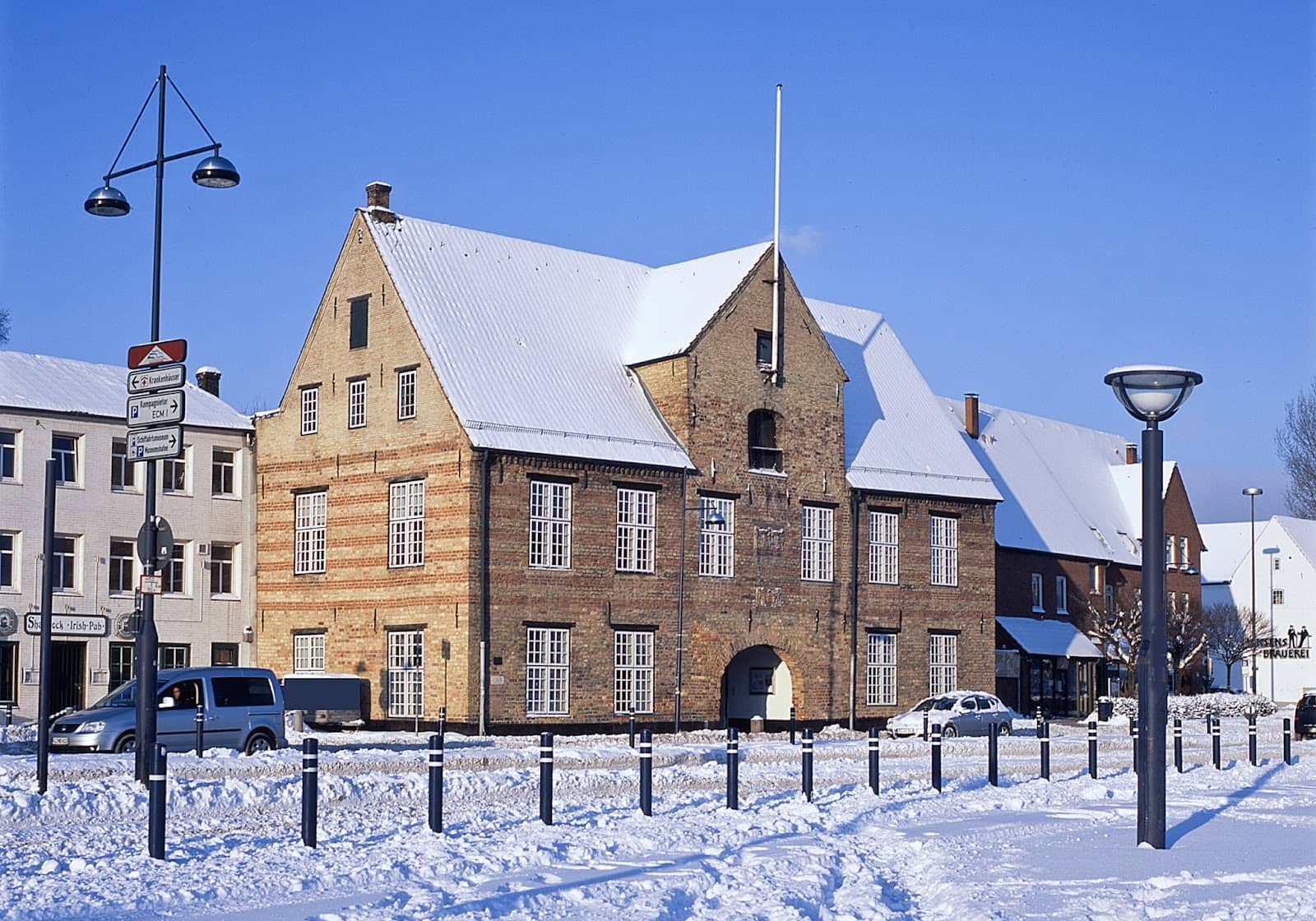
📸 Capture the Details
Don't just photograph the exterior; look for the intricate Dutch tiles inside and the historical inscriptions on the gable. :camerawithflash:
🚶♂️ Explore the Harbor
Kompagnietor is right on the harbor. Combine your visit with a stroll along the waterfront for scenic views. :athletic_shoe:
Highlights
Discover the most iconic attractions and experiences
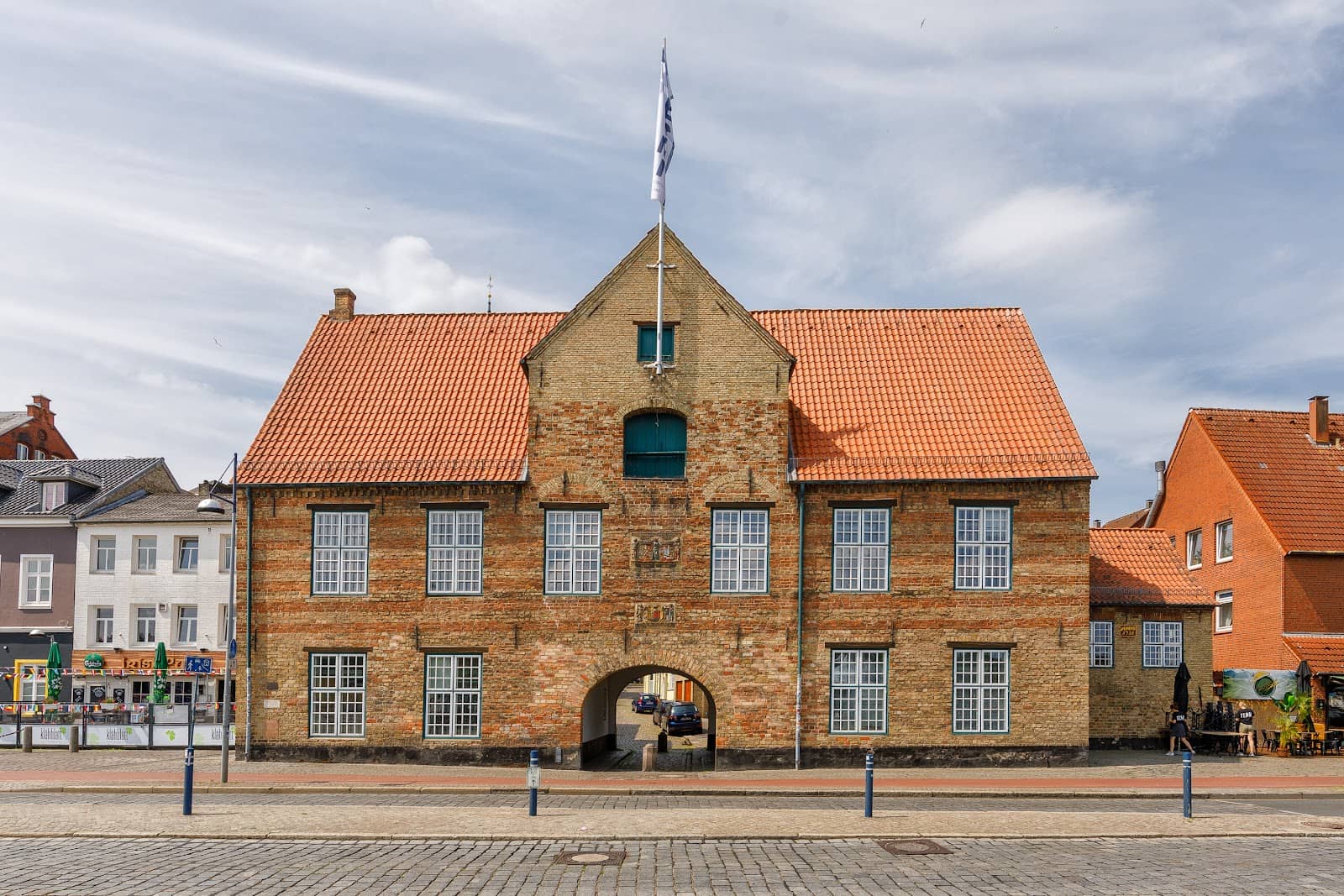
The Grand Facade
Schiffbrücke 12, Flensburg
Admire the 17th-century architecture, a testament to Flensburg's maritime past and Hanseatic charm.
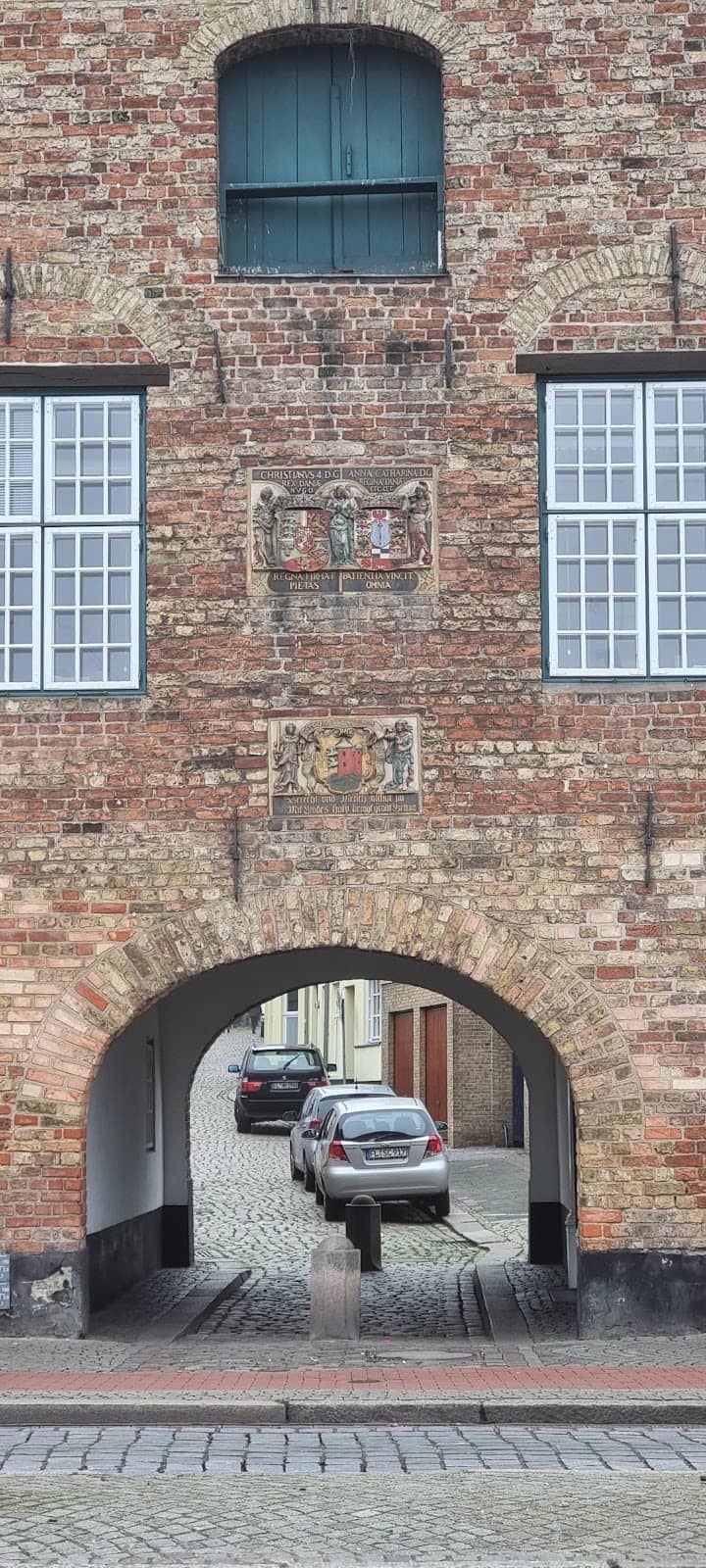
Historic Inscriptions
Gable
Read the inscription 'Gerecht und Metich altidt sin Mit Gades hülp bringt grodt Gewin' and see royal coats of arms.
Tiled Hall
Interior
Step inside to see the beautifully decorated hall featuring Dutch tiles, a unique historical detail.
Plans like a pro.
Thinks like you
Planning Your Visit
Timing Your Visit
Understanding Its History
Best Times
Insider Tips
from TikTok, Instagram & Reddit
📸 Capture the Details
Don't just photograph the exterior; look for the intricate Dutch tiles inside and the historical inscriptions on the gable. :camerawithflash:
🚶♂️ Explore the Harbor
Kompagnietor is right on the harbor. Combine your visit with a stroll along the waterfront for scenic views. :athletic_shoe:
📚 Learn its History
Read up on its past as a meeting place for shipowners to truly appreciate its significance. :books:
Tips
from all over the internet
📸 Capture the Details
Don't just photograph the exterior; look for the intricate Dutch tiles inside and the historical inscriptions on the gable. :camerawithflash:
🚶♂️ Explore the Harbor
Kompagnietor is right on the harbor. Combine your visit with a stroll along the waterfront for scenic views. :athletic_shoe:
📚 Learn its History
Read up on its past as a meeting place for shipowners to truly appreciate its significance. :books:
What Travellers Say
Reviews Summary
Visitors praise Kompagnietor for its historical significance and impressive 17th-century architecture, noting its prominent location on the Flensburg harbor. The building's rich past as a meeting place for sailors and its enduring presence are frequently highlighted as key attractions. Some visitors express a desire for more accessible interior tours to fully appreciate its historical features.
"The Kompagnietor in Flensburg is one of those buildings that makes you wonder if it might once have been home to a sea captain itself. Built in 1602, it was originally erected as the proud home of the Schiffergelage – the honorable association of sailors who used to meet regularly to discuss navigation, storms, rum supplies, and presumably the occasional "And then the whale…!" moment.
The building was commissioned by the Flensburg merchants, who apparently felt that such tradition-conscious seafarers deserved a suitably representative building. And "representative" back then naturally meant sturdy walls, a proper portal, and a hint of "Feel free to come in – but behave yourselves!" Thus, the Kompagnietor came into being as something like the sailors' town hall, only with less politics and more nautical tales.
The Flensburg merchants commissioned the building, apparently believing that such tradition-conscious seafarers deserved a suitably representative structure. The name "Kompagnietor" (Company Gate) is, of course, derived from "Kompanie" or "Compagnie"—a term that once meant something like "association of honorable men" and today sounds more like an impromptu start-up. And let's be honest: a building called Kompagnietor sounds as if you have to wear a tricorn hat before entering, or at least shout a convincing "Ahoy!"
Its use has changed over the centuries, because, like any old building with character, the Kompagnietor has gone through various phases of life. It was once a place for maritime meetings, later a municipal administration building, and at times probably also a human windbreak or a popular subject for painters who like to depict houses with "historical expressions." Today, it serves the city of Flensburg as a prestigious building—exactly what it has always been good for: standing impressively and telling stories at the same time.
And this gate certainly has plenty of stories to tell. If its walls could talk, they would probably begin with: “Sit down, get yourself a grog – this is going to take a while.”
In short:
The Kompagnietor is a historical all-rounder: maritime, majestic, and with a faint whiff of seafaring romance (perhaps just from our imaginations). A building that has proven for over 400 years that good architecture never gets seasick – and that every port city benefits greatly from a touch of Hanseatic charm."
Karl-Heinz Missfeldt
"The Kompagnietor (Danish: Kompagniporten) is one of Flensburg's landmarks, located at its harbor (Schiffbrücke 12). This 17th-century gate had a medieval predecessor of the same name.
The exact date of the first Kompagnietor's construction is unknown. It was part of Flensburg's city fortifications and existed as early as the 15th century.[1] It was replaced by the current structure in 1602. In Braun and Hogenberg's old city map of Flensburg, a harbor gate is also depicted at this location; however, this gate could also refer to the Schiffbrücke gate, so it is unclear what the gate, sometimes also called a wicket gate, actually looked like.
The gate was built in 1602 by the master builder Dirick Lindingk as a meeting place for Flensburg's shipowners (shipowners' banquets). With its age, the Kompagnietor is one of the oldest secular buildings in the city. The newly constructed Kompagnietor (Company Gate) originally had stepped gables on its sides, similar to the former Norderpforte (Northern Gate), the predecessor of the Nordtor (Northern Gate).
The tiled hall, decorated with Dutch tiles, is particularly worth seeing. Flood marks from past floods can be seen on the front building. The gable displays the Flensburg coat of arms and the inscription "Gerecht und Metich alltidt sin Mit Gades hülp bringt grodt Gewin" (Just and temperate at all times, with God's help, brings great gain), along with the coat of arms of King Christian IV of Denmark and Norway and his wife, Queen Anna Katharina of Brandenburg.
Today, the Kompagnietor houses the European Centre for Minority Issues."
Ken Kaminski
"Architecturally interesting and well preserved."
Endless Voyager
What People Like
What People Dislike
Frequently Asked Questions
🚇 🗺️ Getting There
Kompagnietor is conveniently located at Schiffbrücke 12, right on the Flensburg harbor. It's easily accessible by foot if you're exploring the city center or harbor area. Public transport options are available, with bus stops nearby. Parking can be found in the vicinity, though it might be limited during peak times.
Yes, Kompagnietor is situated in a well-connected area of Flensburg. Several bus lines stop within a short walking distance, making it easy to reach via public transportation from various parts of the city.
From Flensburg train station, you can take a local bus directly towards the harbor area, or enjoy a pleasant walk of about 20-30 minutes. Taxis are also readily available outside the station.
🎫 🎫 Tickets & Entry
Kompagnietor is a historical building and landmark. While the exterior is always visible, access to the interior, which houses the European Centre for Minority Issues, may be subject to specific opening hours or events. It's advisable to check for any public access days or events if you wish to see the tiled hall.
As Kompagnietor is a historical building and now houses an institution, its public opening hours can vary. The exterior is always accessible. For interior visits, especially to see the tiled hall, it's best to check the schedule for the European Centre for Minority Issues or any special event listings.
Viewing the exterior of Kompagnietor is free. If there are opportunities to visit the interior, particularly for specific events or tours, there might be a fee associated with that. It's recommended to inquire directly about interior access and any associated costs.
Visiting the exterior of Kompagnietor is possible any day. For interior access, Sunday hours can be limited due to its function as an office space. It's best to confirm any public viewing opportunities for Sundays in advance.
📸 📸 Photography
The best photo opportunities are from the Schiffbrücke, offering a full view of the facade and its harbor setting. For unique shots, try capturing the details of the gable inscription and the Dutch tiles inside if interior access is permitted. Early morning or late afternoon light can enhance the architectural features.
Photography rules inside Kompagnietor depend on its current use and any specific events. If you gain access to the tiled hall, it's wise to ask for permission before taking extensive photos. Generally, respectful photography for personal use is often permitted, but commercial use might require authorization.
For exterior shots, a moderate aperture (f/8-f/11) will ensure sharpness. For the tiled hall, you might need a wider aperture (f/2.8-f/4) and a higher ISO due to lower light conditions. Consider a tripod if you're shooting in low light to avoid blur.
🎫 🏛️ History & Significance
Kompagnietor was built in 1602 as a prestigious meeting place for Flensburg's shipowners and sailors. It served as a 'sailors' town hall,' fostering discussions on navigation and maritime affairs, reflecting the city's strong seafaring heritage.
The current Kompagnietor was built in 1602 by master builder Dirick Lindingk. It replaced an earlier medieval gate of the same name that was part of Flensburg's city fortifications.
The inscription on the gable reads 'Gerecht und Metich altidt sin Mit Gades hülp bringt grodt Gewin,' which translates to 'Just and temperate at all times, with God's help, brings great gain.' It reflects the values of the time.
Today, the Kompagnietor serves as a prestigious building for the city of Flensburg and houses the European Centre for Minority Issues. It continues to stand as a historical landmark.
For Different Travelers
Tailored advice for your travel style
👨👩👧 Families with Kids
🏛️ History Buffs
Deep Dives
In-depth insights and expert knowledge
The Maritime Heart of Flensburg
Over the centuries, the building's role evolved. It transitioned from a hub for nautical discussions to a municipal administration building. This adaptability is a hallmark of well-preserved historical structures. Despite these changes, it has always retained its status as a prestigious building, a testament to its enduring architectural merit and historical significance. The very name, 'Company Gate,' evokes a sense of historical association and collective endeavor, fitting for a building that has witnessed so much of the city's development.
Today, the Kompagnietor continues to stand impressively, housing the European Centre for Minority Issues. This modern function adds another layer to its long history, showing how historical buildings can be repurposed while still serving the community. Its presence on the harbor, marked by flood marks from past inundations, serves as a constant reminder of the sea's power and the city's resilience. It’s a place where history is not just preserved but actively lived.
Architectural Details and Symbolism
Adding to its historical richness are the coats of arms of King Christian IV of Denmark and Norway and his wife, Queen Anna Katharina of Brandenburg. Their inclusion signifies the political and royal patronage associated with the building and the region at the time. Inside, the tiled hall decorated with Dutch tiles offers a glimpse into the interior aesthetics of the era, showcasing imported decorative elements that were a mark of wealth and connection to international trade routes.
Even the subtle details, like the flood marks visible on the front building, tell a story of the building's resilience against the elements and the ever-present influence of the nearby harbor. These architectural and decorative elements combine to make the Kompagnietor a visually engaging structure that invites closer inspection and contemplation of its historical context.

Social
from TikTok, Instagram & Reddit