
Castellum Divisorium
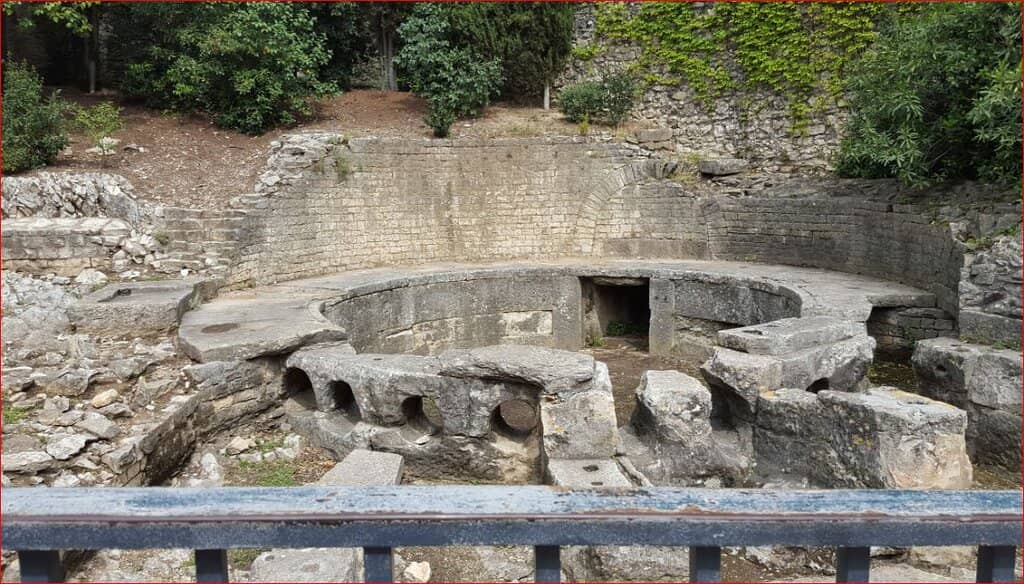
A rare Roman water distribution basin, the Castellum Divisorium showcases ancient hydraulic engineering, channeling aqueduct water to the city.
Highlights
Must-see attractions
Social
From TikTok & Reddit
Best Time
Fewer crowds, better photos
Castellum Divisorium
Best Time
Fewer crowds, better photos
Highlights
Must-see attractions
A rare Roman water distribution basin, the Castellum Divisorium showcases ancient hydraulic engineering, channeling aqueduct water to the city.
"A rare vestige of Roman hydraulic engineering, crucial for supplying ancient Nîmes with water."
🎯 Use GPS to Find It
The Castellum Divisorium isn't always well-signposted. Use Google Maps to navigate directly to the site.
Combine with Nearby Sights
Pair your visit with the Tower of the Magicians and Jardins de la Fontaine for a fuller experience.
Highlights
Discover the most iconic attractions and experiences
The Distribution Basin
Central chamber
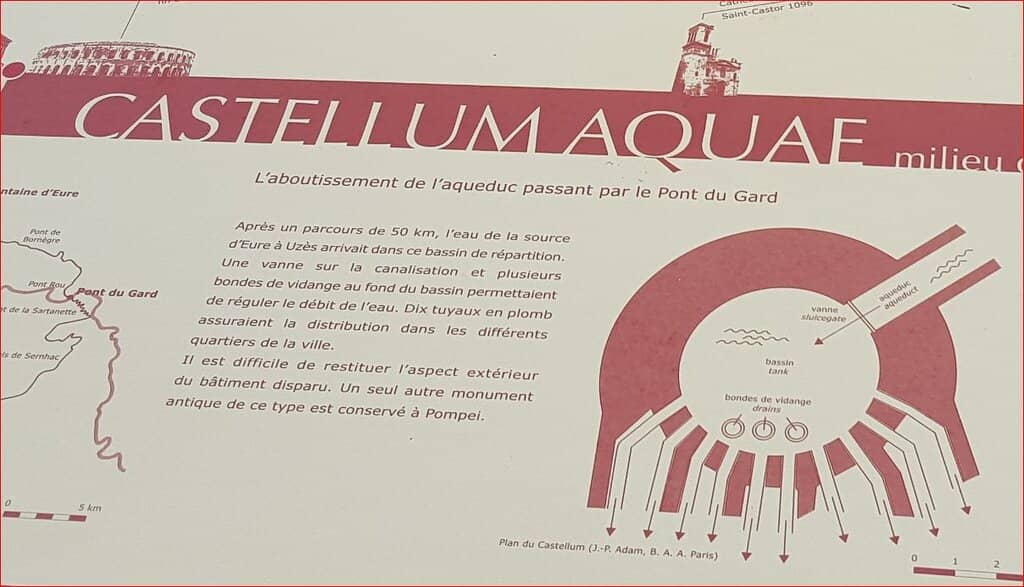
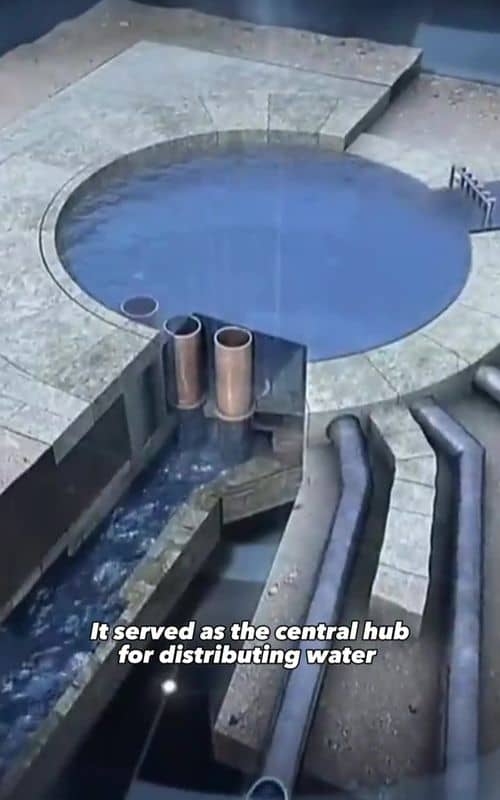
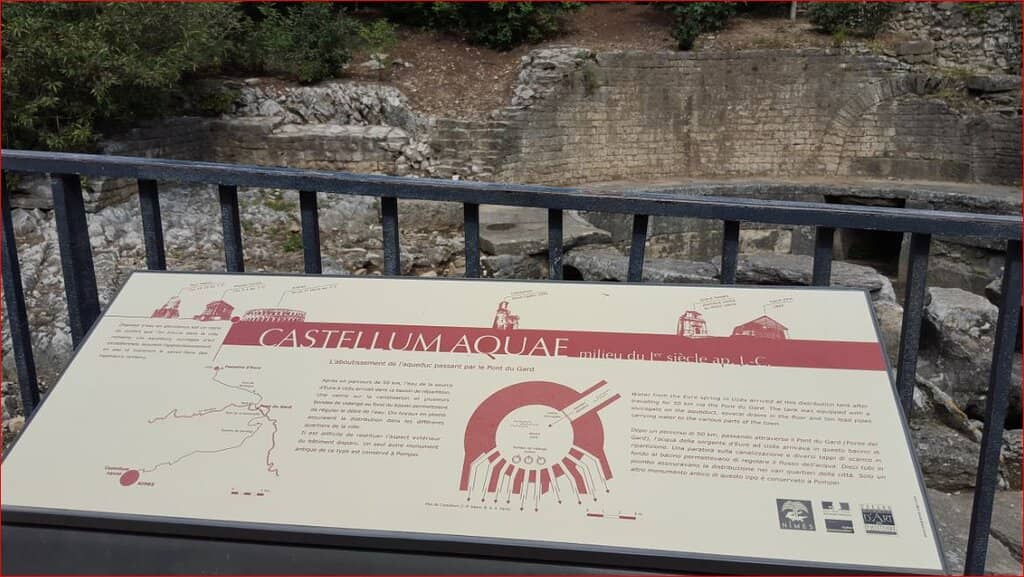
Witness the ingenious Roman engineering that precisely distributed water via lead pipes.
Aqueduct Remnants
Surrounding area
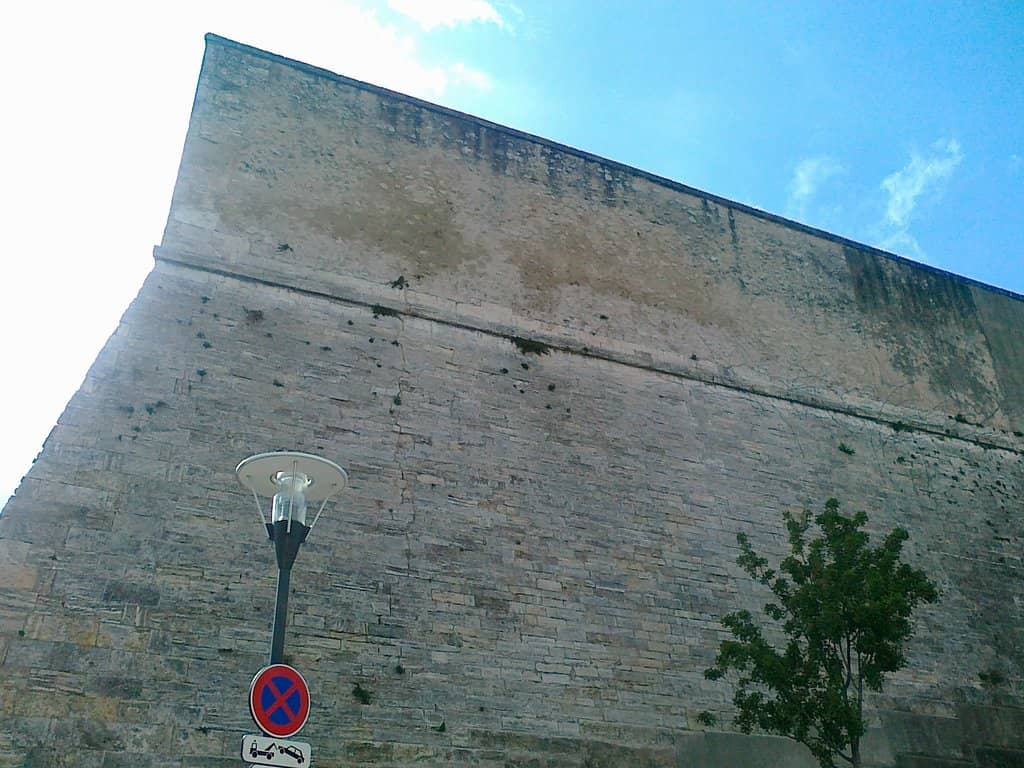
See the remnants of the 50km aqueduct that brought vital water to the ancient city.
Proximity to Jardins de la Fontaine
Adjacent to gardens
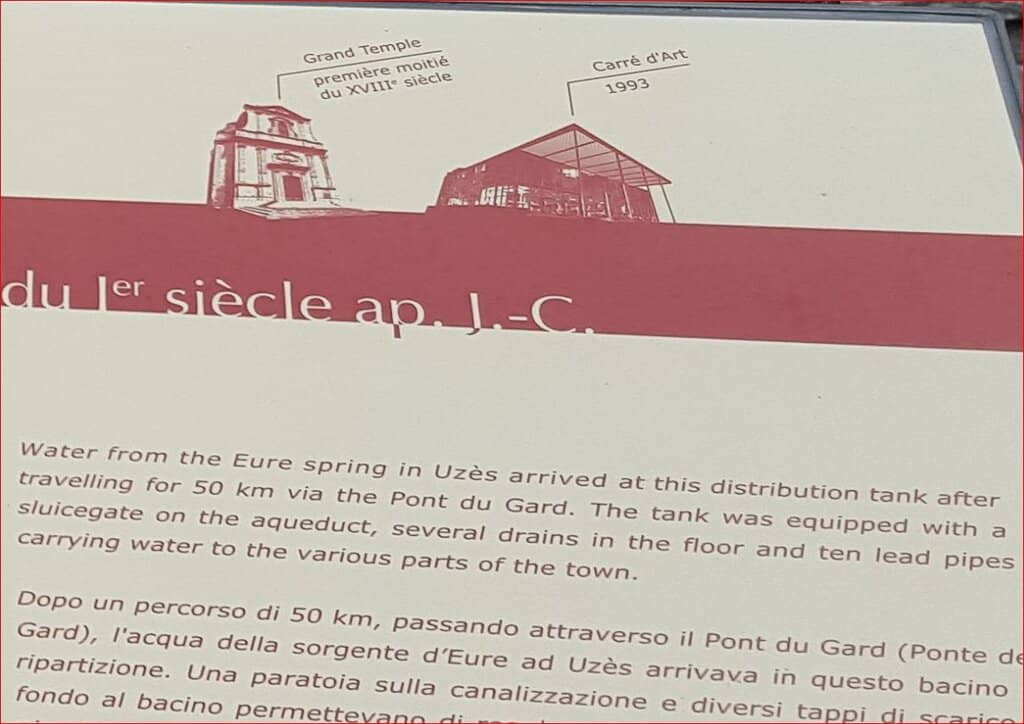
Easily combine your historical exploration with the beauty of the Roman-inspired gardens.
Plans like a pro.
Thinks like you
Planning Your Visit
Timing is Key for This Ancient Marvel
Navigating to Roman Waterways
Best Times
Insider Tips
from TikTok, Instagram & Reddit
🎯 Use GPS to Find It
The Castellum Divisorium isn't always well-signposted. Use Google Maps to navigate directly to the site.
Combine with Nearby Sights
Pair your visit with the Tower of the Magicians and Jardins de la Fontaine for a fuller experience.
Free to View
No entrance fee! You can admire this Roman marvel from the sidewalk.
Understand Roman Hydraulics
Learn how gravity, not electricity, powered this incredible water distribution system.
Tips
from all over the internet
🎯 Use GPS to Find It
The Castellum Divisorium isn't always well-signposted. Use Google Maps to navigate directly to the site.
Combine with Nearby Sights
Pair your visit with the Tower of the Magicians and Jardins de la Fontaine for a fuller experience.
Free to View
No entrance fee! You can admire this Roman marvel from the sidewalk.
Understand Roman Hydraulics
Learn how gravity, not electricity, powered this incredible water distribution system.
Imagine the Flow
Picture the 1,400 liters per inhabitant per day supplied to fountains, baths, and homes.
What Travellers Say
Reviews Summary
Visitor opinions on the Castellum Divisorium are divided. While some find it an underwhelming pile of rocks, others appreciate its historical significance as a rare example of Roman hydraulic engineering. Its free access and proximity to other attractions make it a point of interest for history enthusiasts.
"The Castellum Aquae of Nîmes was used to redistribute water from the Eure springs brought in by the aqueduct, whose best-known section is the Pont du Gard. Its flow rate has allowed a supply of 1,400 liters (370 gallons) of water per day per inhabitant (today, we each consume 150 liters daily (40 gallons!). The city’s fountains were served first, followed by public buildings (notably but not exclusively the baths) and some private houses. A threshold was set in case of drought in favor of the most essential uses."
Philippe Quentin
"This is where the aquaduct came and distributed the water to different parts of the city. Roman engineering is amazing!"
C Ramsey
"The English translation: "Water Castle". Although it was known from the texts, it is a rare vestige of this type. Its function was to distribute water to the city. This water was supplied by a 50 km long aqueduct built in the middle of the 1st century A.D. (Augustan period). In times of drought, it guaranteed the security of the water supply and facilitated the evacuation of the city's wastewater. It is known to have been filled in during the construction of the citadel in 1688 and was not rediscovered until 1844 by a private individual who immediately set about uncovering it. There is no entrance fee, you can see it from the sidewalk."
Natalie Daz
What People Like
What People Dislike
Frequently Asked Questions
🚇 🗺️ Getting There
The Castellum Divisorium is located a bit outside the city center and can be tricky to find as it's not always clearly signposted. Many visitors recommend using GPS or Google Maps to navigate directly to the site. It's often combined with a visit to the nearby Tower of the Magicians and the beautiful Jardins de la Fontaine.
While specific bus routes might vary, Nîmes has a public transport system. It's advisable to check local Nîmes transport schedules for the most convenient routes that get you closest to the Jardins de la Fontaine area, from where you can walk to the Castellum Divisorium.
Driving is an option, but parking availability near historical sites in Nîmes can be limited. It's often easier to park in a central Nîmes car park and then walk or use public transport to reach the vicinity of the Jardins de la Fontaine.
The most reliable method is to use a GPS navigation app on your smartphone and search for 'Castellum Divisorium Nîmes' or navigate towards the Jardins de la Fontaine.
The site itself is an archaeological remnant, and while you can view it from the sidewalk, direct access to explore the interior might be limited. The surrounding area is generally walkable.
🎫 🎫 Tickets & Entry
No, there is no entrance fee to visit the Castellum Divisorium. You can view this historical site from the sidewalk, making it an accessible and free attraction.
As it's an outdoor historical site viewed from the exterior, there are no official opening hours. You can visit it at any time, though daylight hours are best for viewing.
Generally, visitors view the Castellum Divisorium from the outside. While it's a rare vestige, direct interior access for the public is typically not available.
The Castellum Divisorium was filled in during the construction of the citadel in 1688 and was rediscovered in 1844 by a private individual.
Official guided tours specifically for the Castellum Divisorium might be limited. However, guided tours of Nîmes often include this site as part of a broader historical overview of Roman Nîmes.
🎫 🏛️ Onsite Experience
You can see the remnants of the Roman water distribution basin, where water from a 50km aqueduct was channeled into lead pipes to supply the city's fountains, baths, and some houses. It's a testament to Roman hydraulic engineering.
Visitor opinions vary. Some find it an 'underwhelming attraction' that looks like a 'pile of rocks' with only a signboard. Others appreciate it as a 'rare vestige' and a key part of Roman engineering history.
Its primary function was to receive water from the aqueduct and distribute it to various parts of the city, regulating flow and ensuring supply even during droughts. It also facilitated wastewater evacuation.
The system could supply approximately 1,400 liters (370 gallons) of water per inhabitant per day, prioritizing essential uses like fountains and public buildings.
It's a crucial piece of Nîmes' Roman heritage, illustrating the advanced hydraulic engineering that supported the ancient city of Nemausus. It's a rare surviving example of such a structure.
📸 📸 Photography Tips
Late afternoons can offer beautiful golden hour light, while weekday mornings often have fewer people, allowing for clearer shots.
While some find the site visually underwhelming, photographers can focus on the architectural details of the basin and the surrounding Roman-era stonework.
Use a wider aperture for potential depth of field effects if focusing on details. Consider a tripod for low-light conditions or to capture the scale of the remnants.
Drone usage is subject to local regulations. Always check Nîmes' drone laws and obtain necessary permissions before flying near historical sites.
Experiment with low angles to emphasize the structure's historical presence and try to frame it with the surrounding landscape or nearby historical elements.
For Different Travelers
Tailored advice for your travel style
👨👩👧 Families with Kids
To make the visit more enjoyable for families, combine it with the nearby Jardins de la Fontaine. These beautiful gardens offer plenty of space for kids to run around, and they also contain Roman ruins like the Temple of Diana and the Baths of Nîmes, which can spark more interest than the Castellum alone.
🏛️ History Buffs & Engineering Enthusiasts
 +1
+1Focus on understanding its function: receiving water from a 50km aqueduct and distributing it via lead pipes. Appreciate the precision of the gradient and the ingenuity of a system that provided water without electricity. Consider researching the aqueduct system beforehand to fully grasp the scale of this achievement.
🚶 Day-Trippers to Nîmes
Pro-tip: Combine your visit with the Jardins de la Fontaine and the Tower of the Magicians. This allows you to experience multiple historical sites and enjoy a pleasant park setting without needing extensive travel time within the city.
Deep Dives
In-depth insights and expert knowledge
Roman Hydraulic Engineering Masterclass
+1The ingenuity lay in its ability to precisely divide the incoming water flow into multiple channels, feeding the city's network of fountains, public baths, and even some private residences. This was achieved through gravity alone, a testament to the Romans' understanding of gradients and water pressure. The system was designed to ensure a consistent supply, even during droughts, and also played a role in wastewater management.
This sophisticated system highlights how Romans prioritized public health and urban development. The Castellum Divisorium wasn't just a functional structure; it was a symbol of Roman power and their ability to transform landscapes to support large populations. Its existence underscores the advanced planning and engineering required to sustain a thriving Roman city.
+1The Journey of Water to Nîmes
While the Pont du Gard is the most iconic surviving section of this aqueduct, the entire system, including the underground channels (specus) and the final distribution point at the Castellum Divisorium, demonstrates the Romans' commitment to providing essential resources. The precise gradient of the aqueduct, with a total drop of only about 17 meters over 50 kilometers, is a remarkable example of their meticulous calculations.
This continuous flow of water was the lifeblood of Nîmes, enabling the construction and operation of public baths, fountains, and sanitation systems. The Castellum Divisorium was the final stage in this long journey, ensuring that the water reached every corner of the city efficiently and equitably.
Visitor Perspectives: A Tale of Two Views
However, for history enthusiasts and those fascinated by Roman engineering, the Castellum Divisorium holds significant value. They appreciate it as a 'rare vestige' and a crucial piece of evidence for the advanced hydraulic systems of the Roman Empire. The fact that it's free to view from the sidewalk also adds to its appeal for those interested in a quick historical glimpse.
Ultimately, managing expectations is key. If you approach it with an understanding of its historical importance as a distribution hub rather than a grand architectural monument, you can still appreciate its significance. Combining the visit with the nearby Jardins de la Fontaine and the Tower of the Magicians often enhances the overall experience.





Social
from TikTok, Instagram & Reddit