
Linecké předměstí
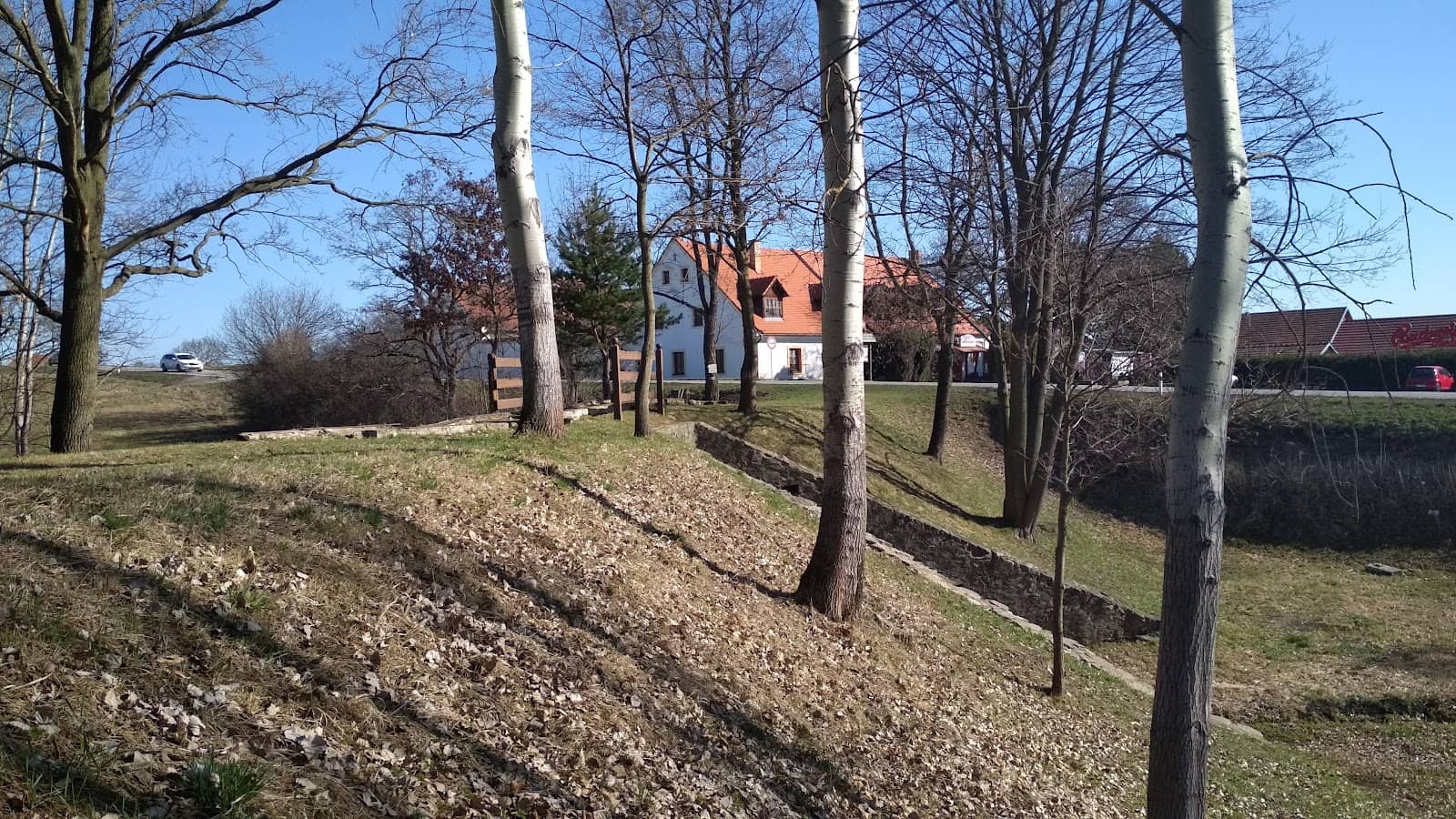
A national cultural monument, this site preserves remnants of Europe's first public horse-drawn railway, featuring a historic stone culvert bridge.
Highlights
Must-see attractions

Social
From TikTok & Reddit
Best Time
Less overgrown, pleasant weather
Linecké předměstí
Best Time
Less overgrown, pleasant weather
Highlights
Must-see attractions
A national cultural monument, this site preserves remnants of Europe's first public horse-drawn railway, featuring a historic stone culvert bridge.
"A piece of history discovered by chance, a beautiful historical monument of the former horse-drawn carriage."

🚗 Parking Advice
Use the Velešín parking lot across the road for easier access. Motorbikes can get closer.
🌿 Embrace Nature
The site is a bit overgrown; enjoy the natural setting.
Highlights
Discover the most iconic attractions and experiences
The Stone Culvert Bridge
Velešín
A remarkably preserved stone bridge, a testament to early European railway engineering.
Remnants of the Horse-Drawn Railway
Near Velešín
See sections of the original tracks and sleepers from the historic České Budějovice-Linz line.
Plans like a pro.
Thinks like you
Planning Your Visit
Accessing the Historic Bridge
Understanding Its Significance
Best Times
Insider Tips
from TikTok, Instagram & Reddit
🚗 Parking Advice
Use the Velešín parking lot across the road for easier access. Motorbikes can get closer.
🌿 Embrace Nature
The site is a bit overgrown; enjoy the natural setting.
📱 Interactive App
Consider using the interactive application for a richer experience.
🍽️ Nearby Dining
The restaurant 'U koňské dráhy' is conveniently located nearby.
Tips
from all over the internet
🚗 Parking Advice
Use the Velešín parking lot across the road for easier access. Motorbikes can get closer.
🌿 Embrace Nature
The site is a bit overgrown; enjoy the natural setting.
📱 Interactive App
Consider using the interactive application for a richer experience.
🍽️ Nearby Dining
The restaurant 'U koňské dráhy' is conveniently located nearby.
What Travellers Say
Reviews Summary
Visitors appreciate Linecké předměstí as a significant historical monument, particularly the well-preserved stone culvert bridge and remnants of the early horse-drawn railway. Its status as part of Europe's first public railway adds to its allure. However, some reviewers note that the site could benefit from more frequent maintenance, as it tends to become overgrown with grass.
"You can drive directly to the bridge with a motorbike. The official Velešín parking lot is across the road.
The stone culvert of the Velešín railway (culverts are used to drain water, bridge streams, etc.) is one of the two stone bridges of the České Budějovice-Linz horse-drawn railway. The bridge is a national cultural monument. The static securing of the bridge (replacing the missing stones) was carried out by the owner of the land, Mr. Josef Bartoš, in the spring of 2011.
The former horse-drawn railway led from České Budějovice to Linz and was built in 1825–1830. František Josef Gerstner came up with the recommendation to build a horse-drawn railway as early as 1807, and his son, František Antonín Gerstner, carried out the construction. In 1827, the northern part of the railway was put into trial operation, in 1832 regular goods transport began, and passenger transport was introduced later. There were 10 stations on the 128.7 km long line, 6 of which were so-called changeover stations. One of these stations, Veselka–Holkov, is located near the bridge. The journey from Linz to Budějovice took 14 hours. The horse-drawn railway (koňka) was the predecessor of later railways and electric trams. The carriages on the light railway superstructure were pulled by a horse-drawn carriage – the horses were able to pull many times heavier loads on the tracks than on a foreman's wagon. The wagon was pulled by two horses, harnessed one behind the other. Horse-drawn railways were built at the beginning of the 19th century all over the world.
The České Budějovice–Linz railway was the first public railway in Europe. At that time, there were a number of private horse-drawn railways. Horse-drawn railways operated for a relatively short time; they were replaced by a steam railway in 1872."
Petr Žák (Jednou stopou Českem)
"A beautiful historical monument of the former horse-drawn carriage from České Budějovice to Linz. Part of the wooden track with rails and an arched bridge have been preserved. It is a bit of a shame that the place is a bit overgrown with grass, it would deserve more frequent maintenance. The place is classified as a technical monument of the Czech Republic."
David Chalupný
"Part of the educational tourist trail, on the other side of the street is the restaurant "U koňské dráhy". You can see several meters of tracks that were not worth tearing up, and a bridge that was not worth blowing up, neither for the partisans nor the retreating Wehrmacht. So the beautiful remains have been preserved to this day, but somehow they are starting to grow over with grass. A horse-drawn carriage has not passed here for a damn long time."
Leoš Kobr
What People Like
What People Dislike
Frequently Asked Questions
🚇 🗺️ Getting There
The site is accessible by road, with a parking lot available across from the Velešín official parking. Motorbikes can drive closer to the bridge itself.
It's a historical monument located near Velešín. Look for signs related to the former horse-drawn railway.
Information on direct public transport is limited, but it's best accessed by car or motorbike.
Walking around the preserved tracks and bridge is recommended. An interactive app can enhance your visit.
Navigate towards Velešín and look for signs indicating the historical railway monument.
🎫 🎫 Tickets & Entry
Entry to the historical site and viewing the bridge is generally free, as it's an outdoor monument.
As an outdoor historical monument, it's accessible at any time. However, visiting during daylight hours is recommended for better viewing.
Parking fees, if any, are typically minimal for the Velešín lot. It's advisable to check local signage.
Yes, the site is accessible year-round, though spring and summer offer the best conditions for exploration.
While official guided tours might be rare, an interactive application is available to learn about the history.
🎫 🧭 Onsite Experience
You can see a preserved stone culvert bridge and sections of the original horse-drawn railway tracks and sleepers.
Some visitors note that the site can be a bit overgrown with grass, suggesting it could benefit from more frequent maintenance.
It's a national cultural monument, part of the first public railway in Europe, built between 1825-1830.
While you can see the tracks and sleepers, it's best to observe them from the designated paths to preserve the historical remnants.
Kids might find the historical aspect interesting, especially with the interactive app. It's more of a historical site than an activity-based attraction.
🍽️ 🍽️ Food & Dining
Yes, the restaurant 'U koňské dráhy' is located on the other side of the street from the monument.
There are no specific picnic facilities, but you could potentially have a picnic nearby, respecting the historical nature of the site.
It's a local restaurant, likely serving traditional Czech cuisine, but it's best to check their current offerings.
Information on cafes or snack bars is limited; the nearby restaurant is the most prominent dining option.
It's a good idea to eat before or after your visit, as dining options directly at the monument are non-existent.
📸 📸 Photography
Capture the impressive stone culvert bridge and the preserved sections of the horse-drawn railway tracks.
Late afternoon light can create beautiful shadows on the stone bridge. Spring and autumn offer good natural colors.
No specific restrictions are mentioned, but be respectful of the historical monument and its surroundings.
Drone usage regulations vary by location; it's advisable to check local laws and obtain any necessary permissions before flying.
A wide-angle lens is useful for capturing the scale of the bridge and tracks. A standard zoom lens will also work well.
For Different Travelers
Tailored advice for your travel style
👨👩👧 Families with Kids
🚶 History Buffs & Railway Enthusiasts
Deep Dives
In-depth insights and expert knowledge
The Historic Horse-Drawn Railway
The preserved stone culvert bridge at Linecké předměstí is a national cultural monument and a crucial part of this historical line. It's one of two stone bridges from the original construction. The carriages on this light railway were pulled by horses, a testament to the ingenuity of the time, allowing for heavier loads than on regular roads. The railway operated until 1872, when it was eventually replaced by steam technology.
Despite its historical importance, some visitors note that the site, including the sleepers and tracks, is becoming overgrown with grass, suggesting a need for more consistent maintenance. However, the preservation of these structures, which even survived potential destruction during wartime, is a testament to their enduring significance.
Visiting and Experiencing the Site
While the historical remnants are fascinating, some reviews mention that the area can be a bit overgrown with grass. This natural setting adds a certain charm, but it's worth noting for accessibility and photographic considerations.



Social
from TikTok, Instagram & Reddit