Casa Natal de Carlos J. Finlay
Birthplace of Dr. Carlos J. Finlay, discoverer of the mosquito vector for Yellow Fever, set in a beautiful 18th-century Cuban Colonial home.
Highlights
Must-see attractions

Social
From TikTok & Reddit
Best Time
Fewer crowds, peaceful exploration
Casa Natal de Carlos J. Finlay
Best Time
Fewer crowds, peaceful exploration
Highlights
Must-see attractions
Birthplace of Dr. Carlos J. Finlay, discoverer of the mosquito vector for Yellow Fever, set in a beautiful 18th-century Cuban Colonial home.
"A small but historically significant museum, a must-visit for understanding medical history and Cuban heritage."

Allow ample time
Take your time to absorb the history and architectural details. It's a small but rich experience. :clock1:
Photography friendly
Capture the beautiful colonial details and historical exhibits. :camerawithflash:

Highlights
Discover the most iconic attractions and experiences
Birthplace of a Medical Pioneer
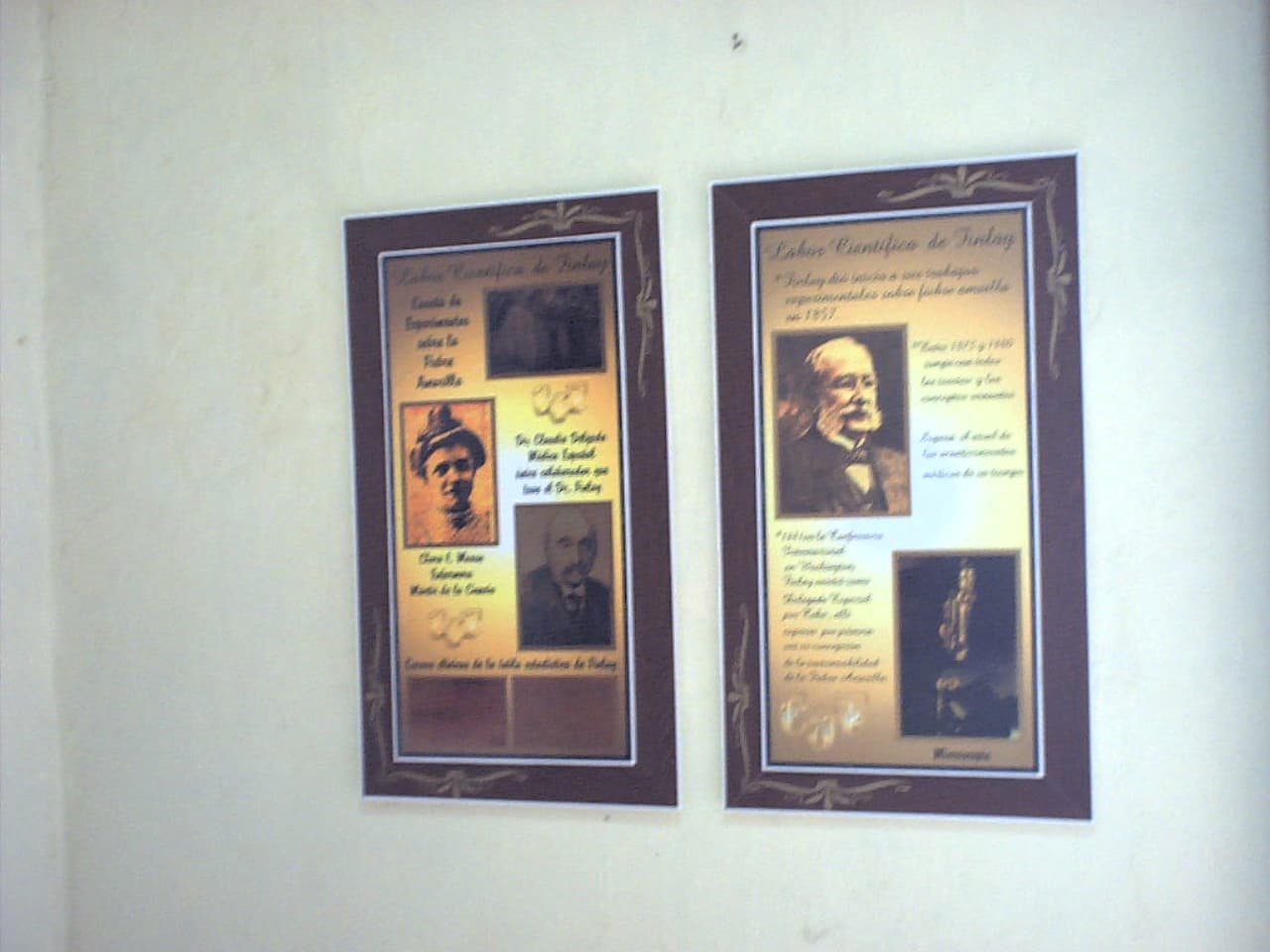
Explore the rooms where Dr. Carlos J. Finlay was born, the brilliant mind behind the Yellow Fever transmission theory.
Cuban Colonial Architecture
Admire the late 18th-century building's Mudejar and Moorish-influenced design, a testament to Cuban heritage.

Yellow Fever Research Legacy
Learn about Finlay's groundbreaking work and his discovery of the Aedes aegypti mosquito's role in disease transmission.
Plans like a pro.
Thinks like you
Planning Your Visit
A Glimpse into Medical History
Architectural Charm
Best Times
Insider Tips
from TikTok, Instagram & Reddit
Allow ample time
Take your time to absorb the history and architectural details. It's a small but rich experience. :clock1:
Photography friendly
Capture the beautiful colonial details and historical exhibits. :camerawithflash:
Learn about Finlay
Research Dr. Finlay's contributions beforehand to fully appreciate the museum's significance. :books:
Tips
from all over the internet
Allow ample time
Take your time to absorb the history and architectural details. It's a small but rich experience. :clock1:
Photography friendly
Capture the beautiful colonial details and historical exhibits. :camerawithflash:
Learn about Finlay
Research Dr. Finlay's contributions beforehand to fully appreciate the museum's significance. :books:
What Travellers Say
Reviews Summary
Visitors praise Casa Natal de Carlos J. Finlay as a small but historically significant museum, highlighting its importance in understanding Dr. Carlos J. Finlay's groundbreaking work on Yellow Fever. The well-preserved Cuban Colonial architecture is also a major draw, offering a charming glimpse into the past. While intimate, the site provides a valuable educational experience for those interested in medical history and Cuban heritage.
"A small museum, the birthplace (December 3, 1833) of the eminent Cuban physician and scientist Carlos Juan Finlay y Barrés, who, through his research on Yellow Fever (Black Vomit), discovered and postulated the theory of the importance of the biological vector (Aedes aegypti mosquito) in the transmission of infectious diseases.
The building dates from the late 18th century, featuring Cuban Colonial architecture influenced by Mudejar and Moorish art."
José Alberto
What People Like
What People Dislike
Frequently Asked Questions
🚇 🗺️ Getting There
The museum is located in Havana, Cuba. It's accessible by taxi or local transport. Many visitors find it convenient to combine with other attractions in the Old Havana area. :taxi:
Parking in Old Havana can be challenging. It's often best to use taxis or public transport and walk to the museum. :bus:
🎫 🎫 Tickets & Entry
Opening hours can vary, so it's advisable to check locally or with your accommodation. Typically, it's open during standard daytime hours on weekdays. :clock1:
Admission fees are generally very affordable, reflecting the museum's status as a historical site. Check for current pricing upon arrival. :moneybag:
For this smaller museum, advance booking is usually not necessary. You can typically purchase tickets upon arrival. :ticket:
🎫 🧭 Onsite Experience
You'll see exhibits detailing Dr. Finlay's life and his pivotal research on Yellow Fever, as well as the preserved colonial architecture of his birth home. :microscope:
While educational, the focus on medical history might be more engaging for older children or those with an interest in science. :child:
A visit usually takes about 30-60 minutes, allowing time to appreciate the exhibits and the building's ambiance. :stopwatch:
Information on guided tours may be limited. It's a place best explored at your own pace, absorbing the historical context. :walking:
🍽️ 🍽️ Food & Dining
Yes, the museum is located in Old Havana, an area rich with paladares (private restaurants) and cafes offering Cuban cuisine. :forkandknife:
Food and drinks are generally not permitted inside the museum to preserve the exhibits and historical setting. :nofoodsymbol:
📸 📸 Photography
Photography is usually permitted for personal use, but flash might be restricted to protect the artifacts. Always check for signage. :camerawithflash:
The colonial courtyards, intricate doorways, and preserved rooms offer beautiful photographic opportunities. Capture the architectural details. :iphone:
For Different Travelers
Tailored advice for your travel style
History Buffs & Medical Enthusiasts
Architecture Admirers
Deep Dives
In-depth insights and expert knowledge
The Legacy of Carlos J. Finlay
Visitors can explore exhibits that chronicle Finlay's life, his scientific journey, and the impact of his work. Understanding his dedication and the challenges he faced adds a profound layer to the visit, highlighting the importance of scientific inquiry and perseverance. It’s a chance to connect with a crucial moment in the fight against tropical diseases.
Cuban Colonial Architecture
Walking through the Casa Natal, you can appreciate the characteristic features of colonial homes: spacious rooms, high ceilings, and often a central courtyard designed for ventilation and natural light. The preservation of these architectural elements offers a tangible link to Cuba's past, providing a serene and historically rich environment. It’s a visual treat for anyone interested in historical buildings and design.
Social
from TikTok, Instagram & Reddit