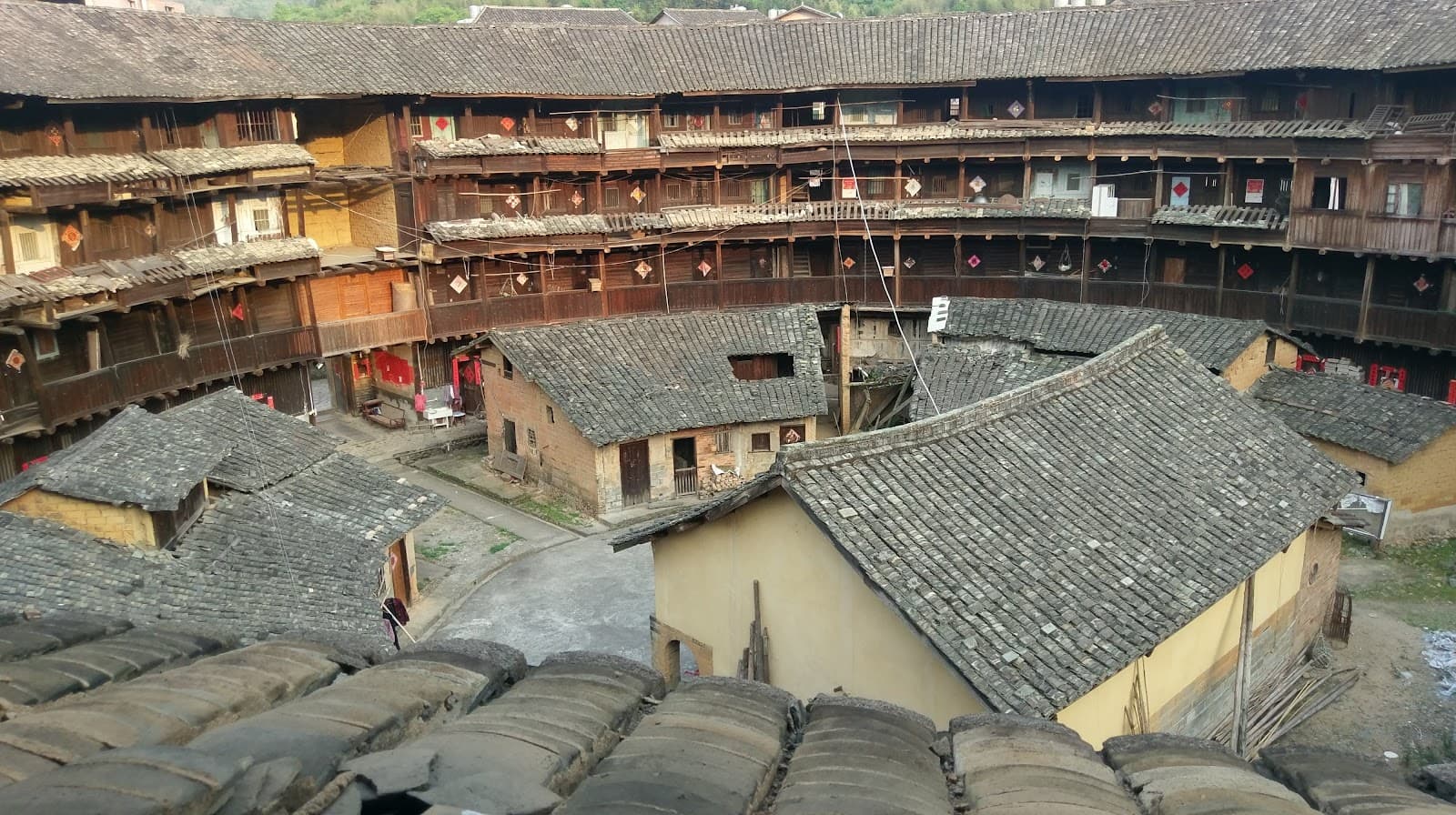
Traditional Tea House Yongding
Ancient Hakka communal dwellings, fortress-like Tulou villages offering a glimpse into centuries of Chinese rural life and architecture.
Highlights
Must-see attractions

Social
From TikTok & Reddit
Best Time
Fewer crowds, peaceful exploration
Traditional Tea House Yongding
Best Time
Fewer crowds, peaceful exploration
Highlights
Must-see attractions
Ancient Hakka communal dwellings, fortress-like Tulou villages offering a glimpse into centuries of Chinese rural life and architecture.
"Living relics of China’s rural wisdom, blending defense, community, and stunning architecture."

Plan Your Travel Time
Buses from Xiamen take 3+ hours. Consider a mini-bus to Longyan for faster train options . :bus:
Embrace the Scale
These are massive communal homes! Explore their unique circular design and living spaces . :housewithgarden:
Highlights
Discover the most iconic attractions and experiences
The Iconic Tulou Dwellings
Various villages within the Fujian Tulou area
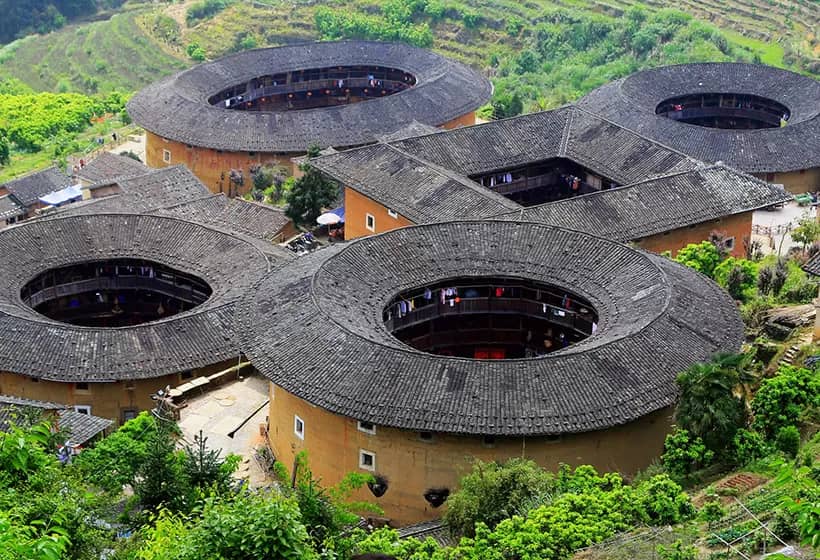
Massive, circular fortress-like homes, a testament to Hakka communal living and ingenious architecture.
Hakka Culture and History
Inside the Tulou villages
Discover the rich heritage of the Hakka people, their traditions, and the stories held within these ancient walls.

Scenic Rural Landscapes
Surrounding areas of Fujian Tulou
Experience the romantic beauty of Fujian's countryside, with rolling hills and traditional village life.
Plans like a pro.
Thinks like you
Planning Your Visit
Embrace the Journey to Tulou
Immerse in Living History
Best Times
Insider Tips
from TikTok, Instagram & Reddit
Plan Your Travel Time
Buses from Xiamen take 3+ hours. Consider a mini-bus to Longyan for faster train options. :bus:
Embrace the Scale
These are massive communal homes! Explore their unique circular design and living spaces. :housewithgarden:
Engage with Locals
Experience the living culture; some residents still practice traditional ways of life. :people_hugging:
Wear Comfortable Shoes
You'll be doing a lot of walking within the villages. :athletic_shoe:
Tips
from all over the internet
Plan Your Travel Time
Buses from Xiamen take 3+ hours. Consider a mini-bus to Longyan for faster train options. :bus:
Embrace the Scale
These are massive communal homes! Explore their unique circular design and living spaces. :housewithgarden:
Engage with Locals
Experience the living culture; some residents still practice traditional ways of life. :people_hugging:
Wear Comfortable Shoes
You'll be doing a lot of walking within the villages. :athletic_shoe:
Entrance Fee
Expect an entrance fee of around 90 Yuan. :ticket:
What Travellers Say
Reviews Summary
Visitors consistently praise Fujian Tulou for its unique historical architecture and the immersive cultural experience of living villages. The journey can be long, but the sight of these ancient, fortress-like dwellings and the insight into Hakka life make it a highly rewarding destination. Some find the entrance fee a bit high, and dining options can be limited.
"Tulou is a one of oldest living village with ancient architecture art and culture. There are building including numbers of rooms (apartments) with having one entrance. Those are can be seen as the fortress."
Prof Gamini Ranasinghe
"Not so easy to reach but definitely worth it. Old historical buildings, oldest one is about 300 years old. The village is full of life, with beautiful views. Area is big, electric cars are available. When we visit it wasn't crowded. Entrance fee = 90 Yuan. You can get there directly from Xiamen by bus. This takes over 3h. There is also a mini bus to Longyan where you can switch to a fast train."
Klaudia Przezdziecka
"Great for history and some great tea!"
Victor Chen
What People Like
What People Dislike
Frequently Asked Questions
🚇 🗺️ Getting There
The most common way is by bus from Xiamen, which takes over 3 hours. Alternatively, you can take a mini-bus to Longyan and then switch to a fast train for a potentially quicker journey.
Electric cars are available for getting around the larger areas once you arrive.
It's not the easiest to reach, but many travelers find it absolutely worth the effort due to the unique historical and cultural significance.
While direct driving is possible, public transport options like buses are widely used and recommended for navigating to and within the Tulou areas.
Yes, many tour operators offer day trips or multi-day tours from Xiamen and other nearby cities, which can simplify transportation and provide guided insights.
Once you're in the Tulou area, electric cars are available to help you navigate the larger villages and attractions.
🎫 🎫 Tickets & Entry
The entrance fee is approximately 90 Yuan per person. This fee typically grants access to the main Tulou villages and their historical sites.
For individual travelers, booking in advance is usually not necessary, especially if visiting on weekdays. However, for group tours or during peak seasons, it's advisable to check with tour operators.
The Tulou villages are generally open to visitors throughout the day, as they are living communities. However, specific cultural exhibits or museums within the Tulou might have set operating hours.
While a general entrance fee is common, some areas or specific Tulou buildings might have separate small charges for entry or guided tours.
The standard entrance fee is generally fixed. Discounts might be available for students, seniors, or children, so it's worth inquiring at the ticket counter.
📸 📸 Photography
The iconic circular architecture of the Tulou itself is a primary subject. Look for vantage points that capture the scale and symmetry, especially during sunrise or sunset for dramatic lighting.
The surrounding rural landscapes, with their peach and plum blossoms in spring, also offer beautiful photographic opportunities.
Generally, photography is allowed in public areas. However, always be respectful of residents' privacy when photographing inside their homes or private spaces within the Tulou.
Early mornings and late afternoons offer the best natural light for photography, minimizing harsh shadows and creating a warmer atmosphere. Sunrise and sunset can be particularly magical.
Drone usage may be restricted in certain areas due to privacy concerns or local regulations. It's best to check with local authorities or guides before flying a drone.
A wide-angle lens is excellent for capturing the grandeur of the Tulou structures. A telephoto lens can be useful for details or distant landscapes. Don't forget a sturdy tripod for low-light conditions.
🎫 🏛️ History & Culture
Fujian Tulou are traditional communal living structures built by the Hakka people, dating back centuries, with the oldest being around 300 years old. They were designed as fortified dwellings to protect villagers from bandits and wild animals, blending defense with community life.
The Tulou were built by the Hakka ethnic group, who migrated to Fujian province. They are renowned for their unique architectural style and communal living arrangements, reflecting a strong sense of unity and self-sufficiency.
The circular design was both practical for defense, offering fewer blind spots, and symbolic of unity and equality among residents. Each Tulou housed an entire clan or community, with shared resources and living spaces.
Yes, many Tulou are still inhabited by descendants of the original builders, making them living villages with a vibrant cultural heritage. You might encounter residents going about their daily lives.
The She people are another ethnic minority in Fujian, known for their distinct culture and traditions, which are also a part of the region's rich tapestry, sometimes intertwined with the Hakka heritage.
🍽️ 🍽️ Food & Dining
You can find authentic Hakka cuisine, which often features hearty, flavorful dishes. Look for local specialties like Hakka stir-fries, stuffed tofu, and preserved meats. Some residents might offer home-cooked meals.
While some Tulou villages have small eateries or tea houses catering to tourists, the dining options might be limited. It's advisable to check in advance or be prepared for simpler fare.
Yes, tea is a significant part of Fujian culture. You can often find opportunities to sample local teas, and some places may offer traditional tea ceremonies.
Keep an eye out for local snacks that reflect the region's agricultural products. Dried fruits, local pastries, and preserved vegetables are common.
While many Hakka dishes are meat-centric, you can usually find vegetable stir-fries and tofu dishes. It's always a good idea to communicate your dietary needs.
For Different Travelers
Tailored advice for your travel style
👨👩👧 Families with Kids
🚶 Budget Travelers
📸 Photography Enthusiasts
Deep Dives
In-depth insights and expert knowledge
The Architectural Marvel of Tulou
The layout within a Tulou is highly organized. The ground floor usually contains kitchens and dining areas, the second floor is for storage, and the upper floors house residential rooms. Central courtyards often serve as gathering spaces and sometimes even for agricultural activities like drying crops. This communal living arrangement fostered a strong sense of unity and self-sufficiency among residents.
Recognized as a UNESCO World Heritage site, Fujian Tulou represents a remarkable example of traditional Chinese vernacular architecture and a unique model of communal living that has endured for centuries. The sheer scale and the intricate internal organization of these earthen fortresses continue to fascinate visitors.
Living History: The Hakka People
Life within the Tulou was communal, with families sharing common spaces and resources. This fostered a strong sense of community and mutual support, essential for survival in earlier times. The Hakka culture emphasizes resilience, hard work, and strong family ties. Visitors can still witness elements of this enduring culture, with some Tulou remaining inhabited by descendants of the original builders.
Experiencing the Tulou offers a glimpse into a way of life that is both ancient and remarkably preserved. It's an opportunity to understand the historical context that shaped the Hakka people and their extraordinary architectural achievements. The wisdom and charm of this ancient community are palpable within these living relics.
Navigating Your Visit: Practicalities
Be prepared for an entrance fee, typically around 90 Yuan, which grants access to these historical wonders.
For photography enthusiasts, the unique circular architecture and the surrounding rural landscapes offer stunning visual opportunities. Early mornings and late afternoons provide the best light.
Social
from TikTok, Instagram & Reddit