Baipu Temple
Discover Baipu Temple, a hidden gem in Beijing's mountains, blending Liao Dynasty history with unique, striking Buddhist art and architecture.
Highlights
Must-see attractions

Social
From TikTok & Reddit
Best Time
Fewer crowds, peaceful atmosphere
Baipu Temple
Best Time
Fewer crowds, peaceful atmosphere
Highlights
Must-see attractions
Discover Baipu Temple, a hidden gem in Beijing's mountains, blending Liao Dynasty history with unique, striking Buddhist art and architecture.
"An interesting experience and amazing trip with unique and intricate sculptures."
Pack Snacks & Water 🍎💧
Bring your own food and drinks as options are limited near the temple.
Wear Comfy Shoes 👟
You'll be doing a lot of walking on varied terrain, so comfortable footwear is essential.
Highlights
Discover the most iconic attractions and experiences
Yuanzheng Master Pagoda
To the right of the Main Hall
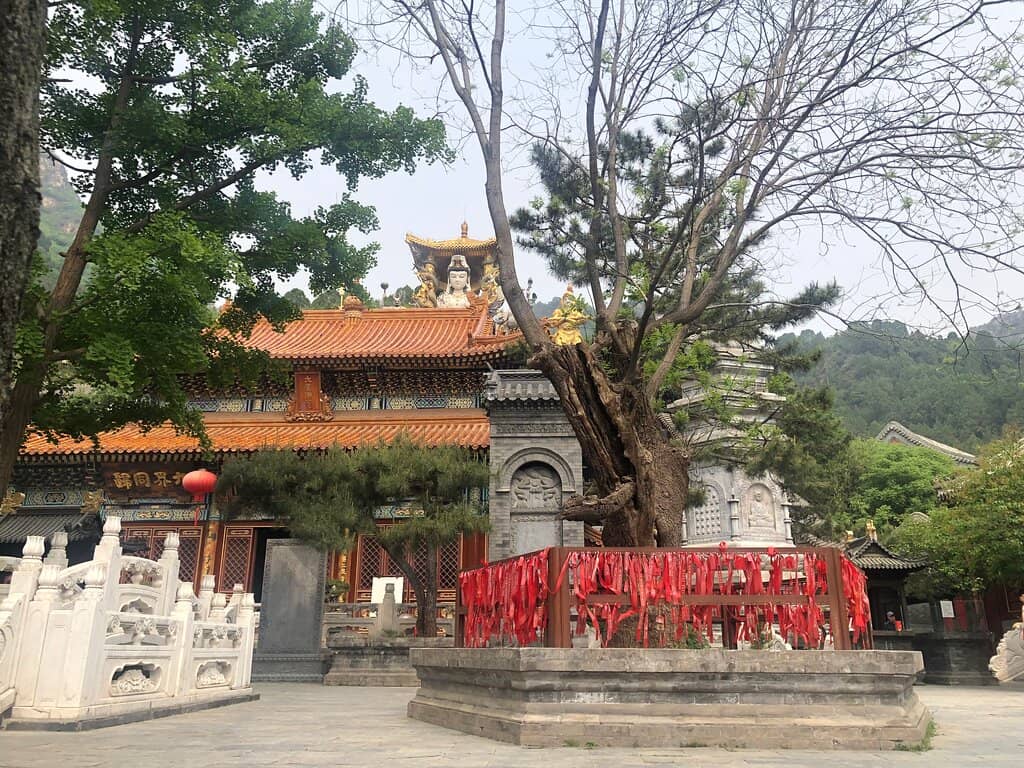
A rare Jin Dynasty pagoda, a unique blend of dense-eaves and covered-bowl styles, standing tall.
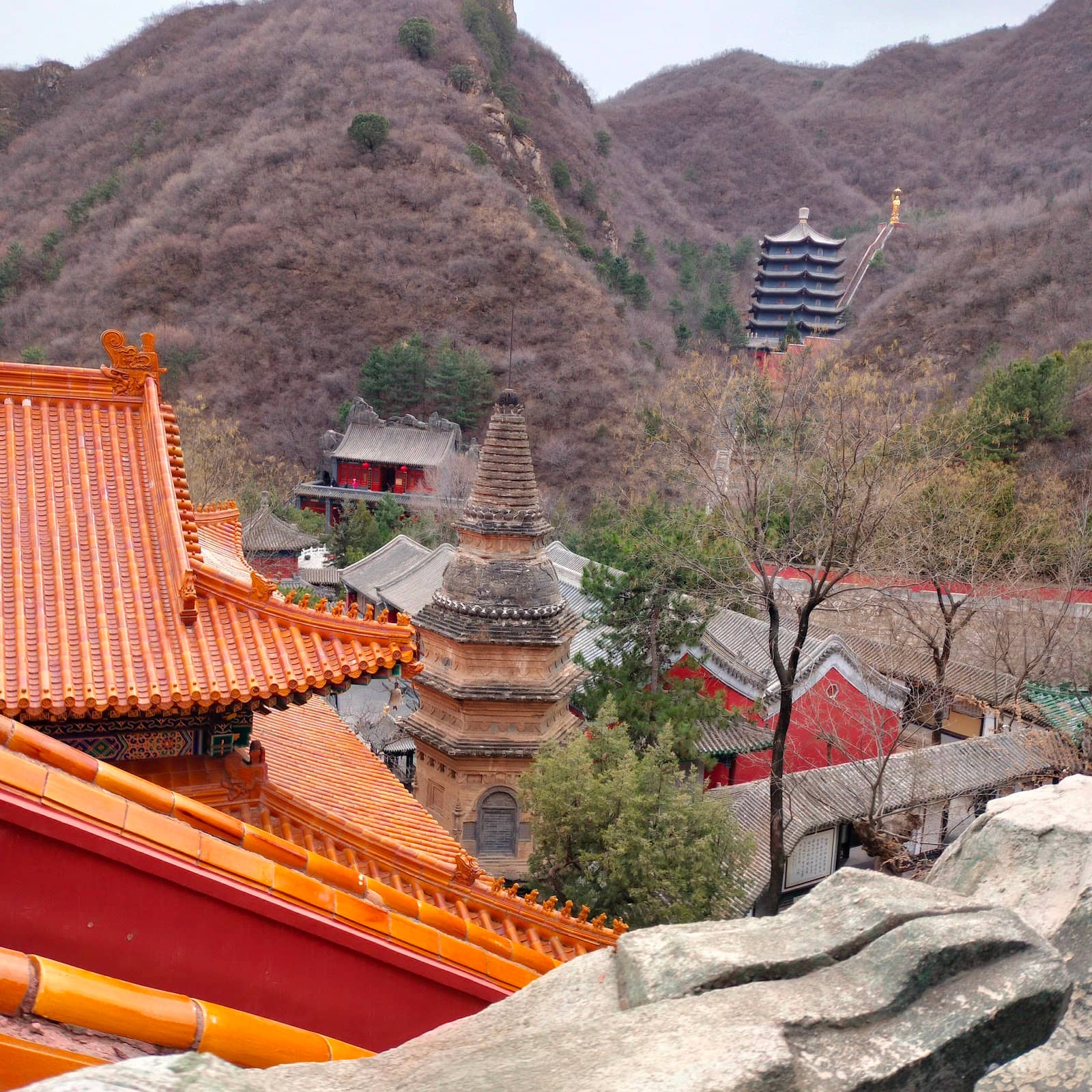
Intricate Sculptures & Statues
Throughout the temple grounds
Discover surprising statues with fangs and claws, alongside colorful Buddhas and dragon motifs.
Liao Dynasty Architecture
Main Hall and surrounding structures
Explore remnants of a temple dating back to the Liao Dynasty, showcasing ancient Buddhist design.
Plans like a pro.
Thinks like you
Planning Your Visit
Getting There & Timing
What to Bring
Best Times
Insider Tips
from TikTok, Instagram & Reddit
Pack Snacks & Water 🍎💧
Bring your own food and drinks as options are limited near the temple.
Wear Comfy Shoes 👟
You'll be doing a lot of walking on varied terrain, so comfortable footwear is essential.
Allow Ample Time ⏳
Plan for at least half a day to fully explore the temple and its surroundings.
Respectful Attire 🙏
Dress modestly out of respect for this active Buddhist temple.
Tips
from all over the internet
Pack Snacks & Water 🍎💧
Bring your own food and drinks as options are limited near the temple.
Wear Comfy Shoes 👟
You'll be doing a lot of walking on varied terrain, so comfortable footwear is essential.
Allow Ample Time ⏳
Plan for at least half a day to fully explore the temple and its surroundings.
Respectful Attire 🙏
Dress modestly out of respect for this active Buddhist temple.
What Travellers Say
Reviews Summary
Visitors find Baipu Temple to be an interesting and amazing experience, appreciating its unique sculptures and historical Liao Dynasty architecture. While the journey requires some effort and amenities are limited, the spiritual atmosphere and distinctive art make it a worthwhile visit for those seeking cultural depth.
"All good but remember to bring your own food and drink"
RV EU 16 CAMPER
"It was an interesting experience and amazing trip"
Mohammed Ahmed
"At the foot of Jincheng Mountain, north of Yubai Village, Yanchi Town, Mentougou District, Beijing, China, lies a Han Buddhist temple.
The temple was first built in the early Qiantong period of the Liao Dynasty. It earned the name "Baipu Temple" because of its proximity to two waterfalls. At its peak, Baipu Temple boasted a hundred monks. The main hall enshrined a thousand Buddhas circumambulating Vairocana, one of only two in China. The bell tower boasted a bronze bell approximately 1.5 meters in diameter. The temple also boasted a water-controlling tower, a Medicine Buddha tower, and a stupa-style, dense-eaves tower. The temple boasted 11 sub-courtyards.
In the early years of the Republic of China, a warlord, attracted by the auspicious feng shui of Baipu Temple, planned to relocate his ancestral tombs there. He subsequently led his troops to destroy the temple. Residents of Yubai Village, the closest village, decided to rebuild the temple, but the resulting structure was far smaller than the original, consisting of a three-story courtyard. The three-story Baipu Temple, with its three-story courtyard, was ultimately destroyed during the Cultural Revolution. The Thousand Buddhas Circling the Vairocana Buddha, which the warlords dared not destroy, were destroyed, and the large bronze bell was sold as a "loudspeaker" for propaganda. Only the stupa-shaped Liao Dynasty pagoda remains.
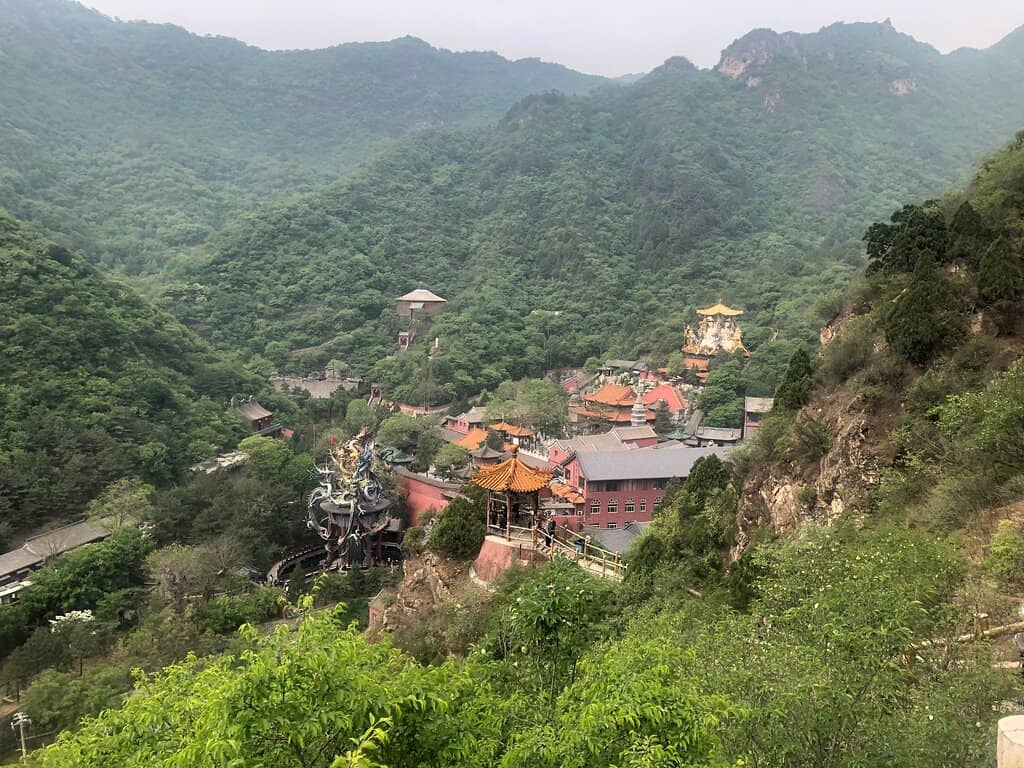
Today, Baipu Temple boasts a mountain-side terraced structure encompassing the mountain gate, the Chariot God Hall, the Heavenly King Hall, two-story dormitories, a bell tower, a drum tower, a guest hall, a Dharma distribution center, and the Main Hall. The Liao Dynasty pagoda, the Yuanzheng Master Pagoda, stands to the right of the Main Hall, while the newly built Medicine Buddha Pagoda is to the left. Flanking these are the Jialan Hall, Medicine Buddha Hall, Amitabha Hall, Patriarch Hall, and monk quarters. Circular corridors encircle the hall, winding their way to the Dharma Hall and Sutra Library. To the left of the circular corridor is the abbot's chamber, while to the right is a small stone bridge leading to the release pond, the dining hall, and a four-story building. The hall, dining hall, and buildings are interconnected. To the southwest of Baipu Temple lies the Ksitigarbha Hall, a white marble statue of Guanyin, the Jieying Hall, and a 10-meter-tall bronze statue of Ksitigarbha Bodhisattva. In front of the statue stands a seven-story stupa housing the remains of the Buddha. Also located are the God of Wealth Hall, a release pond, a well house, and a boiler room. To the east of Baipu Temple are two monasteries, and behind them is the Mituo Village Nursing Home. In front of the two monasteries is the Guanyin Pavilion, housing a 6-meter-tall statue of Guanyin carved from a fossilized camphor tree. Past the Guanyin Pavilion is a winding stone staircase leading to the Medicine Buddha Guanyin Cave.
Baipu Temple is a jungle-style monastery designed and built in accordance with Buddhist rituals, offering a comprehensive range of services for both monks and laypeople, from spiritual practice to chanting for the deceased, passing away, and the storage of their remains.
The Yuanzheng Pagoda, built on October 1, the sixth year of the Huangtong reign of the Jin Dynasty (1146), is a combination of a dense-eaves and a covered-bowl pagoda. This pagoda is a solid brick and stone structure with a hexagonal plan. The upper half is a covered bowl, while the lower half is a dense-eaves style. The pagoda inscription records the life of Master Yuanzheng and the temple's construction. The lower part of the pagoda rests on a Sumeru pedestal, with three layers of dense-eaves above. Above these layers, double-layered lotuses support the covered bowl, which is then topped with lotuses. Above this, an eleven-tiered wheel rests on a hollow iron ball, with an iron brake rod inserted into the ball. Only the brake seat and brake rod remain of the pagoda's top.
The pagoda stands 16.175 meters tall. This pagoda is a rare and dignified structure, a masterpiece of the dense-eaves pagoda of the Jin Dynasty. In 1981, the Mentougou District People's Government designated this pagoda as one of the first batch of Mentougou District Cultural Relics Protection Sites.
On November 18, 2004, the Ancient Architecture Branch of Beijing Urban Construction Yatai Company announced that the restoration of Master Yuanzheng's pagoda had been completed, having passed the joint inspection by the Beijing Municipal Quality Supervision Station and the Mentougou District Cultural Committee. Master Yuanzheng, whose surname was Cao, was born on June 15, 1067, during the reign of Emperor Xianyong of the Liao Dynasty. Legend has it that he radiated white light at birth. He developed a keen interest in Buddhism from a young age and later became a monk. During the Shouchang period of the Liao Dynasty, he resided in Jincheng Mountain, where he lectured and gained increasing influence.
In the early years of the Qiantong reign of the Liao Dynasty (1101), monks and laypeople from Changping, Yuhe, Fanshan, and Huailai raised funds to build Baipu Temple. On March 11, 1134, during the 12th year of the Tianhui reign of the Jin Dynasty, Master Yuanzheng passed away at Baipu Temple. After cremation, his remains yielded 300 relics, which were enshrined in this pagoda."
紀Chi, 丫hui (紀先生)
What People Like
What People Dislike
Frequently Asked Questions
🚇 🗺️ Getting There
Baipu Temple is located about a 1.5-hour drive from central Beijing, in the village of Yubai. You can hire a taxi or use a ride-sharing service. Public transport options are limited, so driving is generally the most convenient way to reach the temple. +1
Public transport to Baipu Temple is not straightforward. It's best to arrange private transportation like a taxi or car service from Beijing, as it's situated in a more remote mountain area.
The driving distance is approximately 1.5 hours from central Beijing, depending on traffic conditions.
Information on dedicated shuttle buses is scarce. It's advisable to confirm local transport options closer to your travel date or opt for private car hire.
The roads leading to Baipu Temple are generally paved, but can be winding as they ascend into the mountains. Drive cautiously.
🎫 🎫 Tickets & Entry
While specific ticket information isn't widely publicized, it's always a good idea to check for any admission fees upon arrival or beforehand. Many temples in China have nominal entry fees.
Opening hours for Baipu Temple are not consistently listed online. It's recommended to visit during daylight hours, typically from morning until late afternoon.
Information on entrance fees is not readily available. It's possible there's a small fee, or it might be free to enter.
Baipu Temple is generally accessible year-round, but weather conditions in the mountains can affect travel during winter months.
As a place of worship, visitors are expected to dress respectfully and behave in a manner befitting a religious site.
🎫 🧭 Onsite Experience
Baipu Temple features a unique jungle-style monastery design, built in accordance with Buddhist rituals. It showcases a blend of Liao Dynasty remnants and newer constructions, including the Yuanzheng Master Pagoda and colorful Buddha statues.
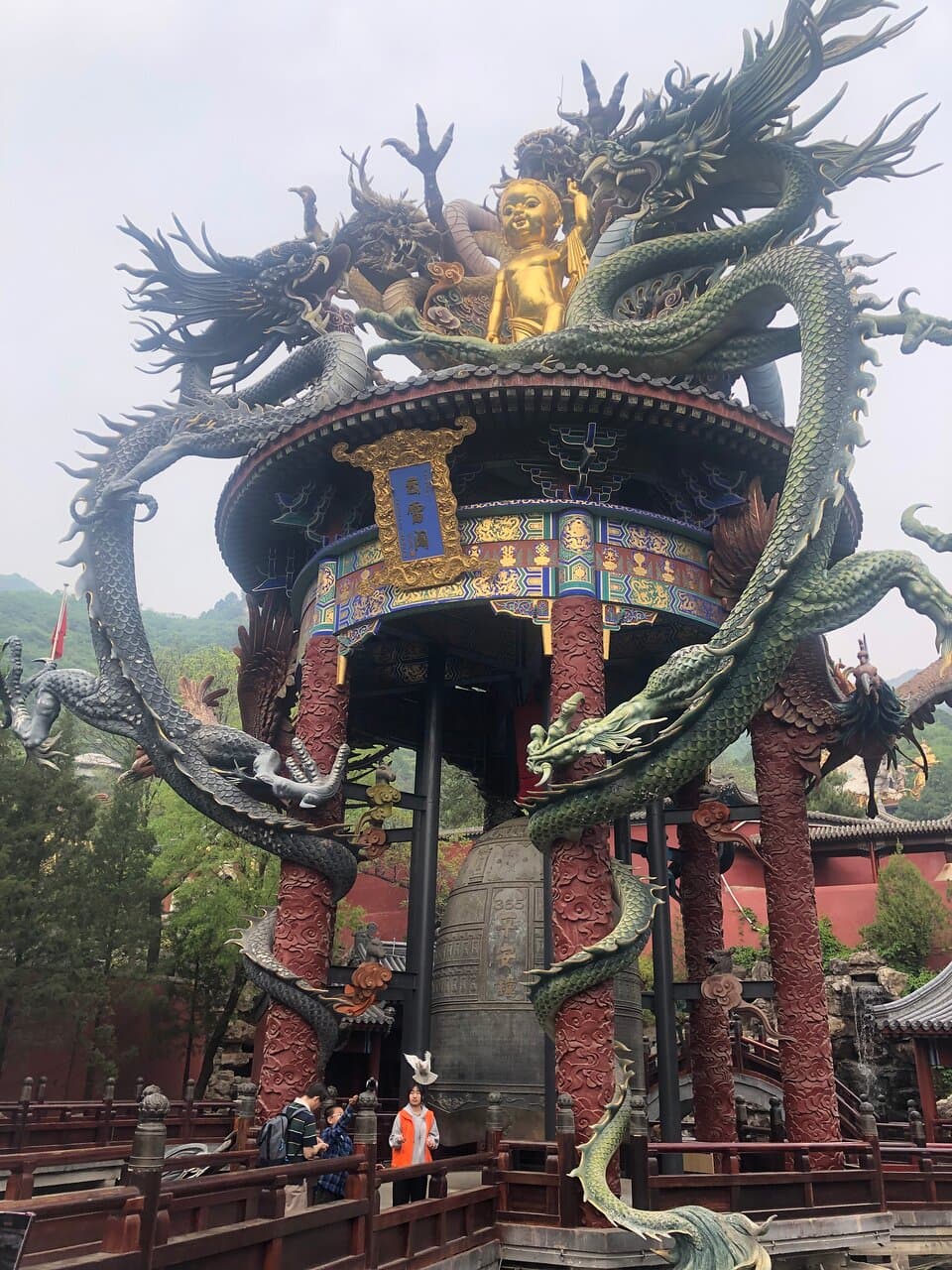
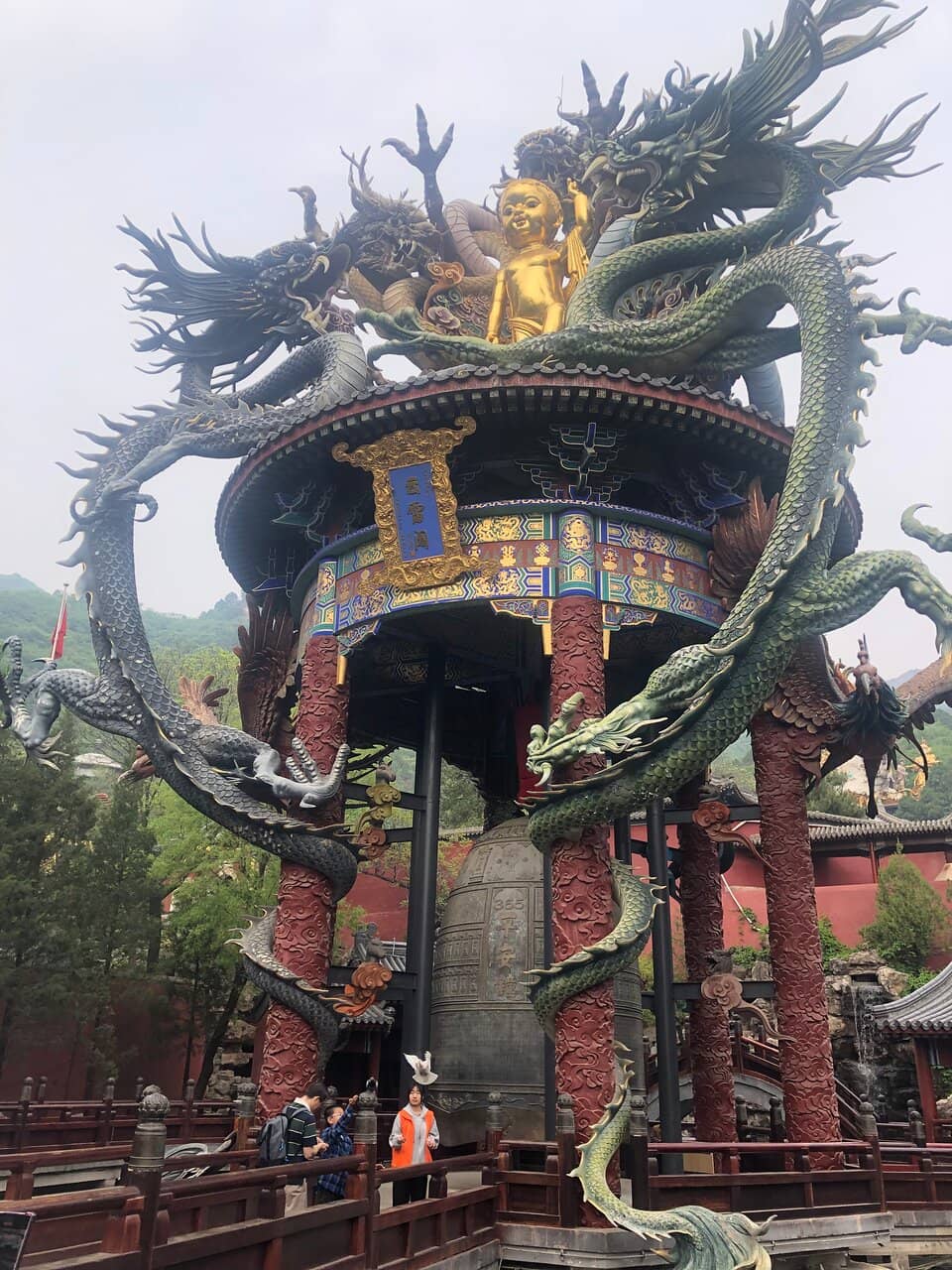
Visitors can expect to see surprising statues, including those with exposed fangs and sharp claws, alongside colorful Buddha statues and intricate dragon motifs. +1
Yes, Baipu Temple offers many unique photographic opportunities with its ancient architecture, intricate sculptures, and mountain setting. +1
It's recommended to allocate at least half a day to explore the temple grounds thoroughly and appreciate its historical and spiritual significance.
Information on official guided tours is limited. You might find local guides in the vicinity, or you can explore independently using information from online resources.
🍽️ 🍽️ Food & Dining
There are very limited dining options directly at Baipu Temple. It is strongly advised to bring your own food and drinks for your visit.
The area around Baipu Temple is quite remote, so dining options are scarce. It's best to eat before you go or pack a picnic.
While not explicitly stated, enjoying a packed meal in a designated area might be permissible, but always be mindful of keeping the temple grounds clean.
Given the limited food availability, it's best to bring your own vegetarian meals if needed.
The most practical approach is to pack a cooler bag with sandwiches, snacks, and plenty of water to ensure you are well-catered for during your visit.
📸 📸 Photography
The Yuanzheng Master Pagoda, the intricate sculptures of Buddhas and dragons, and the overall temple architecture offer excellent photo opportunities. The mountain backdrop also adds to the scenic beauty. +1
Photography rules can vary in temples. It's best to look for signs or ask temple staff if photography is permitted inside the main halls, especially near religious artifacts.
A versatile lens (like a 24-70mm) is useful for capturing both wide shots of the temple and details of the sculptures. A wide-angle lens can be great for the pagoda and overall temple complex.
Drone usage is generally restricted at religious sites and in many public areas in China. It's highly unlikely to be permitted at Baipu Temple.
Morning light can be soft and beautiful for capturing the temple's details, while late afternoon light can create dramatic shadows and highlight the architecture.
For Different Travelers
Tailored advice for your travel style
👨👩👧 Families with Kids
Given the limited food options, packing plenty of snacks and drinks is crucial for keeping younger visitors happy and energized. Consider focusing on the more visually engaging aspects of the temple, like the pagoda and the colorful statues, to maintain their interest. The journey itself, being a drive from Beijing, can also be an adventure for kids.
🚶 Solo Travelers & Backpackers
Remember to pack all your essentials, especially food and water, as amenities are scarce.
📸 Photographers & Culture Enthusiasts
To make the most of your visit, consider visiting on a weekday to avoid crowds and allow ample time to explore different angles and details. Bringing a versatile camera setup, including a wide-angle lens for the overall complex and a telephoto for intricate details, will be beneficial. Be mindful of respectful photography practices within the temple grounds.
Deep Dives
In-depth insights and expert knowledge
The History and Reconstruction of Baipu Temple
Despite these setbacks, the local residents of Yubai Village were instrumental in its rebuilding. However, these subsequent structures were also lost, particularly during the Cultural Revolution. The current Baipu Temple is a testament to modern reconstruction efforts, completed over many years, with significant restoration work on the Yuanzheng Master Pagoda, a rare Jin Dynasty structure, finishing in 2004.
Key historical elements that remain or have been meticulously recreated include the Yuanzheng Pagoda, a unique blend of dense-eaves and covered-bowl styles, and various halls dedicated to different Buddhas and Bodhisattvas. The temple's design follows Buddhist rituals, creating a comprehensive spiritual environment. The presence of the Liao Dynasty pagoda is a significant draw for history enthusiasts, offering a tangible link to the temple's ancient past.
Unique Artistic and Spiritual Elements
The temple's iconography often features dragons, which symbolize power and wisdom in Chinese culture. The presence of dragons coiling around pillars is noted as marking sacred places.
Beyond the visual arts, the spiritual significance of Baipu Temple is deeply rooted in its history and the legends associated with its monks, such as Master Yuanzheng. The temple serves as a place for worship, reflection, and connection to Buddhist traditions, drawing visitors seeking both cultural exploration and spiritual solace. The blend of ancient history, unique art, and active spiritual practice makes Baipu Temple a compelling destination.
Social
from TikTok, Instagram & Reddit