Puente Sucre Yotala
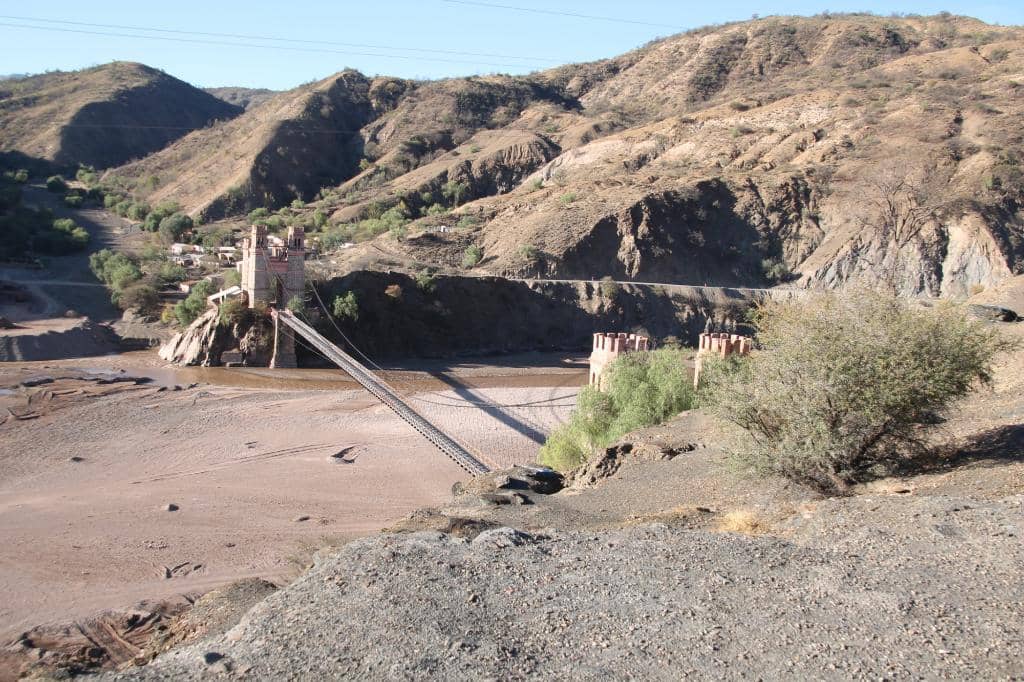
A grand, historic suspension bridge with medieval towers, once Bolivia's longest, now a poignant relic.

Highlights
Must-see attractions

Social
From TikTok & Reddit
Best Time
Clearer views, safer access
Puente Sucre Yotala
Best Time
Clearer views, safer access
Highlights
Must-see attractions
A grand, historic suspension bridge with medieval towers, once Bolivia's longest, now a poignant relic.
"A majestic bridge built by Eiffel. It's a shame it's falling down, and the authorities aren't doing anything."
🚶♂️ Walk with Caution
The bridge deck can be wobbly and is no longer in regular use. Proceed with care and be mindful of your footing.
📸 Capture the Architecture
The medieval towers and suspension design make for dramatic photos. Visit during golden hour for best light.
Quick Facts
Rating
4.4 · 109 reviews
Address
Highlights
Discover the most iconic attractions and experiences
The Grand Suspension Bridge
Spanning the Pilcomayo River
Bolivia's longest suspension bridge, an impressive feat of 1890s engineering with striking medieval towers.

Medieval-Inspired Towers
At both ends of the bridge
Unique architectural elements that add a dramatic, almost castle-like, aesthetic to the bridge.

Pilcomayo River Views
From the bridge
Experience panoramic views of the mighty Pilcomayo River, a significant natural feature of the region.
Plans like a pro.
Thinks like you
Planning Your Visit
A Bridge to the Past
Preservation Concerns
Best Times
Insider Tips
from TikTok, Instagram & Reddit
🚶♂️ Walk with Caution
The bridge deck can be wobbly and is no longer in regular use. Proceed with care and be mindful of your footing.
📸 Capture the Architecture
The medieval towers and suspension design make for dramatic photos. Visit during golden hour for best light.
💧 Respect the Environment
Be aware of sand collectors and avoid disturbing the riverbed, as this may impact the bridge's stability.
🗺️ Plan Your Access
This bridge connects Yotala (Chuquisaca) and Betanzos (Potosí). Access might require local transport.
Tips
from all over the internet
🚶♂️ Walk with Caution
The bridge deck can be wobbly and is no longer in regular use. Proceed with care and be mindful of your footing.
📸 Capture the Architecture
The medieval towers and suspension design make for dramatic photos. Visit during golden hour for best light.
💧 Respect the Environment
Be aware of sand collectors and avoid disturbing the riverbed, as this may impact the bridge's stability.
🗺️ Plan Your Access
This bridge connects Yotala (Chuquisaca) and Betanzos (Potosí). Access might require local transport.
What Travellers Say
Reviews Summary
Puente Sucre Yotala is a historically significant, albeit neglected, suspension bridge. Visitors are impressed by its grand scale and unique medieval towers, recognizing its importance as Bolivia's former longest bridge. However, concerns about its deteriorating condition and lack of preservation efforts are frequently mentioned.
"A stranger in our midst! On the border between the departments of Chuquisaca and Potosí, the Puente Antonio José de Sucre will catch the eye of any traveler, as this suspension bridge seems rather out of place. President Aniceto Acre ordered the bridge's construction in 1892, as part of a grand plan to provide Bolivia with a solid infrastructure. The bridge had to span the Rio Pilcomayo, a major obstacle in the rainy season, in order to connect Sucre and Potosí. Grandiose plans call for grandiose buildings, which is why the bridge has been given a "medieval" tower at both ends. The wobbly bridge deck sometimes made the crossing quite an adventure, but with the arrival of the modern Puente Mendez in the 1980s that came to an end and the Puente Sucre has been "retired" ever since. Perhaps a touristic future lies ahead?"
Koen
"not really worth to visit"
Alexander Gammeter
"The longest suspension bridge in Bolivia is the Antonio José de Sucre Bridge, also known simply as the Sucre Bridge. This bridge connects the municipalities of Yotala (Chuquisaca) and Betanzos (Potosí) and spans the Pilcomayo River. It is approximately 208 meters long."
Jorge Palza
What People Like
What People Dislike
Frequently Asked Questions
🚇 🗺️ Getting There
Puente Sucre Yotala is located between the departments of Chuquisaca and Potosí, spanning the Pilcomayo River. To reach it from Sucre, you'll likely need to arrange local transportation, such as a taxi or a shared "trufis" (minibus) heading towards Yotala or Betanzos. The journey can take approximately 1-2 hours depending on road conditions and your mode of transport.
While direct public transport to the bridge itself might be limited, you can take buses or trufis from Sucre towards Yotala or Betanzos, which are the municipalities the bridge connects. From there, you may need to walk or arrange a short local ride to the bridge site.
Historically, the bridge was a crucial link. Today, while it's a historical site, crossing it might be challenging due to its condition. Travelers often visit it as a point of interest from either Yotala or Betanzos, rather than using it as a primary transit route.
While not as common as tours to other Sucre attractions, some local tour operators in Sucre might offer excursions that include a visit to Puente Sucre Yotala, especially those focusing on historical or off-the-beaten-path sites. It's worth inquiring with local agencies.
Road conditions can vary, especially during the rainy season. While the main routes to Yotala and Betanzos are generally passable, the final approach to the bridge might be unpaved or rough. It's advisable to check local conditions before your visit.
🎫 🎫 Tickets & Entry
Currently, there is no official ticketing system for visiting Puente Sucre Yotala. It is considered a historical site accessible to the public. However, be aware that its condition might mean access is at your own risk.
As an open-air historical site, Puente Sucre Yotala does not have set opening or closing hours. You can visit it at any time of day, though daylight hours are recommended for safety and better viewing.
No, there is no entrance fee to access Puente Sucre Yotala. It's a historical landmark that can be viewed and explored by visitors without charge.
While it was once a functional crossing, the bridge is now retired and in a state of disrepair. Walking across it is not recommended due to safety concerns. Visitors typically view it from the banks or designated safe areas.
There are no official restrictions, but visitors should exercise caution due to the bridge's condition. It's advisable to stay in designated safe areas and avoid attempting to cross the bridge itself.
📸 📸 Photography
The best times for photography are during the golden hours – early morning and late afternoon. The soft light beautifully highlights the bridge's structure and the surrounding landscape. Midday sun can create harsh shadows.
You can capture wide shots of the entire suspension bridge with its towers, close-ups of the intricate engineering, and scenic views of the Pilcomayo River. The contrast between the historical structure and the natural environment is a popular theme.
Drone regulations in Bolivia can be complex and vary by location. It's essential to check current regulations with local authorities before flying a drone. Unauthorized drone use can lead to penalties.
A wide-angle lens is great for capturing the scale of the bridge. A telephoto lens can be useful for details on the towers. Consider a tripod for low-light conditions or to ensure sharp images.
The best viewpoints are typically from the riverbanks on either side of the bridge. You can get different perspectives by walking a short distance along the river. Be mindful of the terrain.
ℹ️ ❓ General Information
Puente Sucre Yotala, also known as the Antonio José de Sucre Bridge, was ordered by President Aniceto Arce in 1892 to span the Pilcomayo River and connect Sucre and Potosí. It was the longest suspension bridge in Bolivia and featured unique medieval-inspired towers.
The bridge was retired with the construction of the modern Puente Méndez in the 1980s. While it was once an adventure to cross, its current state of disrepair makes it unsafe for regular use.
Concerns have been raised about the bridge's structural integrity, with reports of sand collectors digging dirt from under it, potentially causing it to collapse. It is described as falling down and in need of preservation efforts.
While Sucre itself is a UNESCO World Heritage site, Puente Sucre Yotala is a significant historical landmark within the region but is not individually listed as a UNESCO site.
The Pilcomayo River is a major river in Bolivia and Paraguay. In the context of Puente Sucre Yotala, it represented a significant natural obstacle that the bridge was built to overcome, especially during the rainy season.



Social
from TikTok, Instagram & Reddit