
Bonegilla Migrant Experience
Explore the largest post-WWII migrant centre, a poignant site preserving the stories of over 320,000 arrivals.
Highlights
Must-see attractions

Social
From TikTok & Reddit
Best Time
More intimate experience
Bonegilla Migrant Experience
Best Time
More intimate experience
Highlights
Must-see attractions
Explore the largest post-WWII migrant centre, a poignant site preserving the stories of over 320,000 arrivals.
"A stark reminder of how much things have changed, with many interesting information panels telling the story of migration."

Book Guided Tours Ahead
Tours are essential for context but don't run daily. Check the schedule and book in advance! :ticket:
Wear Comfortable Shoes
You'll be walking around the historic site, so comfy footwear is a must. :athletic_shoe:

Highlights
Discover the most iconic attractions and experiences
Block 19
The last remaining original building
Walk through the preserved accommodation huts, kitchen, and mess hall, feeling the echoes of thousands of lives.
Guided Tours
Starts at Block 19
Gain deep insights into the migrant journey with knowledgeable guides sharing personal stories and historical facts.
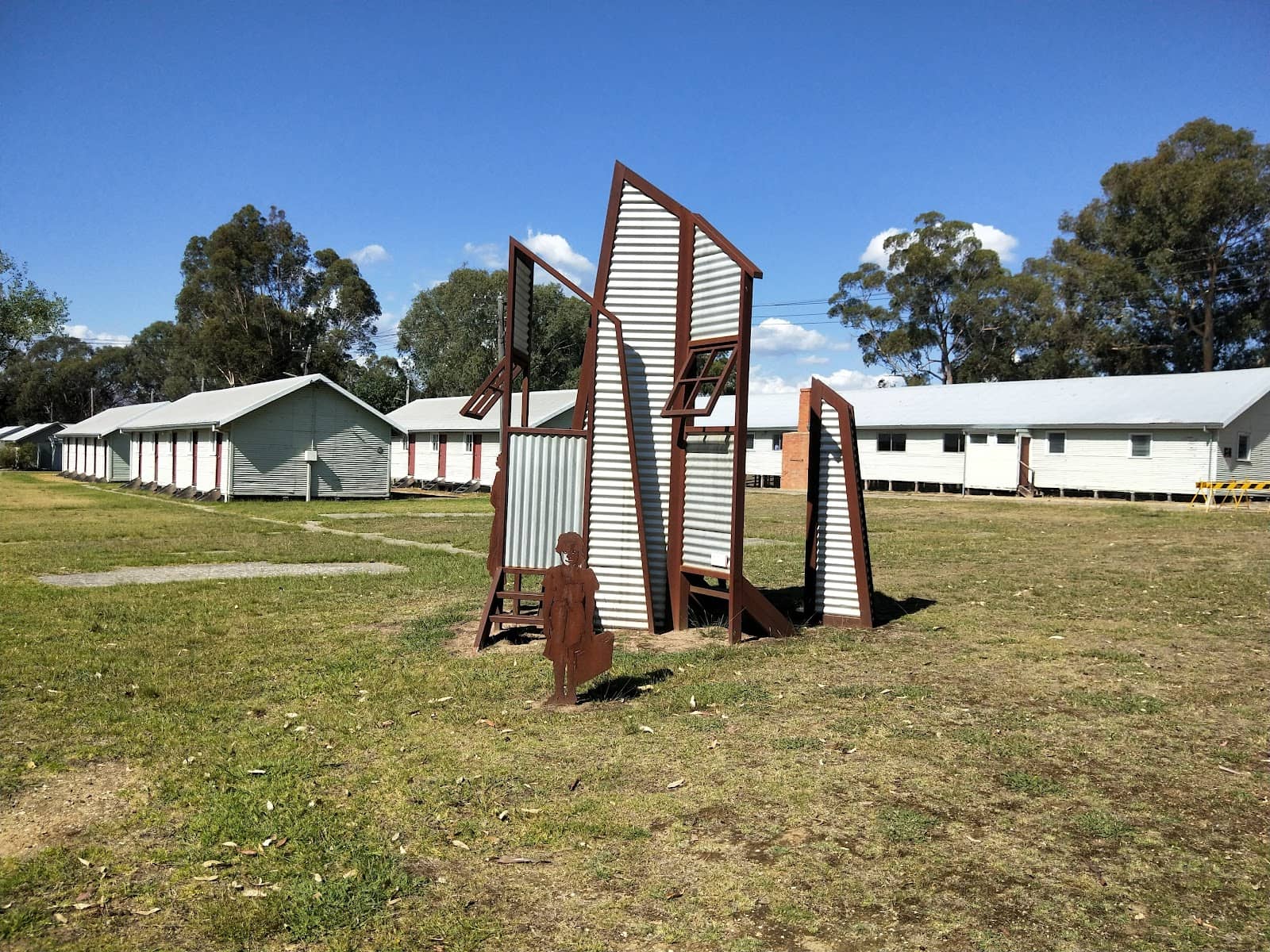
Public Sculpture
Bonegilla Siding
Contemplate the emotional weight of migration through a poignant sculpture about what one would carry to a new home.
Plans like a pro.
Thinks like you
Planning Your Visit
Timing is Key for a Meaningful Visit
Connect with Your Heritage
Best Times
Insider Tips
from TikTok, Instagram & Reddit
Book Guided Tours Ahead
Tours are essential for context but don't run daily. Check the schedule and book in advance! :ticket:
Wear Comfortable Shoes
You'll be walking around the historic site, so comfy footwear is a must. :athletic_shoe:
Check for Family Connections
Use the database to see if your ancestors passed through Bonegilla. Very moving! :heart:
Support Preservation Efforts
Donations help preserve this vital piece of Australian history for future generations. :dollar:
Tips
from all over the internet
Book Guided Tours Ahead
Tours are essential for context but don't run daily. Check the schedule and book in advance! :ticket:
Wear Comfortable Shoes
You'll be walking around the historic site, so comfy footwear is a must. :athletic_shoe:
Check for Family Connections
Use the database to see if your ancestors passed through Bonegilla. Very moving! :heart:
Support Preservation Efforts
Donations help preserve this vital piece of Australian history for future generations. :dollar:
Engage with Volunteers
The volunteers are incredibly knowledgeable and welcoming, sharing personal insights. :wave:
What Travellers Say
Reviews Summary
Visitors find Bonegilla Migrant Experience to be a deeply moving and historically significant site, offering a stark reminder of post-war migration challenges. Many appreciate the preserved buildings and the opportunity to connect with family history. While the site's raw nature is impactful, some note the lack of on-site amenities.
"We visited the former migrant camp where a few friends had started life in Australia
The remaining buildings were a stark reminder of how much things have changed since the 1950’s
What was classed as acceptable accommodation in those times would be called a slum today
There are many interesting information panels around the area telling the story of migration when over 300000 new arrivals passed through the camp
It’s worth a look if you’re interested in history"
Graeme Forbes
"Bonegilla Migrant reception and training centre received and trained migrants who were brought to Australia following World War ll. There were more than 24 blocks all numbered which made up the migrant centre. Block 19 is the last remaining block.
At its busiest the centre housed up to 8000 people, occasionally in tents but usually in large accommodation huts. Women and children were separated from the men until huts were partitioned into cubicles for families.
Initially the centre was only for displaced persons from refugee camps 🏕 in Europe. As the need for labour increased immigration officials opened up the migrants from other countries.
Block 19 has 12 areas which you are allowed to walk 🚶♀️ around either by yourself or with a guided tour guide.
The men were contracted out all over the country. The contracts imposed strain as the women were left to raise their children alone without family members to support them, plus they were isolated due to the language difficulties.
Pregnancy and childbirth were difficult for the younger women without traditional family support of older female members of the family who were sent elsewhere. Lonely isolated and frightened they were unable to express their needs and fears because of language difficulties. The hospital was established at the beginning of 1949 it was mainly established to cater for pregnant 🤰 women and their families. There was over 240 babies 👶 born at the centre.
The school 🏫 was completed by 31 January 1949 there were 6 schoolrooms catering for about 350 children.
The Displaced Person Scheme was scaled down by the Menzies government toward the end of 1951 and terminated in early 1952. The Uranquinty camp was closed by September 1951 the remaining migrants were relocated to Bonegilla while some workers were sent to Wagga.
Accommodation huts and other buildings were occasionally relocated within the reception centre as things changed. As the centre closed the buildings were sold locally.
The experience includes recreation hut, kitchen and mess hall, Tudor hall, chapel, accommodation huts, Hume public service club/employment office, Bonegilla function space,amenities hut and silhouette huts."
Tanya Vanderkooi
"A throughly great experience! My grandparents stayed here for a week in 1960 before relocating to the Illawarra. While they are longer with us, it was great to see their names listed on the database. Good to see the government allocating funds for the much needed restoration and repair work to ensure this part of Australian history is preserved. Thank you to the lovely volunteers who were so knowledgeable and welcoming!"
michael jazbec
What People Like
What People Dislike
Frequently Asked Questions
🚇 🗺️ Getting There
Bonegilla Migrant Experience is located near Wodonga, Victoria. If you're driving from Sydney, it's a road trip that takes several hours. Many visitors travel by car, and it's a popular stop for those exploring the Albury-Wodonga region. Public transport options might be limited, so driving is often the most convenient way to reach the site.
While specific public transport routes directly to the site might be infrequent, you can typically reach the nearby city of Wodonga via bus or train. From Wodonga, you would likely need to arrange a taxi or rideshare to get to Bonegilla. It's advisable to check local transport schedules in advance.
Some visitors have mentioned traveling with their dogs to the Albury-Wodonga area, but it's crucial to confirm the specific pet policy for the Bonegilla Migrant Experience itself. Generally, historical sites may have restrictions on pets within buildings or certain areas. It's best to contact the venue directly or check their official website for the most up-to-date information.
There is typically parking available at the Bonegilla Migrant Experience site, especially near the main visitor areas like Block 19. Parking is usually free for visitors. Arriving earlier in the day can sometimes offer more convenient spots, particularly if you plan to join a guided tour.
The drive from Melbourne to Bonegilla Migrant Experience is approximately 3.5 to 4 hours. You'll typically take the Hume Highway (M31) north towards Albury-Wodonga. The site is well-signposted once you are in the vicinity of Wodonga.
🎫 🎫 Tickets & Entry
Entry to the Bonegilla Migrant Experience site itself is generally free, allowing you to explore the grounds. However, guided tours, which are highly recommended for a deeper understanding, may have a fee. It's best to check the official Bonegilla Migrant Experience website for current pricing and booking information for tours and any special events.
The opening hours for Bonegilla Migrant Experience can vary, especially for guided tours and special events. While the grounds might be accessible during daylight hours, it's essential to check their official website or contact them directly for the most accurate and up-to-date information on opening times and tour availability.
While general access to the Bonegilla Migrant Experience site is often free, there might be costs associated with guided tours or special events. These tours provide crucial historical context and personal stories, making them a worthwhile investment. Always check the official website for the latest admission fees and tour prices.
Yes, it is highly recommended to book tickets for guided tours or any special events at Bonegilla Migrant Experience online in advance. This ensures your spot, especially as tours don't run every day and can fill up. Visit their official website for booking options and schedules.
Information on specific discounts for Bonegilla Migrant Experience, such as for seniors, students, or families, is best found on their official website or by contacting them directly. Special events might also have different pricing structures.
🎫 🧭 Onsite Experience
At Bonegilla Migrant Experience, you can explore the last remaining Block 19, which includes accommodation huts, a kitchen, and mess hall. Guided tours offer deep historical context and personal stories. There's also a public sculpture at Bonegilla Siding, and special events like music performances and workshops are sometimes held. 
Yes, guided tours are a highlight of the Bonegilla Migrant Experience. They are highly recommended as they provide invaluable historical context and personal narratives that bring the site to life. Tours don't run every day, so it's essential to check the schedule and book in advance.
Bonegilla Migrant Experience was the largest and longest-operating migrant reception and training centre in Australia post-WWII, processing over 320,000 migrants between 1947 and 1971. It's a crucial site for understanding Australia's migration history and the challenges faced by new arrivals.
Absolutely! Bonegilla Migrant Experience has a database that allows visitors to search for family connections. Many people find it a deeply moving experience to discover if their ancestors passed through the centre.
Yes, Bonegilla Migrant Experience sometimes hosts workshops and activities, particularly during school holidays. These can include hands-on experiences like making pinch pots or learning about historical crafts, making it an engaging visit for families.
🍽️ 🍽️ Food & Dining
Currently, there are no on-site dining facilities or cafes at Bonegilla Migrant Experience. Visitors are advised to bring their own food and drinks or plan to dine in the nearby city of Wodonga or Albury. Special events, like high teas, may offer food options.
While there might not be designated picnic areas, visitors are generally welcome to bring their own food and enjoy a picnic on the grounds, provided they are respectful of the historical site and clean up afterwards. It's a good idea to bring a blanket to sit on.
The nearby city of Wodonga offers a variety of dining options, from casual cafes and pubs to restaurants. You can find places to eat before or after your visit to Bonegilla Migrant Experience. It's recommended to check local listings for current recommendations.
Occasionally, Bonegilla Migrant Experience hosts special events that may include dining options. For example, a Mother's Day High Tea has been advertised, which would include food and refreshments. Keep an eye on their 'What's On' section for such opportunities.
Yes, bringing your own water bottle is highly recommended, especially on warmer days. While there may not be water fountains, staying hydrated is important as you explore the site.
📸 📸 Photography
Yes, photography is generally allowed at Bonegilla Migrant Experience for personal use. It's a great place to capture the stark beauty of the preserved buildings and the poignant atmosphere. Always be respectful of other visitors and the historical significance of the site.
Block 19 offers many photographic opportunities, from the exterior of the huts to the interior spaces like the kitchen and mess hall. The public sculpture at Bonegilla Siding is also a unique subject. The open grounds and the historical context provide a powerful backdrop.
Regulations regarding drone usage can be strict, especially at historical and cultural sites. It's essential to check with the Bonegilla Migrant Experience directly or consult local aviation authorities before flying a drone on or near the property. Commercial photography or filming may require special permits.
For commercial photography or filming at Bonegilla Migrant Experience, you will likely need to obtain prior permission and potentially a permit. Contact the venue management to inquire about their policies and application process for commercial use.
A camera that handles low light well is beneficial for interior shots of the huts. However, a smartphone camera is perfectly adequate for capturing the atmosphere and details. Consider a wide-angle lens to capture the scale of the accommodation blocks.
For Different Travelers
Tailored advice for your travel style
👨👩👧 Families with Kids
The open grounds also provide space for kids to move around. It's a chance to discuss themes of migration, resilience, and the diverse backgrounds that make up Australia in an age-appropriate way. Consider joining a guided tour to help explain the history in an engaging manner. 🚶 History Buffs & Genealogists
📸 Photographers & Art Enthusiasts
The play of light and shadow within the huts, the textures of the old materials, and the vastness of the grounds provide a compelling subject matter. Don't miss the public sculpture at Bonegilla Siding, which adds an artistic and contemplative element to the site. Remember to be respectful of the historical context and other visitors while capturing your shots. Deep Dives
In-depth insights and expert knowledge
The History of Bonegilla Migrant Reception and Training Centre
The centre initially housed displaced persons from war-torn Europe, many of whom had experienced immense hardship. They lived in basic accommodation huts while awaiting job allocation and integration into Australian society. The conditions, while functional for the time, were often stark and a far cry from their previous lives.
Over the decades, Bonegilla evolved, adapting to changing immigration policies and needs. It witnessed the arrival of diverse cultures and played a pivotal role in shaping modern Australia. Today, the preserved Block 19 serves as a powerful testament to the resilience, hope, and challenges faced by these early migrants, offering a tangible connection to this vital chapter of Australian heritage.
Experiencing Bonegilla: Beyond the Buildings
Guided tours are highly recommended to fully appreciate the significance of Bonegilla. Knowledgeable guides share personal anecdotes, historical facts, and the broader context of post-war migration, transforming the physical remnants into a vivid narrative.
For those with family connections to Bonegilla, the experience can be profoundly personal. The centre offers a database to search for ancestors who may have passed through, allowing visitors to connect with their heritage on a deeper level.
+1Preserving History: The Importance of Bonegilla
Recognizing this importance, efforts are underway to restore and repair the site, safeguarding it for future generations. Visitors can actively contribute to these preservation efforts through donations. These contributions directly support the maintenance and interpretation of the site, helping to maintain its integrity and educational value.
By supporting Bonegilla, you help preserve a place of resilience, hope, and new beginnings, ensuring that the experiences of migrants are remembered and understood. The dedication of staff and volunteers is also paramount to the ongoing success of Bonegilla. Their knowledge and passion bring the history to life, making the experience both informative and moving for visitors.
Their work ensures that Bonegilla remains a vital resource for understanding Australia's multicultural identity. 
Social
from TikTok, Instagram & Reddit